


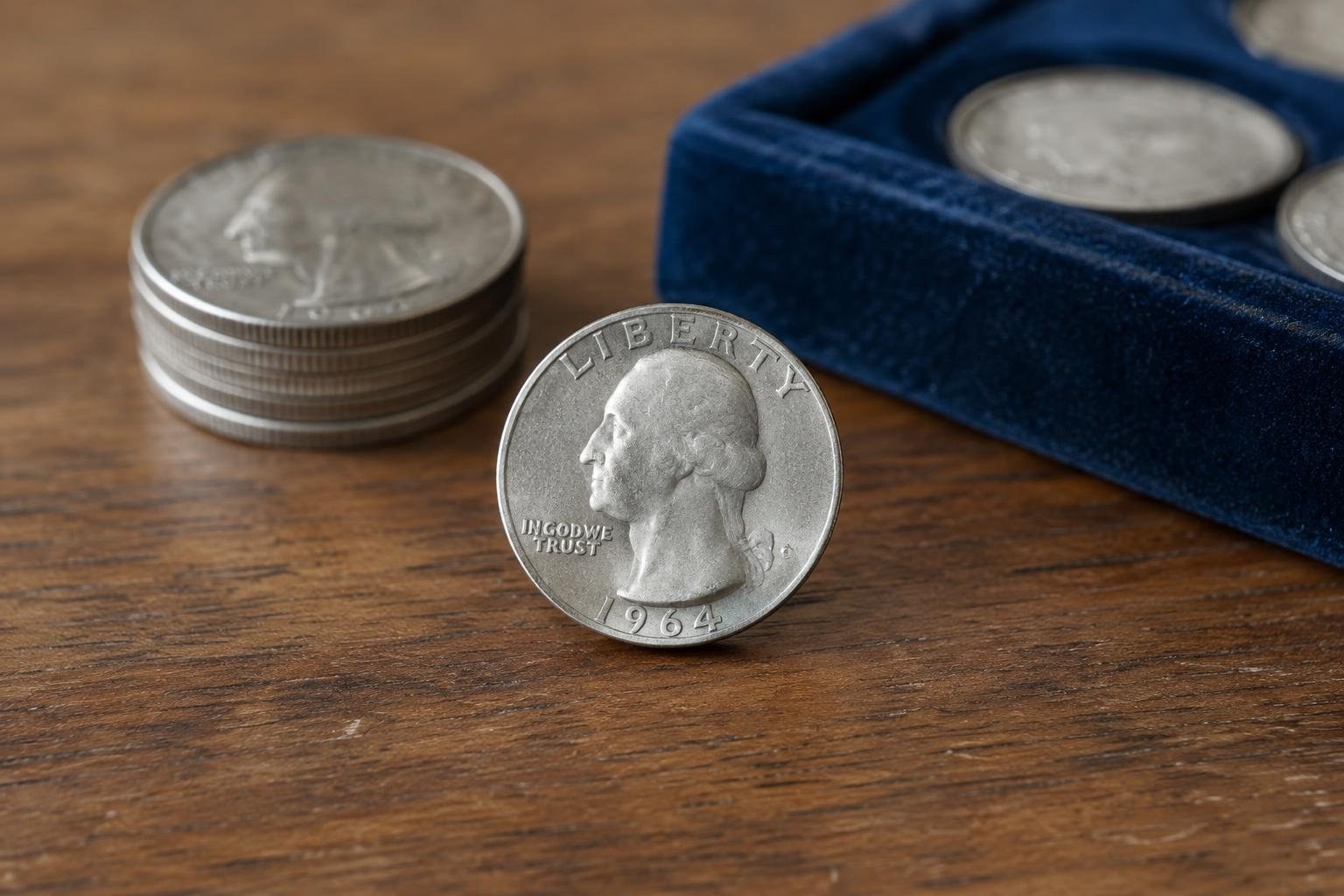
A 1964 quarter is a silver Washington quarter, but its value is not a fixed number. Its silver content gives it a metal-related value, while condition and collector demand may affect what a buyer will offer. Published estimates vary, so treat online figures as starting points rather than guaranteed prices. The safest approach is to identify the coin, preserve it as found, and compare a current, clearly explained evaluation before selling.
Quick answer: what is a 1964 quarter worth?
A 1964 Washington quarter is a 25-cent U.S. coin dated 1964. References supplied for this guide describe 1964 quarters as containing 90% silver. That silver content can make the coin worth more than face value, but it does not establish one fixed selling price.
A useful evaluation separates two questions: what the coin may be worth for its metal content, and whether its condition or collector interest adds value beyond that. The references publish different estimates, which is a reminder that a quoted guide figure is not a guaranteed offer or a universal market price.
- Face value: the denomination printed on the coin.
- Silver-related value: an estimate based on metal content and a current silver price.
- Collector value: a possible additional amount tied to condition or collector demand.
- Offer: the amount a particular buyer is willing to pay under stated terms.
Do not assume that every old quarter is rare. Start with the date, condition, and a current evaluation.
How to identify the coin and inspect it safely
Begin by checking that the date reads 1964 and that the coin is a Washington quarter. Look at both sides under even light. If you are inspecting a mint mark or a feature someone has identified as unusual, avoid treating that feature by itself as proof of rarity or authenticity.
Condition matters because wear, surface damage, and preservation can affect collector interest. Coin grades are labels used to describe condition; a casual visual check is not the same as a professional grade. A reference to another year’s quarter discusses values by grade, illustrating why grade categories matter, but it does not set the grade or price of your 1964 coin.
Do not clean or polish the coin to make details easier to see. Keep it in its existing holder when possible, and use a qualified coin evaluator if you cannot confidently identify what you have.
Signs you may need a closer evaluation
An evaluation may be useful if you are deciding whether to sell, sorting an inherited group, or trying to understand why one coin has been offered at a different price from another. It is especially sensible to seek another opinion when a buyer claims a coin is exceptionally rare, assigns it an unusually high grade, or offers only a generic price without explaining the basis.
It can also help when online listings leave you unsure whether you are comparing similar coins. A listing’s asking price is not, by itself, proof of what a buyer will pay. The supplied references offer different estimates for 1964 quarters, so relying on one figure can give a misleading impression of value.
If the coin is clearly circulated and you have no reason to suspect a collectible distinction, a straightforward offer comparison may be more useful than paying for an elaborate evaluation. If a claim of unusual rarity or exceptional condition could change your decision, ask for an explanation before selling.
What an evaluation or selling process should include
A practical evaluation should make clear what is being assessed and how the proposed amount was reached. For a 1964 quarter, ask whether the buyer is considering its silver content, its condition, possible collector interest, or a combination of these factors. If the evaluator identifies a variety or unusual feature, ask what supports that identification.
- Show the coin as it is. Do not clean or alter it before review.
- Ask what information is being used to estimate its value.
- Request a clear offer and any applicable conditions or charges.
- Compare the offer with another current evaluation if the amount or explanation seems unclear.
- Decide whether to sell only after understanding the terms.
This is a decision process, not a guarantee that two buyers will reach the same number. Published guides themselves differ, and an offer is specific to the buyer and transaction.
What affects 1964 quarter value?
Three broad factors help explain why estimates differ:
- Silver-market context: a metal-related estimate depends on a current silver price. A price quoted at one time may not apply later.
- Condition: circulated wear and the preservation of the surfaces can influence collector interest. Grade claims should be treated cautiously unless their basis is explained.
- Demand and transaction terms: a guide estimate, an advertised asking price, and a buyer’s offer are different kinds of figures.
The supplied references include several different estimates for 1964 quarters but do not establish a single current price that applies to every coin. They should not be combined into a precise value range without comparable dates, conditions, and market assumptions. Ask for a dated estimate and the reasoning behind it instead of treating an old or unqualified number as current.
Price considerations: estimates, asking prices, and offers
There is no current dollar figure in the research for this guide that can responsibly be applied to every 1964 quarter. Published estimates differ, and the available claims do not establish matching dates, grades, or pricing methods. Use them as a reason to investigate, not as a promise of a sale price.
When comparing pricing, ask what kind of number you are being shown:
- Guide estimate: a reference figure whose assumptions and date matter.
- Asking price: what a seller advertises, not necessarily what a buyer pays.
- Evaluation or offer: a specific buyer’s proposed terms for your coin.
- Metal-related estimate: an amount that should be tied to current silver pricing and the coin’s applicable metal content.
Ask whether the offer is firm, how long it remains valid, and whether deductions or other terms apply. Compare like with like: same coin, similar condition, current timing, and clearly stated transaction terms.
Compare a basic offer, specialist review, and grading
For an ordinary decision, compare a simple sale offer with an evaluation that explains whether it sees collector value beyond the coin’s silver content. If someone claims a special variety or exceptional grade, seek a second opinion before paying for grading or accepting a quick sale.
Professional grading is a separate option from a basic identification or offer. Ask about total cost and likely purpose first.
Do not confuse a coin described as “proof” or “mint state” in a listing with a verified grade. The supplied listing source contains a misspelled description and does not authenticate the item or establish a sale result. Treat listing language as a claim to check, not as evidence of value.
What to expect, including timing
Evaluation time and sale timing depend on the provider and the type of review; no standard turnaround is established by the available references. Ask in advance whether the review is immediate or requires a later appointment, whether a written offer is provided, and how long the terms remain valid.
Market figures also have a time element. A guide number without a clear date may not reflect a current silver market or a present buyer’s offer. If you are comparing prices, record when each quote was made and whether the amount can change before you accept it.
For a collection rather than one coin, keep items organized and ask how the provider plans to review them. Do not rush because someone claims the offer will disappear unless you accept immediately. Take enough time to understand the evaluation and terms.
How to choose a qualified buyer or evaluator
Choose a coin buyer or evaluator who explains the basis of the assessment in plain language and gives you time to consider the terms. Ask whether the person is evaluating silver-related value, collector appeal, or both. If the coin is said to be rare or unusually well-preserved, request a specific explanation and consider an independent second opinion.
Compare the full offer, not just a headline number. Ask about any charges, shipping arrangements, payment method, and when payment is made. A professional-looking advertisement or confident description is not a substitute for clear terms and a reasoned assessment.
Do not assume that a particular credential or slab makes an offer correct. Verify claims and make your own decision before handing over the coin.
Credentials, transaction terms, and safe handling
Before agreeing to a transaction, understand how the coin will be handled, when ownership transfers, how and when payment will be made, and whether shipping or other costs apply. Ask for the terms in writing when practical. Keep a record of the coin and the offer, especially if you are handling several pieces.
Requirements can depend on where and how a transaction takes place, so verify any local or legal question with an appropriate official source rather than relying on a buyer’s informal assurance.
For an online transaction, consider the security of the shipping method and the documentation you retain. Do not send a coin until you understand the process and how a dispute or declined offer would be handled.
Ways to save safely before selling
You can reduce avoidable expense without risking the coin. First, do not pay for grading or additional services until you understand what question they would answer and whether the result could affect your decision. The available references do not provide service prices, so request current, itemized terms before committing.
Get more than one offer when practical, and compare the amount, payment method, timing, and conditions together. Keep the coin in its current holder if it has one. Avoid buying special equipment or attempting home tests just to make a routine selling decision.
Saving money does not mean accepting an unexplained offer or mailing a coin under unclear terms. If a claimed premium seems significant, spend time verifying the claim rather than rushing into either a costly service or a sale.
Mistakes, warning signs, and a practical checklist
Avoid these common mistakes:
- Relying on one online number: published estimates differ, and they may not describe the same condition or timing.
- Confusing an asking price with an offer: a listing does not prove that a coin sold for that amount.
- Assuming a date or missing mint mark proves rarity: ask for evidence before paying or accepting a special-coin claim.
- Cleaning the coin: preserve it as found rather than polishing or treating the surfaces.
- Agreeing without clear terms: understand charges, payment, shipping, and conditions first.
Before deciding, check the date, photograph both sides for your records, note the coin’s current holder or packaging, request an explained evaluation, and compare offers when feasible. If a claim of high collector value is central to the sale, pause for another opinion.
Inherited coins and collection handling
If the quarter came from an inheritance or a larger group, preserve it with the other items until the collection has been reviewed. Keep holders, envelopes, labels, purchase records, and notes together; they may provide context that is lost if items are separated. Photograph the group and make a basic inventory before moving or distributing it.
Do not clean coins or discard packaging while sorting. If you do not recognize an item, get knowledgeable review before selling it as ordinary silver. For a substantial collection, plan secure handling and transport, and keep records of evaluations and offers.
These steps help you make an informed decision without assuming that every old coin has a rare-coin premium. The supplied references support a silver-related reason for interest in 1964 quarters, but do not establish the value of an individual estate coin.
Practical next steps
For one 1964 quarter, start with a careful, non-destructive inspection and a current explanation of the proposed value. For a group, preserve original organization and records, then ask for an evaluation that distinguishes metal-related value from any claimed collector premium. Compare offers and accept only terms you understand.
Online figures can provide context, but the supplied estimates are not consistent enough to serve as a guaranteed current price for your coin. If you are ready to explore a sale, Visit CashForCoins.net to request an offer for your coins or bullion.
Permits, credentials, warranties, or safety
Before handing over a coin, ask what qualifications the evaluator has for the service being offered and whether any relevant credential or permit can be verified. If the coin is described as proof, mint state, or professionally graded, ask what supports that description; listing language alone does not verify a grade or authenticate a coin.
Ask whether the buyer provides a written warranty, guarantee, or other assurance, and read its scope, limits, and conditions before agreeing. Do not assume that an assurance applies unless its terms are clear.
For safety, confirm how the coin will be handled, when it must be surrendered, and how payment and any return of the coin would work if you decline an offer. Keep a record of the coin and the agreed terms, and do not send it until you understand the process.
Frequently asked questions
What is a 1964 quarter?
A 1964 quarter is a Washington quarter dated 1964. The supplied references describe 1964 quarters as containing 90% silver. Check the date and coin condition, and have an unusual or exceptionally well-preserved coin reviewed before selling.
Why is a 1964 quarter worth more than 25 cents?
The coin’s value can reflect its silver content and any additional collector demand. The amount someone will pay depends on the market, condition, and the buyer’s offer. Online estimates in the supplied references differ, so they should not be treated as a guaranteed current price.
How much silver is in a 1964 quarter?
The references describe 1964 quarters as 90% silver, but they do not establish a current dollar value. A current estimate requires a current silver price and a buyer’s terms, as well as consideration of the coin’s condition and any collector interest.
Is a 1964 quarter with no mint mark rare?
A missing mint mark alone does not establish that a quarter is rare or valuable. Have the date, surfaces, condition, and any claimed variety examined before paying a premium or accepting a special-value claim.
Should I clean a 1964 quarter before selling it?
Do not clean, polish, scratch, or chemically treat it. Keep the coin in its existing holder if it has one, and request an evaluation that distinguishes silver-related value from any collector premium.
Are online 1964 quarter price estimates reliable?
Not automatically. The supplied references show differing published estimates, and an online asking price is not the same as a completed sale or a cash offer. Compare current, clearly explained offers before deciding.
People Also Ask
What is a 1964 quarter worth today?
It is a U.S. Washington quarter dated 1964. References describe 1964 quarters as 90% silver, which is one reason they may be worth more than face value.
How do I identify a 1964 silver quarter?
The date identifies the year; the coin’s condition and current market context help determine its value. A current offer may differ from a guide estimate or online asking price.
Is a 1964 quarter made of silver?
The supplied references describe the 1964 quarter as containing 90% silver. They do not provide a current, verified melt value, which changes with the silver market and requires a current price and the coin’s metal content.
Are all 1964 quarters valuable to collectors?
Not necessarily. A quarter can have silver-related value without being a scarce collector coin. Condition and evidence of a recognized variety matter when considering additional collector value.
What should I do with a 1964 quarter I found?
Do not clean it. Keep it safe in its current holder or place it in a suitable protective holder without rubbing the surfaces, then ask for an evaluation.
How can I get a fair offer for a 1964 quarter?
Ask how the offer was determined, whether it reflects silver content or collector interest, and whether there are any charges or conditions. Compare more than one current offer when practical.
A 1964 Washington quarter is worth more than its 25-cent face value in many cases because it contains silver, but there is no single reliable price for every coin. Identify the coin, assess its condition without cleaning it, and compare a current offer with an evaluation that accounts for both silver content and collector appeal. If you are considering selling, Visit CashForCoins.net to request an offer for your coins or bullion.
Your next step
Visit CashForCoins.net to request an offer for your coins or bullion.
Get a custom offer for your coins or Bullion!View Live offers for Gold & Silver Coins
Last reviewed and updated October 15, 2026 by the Cashforcoins Editorial Team.
Sources
- 1960 Quarter Value | Discover Their Worth
- 1964 Quarter | Learn the Value of This Silver Coin
- The Value of Pre-1964 U.S. Silver Quarter Coins
- 1964 Quarter Value Guide – Bullion Shark
- How Much is a 1965 Quarter Worth? | 2024 Value Guide
- Nineteen sixty four quarter no mintmark poof conditions | eBay
- How Much is a 1964 Quarter Worth? | 2026 Value Guide – Hero Bullion
- 1964 Quarter Value | Discover Their Worth