


A 1943 steel penny is a Lincoln cent with a zinc-plated steel core, made during World War II when the U.S. Mint reduced copper use in cents. Most examples are common and worth a modest collector premium, not a fortune. Condition and mint mark matter, while a coin suspected to be a rare bronze error needs careful professional authentication before anyone assigns it a high value.
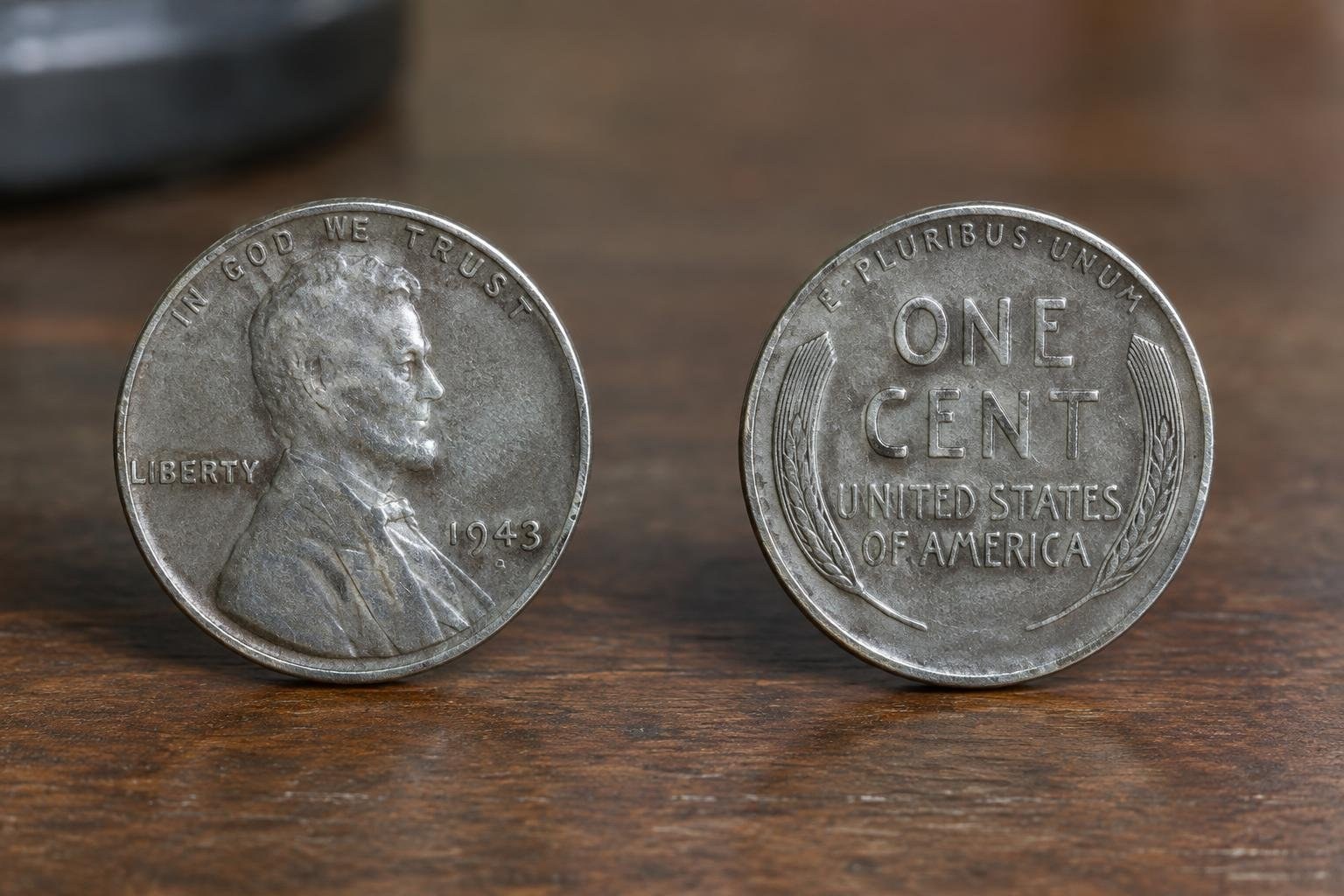
What a 1943 steel penny is and why people ask about its value
The regular 1943 Lincoln cent has a steel core plated with zinc. The U.S. Mint adopted this composition to reduce copper use in cents during World War II. The coin belongs to the Lincoln wheat-cent series, whose reverse shows two wheat ears.
Three mint origins are relevant to the date: Philadelphia, Denver, and San Francisco. Philadelphia cents have no mint mark; Denver coins carry a D and San Francisco coins an S. The mark is on the obverse below the date. A mint mark helps identify the issue, but by itself does not establish that a coin is rare or valuable.
Published price estimates for 1943 steel cents are not consistent. Sources describe ordinary circulated examples as modest-value coins, while giving differing figures for better-preserved or exceptional pieces. Treat online figures as estimates tied to the source's assumptions, not as a current guaranteed selling price.
How to identify a 1943 steel cent
- Read the date and confirm that it says 1943.
- Look below the date for a D or S mint mark. If none appears, the coin is a Philadelphia issue.
- Check the overall color and surfaces without scraping or applying chemicals. The regular issue has a zinc-plated steel core.
- Examine wear, marks, corrosion, and any signs that the surfaces have been changed.
- If the coin appears bronze-colored, has an unusual mint mark, or seems exceptionally well preserved, keep it separate and request expert review.
These steps help sort coins for further attention, but they do not authenticate a rare error. A visual impression alone is not enough to establish a coin's composition, originality, or market value.
Condition, grade, and surfaces: what changes collector interest
Condition is a major reason two coins with the same date and mint mark may attract different interest. A circulated cent shows wear from handling and use. An uncirculated coin has not circulated, but it can still have contact marks, weak details, or surface problems. A professional grade is an opinion about condition, not a promise of a particular sale price.
Pay attention to the highest points of Lincoln's portrait and the wheat ears, along with luster, scratches, spots, corrosion, and marks from contact with other coins. Strong remaining detail does not automatically mean a coin is top grade. A cleaned or damaged coin may be less desirable than its apparent sharpness suggests.
Published estimates show a substantial difference between ordinary circulated pieces and high-grade examples, but the figures vary by source and grade. Avoid assigning a grade from a quick online comparison. Use images for preliminary sorting, then ask a qualified numismatist to review a coin whose condition could materially affect its value.
Price and value: how to interpret estimates
A 1943 steel cent's face value is one cent. Collector value is different: it reflects what a buyer may pay for the coin as a collectible. A dealer's purchase offer, a retail asking price, an auction result, and an insurance appraisal are also different measures. An asking price is not proof that a coin sold for that amount.
There is no single dependable online figure for every 1943 steel cent. The supplied published estimates differ, particularly for high grades and unusual pieces. Use them to understand that condition can matter, not as a firm quote. A specific offer depends on the coin and the buyer's assessment at that time.
Before accepting an estimate, ask what it describes: a circulated coin, a particular grade, a certified coin, or a claimed error. Find out whether the figure is an asking price, a completed sale, or a dealer's offer. If the coin is ordinary and circulated, the time and expense of pursuing a high-grade valuation may not be practical.
Suspected bronze errors and other unusual coins
Value discussions often mix up ordinary steel cents with the famous 1943 bronze cent. The bronze issue is an error coin, not the normal composition for the date, and published sources describe it as exceptionally valuable. That broad statement does not authenticate any particular coin or establish a price for one.
A copper-colored appearance alone is not proof of bronze composition. A coin may have been altered, damaged, or otherwise changed after leaving the Mint. Do not scratch, file, heat, chemically treat, or otherwise destructively test it. A simple home check is not a substitute for examination by a professional familiar with Lincoln cents and mint errors.
If someone offers a large sum or asks you to pay a substantial fee based only on a photograph, pause. Keep the coin and any holder or paperwork together, obtain an independent opinion, and establish what the assessment actually covers before making a sale or grading decision.
Your options: keep, seek an opinion, grade, or sell
For a first pass, compare your coin with reliable photographs of the same date and mint mark, then consider three paths:
- Keep and enjoy it: sensible for an ordinary circulated example with no special feature.
- Ask a coin professional for an opinion: useful when condition, authenticity, or a possible variety could affect a decision.
- Consider third-party grading: potentially relevant for a coin whose authenticity or high grade matters enough to justify the cost and effort.
Published estimates place ordinary examples well below exceptional high-grade or error coins, but there is no universal threshold at which grading becomes worthwhile. Compare the likely value of the specific coin with all costs and risks before submitting it. Do not pay for grading just because a coin is old or appears shiny.
If selling, compare the kind of value being discussed. A dealer buying a coin needs room to resell it; a retail listing reflects a seller's asking price and may not result in a sale. Ask how an offer was reached and whether it assumes a particular grade or error attribution.
What to expect from an evaluation or sale
A straightforward coin review begins with identification: date, mint mark, visible condition, and any unusual feature. The reviewer may then explain whether the coin appears to be an ordinary steel issue or deserves closer examination. If you request an offer, clarify whether it is based on a preliminary description or on inspection of the coin.
Allow time to organize the coin and any related records, ask questions, and compare options. If you pursue professional grading, there may be additional submission and shipping steps; confirm the provider's current process and charges before committing. The research available for this article does not establish a standard turnaround time, so do not rely on a generic estimate.
Keep the coin secure while deciding. Do not mail an unusual or potentially valuable piece without understanding the shipping method, insurance terms, tracking, and responsibility for loss. Get important terms in writing.
How to choose a qualified coin professional
Choose someone who can explain the reasoning behind an identification and distinguish a normal 1943 steel cent from a suspected error. Ask what evidence supports the opinion, whether it is preliminary, and whether the professional is evaluating condition, authenticity, or both.
Compare like with like. A price estimate for a certified high-grade coin is not directly comparable to an offer for a circulated coin. Ask whether a quoted figure is a dealer purchase offer, an asking price, or an estimate of possible retail value. For a coin represented as a rare error, consider an independent second opinion before agreeing to a sale.
Be cautious of pressure to decide immediately, unsupported rarity claims, or a valuation that cannot be explained. A useful evaluation should make its limits clear and tell you what further review, if any, would be needed.
Credentials, service terms, and safe handling
There is no home permit or special handling license discussed for an ordinary 1943 cent in the available research. That does not replace checking applicable requirements if a transaction involves other property, a large collection, or a different jurisdiction. Ask a provider to explain the terms that apply to the transaction you are considering.
Before using a grading or evaluation service, confirm its current fees, submission and return procedures, shipping responsibility, and any stated guarantee or warranty. Do not assume that a grade, authenticity opinion, or future resale price is guaranteed unless the terms explicitly say so. A third-party grade is an assessment, not a guarantee of a buyer's offer.
For safety, avoid destructive tests and do not share unnecessary personal or collection details publicly. If sending a coin, use a secure, documented method and keep copies of correspondence and tracking information.
Ways to save money without risking the coin
Keep costs proportionate to the coin. Start with identification and a basic condition review before paying for grading or other services. Group related coins and records so a professional can see what is being evaluated, but do not bundle a potentially unusual coin with ordinary pieces without noting the difference.
Use free visual references for preliminary identification, not as proof of grade or authenticity. Compare estimates that refer to the same mint mark, condition, and coin type. If a proposed service cost is unclear, request a written breakdown before authorizing it.
For a coin with no apparent special feature, it may be more practical to keep it or ask for a straightforward offer than to incur costs that exceed its likely collector interest. For a suspected error or unusually strong condition, an expert opinion may prevent a more consequential mistake.
Common mistakes and a practical checklist
- Do not clean it. Cleaning, polishing, scraping, and chemical treatment can alter surfaces and harm collector appeal.
- Do not assume age means rarity. Most 1943 steel cents are common, and the unusual bronze error is not the same coin as a regular steel cent.
- Do not trust color alone. A copper-like look does not establish that a coin is a genuine bronze error.
- Do not treat an asking price as a sale. Understand whether a figure is an offer, estimate, or advertised price.
- Do not rush into grading. Compare possible benefit with fees and handling before submitting a coin.
- Do preserve context. Keep holders, labels, paperwork, and notes with the coin until it has been reviewed.
A practical checklist: photograph both sides, record the date and mint mark, note where it came from if known, keep it protected, and get an independent assessment if it appears unusual.
Inherited coins and larger collections
If you inherited one 1943 cent or a larger collection, preserve the coins and their context before sorting or selling. Keep original holders, envelopes, labels, receipts, certificates, and collector notes with the relevant pieces. Photograph coins and packaging, and make a simple inventory without assigning unsupported grades or values.
Separate coins only when needed for safe organization, and do not clean them. Set aside anything that appears unusually well preserved, bronze-colored, or otherwise different for expert review. For a large holding, consider privacy, secure storage, transport, and written records of any evaluation or transaction.
Do not dispose of unfamiliar material based on a quick assumption that every example is ordinary. A professional can help distinguish common coins from pieces that merit closer attention; ask how the review and any offer are determined.
Factors that affect a 1943 steel penny’s value
Several factors shape what a buyer may offer for a 1943 steel cent. They work together, so the date alone is not enough to estimate a specific coin.
- Condition and grade: Wear, contact marks, surface damage, and preservation can affect collector interest. Published estimates vary considerably for circulated and high-grade examples, so compare coins in similar condition rather than relying on a single price figure.
- Mint mark: Philadelphia cents have no mint mark, while Denver and San Francisco cents carry a D or S below the date. The mark identifies the issue, but does not by itself prove that a coin is rare or valuable.
- Authenticity and unusual features: A verified error or variety may attract more interest than a normal steel cent. A bronze-colored appearance alone does not establish that a coin is a genuine bronze error; seek professional examination before treating it as one.
- What the quoted price represents: Published estimates, asking prices, auction results, and dealer offers are different measures. Check what type of coin and grade a figure describes, and whether it records an actual sale or only an asking price.
For a practical comparison, first confirm the date and mint mark, assess visible condition without cleaning the coin, and identify whether any unusual feature has been professionally verified. Then compare estimates or offers that apply to similar coins.
Frequently asked questions
What is a 1943 steel penny worth?
Most circulated 1943 steel cents have only a modest collector premium. Value depends on condition, mint mark, and whether the coin has a notable variety or error. Published estimates differ, so use them as general context rather than a guaranteed offer.
Why were 1943 pennies made of steel?
The regular 1943 cent was made with a steel core plated with zinc. The change was made to reduce the use of copper in cents during World War II.
Where is the mint mark on a 1943 steel penny?
A mint mark, when present, is on the obverse below the date. A coin without a mint mark was struck at Philadelphia; D and S identify Denver and San Francisco. Have unusual or unclear marks examined rather than altered.
How can I tell whether a 1943 penny is steel or copper?
A magnet response can be a preliminary clue because the regular 1943 cent has a steel core, but it does not authenticate a coin or prove that a nonmagnetic coin is a genuine bronze error. Seek professional review before buying or selling a suspected error.
Are 1943 copper pennies valuable?
The 1943 bronze cent is a well-known error coin, but a coin that appears copper-colored is not automatically one. Surface treatments, damage, or other alterations can be misleading; do not scrape or chemically test it. Get an expert opinion.
Should I get my 1943 steel penny professionally graded?
Professional grading is most worth considering when a coin appears exceptionally well preserved, has a suspected variety or error, or its potential value justifies submission costs. For an ordinary circulated steel cent, grading fees may outweigh the likely benefit.
Should I clean an old steel penny before selling it?
No. Cleaning, polishing, or chemical treatment can permanently change a coin's surfaces and reduce collector appeal. Leave it as found and handle it by the edges.
What should I do before selling a 1943 steel penny?
Keep the coin and any holder or documentation together, photograph both sides, and describe what you know without making an unsupported rarity claim. Compare estimates and understand whether an offer is a dealer purchase price or an asking price.
People Also Ask
How much is a 1943 steel penny worth today?
Most circulated examples have modest collector value. A coin's condition, mint mark, and any verified variety or error can affect its appeal and price.
What is a 1943 steel penny made of?
The regular issue has a steel core with zinc plating. The U.S. Mint used that composition to reduce copper use for cents during World War II.
What do the letters on a 1943 penny mean?
Look on the front of the coin below the date. A D or S indicates Denver or San Francisco; no mint mark indicates Philadelphia.
How rare is a 1943 copper penny?
Not every copper-colored 1943 cent is a bronze error. Alterations and surface changes can mislead, so do not clean, scrape, or chemically test it. Get an expert assessment.
Will a magnet stick to a 1943 steel penny?
A magnet can provide a preliminary indication of the steel core in a regular example, but it cannot authenticate a coin or establish that a suspected bronze cent is genuine.
Is it worth getting a 1943 steel penny graded?
Only if the coin's condition, potential variety, or suspected error makes the likely benefit greater than the grading and shipping costs. Many ordinary circulated examples do not warrant submission.
Most 1943 steel pennies are common and have modest collector value, but condition, mint mark, and unusual characteristics can affect interest. Treat claims that a coin is a rare copper error as unconfirmed until it has been examined by a qualified numismatic professional. Preserve the coin as found, compare its condition carefully, and seek an informed assessment before making a decision.
Your next step
Visit CashForCoins.net to request an offer for your coins or bullion.
Get a custom offer for your coins or Bullion!View Live offers for Gold & Silver Coins
Last reviewed and updated October 15, 2026 by the Cashforcoins Editorial Team.
Sources
- 1943 Steel Wheat Penny Value: No Mint Mark, D & S Prices Explained
- 1943 Steel Penny Value: 10 Cents to $4,000+ by Grade
- 1943 S Lincoln Wheat Penny Steel Cent Coin Value, Prices & Info | USA Coin Book
- 1943 Steel Penny Value: How Much Is a 1943 Steel Penny Worth? – Bullion Shark
- 1943 Steel (Silver) Penny: Background and Value
- 1943 Steel Penny Value: What Is Yours Worth? | Cash 4 Gold
- What Is A 1943 Steel Penny Worth Today? | 1943 Steel Penny Value
- 1943 Steel Penny Value: How Much They Are Worth Now