


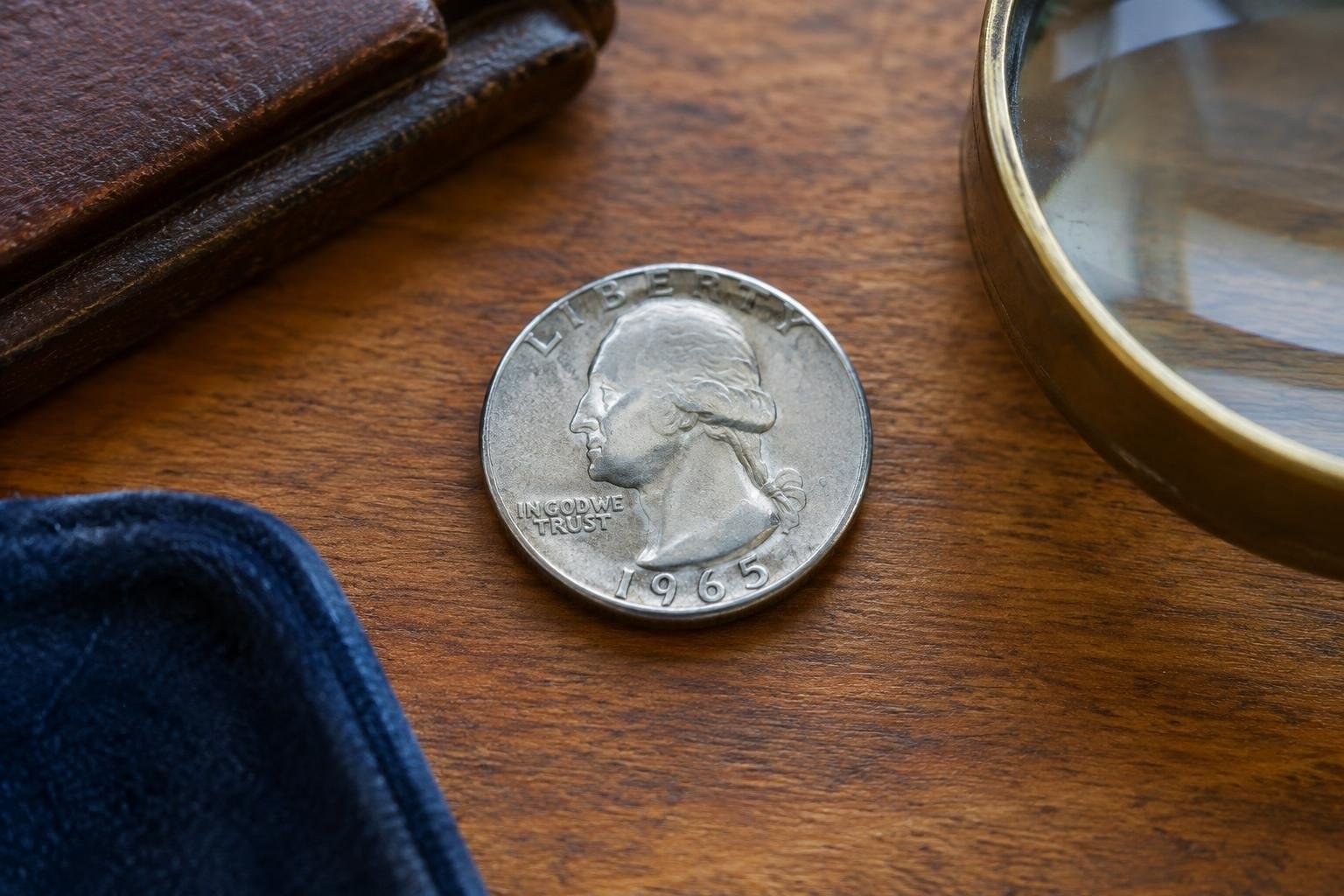
A 1965 Washington quarter is not automatically a rare silver coin. Most circulated examples are ordinary coins worth around their 25-cent face value; higher values depend on the coin’s actual condition, collector-set status, or a verified unusual error. Online estimates differ, and a headline price is not the same as a completed sale or a dealer offer. Start by identifying what you have, preserve it as found, and get expert review before treating an unusual claim as fact.
Quick answer: what is a 1965 quarter worth?
The 1965 Washington quarter has an ordinary face value of 25 cents, but collectors may pay more for some coins based on condition or an unusual, verified feature. The year is associated with a change in U.S. quarter production, so claims that a 1965 coin is silver deserve careful checking rather than automatic belief.
Online value guides are not consistent: some describe most examples as worth little more than face value, while others discuss high-grade or alleged error coins at much higher amounts. These are not interchangeable kinds of evidence. An estimate, an asking price, a completed sale, and a dealer’s cash offer can all differ.
Key takeaways:
- A date of 1965 does not by itself establish rarity or silver content.
- Condition and the coin’s origin, including possible Special Mint Set status, can matter.
- Claims of a silver-planchet error require professional authentication.
- Keep the coin uncleaned and seek a second opinion if a large value is claimed.
On this page: identification, warning signs, value factors, selling options, timing, professional review, safe handling, and an evaluation checklist.
What to know about the 1965 Washington quarter
The coin is a Washington quarter dated 1965. Its denomination is 25 cents. The year falls during a period when U.S. quarter production changed; a reference discussing the transition reports that new coins began being struck on July 23, 1965, and that the intrinsic value of the changed coins was below face value.
That context explains why the date attracts questions, but it does not prove that a particular coin is silver, rare, or valuable. A normal coin should not be declared an error solely because someone sees a silver-colored edge or finds an online article describing an exceptional example. Genuine errors must be distinguished from damage, altered coins, misleading photographs, and inaccurate claims.
Value guides also discuss 1965 Special Mint Set (SMS) quarters. An SMS coin comes from a collector set, not simply from ordinary circulation. Do not assume a coin is an SMS piece based only on shine or a seller’s description; evaluate its surfaces, appearance, and any original set packaging together.
How the identification and evaluation process works
Checking a 1965 quarter is a short, careful process. It is not a reason to alter or test the coin destructively.
- Record what you see. Note the date, visible marks, overall wear, and whether the coin appears to have been kept in packaging.
- Photograph both sides. Use clear, neutral lighting and keep the images unedited. Include close views of any feature that seems unusual.
- Assess condition conservatively. Circulation wear, marks, surface damage, and signs of cleaning can affect collector interest. A shiny surface alone does not establish a high grade.
- Separate fact from claim. Write down exactly what feature is being asserted, such as an unusual planchet, rather than relying on a vague “rare silver quarter” label.
- Request an informed examination. Ask a qualified coin professional to explain what can and cannot be established from the coin.
Do not scrape, file, scratch, apply chemicals, or use a magnet as a substitute for authentication. Keep original holders or packaging with the coin until it has been reviewed.
Signs an expert evaluation may be needed
An evaluation may be useful if you inherited a group of coins, found a 1965 quarter in an original collector set, or have a feature that a knowledgeable person says could be an error. It can also help when a buyer makes an unusually high claim that you cannot verify.
Warning signs that call for a closer look include a seller describing an ordinary-looking coin as a guaranteed rarity, a claim based on the date alone, or a price supported only by an online listing. A reported sale of an unusual coin does not mean every similar-looking coin is authentic or worth the same amount. One supplied reference itself notes limited numismatic literature confirming the existence of the alleged silver-planchet coins it discusses.
By contrast, finding a worn 1965 quarter in everyday change does not automatically require a paid grading service or a formal appraisal. First document it and seek a basic, independent opinion. Escalate only if the coin’s condition or a specific feature gives a professional a reason to recommend further authentication.
Cost and pricing considerations
There is no single dependable price for every 1965 quarter. A coin’s face value is fixed by denomination, but its collectible value depends on condition, identification, authentication, and demand. A published price guide is an estimate with its own assumptions. A dealer offer reflects the buyer’s assessment and resale costs; it is not the same as a retail asking price, auction result, or insurance appraisal.
Some online guides publish specific estimates for high-grade regular strikes and SMS coins. Those figures should not be treated as current guaranteed offers unless the guide gives a relevant date, grading basis, and market method. Do not add an advertised premium to an ordinary coin merely because a website mentions exceptional specimens.
If a professional recommends third-party grading, ask for the total expected expense before submitting the coin. Consider whether the possible value difference could justify grading, shipping, insurance, and other applicable charges. For an ordinary circulated coin, those costs may outweigh the practical benefit. Get the fee and service terms in writing rather than assuming a grading result will increase value.
Factors that affect a 1965 quarter’s value
Several factors shape what a buyer may pay:
- Condition: Circulated wear and surface problems distinguish a common pocket coin from a carefully preserved collector example. A numeric grade should come from a consistent grading assessment, not a guess based on brightness.
- Coin type: An ordinary circulation strike and a coin from a Special Mint Set are different collecting contexts. Preserve any original set materials that may help establish how the coin was obtained.
- Authenticity: A claimed silver-planchet error is exceptional. It needs evidence that the coin is genuine and that its unusual characteristics resulted from mint production, not later alteration or damage.
- Market evidence: A guide estimate, asking price, reported auction result, dealer bid, and insurance value answer different questions. Compare like with like.
- Buyer demand and costs: A buyer may account for the work and risk involved in verifying and reselling a coin. Offers can therefore differ from a seller-facing retail estimate.
Online sources mention high-grade coins and alleged silver errors, but a headline amount is not a valuation for an unexamined coin. The actual coin and evidence matter more than a broad claim about the year.
Options and tradeoffs: keep, evaluate, or submit for grading
Choose the next step that matches the coin and your goal:
| Option | Useful when | Tradeoff |
|---|---|---|
| Keep and document it | The coin appears ordinary, or you are not ready to sell | It does not establish a formal grade or market price |
| Ask a local coin professional for an opinion | You need help distinguishing a normal coin from a possible exception | Ask whether the opinion is complimentary, paid, or tied to a purchase offer |
| Seek an independent second opinion | A high-value error or silver claim is made | It takes additional time, but helps guard against relying on one unsupported conclusion |
| Submit for third-party grading | A specialist believes authentication or grading could materially help | Fees, shipping, and turnaround time apply; a favorable result is not guaranteed |
For most ordinary circulated coins, a basic identification is more proportionate than immediately paying for grading. A potentially exceptional coin deserves a stronger standard of proof before you sell, buy, or insure it.
What to expect, including timing
A quick visual opinion and a formal grading submission are not the same process. A professional may be able to give an initial assessment from photographs or an in-person look, but a difficult authenticity question can take more examination. Third-party grading also involves submission and handling steps, so it is not necessarily immediate.
Ask the provider what the next step includes, what it costs, how the coin will be handled, and whether the timing is an estimate or a commitment. If the coin must be sent away, confirm the submission procedure, packaging requirements, shipping responsibility, and how it will be returned. Do not ship a coin based only on an unsolicited message or an unverified address.
There is no evidence-based universal turnaround time for all providers or services. The appropriate timeline depends on the service selected and the provider’s current process. If you are selling an estate or a group of coins, allow time for sorting and review rather than making a rushed decision based on one online price.
How to choose a qualified coin professional
Look for a coin professional who can explain the reasoning behind an opinion in plain language. Ask how the person distinguishes a Special Mint Set coin, a circulation coin, damage, and a possible mint error. A sound evaluation should identify uncertainty rather than promise a specific result before examining the coin.
Before accepting an offer, clarify whether the figure is a purchase offer, an estimate of retail value, or an appraisal for another purpose. Ask whether the professional is buying the coin and whether that affects the recommendation. For an alleged high-value error, seek a separate opinion from someone who is not relying on your acceptance of an immediate offer.
Compare written terms, payment method, fees, handling arrangements, and the provider’s explanation of how the coin was assessed. Do not rely solely on a professional-looking website, a dramatic testimonial, or a claim that an offer expires immediately. Keep copies of written evaluations and transaction records.
Credentials, service terms, and safe handling
Coin evaluations and third-party grading are not building projects, so contractor permits are not the relevant qualification. The practical safeguards are authentication methods, transparent service terms, secure handling, and clear responsibility for the coin while it is being examined or transported.
Ask whether the service is identification, grading, authentication, appraisal, or a purchase offer. These terms are not interchangeable. A grading service may describe condition and authenticity under its process; an appraisal estimates value for a stated purpose; a dealer offer is what that buyer is prepared to pay under the terms offered.
Before handing over or shipping a coin, request a receipt or written submission record that describes the item and states who is responsible for handling and return. Do not assume that a warranty, insurance coverage, or guarantee applies unless the provider gives its terms in writing. Avoid destructive tests: preserving the coin’s surfaces is safer for its potential collector value.
Ways to save safely on evaluation and selling
You can control avoidable costs without risking the coin. Start with clear photographs and basic sorting rather than submitting every 1965 quarter for grading. Keep collector sets together, and retain any packaging, labels, receipts, or notes that came with a coin. A professional can advise whether more costly authentication is warranted after an initial review.
When comparing offers, make sure they refer to the same coin and the same basis of value. Ask whether costs are deducted from payment and whether the amount is final. A higher advertised estimate may not be a better outcome if it comes with substantial fees or uncertain conditions.
Handle the coin by its edge with clean, dry hands, or leave it in a holder if it is already protected. Avoid polishing or attempted silver tests. The purpose of preserving a coin is to retain evidence and condition, not to make an ordinary coin look newer.
Mistakes, red flags, and a practical checklist
Common mistakes can harm the coin or distort expectations:
- Assuming the date proves silver: 1965 is not enough to authenticate a precious-metal error.
- Using an asking price as a valuation: A listing price does not demonstrate that a buyer paid that amount.
- Cleaning or polishing: This can permanently alter surfaces and reduce collector appeal.
- Submitting every coin for grading: Fees may not be justified for an ordinary circulated piece.
- Trusting a guaranteed rarity claim: Ask what specific feature supports the claim and who has authenticated it.
- Discarding original material: Keep holders, set packaging, documents, and provenance together until reviewed.
Before selling, use this checklist: photograph both sides; record the coin’s source if known; preserve its current holder; obtain a written explanation of any claimed error; compare at least two informed opinions for a substantial claim; understand the difference between a valuation and an offer; and keep transaction documentation.
Inherited quarters and larger collections
For an inherited collection or a group of coins, preserve the original organization before sorting. Keep envelopes, labels, set boxes, certificates, receipts, and collector notes with the coins they describe. Photograph notable items and make a simple inventory without assigning speculative values.
Do not clean, polish, or separate coins from original packaging just to make them easier to inspect. If someone identifies a 1965 quarter as a possible silver-planchet error or a valuable SMS coin, ask for the basis of that identification and obtain an independent review before selling or distributing it.
Think about privacy and security when discussing a collection, arranging transport, or sharing detailed photographs. For a large holding, plan a controlled evaluation and written record rather than carrying valuable-looking items to multiple appointments casually. An offer for a collection may reflect a buyer’s assessment of all the items together, so request an explanation of how the important pieces were considered.
Frequently asked questions
Is every 1965 quarter worth more than 25 cents?
Usually, no. A normal circulated 1965 quarter is generally a face-value coin. A genuinely unusual error or exceptionally well-preserved example may be worth more, but it needs careful identification and authentication.
How can I tell if my 1965 quarter is silver?
Do not assume that a 1965 date proves a coin is silver. Claims of 1965 quarters struck on silver planchets exist, but they are exceptional claims that require examination and authentication.
What is a 1965 Special Mint Set quarter?
A Special Mint Set coin was issued as part of a collector set, rather than being an ordinary coin pulled from circulation. Identify the coin and its original packaging before judging its value; condition and authenticity still matter.
Should I get my 1965 quarter professionally graded?
A reputable coin professional should explain the basis for an opinion, distinguish an estimate from a purchase offer, and let you decide without pressure. For a potentially rare coin, consider an independent second opinion.
Should I clean a 1965 quarter before selling it?
No. Cleaning or polishing can damage a coin’s surfaces and may reduce its collector appeal. Leave it as found and handle it carefully by the edge.
People Also Ask
Why is a 1965 quarter worth more than face value?
The date alone does not make a 1965 quarter valuable. Most circulated examples are ordinary coins, while condition, collector-set status, and authenticated errors can affect collector interest.
What does a 1965 quarter error look like?
A year is not enough to identify a rare error. A specialist needs to examine the coin’s surfaces, dimensions, weight, and striking characteristics without damaging it.
How much is a 1965 quarter worth in different grades?
The useful comparison is not simply a price list. Compare the coin’s grade, whether it is a regular circulation strike or a Special Mint Set coin, and whether any claimed error has been authenticated.
Are online 1965 quarter prices reliable?
An online listing is an asking price, not proof of what a coin is worth. Look for reliable evidence of comparable completed sales and get an independent opinion for a claimed rarity.
What should I do if I think I found a rare 1965 quarter?
Keep the coin in its current state, photograph both sides, and have a qualified numismatic professional inspect it. Do not clean, scratch, or chemically test it.
Most 1965 Washington quarters are ordinary circulation coins, not automatic silver rarities. Check the coin carefully, keep it unaltered, and treat exceptional-value claims as a reason to seek an independent examination, not as a price guarantee. If you are considering selling, compare the coin’s condition, authenticity, and likely buyer demand before deciding. Visit CashForCoins.net to request an offer for your coins or bullion.
Your next step
Visit CashForCoins.net to request an offer for your coins or bullion.
Get a custom offer for your coins or Bullion!View Live offers for Gold & Silver Coins
Last reviewed and updated October 15, 2026 by the Cashforcoins Editorial Team.
Sources
- 1965 Quarter Value – How much is it worth?
- 1965 Quarter Coin: How Much is Your 1965 Quarter Worth?
- What Is A 1965 Quarter Worth Today? | 1965 Quarter Value
- 1965 Quarter Value Guide: Find Your 1965 Quarters Worth | Accurate Precious Metals
- Top 100 Most Valuable Modern Quarters Worth Money List (1965-Present) – CoinValueChecker.com
- 1965 Quarter Coin Value: Errors List & No Mint Mark Worth
- 1965 Quarter Value: Error List and Silver Varieties 2026
- How Much is a 1965 Quarter Worth? | 2024 Value Guide