


Kennedy half dollars are United States fifty-cent coins first issued in 1964 to honor President John F. Kennedy. A coin’s date, condition, composition, and collector demand can all matter when you decide whether to keep, buy, or sell it. Start by identifying what you have and preserving it as found. Do not assume every older coin is rare or worth more than its face value, and do not rely on a broad online estimate as a guaranteed offer.
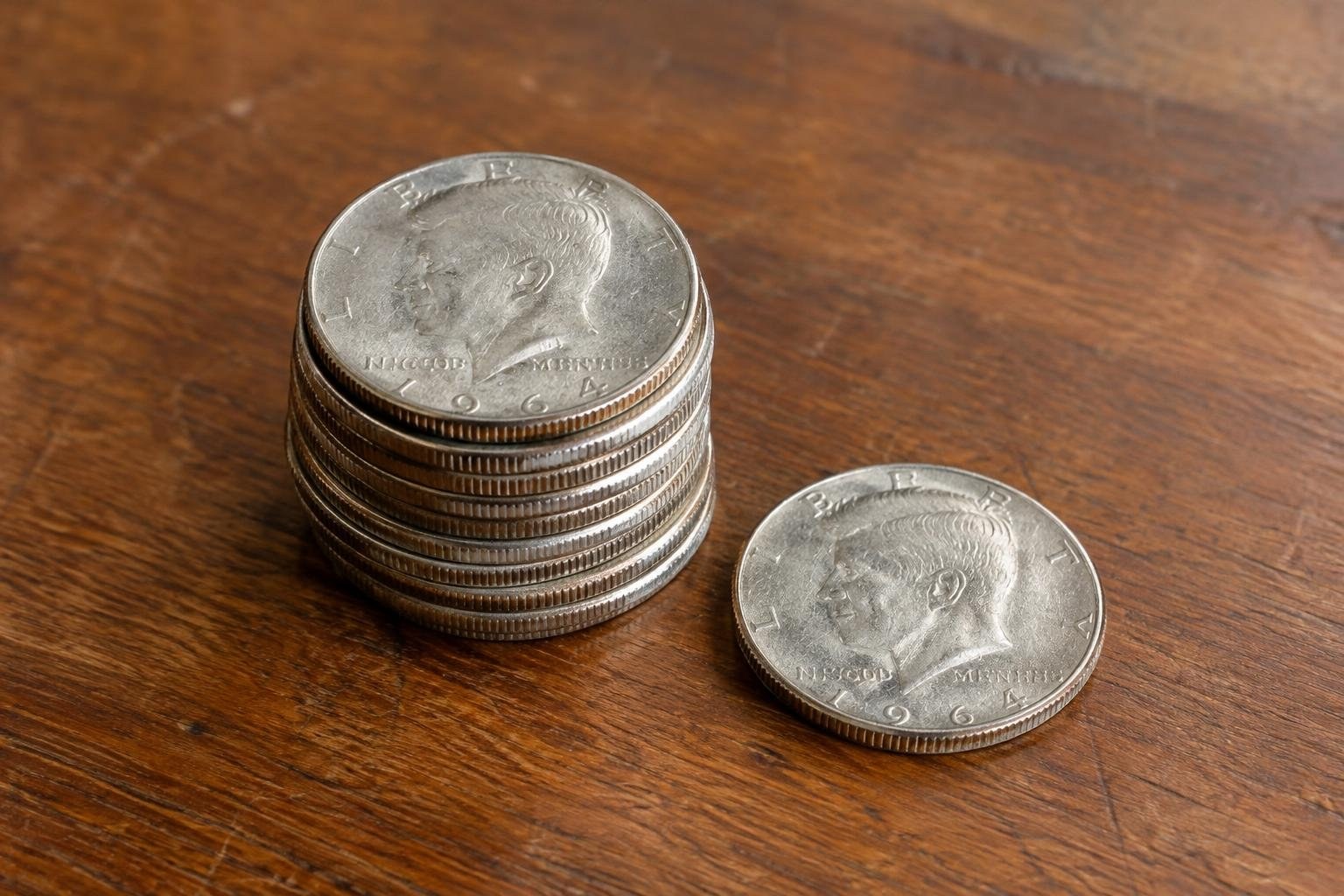
What to know about Kennedy half dollars
The Kennedy half dollar is a United States fifty-cent coin introduced in 1964 as a memorial to President John F. Kennedy. Its design replaced the Franklin half dollar. To begin identifying one, look at both sides and record the date, any mint mark you can clearly see, and the coin’s general condition. Do not guess at details that are too small or worn to read.
The 1964 issue was made of 90% silver and 10% copper. That specific fact does not establish the composition of coins from other years. Check a dependable reference for the exact date before using a metal-content assumption to estimate value.
The denomination gives a starting point, not a complete valuation. Face value, possible metal value, and collector value are different concepts. A coin may interest collectors because of its date, variety, or condition, but age by itself is not proof of rarity or a high price.
How the identification and evaluation process works
A practical evaluation begins with identification, not a price guess. Separate Kennedy half dollars from other coins, group them by visible date, and note any coin that appears different from the rest. Keep original holders, envelopes, labels, and paperwork with the coins they came with. Take photographs for your records, but avoid handling a coin more than necessary.
- Record the date and visible mint mark, if readable.
- Note whether the coin is loose, in a holder, or part of a labeled set.
- Describe obvious wear, damage, or unusual features without trying to diagnose a variety.
- Compare the coin with a reference that covers the relevant year, variety, and grade.
- Seek a professional opinion before making an irreversible decision about a potentially significant coin.
Price references cover specific years, varieties, and grades. That is why identifying the coin correctly comes before choosing a number from a guide.
Signs a closer coin review may be useful
Consider a closer review when a coin has an unclear date, a visible feature you cannot explain, or a condition that seems notably different from the rest of a group. A review can also help if you are deciding whether to sell a collection, have inherited coins, or are unsure whether a guide entry applies to your coin.
Use caution with claims that an ordinary-looking coin is automatically rare or valuable. Value references list many distinct entries across the series, and their range reflects differences among issues and conditions. A general search result may not match the precise coin in your hand.
If someone’s claim depends on a particular variety, ask what feature identifies it and whether the coin has been independently authenticated. An unusual appearance alone is not proof of a rare variety or mint error.
Cost and pricing: what a value estimate does and does not mean
There is no single price that applies to every Kennedy half dollar. A useful estimate must identify the coin and make clear what kind of figure is being discussed. Face value is the denomination. A price-guide figure is a reference point. A dealer offer is a proposed purchase price. A seller’s asking price is not proof that a buyer will pay that amount.
For a coin with precious-metal content, a metal-based estimate requires verified composition and a current metal price. For a collectible coin, the relevant year, variety, condition, and market demand can matter. Do not apply a silver estimate to an issue whose composition you have not confirmed.
Published guides are not interchangeable. Some show values by year and grade, while others present different market categories. Check what a source measures, when it was updated, and whether it describes retail, wholesale, or another context. The available research confirms that price references distinguish years, varieties, and grades, but it does not establish a current offer for any individual coin.
Factors that can affect a Kennedy half dollar’s value
Several factors can shape the value of a Kennedy half dollar. Start with the year and any variety or issue distinction identified by a reliable reference. Then consider condition. Circulation wear can soften design details; damage or altered surfaces can make a coin less attractive to collectors. A coin’s actual appearance should be compared with a grading reference rather than assigned a grade from a photograph alone.
Composition matters when estimating metal value, but it must be verified for the particular date. The 1964 issue is documented as 90% silver and 10% copper. Do not extend that specification to the full series without checking.
Finally, consider the purpose of the price comparison. A catalog estimate, a retail asking price, an auction result, and a dealer’s purchase offer can differ because they describe different transactions and conditions. A guide is useful for research, but it is not a promise of sale proceeds.
Options and tradeoffs: keep, research, or sell
Collectors and sellers usually face a choice between keeping a coin, getting more information, or seeking an offer. Keeping it may make sense for sentimental or collecting reasons. Researching it first can help if the date, condition, or potential variety is unclear. Selling may be appropriate when you have decided not to retain the coin, but compare the proposed offer with relevant references and understand what type of price each source reports.
Do not compare a dealer’s buy offer directly with a shop’s retail asking price as if they were the same thing. One is a proposed purchase price; the other is a seller’s listed price. Neither alone proves the amount a different buyer will pay.
For a group of coins, ask whether the reviewer will consider the coins individually or as a lot. A group can include common pieces as well as coins that deserve separate attention. Keep your choices open until the pieces are identified.
What to expect, including timing
Plan for enough time to identify the coins and compare information before making a decision. The time required depends on how many coins you have, how clearly their dates can be read, whether they are already organized, and whether any need closer review. The research available for this guide does not establish a standard appointment, grading, or payment timeline, so ask any prospective provider to explain their process and expected schedule.
For an initial review, prepare a short inventory and clear photographs. Ask what additional information is needed, whether the provider will inspect the coins in person, and how the proposed offer or valuation will be explained. Do not feel pressured to accept immediately if you need time to compare options.
If you are asking for a formal grade or other specialized service, confirm the scope, fees, submission steps, and estimated turnaround directly with the provider before sending coins. Timing can differ by service and circumstances.
How to choose a qualified coin professional
Choose a provider who can explain how they identified the coin and what information their estimate uses. A useful conversation should distinguish the date, variety, and condition rather than rely only on a broad statement that the coin is old or rare. Ask whether the figure is an offer to buy, an estimate, or another kind of valuation.
Before agreeing to a paid service, ask for its scope and fees in writing. If a provider recommends grading or authentication, ask why that step is relevant to your coin and how the expense could affect your decision. You can seek another opinion when the explanation is unclear or the decision is significant.
Do not treat an impressive-sounding credential or a confident price claim as a substitute for transparent reasoning. Check what the provider actually does, what they are asking you to authorize, and whether you can decline without handing over the coins.
Credentials, documentation, custody, and safety
Coin evaluation is not a home repair project, so permits and construction warranties are not the relevant questions. Instead, focus on custody, documentation, and the terms of any service. Ask who will handle the coins, whether they will remain in your sight or be sent elsewhere, what paperwork records the transaction, and how payment and return or transfer of the coins will be handled.
If a coin is already in a holder, preserve it until you understand why it is there. Do not remove a coin from packaging, alter a label, or ship it based only on an unsolicited message. Before mailing a collection, confirm the recipient, shipping instructions, insurance arrangements, and what happens if the package is delayed or lost.
For a collection with significant financial or family importance, keep a record of the coins and retain copies of communications and transaction documents. Avoid sharing unnecessary information about where valuable coins are stored.
Ways to save time and money without risking the coins
You can reduce avoidable expense by doing basic organization yourself. Group coins by date, keep paperwork with the relevant pieces, and photograph the group before requesting an evaluation. Clear identification can make it easier to discuss the collection and focus attention on coins that may need additional review.
Do not pay for grading or authentication automatically. First ask whether the service addresses a specific uncertainty and whether the result could reasonably help you make a decision. Compare the stated service fee and process with the value question you are trying to answer.
Saving safely does not mean cleaning, polishing, or testing a coin in a way that can alter it. Preserve its current condition and ask a knowledgeable professional if you are unsure how to handle or package it.
Mistakes, warning signs, and a practical checklist
Avoid these common mistakes when researching or selling Kennedy half dollars:
- Assuming that every older coin is rare or valuable.
- Applying the 1964 silver specification to a different date without verification.
- Treating a guide value or asking price as a guaranteed purchase offer.
- Cleaning, polishing, scratching, or otherwise altering a coin before review.
- Paying for grading or authentication without understanding the purpose, cost, and process.
- Separating coins from original holders, labels, notes, or purchase records before they are reviewed.
- Accepting a claim of rarity without asking what specific date or variety feature supports it.
Before you proceed: record the dates, preserve the coins as found, compare a relevant reference, ask the provider to explain the valuation, and take time to understand the offer or service terms.
Inherited collections and estate handling
If you are handling an inherited collection, preserve the coins and the context around them. Keep holders, envelopes, labels, invoices, certificates, boxes, and collector notes together. Do not clean or reorganize coins in a way that separates them from information that may help identify them.
Make a basic inventory and photographs before moving or sharing the collection. Store it securely, limit unnecessary disclosure, and keep a record of who has access. If the collection is large or contains unfamiliar coins, arrange an informed review before disposing of pieces. Ask how any proposed evaluation will distinguish individual coins from a bulk group.
Take time to compare the explanation and terms before accepting an offer. A careful, documented process helps heirs and executors make decisions without treating an unverified online estimate as the collection’s final value.
Frequently asked questions
What is a Kennedy half dollar?
The Kennedy half dollar is a United States fifty-cent coin first issued in 1964 as a memorial to President John F. Kennedy. Its design features Kennedy on the obverse and a heraldic reverse design. The coin replaced the Franklin half dollar.
Are all Kennedy half dollars valuable?
Not necessarily. A coin’s age alone does not establish collector value. Value references distinguish among years, varieties, and grades, and prices can vary by condition and market. Identify the coin and assess its surfaces before relying on a general estimate.
Which Kennedy half dollars contain silver?
The 1964 issue was made of 90% silver and 10% copper. Do not assume that a different year has the same composition. Confirm the specific coin’s composition using a reliable reference before estimating metal value.
How can I find out what my Kennedy half dollar is worth?
Start with the date and visible condition, then look for a reliable coin reference that covers the specific year, variety, and grade. A price guide is a starting point, not a guaranteed offer. For a coin that may have significant collector value, consider an independent professional review.
Should I clean a Kennedy half dollar before selling it?
Avoid cleaning or polishing it. Keep it in its current holder if it has one, record the date and any marks visible without handling the surfaces, and seek an evaluation if its value or authenticity is uncertain.
People Also Ask
When were Kennedy half dollars first made?
The series began in 1964 as a memorial to President John F. Kennedy. That first issue was made of 90% silver and 10% copper. Consult a year-specific reference before assuming another date has the same composition.
Are 1964 Kennedy half dollars silver?
The 1964 Kennedy half dollar was 90% silver and 10% copper. For other dates, check a reliable reference for the specific issue rather than inferring metal content from appearance.
What is the face value of a Kennedy half dollar?
The coin is a United States fifty-cent denomination. Its face value is distinct from any potential metal value or collector value, which depends on the particular coin and the market.
Do online Kennedy half dollar price guides show what I will get?
A price guide can help you compare a specific year, variety, and grade, but it is not the same as a dealer offer or a completed sale. The coin’s condition and the transaction type matter.
What should I do with a Kennedy half dollar I found?
Do not clean, polish, or alter it. Keep the coin in its current holder if available, record identifying details, and request an informed review before deciding what to do.
What affects the price of a Kennedy half dollar?
A Kennedy half dollar price depends on the coin’s identification, condition, composition where relevant, and the kind of price being considered. A guide value, dealer offer, and seller’s asking price are not interchangeable.
Kennedy half dollars are easy to recognize, but their value depends on more than the date on the coin. Identify the year, preserve the coin’s condition, and compare its silver-related and collectible potential before selling or buying. If you have coins you would like reviewed, visit CashForCoins.net to request an offer for your coins or bullion.
Your next step
Visit CashForCoins.net to request an offer for your coins or bullion.
Get a custom offer for your coins or Bullion!View Live offers for Gold & Silver Coins
Last reviewed and updated October 15, 2026 by the Cashforcoins Editorial Team.
Sources
- Half Dollar Coins | US Mint
- Kennedy Half Dollar Key Dates & Values (1964-Present)
- Kennedy/JFK Half Dollar Values (1964 to 2026) | CoinTrackers.com Project
- Kennedy Half Dollar Values and Prices (1964-2015)
- Kennedy Half Dollars | Complete Collector's Guide | L&C Coins
- Kennedy Half Dollar (1964 to Date) Values – PCGS Price Guide
- Kennedy Half Dollar Values & Prices | Greysheet
- Kennedy half dollar – Wikipedia