


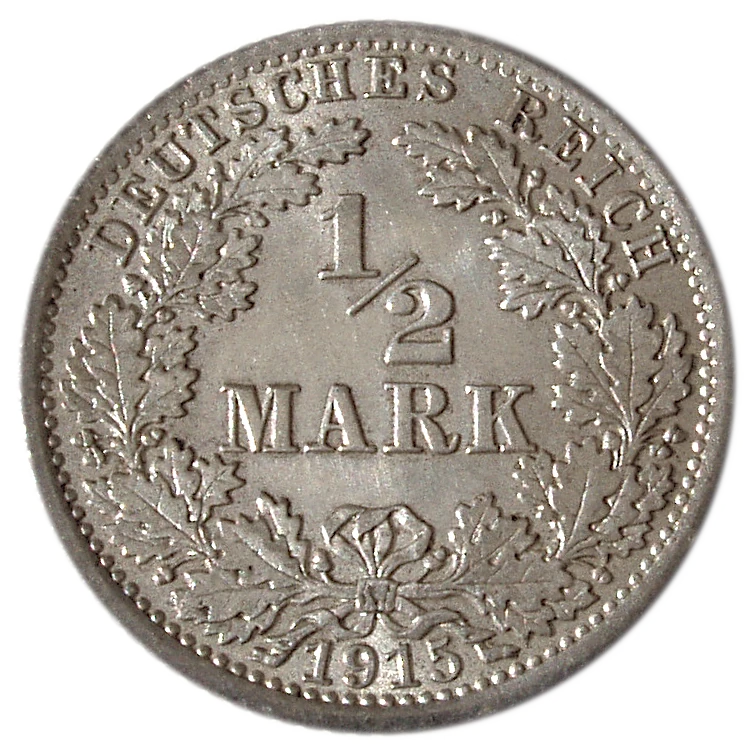
German Empire Silver Half Mark — .900 KM17
Photo credits and rights on the linked coin profile.
Germany • 90% silver; remaining alloy metals not independently verified
Issue years: 1905–1909, 1911–1919
Fine silver: 0.080400 troy oz
Germany • 1 Mark
German Empire one-mark coins in this guide use a 5.55-g, .900 silver standard and .1606 reference fine silver troy ounce per matching coin. The guide distinguishes the earlier KM7 eagle and later KM14 eagle with shield. Thirty-eight annual dates are supported, with gaps retained rather than a continuous 1873–1916 claim. The genuine photographs show a later 1905-G example.
When a fresh spot bid is available, melt values use fine-metal content × spot bid. CashForCoins guide buying offers use the separately configured percentage for each metal. Selected rare/numismatic coins require an appraisal. Dollar amounts remain unavailable when a fresh quote or buying percentage is missing.
Thirty-eight specific annual dates across KM7/KM14, retaining distinct eagle designs. The KM14 1890 production note lacks an individual annual row and remains unresolved. Aggregate proof ranges do not establish omitted dates. Exact mint, overdate and finish require attribution; later .500 Weimar standards are excluded.
Formula: specified fine-metal troy ounces × quantity. Dollar melt value additionally requires an approved current metal price.
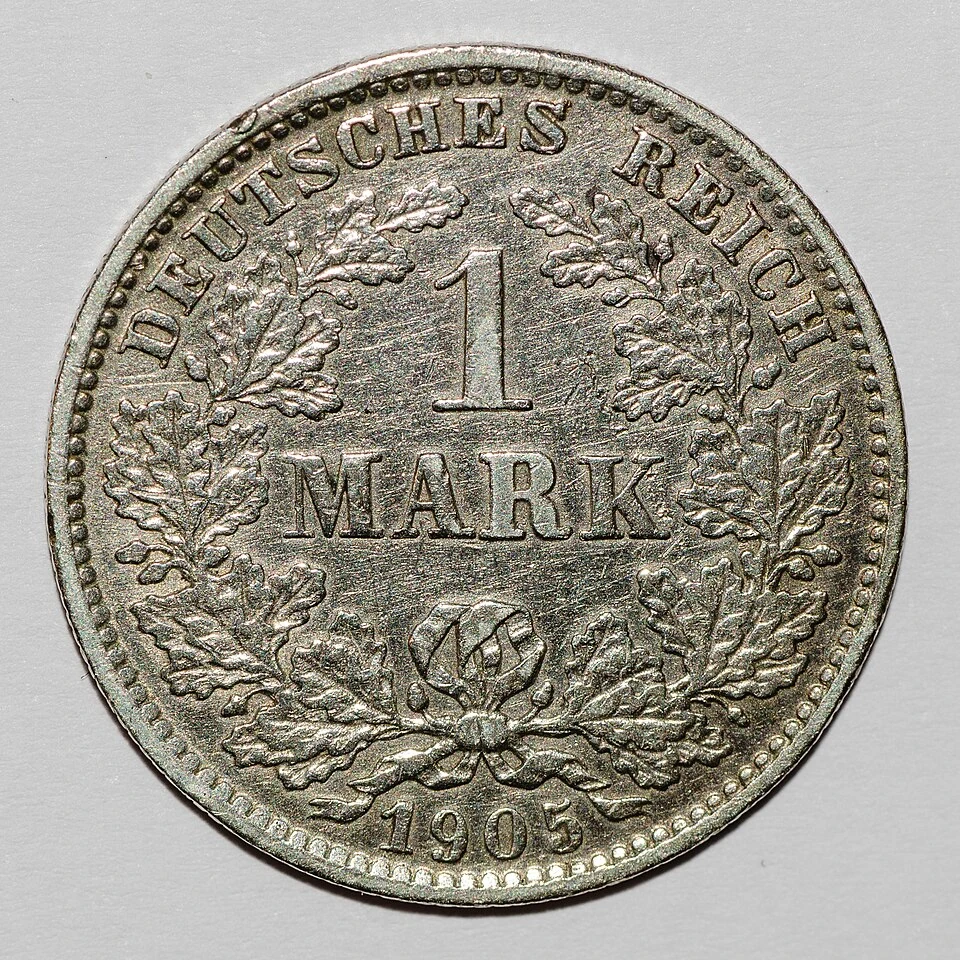
The illustrated obverse reads 1 MARK inside a wreath, DEUTSCHES REICH around it and 1905 below. This complete denomination/date face follows the reference’s obverse convention for both Empire mark designs. A similar wreath appears on the half mark, so read the fraction or whole numeral instead of identifying a coin from approximate size. The natural wear in the photograph is retained and is not a condition assessment of another specimen.
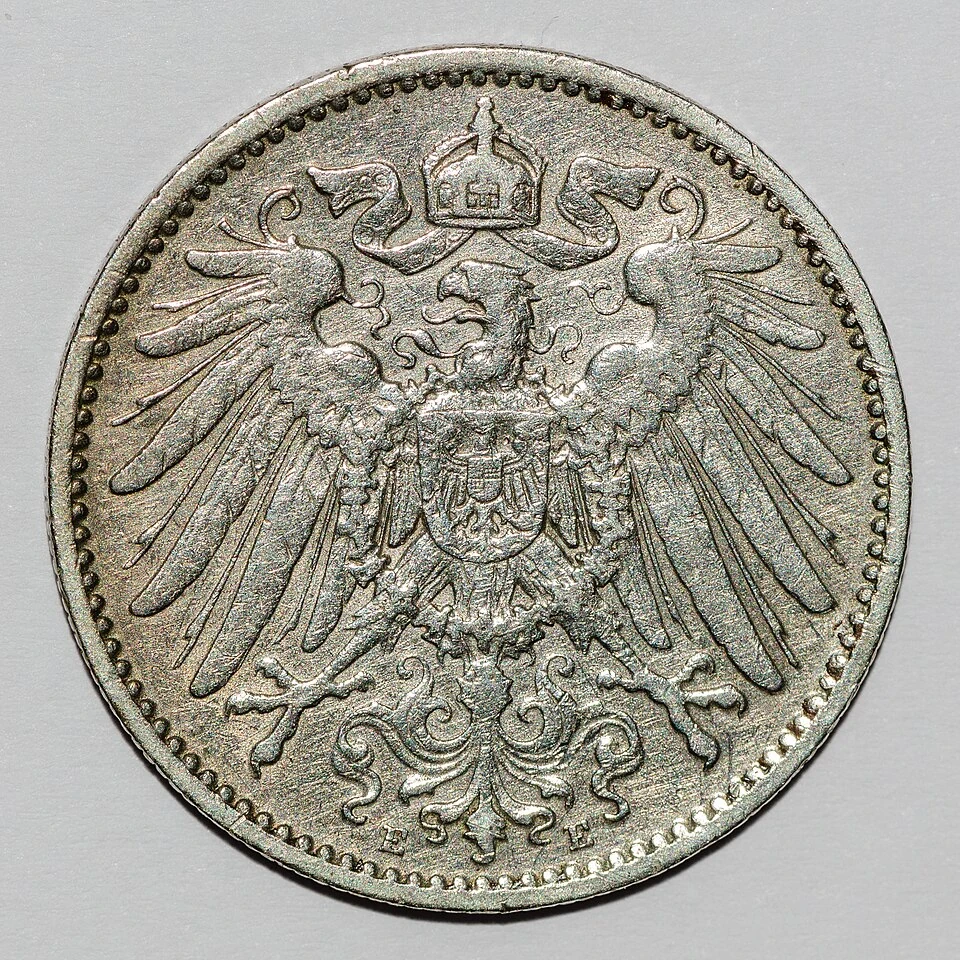
The reverse photograph shows the later crowned imperial eagle with shield and G below, matching the KM14 description. KM7 uses an earlier eagle design within the same nominal silver standard. Both designs are supported but the 1905-G picture illustrates only the later type. A reference image does not represent every dated mint combination, prove finish or replace examination of both faces and the edge of a customer coin.
The Empire mark melt heading spans 1873–1916, while the reference’s KM7 and KM14 records distinguish the earlier and later eagle designs. Both retain the same .900 silver standard. The Weimar period later uses a different .500 standard for its Mark/Reichsmark coins, so a similar denomination is not evidence of equal silver content. Preserve type, full date and mint letter with a collection record instead of grouping every German mark together.
Confirm 1 MARK, the complete date, mint letter and KM7 or KM14 eagle design. The source-backed nominal references are 5.55 g, .900 silver and 24-mm diameter. Measure an actual specimen separately; wear, alterations or a different denomination can affect what you observe. Earlier regional coins and later Weimar Mark/Reichsmark standards remain outside this calculator, even where the name or appearance seems similar.
One matching Empire mark contributes .1606 reference fine silver troy ounce; three total .4818 ounce and 16.65 nominal gross grams. The nominal fine-silver mass is 5.55 g × .900 = 4.995 g per coin. The calculator retains the designated reference ounces consistently. A mixed lot of Empire .900 marks and Weimar .500 coins needs separate rows; equal denomination names do not imply equal metal content.
Accepted issue years: 1873–1883, 1885–1887, 1891–1894, 1896, 1898–1916. These are the specific annual dates verified in the inspected records, not a guarantee of every mint/finish combination or an expansion of aggregate proof ranges. Retain the full dated type when identifying a coin.
The annual records support 1873–1883 and 1885–1887. Mint letters A, B, C, D, E, F, G, H and J occur across different dates. An undated common-date proof entry supplies no additional year. The reference places the denomination/wreath on the obverse and a crowned imperial eagle on the reverse.
Annual records support 1891–1894, 1896 and 1898–1916. The 1905-G reference photos show this later design. The reference notes production beginning in 1890, but its inspected annual table has no individual 1890 entry. Aggregate proof ranges 1891–1900 and 1901–1916 cannot independently establish a missing annual proof date. These unresolved rows are not expanded into the accepted year list.
The later table includes 1900/800-D, 1900/801-D, 1901/800-D, 1901/801-D and 1903/803-D. Read the actual digits and mint mark before assigning a variety. A date alone cannot distinguish regular from proof finish, establish grade or authenticate a coin.
Keep the exact year, mint letter, design, finish and provenance with each piece. A catalogue overdate or proof entry must be attributed on the actual coin; it does not turn every similar example into that variety. Reference metal content alone does not determine collector interest or grade. Preserve old labels and packaging with the correct coin, avoid cleaning, and request specialist assessment where a variety, unusual surface or condition could affect its value.
Provide photographs of both complete faces and the edge, together with measured mass and diameter when available. Include every visible date digit, the full denomination and mint letter. Matching the illustrations is an identification aid, not proof of authenticity or an assay. Wear, plating, alteration and mistaken attribution require examination of the actual specimen. Keep unresolved pieces separate until the type and nominal composition can be established.
Sort identified .900 Empire marks away from half marks and .500 Weimar denominations before entering quantity. The existing quote form carries the selected profile and quantity with your photographs and notes. Live dollar pricing remains unavailable. Reference ounces describe theoretical silver content and are not a purchase offer, collectible valuation or promise of recoverable metal.
The designated reference world-silver melt table specifies 5.55 g gross mass, .900 fineness and .1606 fine silver troy ounce. Both KM7 and KM14 dated records agree on these fields and supply a 24-mm catalogue diameter. Thickness, edge and the identity of the remaining alloy metals are not independently verified. Catalogue figures are nominal references, not an assay or authentication of a customer specimen. Actual annual rows and independent photograph permissions were inspected on 2026-10-11. Tuxyso’s two Commons pages independently grant CC BY-SA 3.0. The actual downloaded 960-pixel full-face previews are converted to WebP at those dimensions and retain that licence with visible attribution. No coin artwork is generated, enlarged, changed or cropped away. Unresolved dates and source discrepancies remain explicit rather than silently corrected.
The accepted annual dates are 1873–1883, 1885–1887, 1891–1894, 1896, 1898–1916. Aggregate proof ranges do not establish individual missing dates. The conflicting 1890 production note remains unresolved.
Three matching coins contain .4818 fine silver troy ounce using the designated reference melt figure. The result is theoretical content, not a purchase offer.
Later Weimar coins and other composition standards require exact type identification and their separate calculator profile. Denomination, colour or a similar design alone does not establish silver content.
Content maintained by CashForCoins. Last substantive record update: 2026-10-11. Report a specification or attribution issue through our contact page.
Photo credits and rights on the linked coin profile.
Germany • 90% silver; remaining alloy metals not independently verified
Issue years: 1905–1909, 1911–1919
Fine silver: 0.080400 troy oz
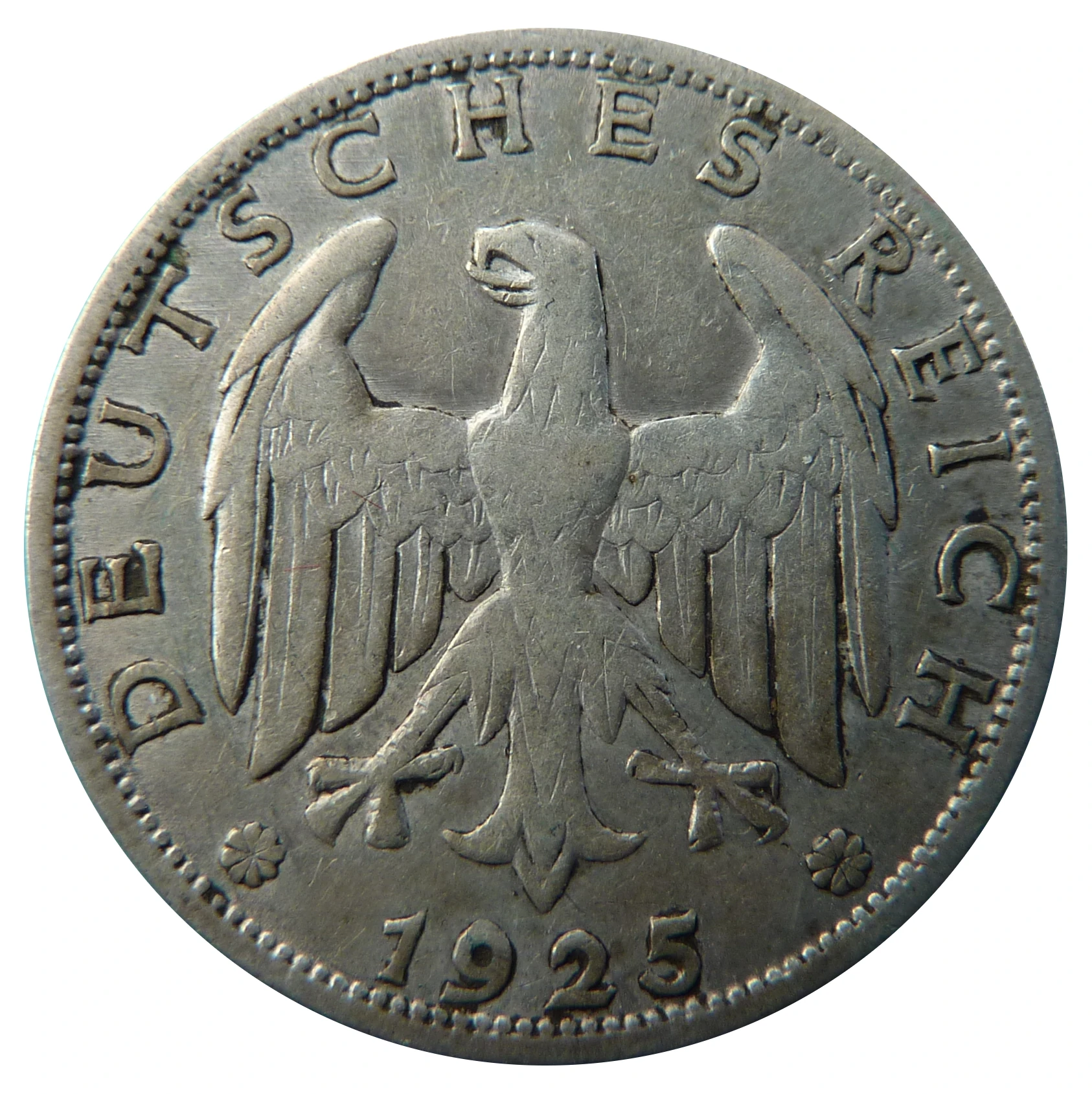
Photo credits and rights on the linked coin profile.
Germany • 50% silver; remaining alloy metals not verified
Issue years: 1924–1927
Fine silver: 0.080400 troy oz
Photographs can help identify your coin. An appraisal may consider authenticity, condition and collector demand as well as metal content.
Request a photo appraisal View current silver coin buying information
