
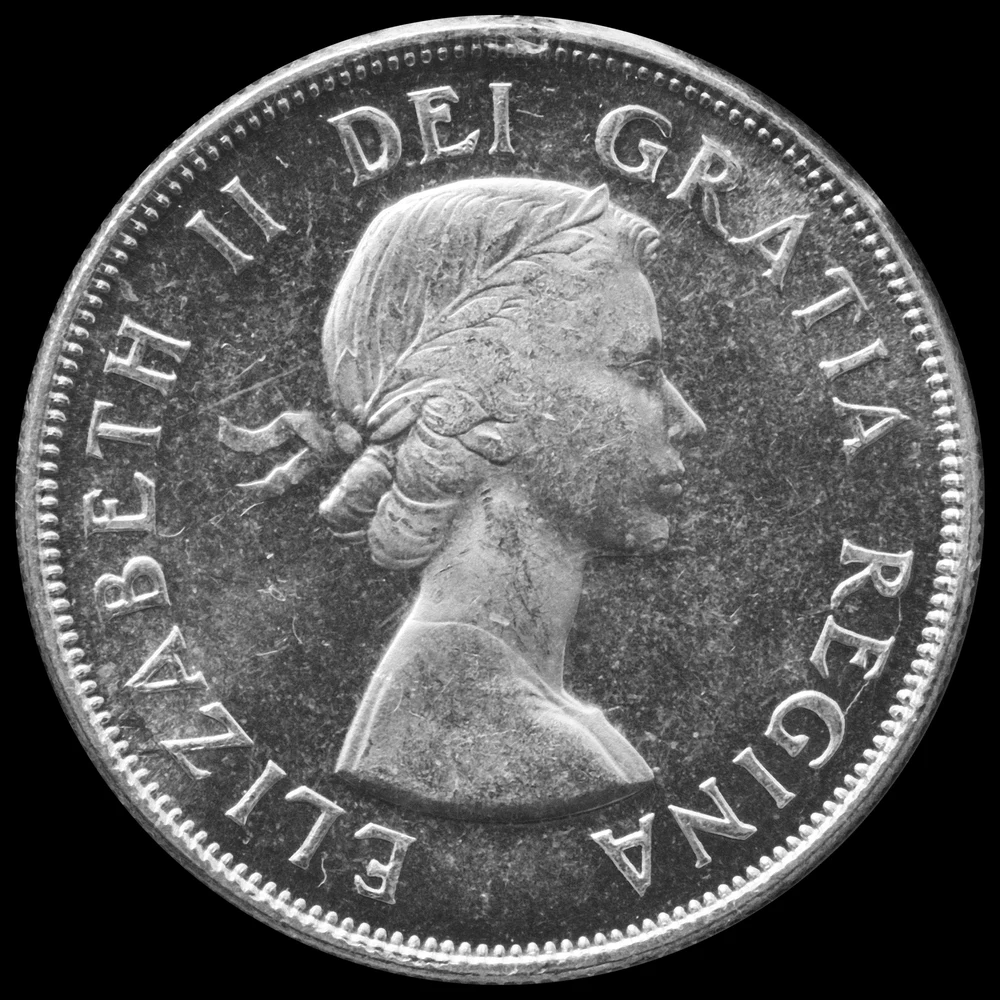
Canadian Half Dollar — .800 Silver
Photo credits and rights on the linked coin profile.
Canada • 80.000% silver; balance copper
Issue years: 1920–1921, 1929, 1931–1932, 1934, 1936–1967
Fine silver: 0.300000 troy oz
Canada • 50 Canadian cents
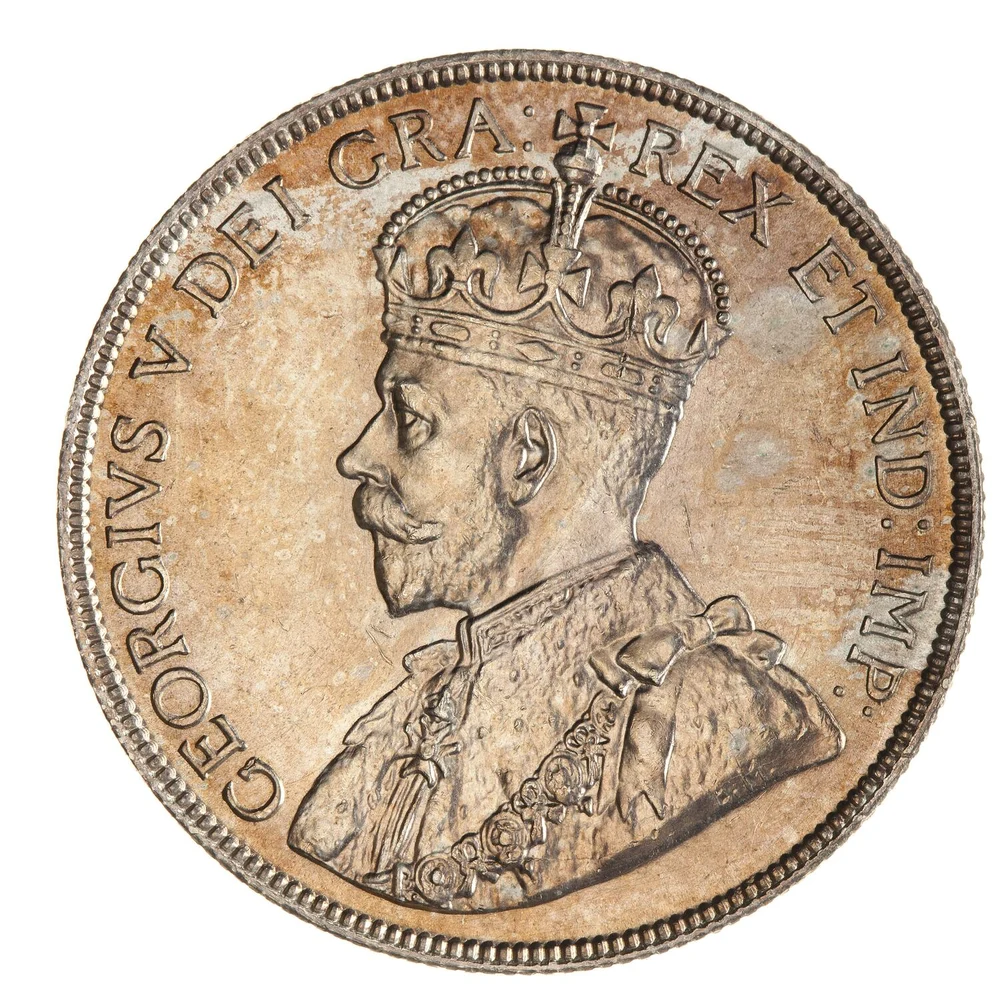
Canadian sterling silver half dollars are 50-cent coins in the .925 silver composition family. The selected reference melt reference assigns .3469 fine silver troy ounce to one identified matching coin. Confirmed issue dates are 1870–1872, 1881, 1888, 1890, 1892, 1894, 1898–1914, 1916–1919. Three matching coins total 1.0407 reference ounce. The two genuine photographs show a 1912 George V specimen strike, distinct from a claim about a customer’s coin, its finish or its grade.
When a fresh spot bid is available, melt values use fine-metal content × spot bid. CashForCoins guide buying offers use the separately configured percentage for each metal. Selected rare/numismatic coins require an appraisal. Dollar amounts remain unavailable when a fresh quote or buying percentage is missing.
Confirmed issue dates across Victoria, Edward VII and George V. The broad 1870–1919 envelope is not continuous production; 1915 is absent from the reference and has zero Mint production. Mint marks, 1910 leaf types, 1911/1912 legend types and specimen finishes need separate attribution. Newfoundland coins, bronze patterns and later recreations are excluded.
Formula: specified fine-metal troy ounces × quantity. Dollar melt value additionally requires an approved current metal price.
The photographed obverse shows George V facing left with a crown, draped bust and a legend naming the king. The B.M. initials are visible near the bust truncation. This portrait is an identification aid for the illustrated 1912 type, not a promise that every sterling half dollar has the same face. Victoria appears on the earlier type, and Edward VII faces right on the 1902–1910 type. Keep the full outer legend visible when taking appraisal photographs.
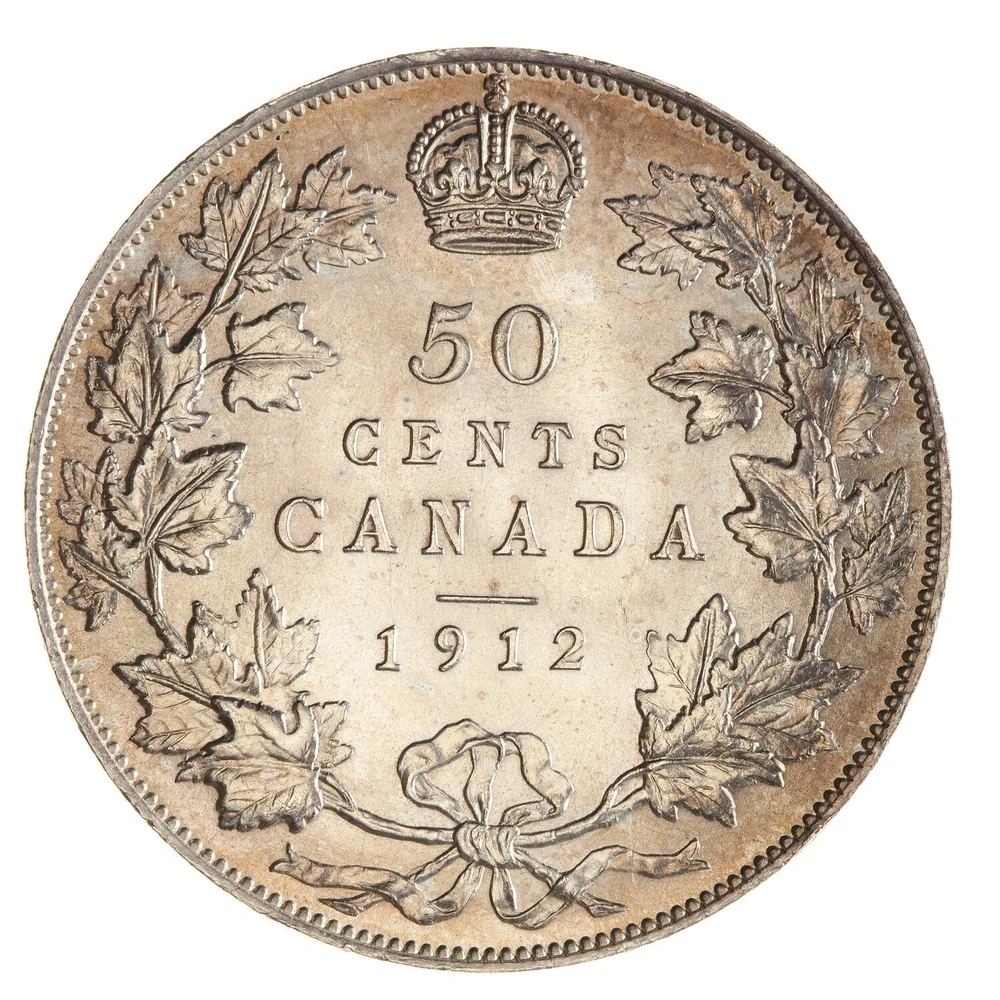
The reverse visibly reads 50 CENTS, CANADA and 1912. A crown appears above the denomination; maple branches surround the central lettering and meet at a ribbon below. Read 50 rather than inferring the denomination from a familiar wreath shared by smaller coins. The complete dated reverse, including its rim and leaf details, helps distinguish the illustrated Canadian half dollar from a dime, quarter, another jurisdiction’s coin or a later recreation.
The reviewed the reference series starts with Victoria in 1870, continues with Edward VII from 1902 and changes to George V in 1911. The first George V legend type and the modified legend from 1912 have separate catalog entries. The official Mint composition chronology ends the sterling standard in 1919 and identifies .800 silver from 1920–1967. Later nickel pieces begin in 1968. The coin’s continuing face value does not establish continuing silver composition.
Check CANADA, 50 CENTS, the date and the monarch together. Document a mint mark and the actual edge; the reference type has a reeded or milled edge. The reference and the issuer give 29.72 mm diameter, while the selected melt group gives 11.6638 g reference gross mass. Source mass differences are explicitly explained below. Newfoundland issues, bronze patterns and modern commemorative recreations are outside this identity. A resemblance to the 1912 photograph alone does not resolve those boundaries.
One matching coin contributes .3469 reference fine silver troy ounce. At quantity three, the calculation is 1.0407 reference ounce and 34.9914 nominal gross grams. Independently, 11.6638 g × .925 gives 10.789015 g nominal silver per coin. Converting that rounded mass product need not reproduce the reported ASW digit for digit. The library uses the owner-selected reference ASW basis consistently, without treating a museum object measurement, wear allowance or purchase bid as the nominal standard.
The source-backed issue list is 1870–1872, 1881, 1888, 1890, 1892, 1894, 1898–1914, 1916–1919. There are substantial gaps in Victoria’s period, and no 1915 half dollar appears in the reviewed issue table; the Mint records zero production for that year. The reference lists an 1870 LCW variety and the 1872 inverted-A-for-V legend variety. Its Edward VII table includes 1903H, and two reverse-leaf types occur in 1910: Victoria leaves in KM12 and Edwardian leaves in KM12a. George V’s 1911 KM19 and later KM25 legend types must be distinguished. These die, legend and finish descriptions do not automatically require another silver calculation.
Keep specimen, proof or unusual-variety attribution evidence with each coin instead of mixing it into an undifferentiated melt lot. The illustration is specifically catalogued by the museum as a specimen strike; it does not establish that an ordinary customer example is one. An unusual legend, mint mark or leaf form should be photographed clearly for qualified appraisal. Do not clean the surfaces to make the reference photograph look closer. Metal content, collector value and a real purchase offer answer different questions.
Capture complete obverse and reverse images, readable legends and the date. Record actual measured mass and diameter separately from the nominal reference, especially because source displays disagree here. Do not diagnose authenticity from a single weight, a royal portrait or the reported silver content. Keep plated, altered, mounted or unresolved pieces outside the counted lot until their identity and composition have been examined. Preserve packaging, grading labels and any specimen attribution supplied with a coin.
Sort sterling half dollars by verified identity before counting. Separate the later .800 silver family, nickel coins, other denominations and unresolved pieces. Send clear front and back photographs through the existing photo-appraisal form, and mention visible mint marks, unusual leaves and any specimen or proof documentation. The reference calculation is educational: no live dollar quote is configured, and the stated ASW does not bind a buyer to an offer or price an individual coin’s collector premium.
The owner-selected reference sterling half-dollar melt row controls 11.6638 g gross, .925 fineness and .3469 reference fine silver troy ounce. All five reviewed the reference dated-type tables instead display 11.6200 g and .3456 ounce. The Royal Canadian Mint gives 11.62 g for 1908–1919. This unresolved source discrepancy is not evidence of a verified weight transition within the sterling family; the specified melt-table priority governs the calculator. The museum measures its individual 1912 specimen at 11.643 g and 30 mm; those object observations do not replace the nominal reference. The reference and the issuer give 29.72 mm reference diameter. The .3469-ounce value is a reported reference amount rather than a customer assay. Actual issue years were extracted from five directly read the reference annual tables, with duplicate variety dates counted once. The issuer independently confirms the 1915 gap. Museums Victoria identifies the photographed 1912 specimen as NU12802; both image-specific captions credit Jennifer McNair and permit CC BY 4.0 reuse. Resized WebP derivatives preserve the genuine faces and attribution. The source object provides identification context without representing every monarch, mint or finish in this broad composition family.
The owner-selected reference melt table reports .3469 fine silver troy ounce per identified matching coin. Three total 1.0407 reference ounce. The conflicting .3456-ounce type-page figures are disclosed rather than silently substituted.
No. Confirmed dates are 1870–1872, 1881, 1888, 1890, 1892, 1894, 1898–1914, 1916–1919. Victoria’s period has numerous gaps, and 1915 is absent from the issue table and has zero production in the Mint record. A broad catalog envelope must not be read as annual production.
No. The official Mint chronology identifies the .800 silver standard from 1920. Use the matching later half-dollar profile after identifying the coin; the similar denomination and wreath do not establish .925 silver.
Content maintained by CashForCoins. Last substantive record update: 2026-10-11. Report a specification or attribution issue through our contact page.
Photo credits and rights on the linked coin profile.
Canada • 80.000% silver; balance copper
Issue years: 1920–1921, 1929, 1931–1932, 1934, 1936–1967
Fine silver: 0.300000 troy oz
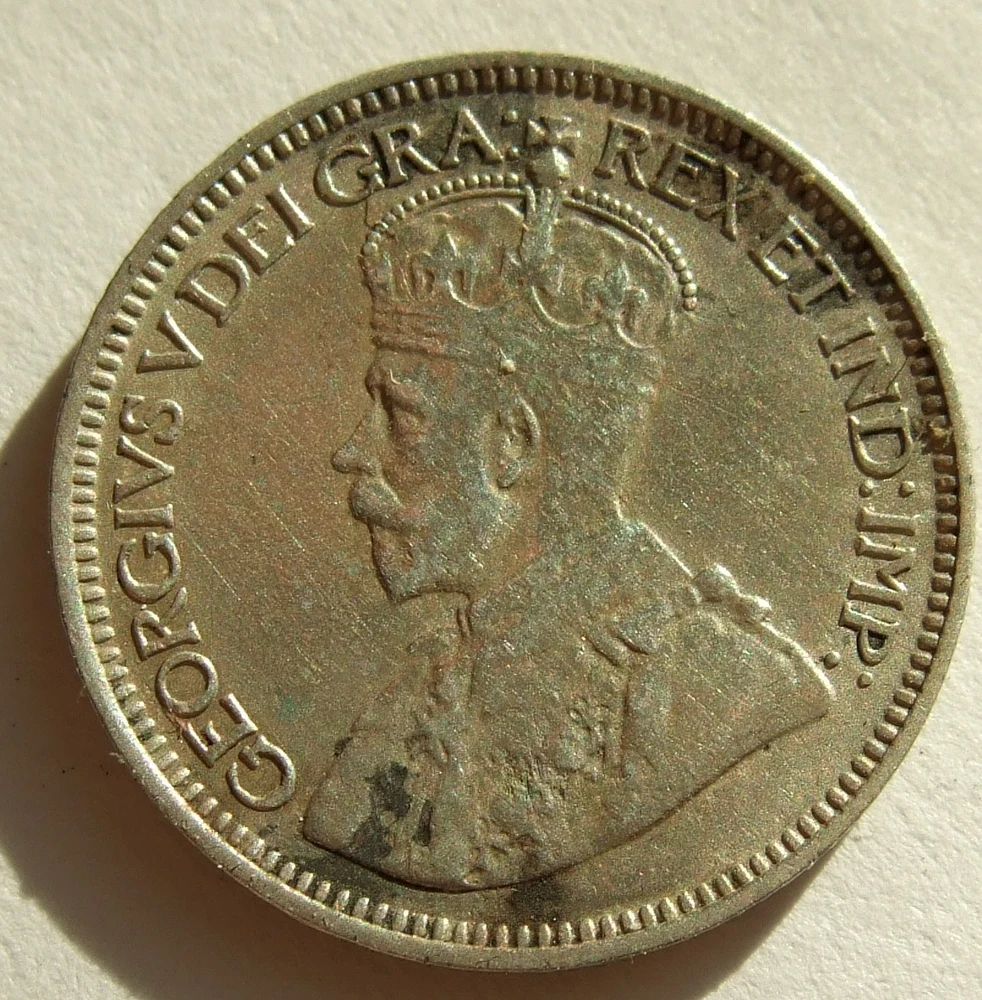
Photo credits and rights on the linked coin profile.
Canada • 92.5% silver; 7.5% copper
Issue years: 1858, 1870–1872, 1874–1875, 1880–1894, 1896, 1898–1919
Fine silver: 0.069100 troy oz
Photographs can help identify your coin. An appraisal may consider authenticity, condition and collector demand as well as metal content.
Request a photo appraisal View current silver coin buying information
