


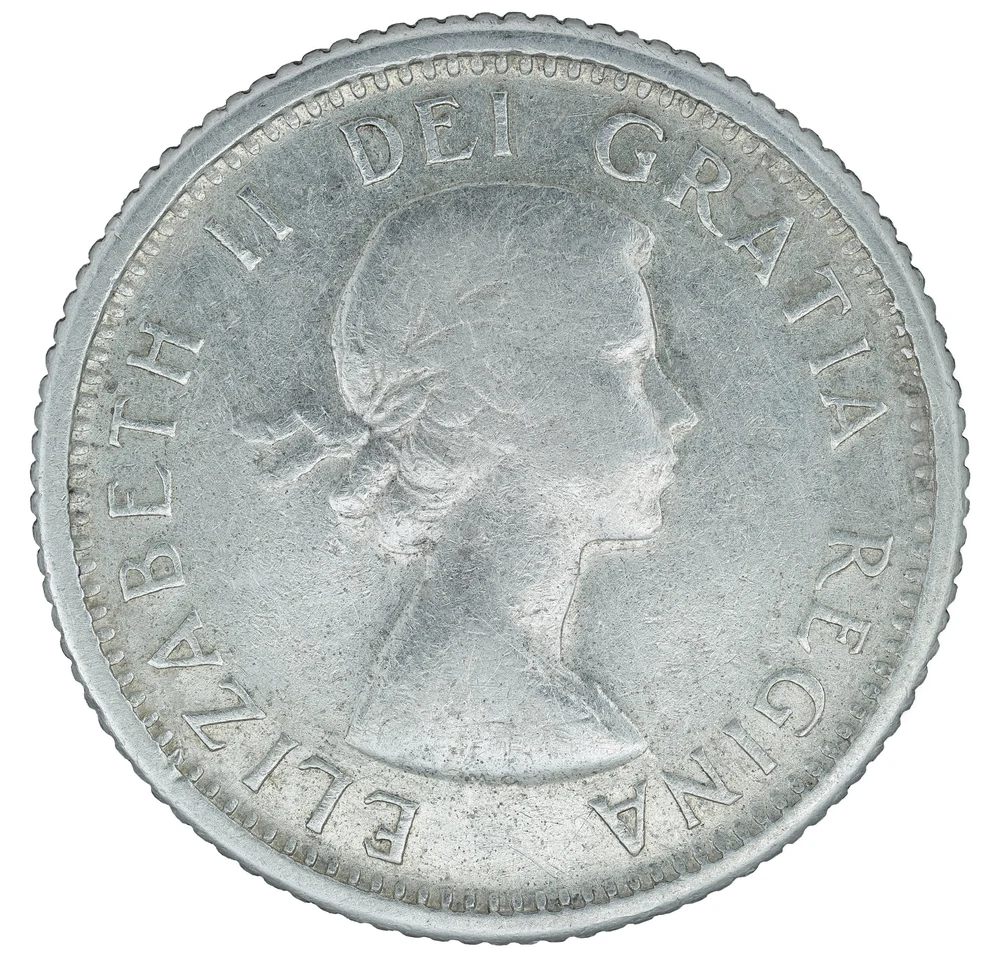
Canadian Dime — 80% Silver
Photo credits and rights on the linked coin profile.
Canada • 80.0% silver; balance copper
Issue years: 1920–1921, 1928–1967
Fine silver: 0.060001 troy oz
Canada • 10 Canadian cents
Canadian Dime — 92.5% Silver contains .0691 reference fine silver troy ounce per correctly identified coin under the owner-selected reference melt specification. Its confirmed issue dates are 1858, 1870–1872, 1874–1875, 1880–1894, 1896, 1898–1919. The photographs show a genuine 1917 George V ten-cent example. This sterling standard is separate from the later .800, .500 and non-silver dime compositions.
When a fresh spot bid is available, melt values use fine-metal content × spot bid. CashForCoins guide buying offers use the separately configured percentage for each metal. Selected rare/numismatic coins require an appraisal. Dollar amounts remain unavailable when a fresh quote or buying percentage is missing.
These are confirmed regular issue dates across the Victoria, Edward VII and George V types. The annual tables do not list 1859–1869, 1873, 1876–1879, 1895 or 1897 as regular issues. Overdates, leaf varieties and mint combinations need separate attribution; later commemorative recreations and Newfoundland coins are excluded.
Formula: specified fine-metal troy ounces × quantity. Dollar melt value additionally requires an approved current metal price.
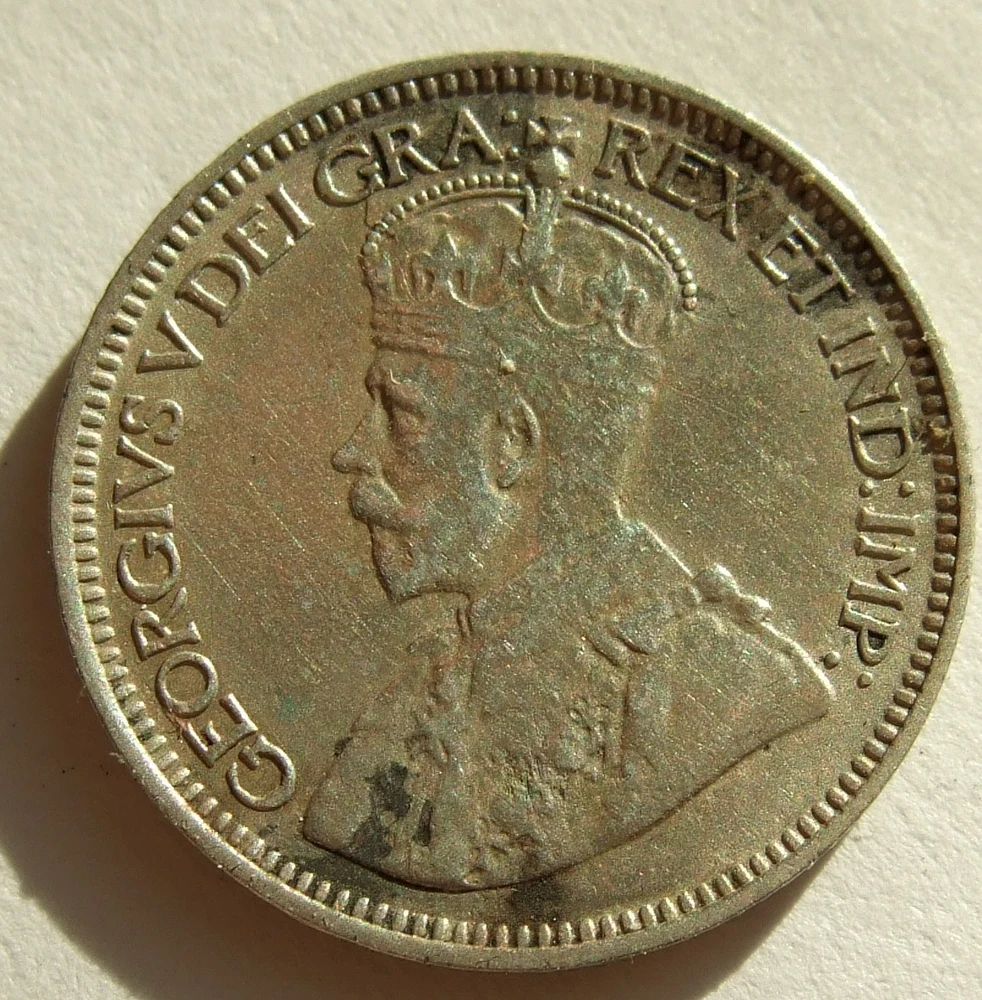
The reference obverse shows the crowned and robed bust of George V facing left. The surrounding lettering includes GEORGIVS V, DEI GRA and the royal titles. Preserve the complete portrait and rim inscription in an identification photograph. Victoria and Edward VII portraits also occur within the older sterling-dime family; the 1917 illustration does not represent all monarchs or legend varieties.
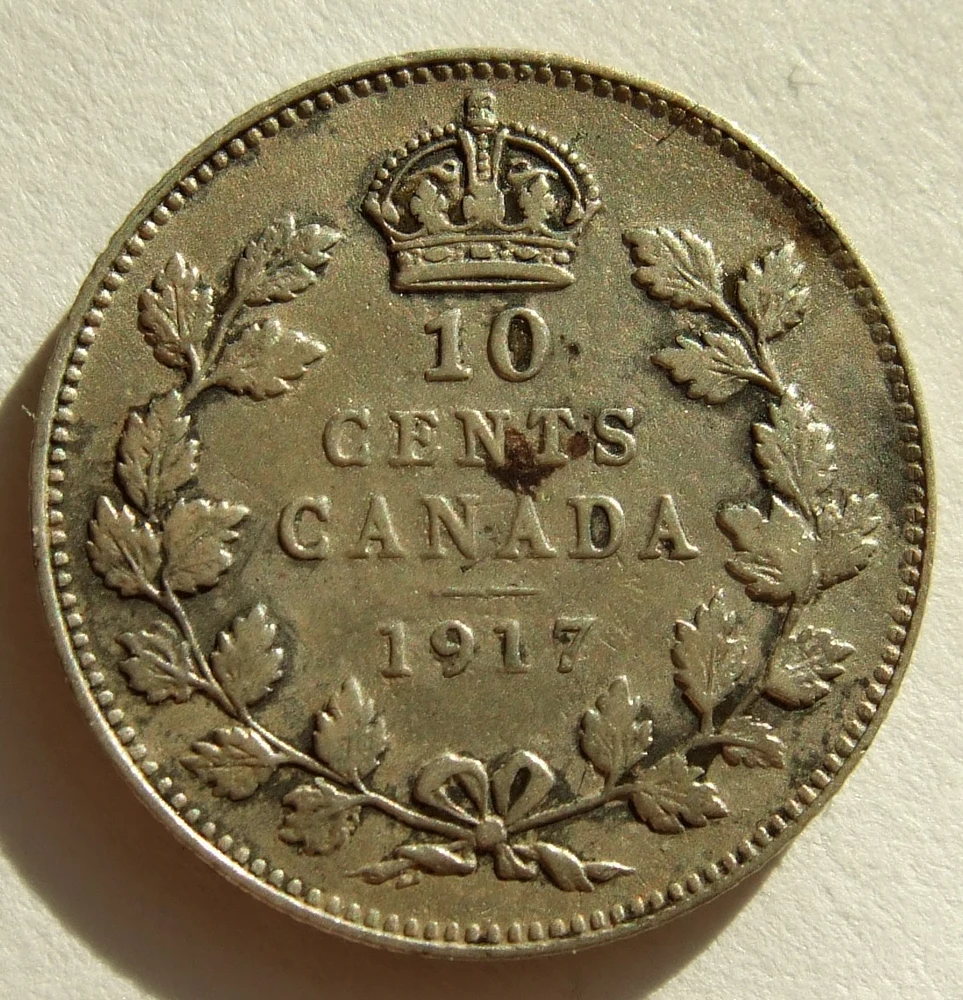
A crown stands above 10 CENTS, CANADA and 1917 inside crossed maple boughs. Read the denomination and the full date rather than inferring either from apparent screen size. This is the earlier wreath/bough design; the Mint dates the later Bluenose reverse to 1937. Wreath elements also appear on quarters and half dollars, which have different metal quantities.
The reference date tables place the Victoria ten-cent type at 1858–1901, Edward VII at 1902–1910, the first George V type in 1911 and the subsequent George V type at 1912–1919. These endpoints describe types, not uninterrupted annual issues. The Mint’s technical chronology changes the circulation dime from .925 to .800 in 1920. Later .500 transition coins and non-silver dimes must follow their own identification paths.
Confirm 10 CENTS and CANADA, then record the actual portrait, date and any H mint mark. The reference’s .925 melt standard uses 2.3239 g gross and .0691 reference fine silver troy ounce. For the 1908–1919 technical period, the issuer documents an 18.034 mm nominal diameter. Earlier the reference types display 18.03 mm; two George V type records display conflicting dimensions, as explained in the methodology. Do not interpret a single disputed diameter field as authentication, and do not include Newfoundland coins, later commemorative recreations or other denominations in this record.
Three matching sterling dimes total .2073 reference fine silver troy ounce and 6.9717 g nominal gross mass using the selected reference figures. The separate mass product, 2.3239 g × .925, gives 2.1496075 g nominal silver per coin; conversion from that rounded product differs slightly from reported ASW. The calculator uses .0691 ounce as its reported fine-weight basis. This is an identified standard, not a measurement of wear, a customer assay or a promised sale price.
Confirmed regular issue dates are 1858, 1870–1872, 1874–1875, 1880–1894, 1896, 1898–1919. The reviewed annual tables do not list 1859–1869, 1873, 1876–1879, 1895 or 1897 as regular issues in this family. The reference separately lists 1858/5 and 1892/1 overdates, narrow/wide 1870 zeros, H-marked issues, 1891 leaf-count differences, different 1893 numeral styles, different 1899 nines and leaf varieties for 1909 and 1913. Record the actual variety without turning every subtype into another metal amount. These dates combine mints and types; patterns and later commemorative recreations are outside the scope.
Retain date, mint detail, leaf and numeral observations, surface condition and any holder records for appraisal. An unusual variety or scarce dated issue may need examination beyond the nominal silver amount. The illustrated specimen has visible wear and surface detail; its appearance supplies identification context without assigning a grade to another coin. Do not clean or polish a coin to make its lettering resemble a reference photograph.
Photograph both faces, the complete rim and any visible mint mark without scratching, cleaning or removing a coin from a grading holder. Compare the exact design, denomination and date, and keep scale/caliper observations with the specimen. A plausible weight or portrait resemblance is insufficient to establish authenticity. Leave mounted, plated, altered or uncertain coins outside the counted lot until their identity and composition can be assessed.
Separate confirmed .925 dimes from the .800 dime family and from ambiguous 1967 or 1968 transition pieces. Keep unusual early dates and varieties individually documented rather than mixing them into an unidentified bag. Supply readable face and rim photographs and a matching quantity through the existing appraisal form. The educational silver total does not create a binding offer or value a collector variety by itself.
The reference’s Canadian .925 dime melt row controls 2.3239 g gross, .925 fineness and .0691 fine silver troy ounce. The matching dated type pages round gross mass to 2.3240 g; the issuer displays 2.32 or 2.33 g. Those rounded mass displays do not replace the selected reference inputs. The Mint documents 18.034 mm nominal diameter for its 1908–1919 technical period. The reference type diameter displays conflict: 18.03 mm for KM3/KM10, 17.8 mm for KM23 and 23.5 mm for KM17. The issuer’s stated diameter is labelled by its period; a face photograph does not resolve these discrepancies. The exact annual date tables were read separately from their series envelopes. The two authentic 1917 photographs have independently documented photographer CC BY-SA 2.0 licenses; their resized WebP derivatives retain attribution and the same license. The specimen date does not prove the appearance of all issues, and a reference photograph does not authenticate another coin. No approved live market-price provider is configured, so dollar melt estimates remain unavailable.
The reference’s .925 dime melt row reports .0691 fine silver troy ounce, so three matching coins total .2073 ounce. Its separately reported gross mass is 2.3239 g; the rounded mass product and reported ASW are distinguished in the methodology.
No. The confirmed issue list is 1858, 1870–1872, 1874–1875, 1880–1894, 1896, 1898–1919. A broad 1858–1919 range hides several gaps and does not establish every mint-year combination.
No. The sterling circulation period ends in 1919. A 1967 dime can have .800 or .500 silver and requires composition-specific attribution; neither alloy belongs in this .925 calculation.
Content maintained by CashForCoins. Last substantive record update: 2026-10-11. Report a specification or attribution issue through our contact page.
Photo credits and rights on the linked coin profile.
Canada • 80.0% silver; balance copper
Issue years: 1920–1921, 1928–1967
Fine silver: 0.060001 troy oz
Photographs can help identify your coin. An appraisal may consider authenticity, condition and collector demand as well as metal content.
Request a photo appraisal View current silver coin buying information
