

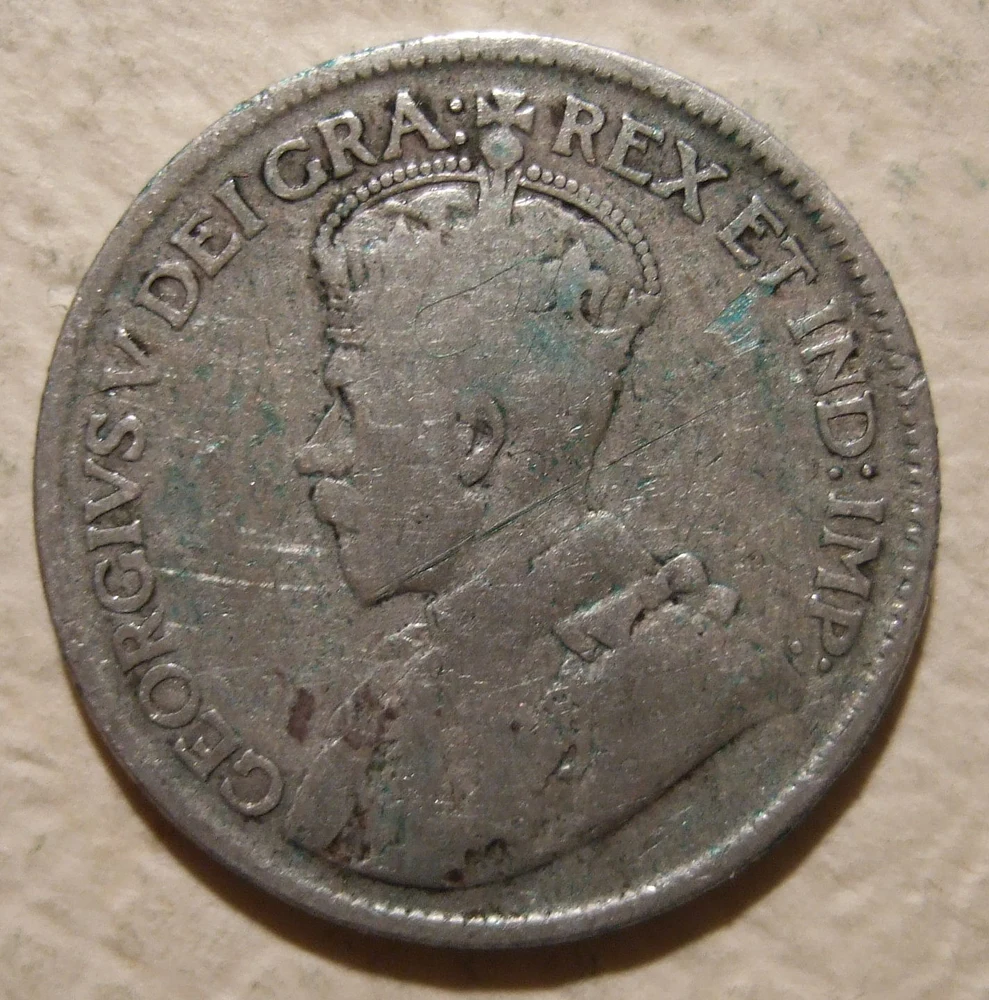
Canadian Quarter — 80% Silver
Photo credits and rights on the linked coin profile.
Canada • 80.0% silver; balance copper
Issue years: 1920–1921, 1927–1967
Fine silver: 0.150000 troy oz
Canada • 10 Canadian cents
Canadian Dime — 80% Silver contains nominally 1.86624 g fine silver, approximately 0.060001 troy oz, from 2.3328 g gross mass and 80.0% silver. This entry covers the .800 silver composition, including only confirmed .800 examples in the 1967 transition. The illustrated 1955 coin is outside that ambiguous transition.
When a fresh spot bid is available, melt values use fine-metal content × spot bid. CashForCoins guide buying offers use the separately configured percentage for each metal. Selected rare/numismatic coins require an appraisal. Dollar amounts remain unavailable when a fresh quote or buying percentage is missing.
The Mint reports no dime production in 1922–1927. In 1967, .800 and .500 silver dimes coexist; date alone does not establish the alloy.
Formula: gross grams × fineness ÷ 31.1034768 × quantity. Dollar melt value additionally requires an approved current metal price.
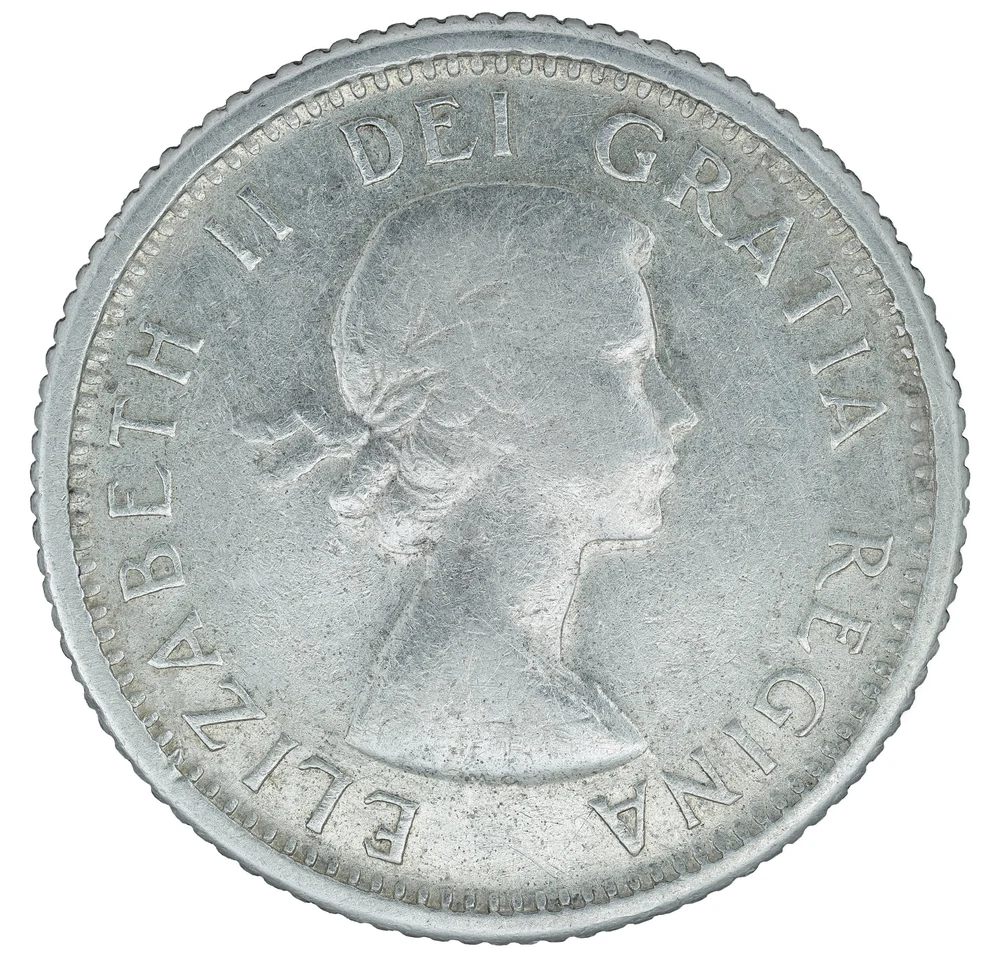
The 1955 specimen shows Elizabeth II facing right, with the monarch’s name and title around the rim. Earlier coins in the same composition family have different monarchs. A head portrait identifies neither the denomination nor the later transition alloy by itself.
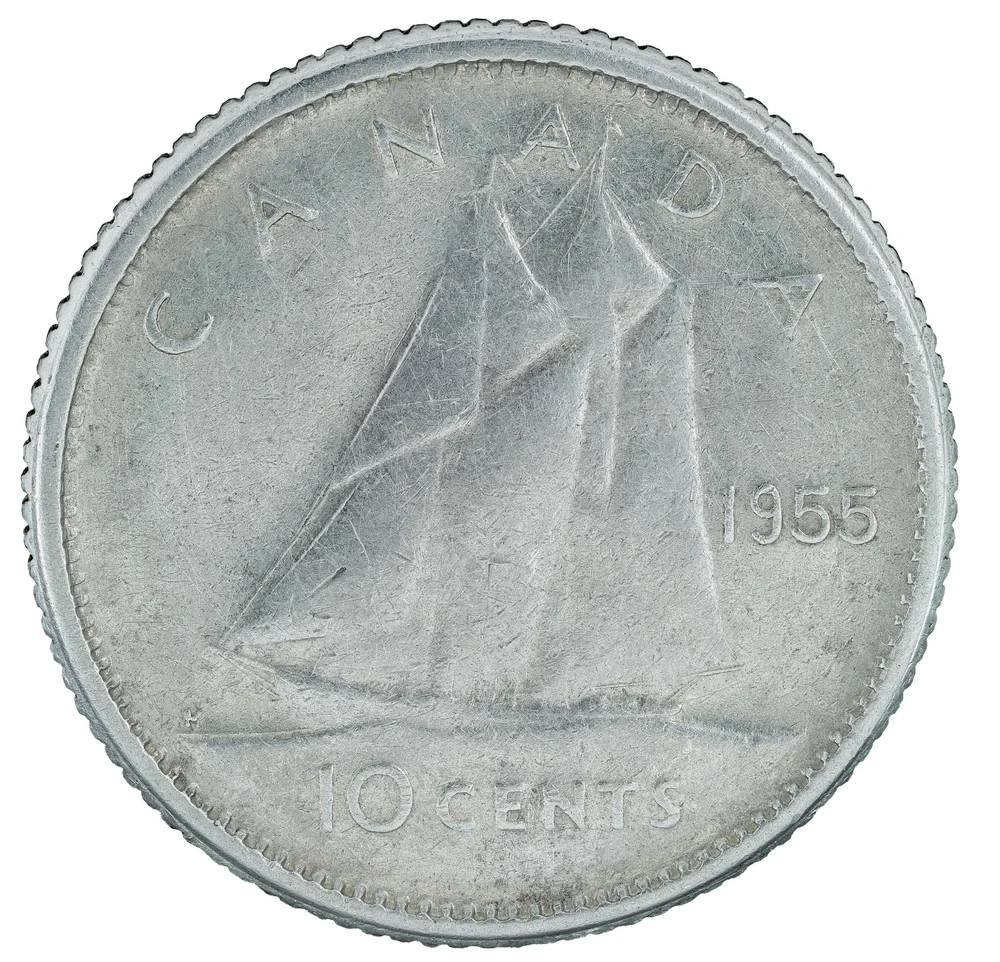
The Bluenose schooner is under sail, with CANADA, the date 1955 and 10 CENTS visible. Read TEN CENTS or 10 CENTS rather than estimating size from a screen. The schooner design also persists into later nonsilver production, so it cannot substitute for a date and composition check.
The Mint dates the Bluenose reverse to 1937; earlier dimes use crossed maple boughs. Its technical table lists eighty-percent silver in the historical period, while the reference separately identifies the fifty-percent 1967–1968 transition. This guide keeps those compositions distinct despite similar faces.
Confirm ten cents, date and the .800 silver issue before using 2.3328 g nominal mass. The Mint’s 2.33 g display rounds the longer the reference weight. The nominal diameter is 18.034 mm. Record actual measurements separately and obtain a composition assessment for an uncertain transition coin.
Multiply 2.3328 g by 0.8 to obtain 1.86624 g nominal silver, then divide by 31.1034768 g per troy ounce. Three correctly identified standard-weight coins contain approximately 0.180003 troy oz. These are decimal calculations from the cited specification, not an assay, customer weighing result, collector price or payment commitment. The remaining alloy is not additional silver.
The 1967 centennial reverse uses a mackerel rather than Bluenose. The reference’s .800 and .500 rows overlap in 1967; the face year alone cannot decide the alloy. Earlier pre-1920 sterling dimes and later nickel issues belong outside this calculator identity.
Maintain date and design distinctions when sorting a lot. Keep a 1967 coin with uncertain composition unassigned until identified rather than selecting the larger silver amount. A normal pre-transition reference photograph provides useful design context but is not chemical evidence for another specimen.
Keep measurements, denomination, date, both face designs and original packaging together. A familiar portrait or silver color cannot certify a composition. Use a suitable scale and caliper without scratching, cleaning or removing a coin from a grading holder. Preserve photographs and provenance for individual examination when attribution or authenticity is uncertain. These reference images do not grade or authenticate a customer coin.
Sort this identified type separately from adjacent alloys and denominations. Record the quantity, readable dates and mint details, and supply both-side photographs for unusual or uncertain examples. Request an appraisal of the actual lot using the existing quote form; its prefilled coin context assists identification. Keep the nominal metal total separate from a collector assessment and any accepted offer.
The reference’s .800 dime row gives 2.3328 g; the Mint rounds this to 2.33 g. The nominal .800 calculation applies to confirmed composition, especially in 1967; it does not silently classify overlapping transition issues. The reference is the owner-selected specification authority when references disagree. Rounded ASW displays are compared with the calculation rather than converted into extra precision. Photographic identity and photographer reuse rights are reviewed independently. No approved live feed is configured, so dollar melt values remain unavailable. Publication and modification dates document actual review, not an artificial freshness claim.
At the reference’s nominal 2.3328 g and .800 fineness, it contains 1.86624 g fine silver, approximately .060001 troy oz.
No. The reference lists overlapping eighty- and fifty-percent transition entries. Establish the actual alloy rather than assuming it from the year.
The owner selected reference as the deciding weight reference. Its longer nominal value rounds to the issuer’s display; this is a precision disclosure, not a measured specimen weight.
Content maintained by CashForCoins. Last substantive record update: 2026-10-10. Report a specification or attribution issue through our contact page.
Photo credits and rights on the linked coin profile.
Canada • 80.0% silver; balance copper
Issue years: 1920–1921, 1927–1967
Fine silver: 0.150000 troy oz
Photographs can help identify your coin. An appraisal may consider authenticity, condition and collector demand as well as metal content.
Request a photo appraisal View current silver coin buying information
