
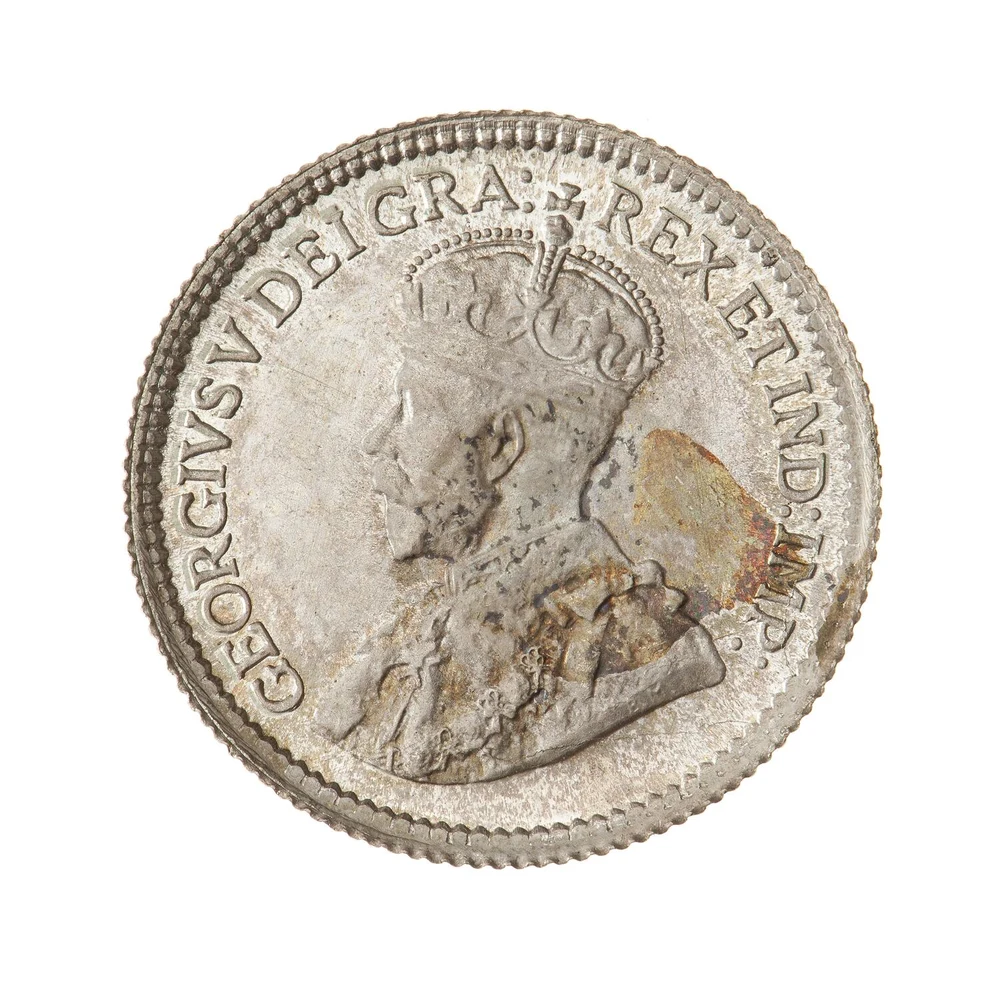
Canadian Silver Five Cents — 80% Silver
Photo credits and rights on the linked coin profile.
Canada • 80% silver; 20% copper
Issue years: 1920–1921
Fine silver: 0.030000 troy oz
Canada • 5 Canadian cents
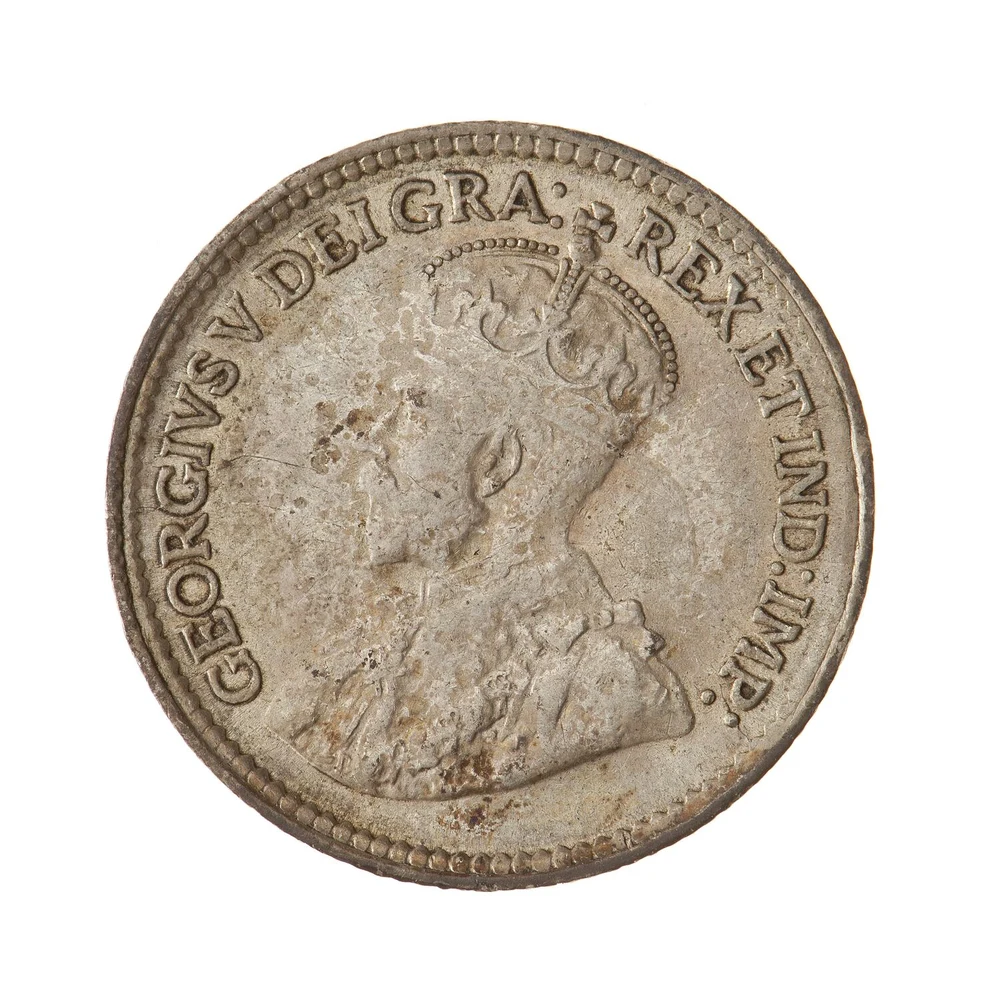
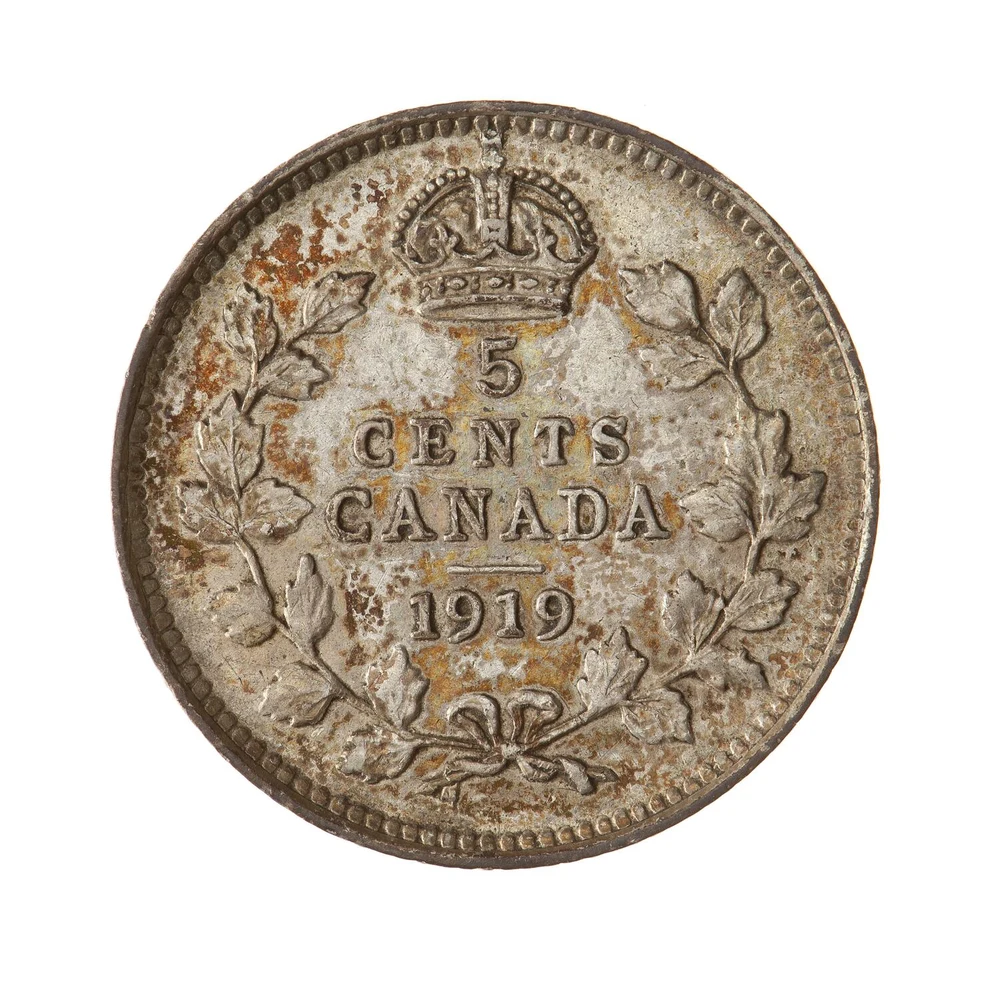
Canadian sterling silver five cents contain .0346 reference fine silver troy ounce per identified coin under the selected reference melt standard. Confirmed issue years are 1858, 1870–1872, 1874–1875, 1880–1894, 1896–1919. Three matching coins contain .1038 reference ounce. Both genuine photographs show a 1919 George V specimen from Museums Victoria. This .925 composition group is distinct from the .800 five cents of 1920–1921 and the larger nickel coins introduced in 1922.
When a fresh spot bid is available, melt values use fine-metal content × spot bid. CashForCoins guide buying offers use the separately configured percentage for each metal. Selected rare/numismatic coins require an appraisal. Dollar amounts remain unavailable when a fresh quote or buying percentage is missing.
Confirmed issue dates across Victoria, Edward VII and George V. The annual tables do not list 1859–1869, 1873, 1876–1879 or 1895 as regular issues. Five cents includes 1897, unlike the sterling dime. Mint combinations, die varieties and proof descriptions need separate attribution; Newfoundland coins, patterns and later recreations are excluded.
Formula: specified fine-metal troy ounces × quantity. Dollar melt value additionally requires an approved current metal price.
The 1919 obverse has a crowned and draped George V portrait facing left. GEORGIVS V DEI GRA REX ET IND IMP runs around the rim. The museum records the portrait artist’s B.M. initials on the bust truncation; readable initials help document a specimen but do not authenticate it. Earlier Victoria and Edward VII five-cent designs use different portraits. The separate 1911 George V type omits DEI GRA, so the illustrated 1919 legend must not be imposed on that issue.
The illustrated reverse reads 5 CENTS, CANADA and 1919 beneath a crown, within crossed maple boughs tied with a bow. The denomination is the numeral 5, even though the wreath layout resembles contemporary dimes and larger silver denominations. Read the whole date and preserve the complete rim in a photograph. Leaf counts, numeral shapes and other die details vary across earlier types; a 1919 reference image cannot establish all those varieties.
This small five-cent family begins with the 1858 Victoria issue in the reference table and includes later Victoria, Edward VII and George V types. Annual issues are interrupted in the earlier period. The Mint’s technical chronology puts .925 silver through 1919, .800 silver in 1920–1921 and the redesigned larger nickel standard from 1922. The denomination continued while its metal and physical standards changed. The beaver reverse belongs to the later circulation design introduced in 1937.
Start with CANADA, the 5 CENTS denomination, the actual date and the portrait. Record any H mint mark, leaf arrangement, unusual numeral or missing legend words without assigning a die variety prematurely. The selected melt-table standard is 1.162 g nominal gross mass and .925 fineness. Reviewed later sterling type pages show 15.5 mm diameter; conflicting the reference weight and issuer dimension displays are explained below. Newfoundland five cents, reproductions and later commemorative recreations have their own identity boundaries and are excluded.
The reported ASW basis is .0346 fine silver troy ounce per coin. At quantity three, the library calculates .1038 reference ounce and 3.486 nominal gross grams. Separately, 1.162 g × .925 gives 1.07485 g nominal silver per coin; conversion from that rounded mass product differs slightly from the reported ASW. The calculator uses the selected reference fine-weight reference. It does not measure wear, surface deposits or a customer assay, and it does not combine the later .800 standard with sterling coins.
The exact issue list is 1858, 1870–1872, 1874–1875, 1880–1894, 1896–1919. The reference annual tables do not list 1859–1869, 1873, 1876–1879 or 1895 as regular issues in this group. The five-cent list includes 1897; a missing year from another denomination must not be copied here. Documented Victoria varieties include the 1858 large-date-over-small-date issue, 1870 flat/wire rims, 1874 crosslet/plain 4, 1875 date sizes, 1885 numeral-5 forms, 1886 numeral-6 forms and 1900 oval/round zeros. Edward VII includes H-marked issues and pointed/round leaf types in 1909 and 1910. George V’s 1911 legend type is separate from 1912–1919. Collector varieties and proof descriptions do not automatically establish another metal standard.
Document an overdate, mint mark, distinctive rim, leaf shape or numeral before treating a mixed group solely as scrap silver. A complete issue-year list does not identify every mint/variety combination or price its collector premium. The source museum piece shows visible wear and surface toning; those observations describe the illustration, not a grade for a customer’s coin. Keep holder information, provenance and related photographs together for appraisal. Cleaning can remove useful surface evidence.
Photograph the complete front and back and record the date exactly, including uncertain digits. Keep measured mass, diameter and edge observations separate from nominal reference fields, particularly where published specifications conflict. A familiar royal portrait, a plausible scale reading or a matching wreath is insufficient to establish authenticity. Keep altered, plated, mounted or unresolved specimens outside the counted sterling lot until qualified examination identifies the coin and its composition.
Separate these sterling five cents from the visually similar .800 five cents dated 1920 and 1921, the larger nickel denomination and silver coins of other face values. Count only identified matching specimens. Individually document unusual dates, legends and varieties, and send readable face photographs through the existing photo-appraisal form. The educational .0346-ounce reference does not create a purchase offer or replace assessment of condition and collector demand. Keep original packaging and any grading labels with the coin.
The owner-selected reference sterling five-cent melt row controls 1.162 g gross, .925 fineness and .0346 reference fine silver troy ounce. The reference KM2, KM9, KM13 and KM16 agree with those amounts. Its KM22 type page instead displays 1.130 g and .0336 ounce for 1912–1919. That unresolved display is disclosed, not interpreted as a verified historical alloy or weight transition; the specified melt-table priority governs this calculator. The issuer rounds its 1908–1919 gross mass to 1.167 g. The photographed museum object measures 1.159 g and 15 mm; object observations do not replace nominal inputs. Reviewed Edward VII and George V type entries give 15.5 mm diameter, while the Mint technical table gives 14.494 mm and its design text describes approximately 15.5 mm. The reference’s type diameter is used with the discrepancy explicitly disclosed. The issue list combines five directly read the reference annual tables rather than inferring yearly production from endpoints. Museums Victoria identifies the photographed 1919 working strike as NU7609; both face captions separately permit CC BY 4.0 reuse and credit Justine Philip. Resized WebP derivatives preserve the coin design and license attribution. The illustration supplies dated identification context without a claim that it depicts every earlier monarch, mint or finish. No approved live-price feed is configured, so dollar melt estimates remain unavailable.
The selected reference melt row reports .0346 fine silver troy ounce per identified sterling five cents. Three matching coins total .1038 reference ounce and 3.486 nominal gross grams. Conflicting type-page figures and issuer rounding are disclosed in the methodology.
No. The confirmed list is 1858, 1870–1872, 1874–1875, 1880–1894, 1896–1919. In particular, 1897 is included for five cents even though the sterling dime list has a gap that year. Annual chronology must be checked for the actual denomination.
No. The Mint’s technical chronology and the reference distinguish .800 silver in 1920–1921 from the earlier .925 standard. Use the separate .800 five-cent record for an identified matching coin; nickel pieces from 1922 require another composition path.
Content maintained by CashForCoins. Last substantive record update: 2026-10-11. Report a specification or attribution issue through our contact page.
Photo credits and rights on the linked coin profile.
Canada • 80% silver; 20% copper
Issue years: 1920–1921
Fine silver: 0.030000 troy oz
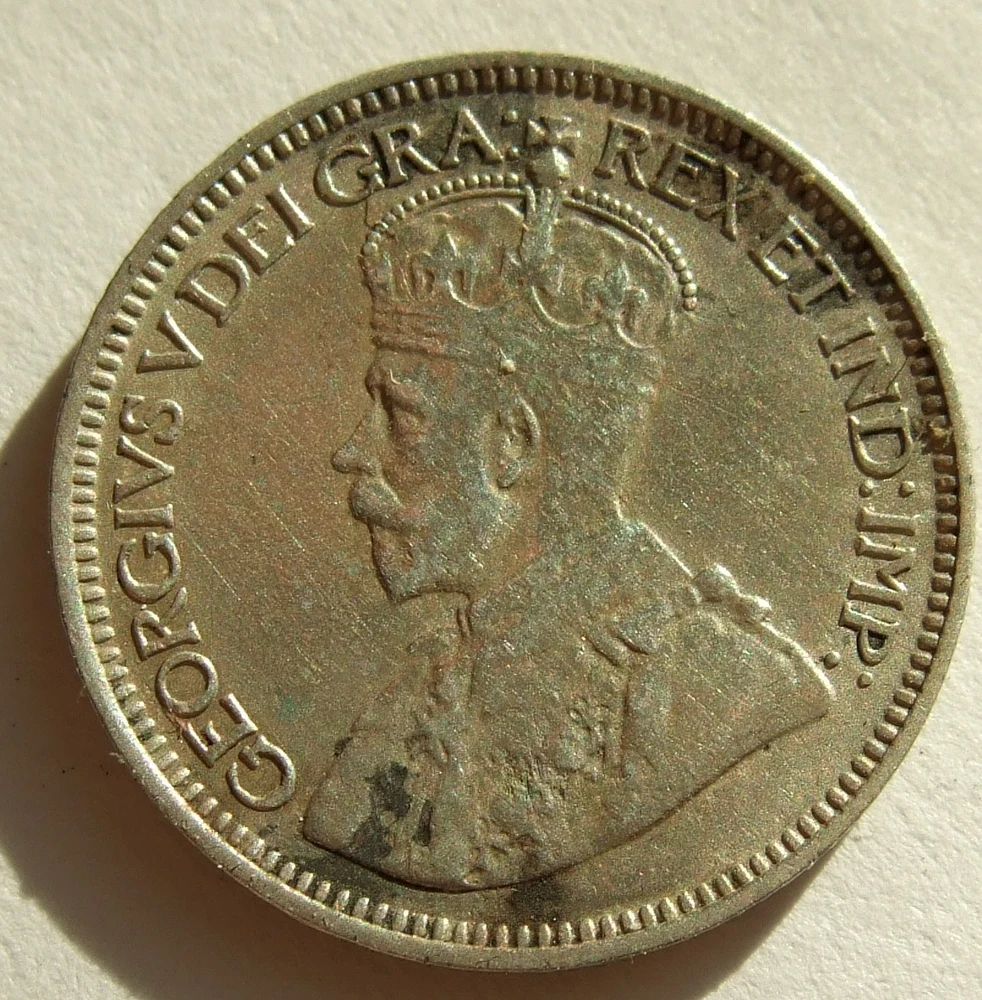
Photo credits and rights on the linked coin profile.
Canada • 92.5% silver; 7.5% copper
Issue years: 1858, 1870–1872, 1874–1875, 1880–1894, 1896, 1898–1919
Fine silver: 0.069100 troy oz
Photographs can help identify your coin. An appraisal may consider authenticity, condition and collector demand as well as metal content.
Request a photo appraisal View current silver coin buying information
