
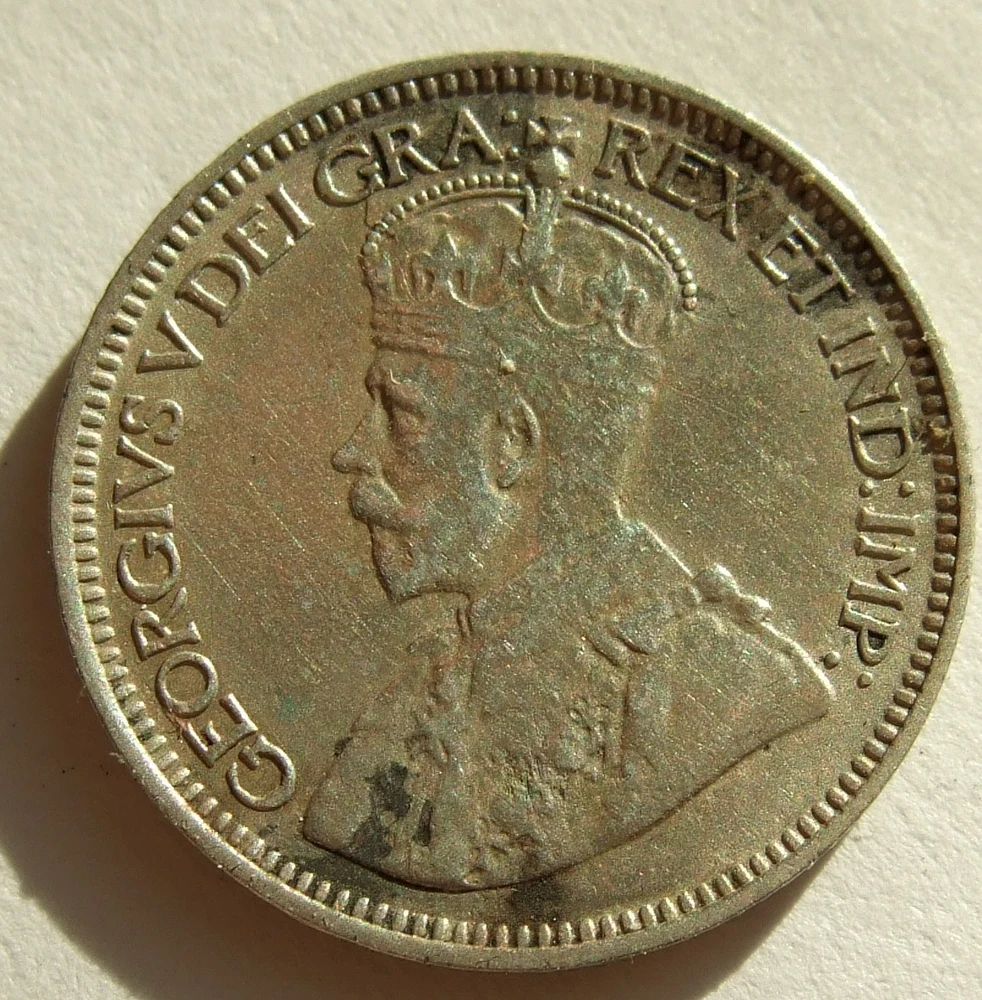
Canadian Dime — 92.5% Silver
Photo credits and rights on the linked coin profile.
Canada • 92.5% silver; 7.5% copper
Issue years: 1858, 1870–1872, 1874–1875, 1880–1894, 1896, 1898–1919
Fine silver: 0.069100 troy oz
Canada • 5 Canadian cents
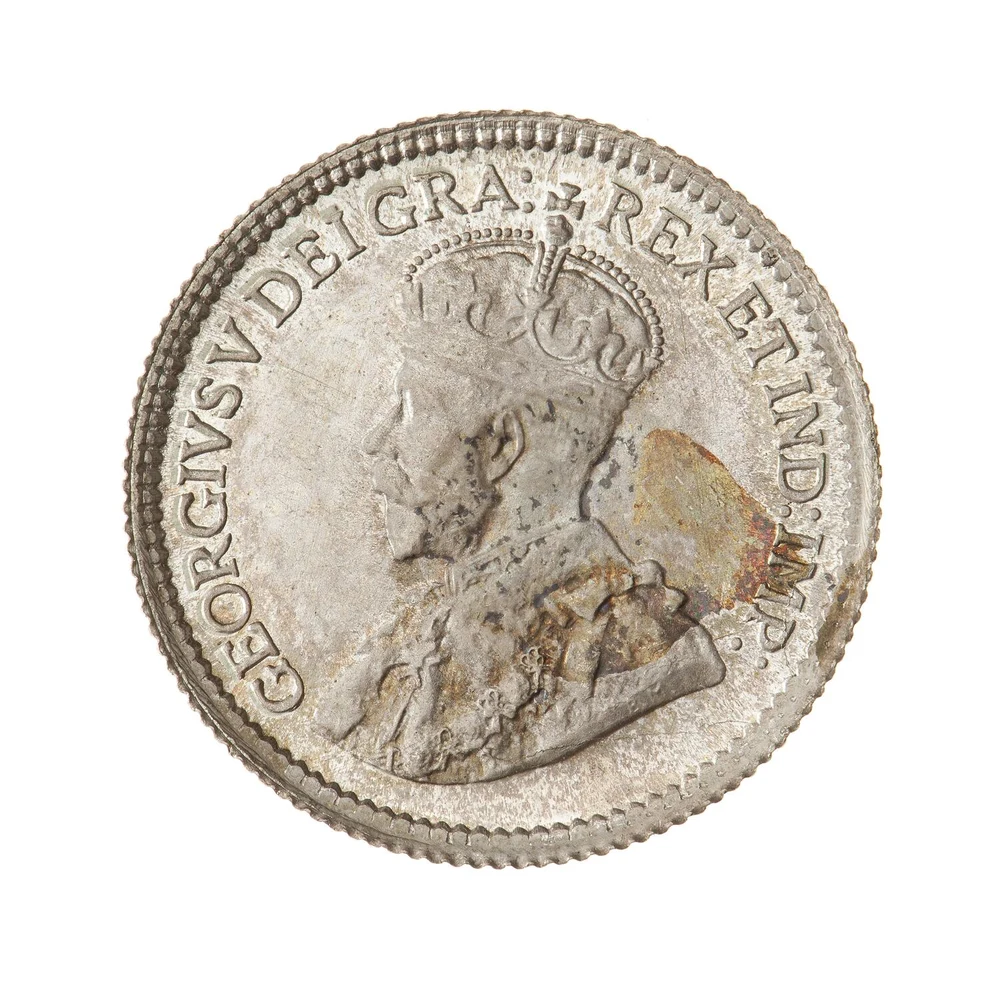
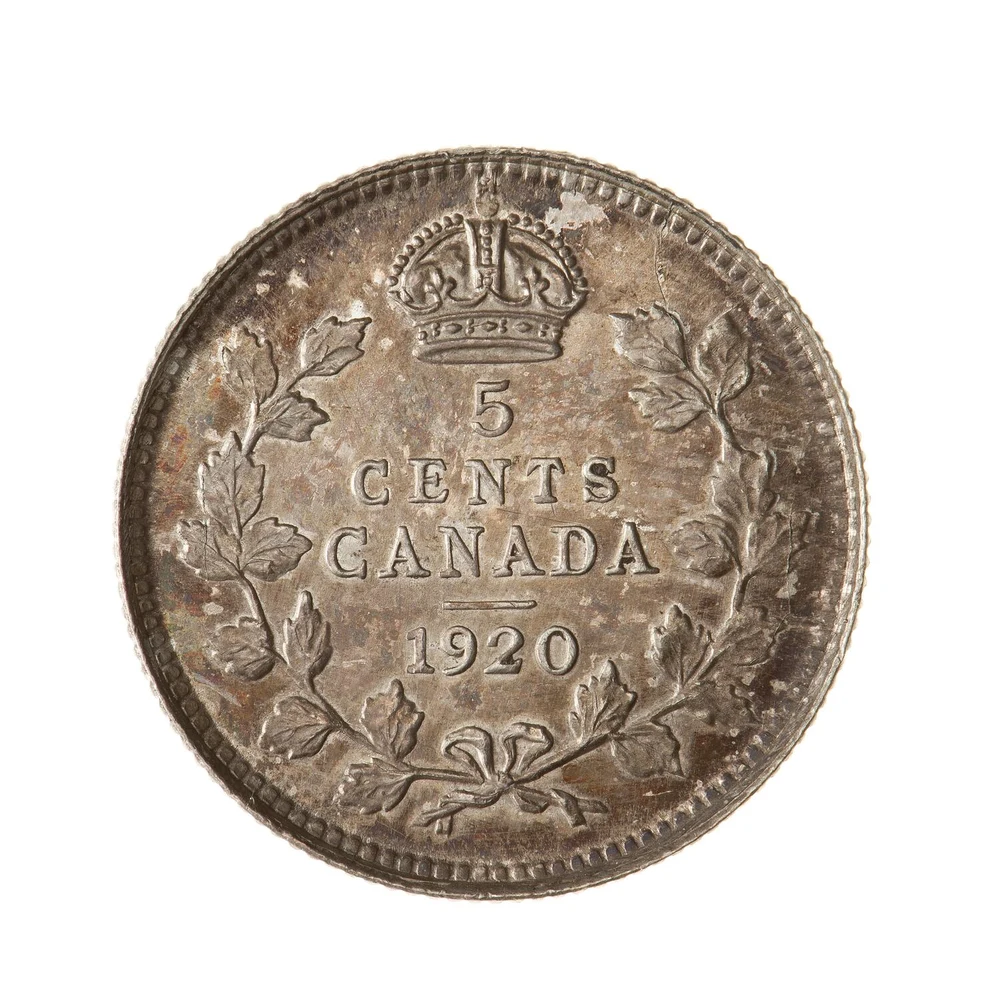
The Canadian .800 silver five-cent coin was issued in 1920 and 1921. The reference reports .0300 fine silver troy ounce in a matching coin, so three contain .0900 reference ounce. The photographs show a genuine 1920 museum specimen with George V on the front and 5 CENTS, CANADA and 1920 on the back. Earlier sterling five cents and the larger nickel coin introduced in 1922 have different composition standards.
When a fresh spot bid is available, melt values use fine-metal content × spot bid. CashForCoins guide buying offers use the separately configured percentage for each metal. Selected rare/numismatic coins require an appraisal. Dollar amounts remain unavailable when a fresh quote or buying percentage is missing.
Both dates are confirmed by the reference annual type table and the Mint’s mintage list. Extensive remelting does not erase the 1921 dated issue. Earlier .925 five cents and larger nickel coins from 1922 are separate composition identities.
Formula: specified fine-metal troy ounces × quantity. Dollar melt value additionally requires an approved current metal price.
The crowned and draped portrait of George V faces left. Around the rim, GEORGIVS V DEI GRA REX ET IND IMP identifies the king and his titles. The museum attributes this portrait to Bertram Mackennal and records B.M. at the bust truncation. Preserve a clear photograph of the portrait and legend; neither a matching portrait nor a legible artist mark authenticates another specimen.
The reverse has a crown above 5 CENTS, CANADA and the four-digit date, enclosed by crossed maple boughs. A bow joins the boughs below the date. The illustrated reverse reads 1920. Read the numeral 5 directly: similar bough-and-crown arrangements occur on other Canadian denominations, with substantially different fine-metal amounts. The beaver design belongs to a later five-cent period.
The Royal Canadian Mint documents the small crossed-bough design through 1921 and a larger redesigned five-cent coin from 1922. Its technical chronology separates the .925 silver period ending in 1919 from .800 silver in 1920–1921. The reference’s KM22a table confirms both final silver dates, including 1921 despite the extensive remelting noted in that record. The two-year composition group should not be extended to later coins because their face value is unchanged.
Confirm CANADA, 5 CENTS, the George V portrait and an actual 1920 or 1921 date. Use the reference’s nominal 1.1664 g gross and .800 fineness for an identified matching coin. Its type reference lists 15.48 mm diameter; conflicting issuer displays and museum specimen observations are explained in the methodology. Record condition, edge and measured dimensions independently. A later larger nickel or plated coin must not enter this silver calculation.
The selected reference amount is .0300 fine silver troy ounce per coin. At quantity three, the calculator gives .09 fine silver troy ounce and 3.4992 nominal gross grams. The separate gross-mass product, 1.1664 g × .800, is .93312 g nominal silver per coin; converting that rounded product differs slightly from the reference’s rounded .0300-ounce ASW. The calculator follows the reported fine-weight basis and does not measure wear, contamination or a customer’s assay.
Both 1920 and 1921 are confirmed dated issues in the reference annual table and the Mint’s mintage list. A 1921 date is not a missing-year gap simply because many coins were remelted. Keep a possible 1921 coin individually documented for specialist examination rather than valuing it only for silver. The 1920 photographs do not establish the authenticity, grade or die attribution of a 1921 piece. Earlier .925 five cents, later nickel issues and commemorative recreations require separately researched identities.
Melt content is a composition calculation; it does not price a date, variety or collector-quality specimen. The reference describes substantial remelting of the 1921 issue, so a readable 1921 candidate merits individual appraisal and authentication. Keep provenance and any holder information alongside its photographs. The source museum specimen is visibly worn; that illustration is not a grading result for a customer’s coin. Cleaning or polishing can remove useful surface evidence.
Photograph both complete faces, the rim and any readable small details without scratching or removing a coin from a grading holder. Record the date exactly, including uncertain digits, and retain measurements without treating a nominal-weight match as proof. Distinguish an identified historical coin from a plated piece, altered date or modern reproduction. Keep unresolved coins outside the calculated lot until qualified examination establishes their identity and composition.
Separate these small .800 five-cent coins from earlier sterling five cents and later nickel pieces. Record a matching quantity only after reading the denomination and date on each coin. Keep a potential 1921 issue separate and supply clear face photographs through the existing photo-appraisal form. The educational fine-silver result is not a binding purchase offer and does not resolve collector value. Preserve packaging, holder labels and documented ownership information for the appraisal.
The reference’s .800 Canadian five-cent melt and KM22a type references agree on 1.1664 g gross, .800 fineness and .0300 reference fine silver troy ounce. The issuer rounds gross weight to 1.167 g. The museum reports 1.15 g and 15 mm for its photographed specimen; these are object observations, not replacement nominal inputs. The reference gives 15.48 mm nominal diameter, while the Mint’s technical table shows 14.494 mm and its design text describes approximately 15.5 mm. This guide uses the reference type diameter and discloses the conflicting displays rather than treating any one measurement as authentication. The reference annual table was read directly to establish both dated issues. The Royal Canadian Mint supports the two-year .800 composition boundary and the redesign beginning in 1922. The museum independently licenses each photographed face under CC BY 4.0, with Justine Philip and Museums Victoria credited; the WebP files are resized derivatives without design replacement. No approved live-price provider is configured, so dollar melt estimates remain unavailable.
The reference reports .0300 fine silver troy ounce for an identified KM22a .800 five-cent coin. Three matching coins total .09 reference ounce and 3.4992 nominal gross grams.
Yes. Both reference and the Mint list the 1921 dated issue. Extensive remelting makes a possible 1921 piece a reason for individual examination, not a reason to erase the year from the issue list.
No. The Mint places the larger nickel standard from 1922. Earlier .925 silver and later nickel or plated five-cent compositions must not be combined with the 1920–1921 .800 silver amount.
Content maintained by CashForCoins. Last substantive record update: 2026-10-11. Report a specification or attribution issue through our contact page.
Photo credits and rights on the linked coin profile.
Canada • 92.5% silver; 7.5% copper
Issue years: 1858, 1870–1872, 1874–1875, 1880–1894, 1896, 1898–1919
Fine silver: 0.069100 troy oz
Photographs can help identify your coin. An appraisal may consider authenticity, condition and collector demand as well as metal content.
Request a photo appraisal View current silver coin buying information
