

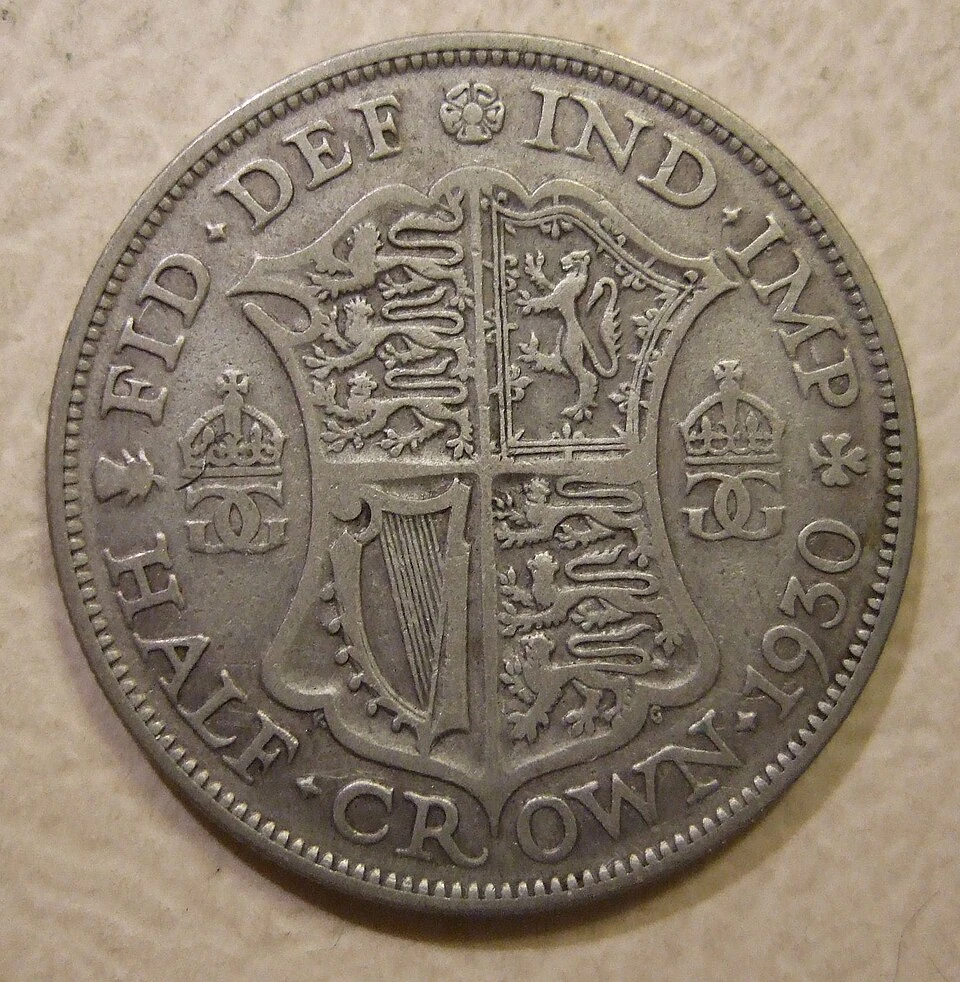
British Silver Half Crown — .500 Dated Types
Photo credits and rights on the linked coin profile.
United Kingdom • 50% silver; remaining alloy metals not independently verified
Issue years: 1920–1946
Fine silver: 0.227300 troy oz
United Kingdom • 3 pence
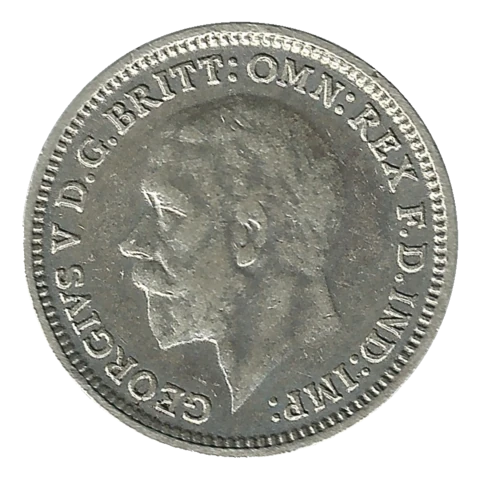
British round .500 silver threepence use 1.4138 nominal gross grams and .0227 reference fine silver troy ounce per matching coin. Five inspected types collectively list 1920–1946, including prooflike issues. The 1932 photographs show the George V oak-leaf KM831 design. Twelve-sided nickel-brass threepence and .925 silver types are excluded.
When a fresh spot bid is available, melt values use fine-metal content × spot bid. CashForCoins guide buying offers use the separately configured percentage for each metal. Selected rare/numismatic coins require an appraisal. Dollar amounts remain unavailable when a fresh quote or buying percentage is missing.
Twenty-seven actual family years across five .500 types, including prooflike issues. KM831 oak leaves omit 1929; KM827 prooflike crowned numeral supplies it. KM848 shield/rose ends in 1945, with that issue specially flagged; KM850 prooflike crowned numeral supplies 1946. Sterling KM813 also lists 1920 and remains separate. Nickel-brass pieces and patterns are excluded.
Formula: specified fine-metal troy ounces × quantity. Dollar melt value additionally requires an approved current metal price.
The genuine 1932 scan shows George V facing left, with his name and royal titles around the rim. Identify this portrait with the opposite face and full issue date. George VI replaces George V on later silver types; a portrait alone cannot distinguish the metal, denomination or finish.
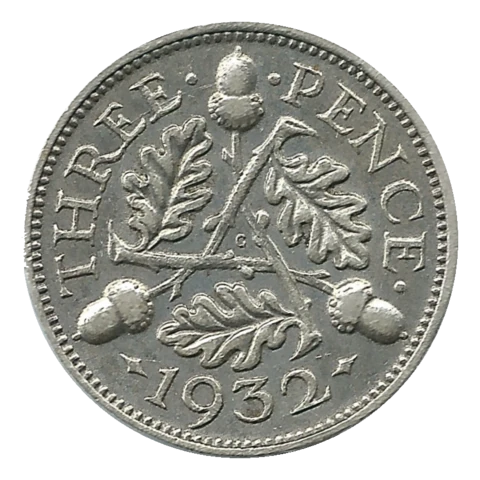
Three oak leaves and acorns surround the date on the illustrated KM831 reverse, with THREE PENCE above. Other included types have a crowned numeral 3 within a wreath or the George VI shield on a Tudor rose. Those reverses have different year lists. The pictured 1932 leaf design is not used to illustrate a 1929 leaf issue, because no such annual row occurs in its table.
The dated records distinguish the older crowned-numeral reverse, the later oak-leaf design and the George VI shield/rose design. A separate prooflike crowned-numeral series supplies years absent from the oak-leaf circulation design. Silver and nickel-brass threepence coexist in the George VI era; equal denomination does not imply equal metal content.
Read THREE PENCE or the crowned numeral 3 and confirm a round silver design. The reference gives 16.1 mm for KM813a and 16 mm for the other included types; no single diameter is asserted for the whole family. Its nominal mass is 1.4138 g. The larger twelve-sided nickel-brass KM849, patterns and unresolved replicas are outside this calculator. A date of 1920 alone is insufficient because the reference also lists .925 KM813 that year.
One matching 3 pence contributes 0.0227 reference fine silver troy ounce. Three contribute 0.0681 ounce and 4.2414 nominal gross grams. Nominal fine silver mass follows gross mass ×.500; reference ounces retain the reference’s designated rounding. Count only coins matching the verified design and composition. Worn, plated or altered specimens require separate assessment.
Actual listed issue years for the included types collectively cover 1920–1946. This includes specialised finishes and overlapping designs; it does not promise a regular circulation strike for every type and year.
Specific rows include 1920–1922, 1923–1924 prooflike issues, 1925–1926 and 1927 prooflike. A 1924 satin specimen is separately listed. This is the .500 type; .925 KM813 remains excluded.
Specific rows list 1926 and prooflike 1928–1936, including 1929. There is no 1927 row in this type; other included types supply that family date.
Specific rows cover 1927–1928 and 1930–1936, with proofs listed. No 1929 oak-leaf row occurs. The genuine 1932 photographs represent this design only.
Specific rows cover 1937–1945. The reference flags the 1945 issue as remelted and exceptionally scarce; it should receive specialist assessment, not routine counting based on an assumed common date. Its table has no 1946 annual row.
Prooflike annual rows cover 1937–1946. This distinct design supplies 1946 in the shared .500 family; it is not a 1946 shield/rose circulation issue.
Keep the actual reverse and finish with each date. Prooflike and proof descriptions are different catalogue labels, not finishes established from these reference scans. The 1929 family date belongs to a prooflike crowned-numeral design, and the unusually scarce 1945 shield/rose issue merits specialist attribution. Preserve surfaces and collection labels rather than clean a coin for comparison.
Provide both complete faces, the full denomination and issue date, plus an edge photograph and actual measured mass/diameter where available. These genuine reference photographs assist attribution but do not establish authenticity, fineness or finish of your coin. Keep uncertain pieces separate; do not rely only on colour or a matching portrait.
Sort matching .500 3 pence pieces away from sterling, other denominations, base-metal issues and unresolved objects. The existing quote link carries the selected coin and quantity for collection details and photographs. Dollar pricing is unavailable until live pricing is configured. Reference metal content is not a purchase offer or a guaranteed recovery amount.
All five included the reference types agree with the designated 1.4138-g/.500/.0227-ASW standard. Diameters differ by type:16.1 mm for KM813a and 16 mm for KM827/KM831/KM848/KM850. The shared numeric diameter is omitted rather than silently selecting one. Edge, thickness and remaining alloy-metal identities are not independently verified. Actual annual rows and independent photograph permissions were inspected on 2026-10-11. The displayed photograph represents the 1932 KM831 oak-leaf threepence only. Source faces are retained without invented artwork or upscaling; permitted scan splitting and WebP conversion are disclosed in the image credits. No reference price estimates or copied descriptive article text are republished.
No. The reference lists a 1929 prooflike crowned-numeral KM827. The shared family covers that type, while the KM831 oak-leaf table still has no 1929 row.
Three matching coins contain 0.0681 fine silver troy ounce using the designated 0.0227 per coin. This is reference metal content, not a dollar offer.
No. They illustrate a sourced representative design. Your actual denomination, date, edge, finish, dimensions and metal attribution still require review.
Content maintained by CashForCoins. Last substantive record update: 2026-10-11. Report a specification or attribution issue through our contact page.
Photo credits and rights on the linked coin profile.
United Kingdom • 50% silver; remaining alloy metals not independently verified
Issue years: 1920–1946
Fine silver: 0.227300 troy oz
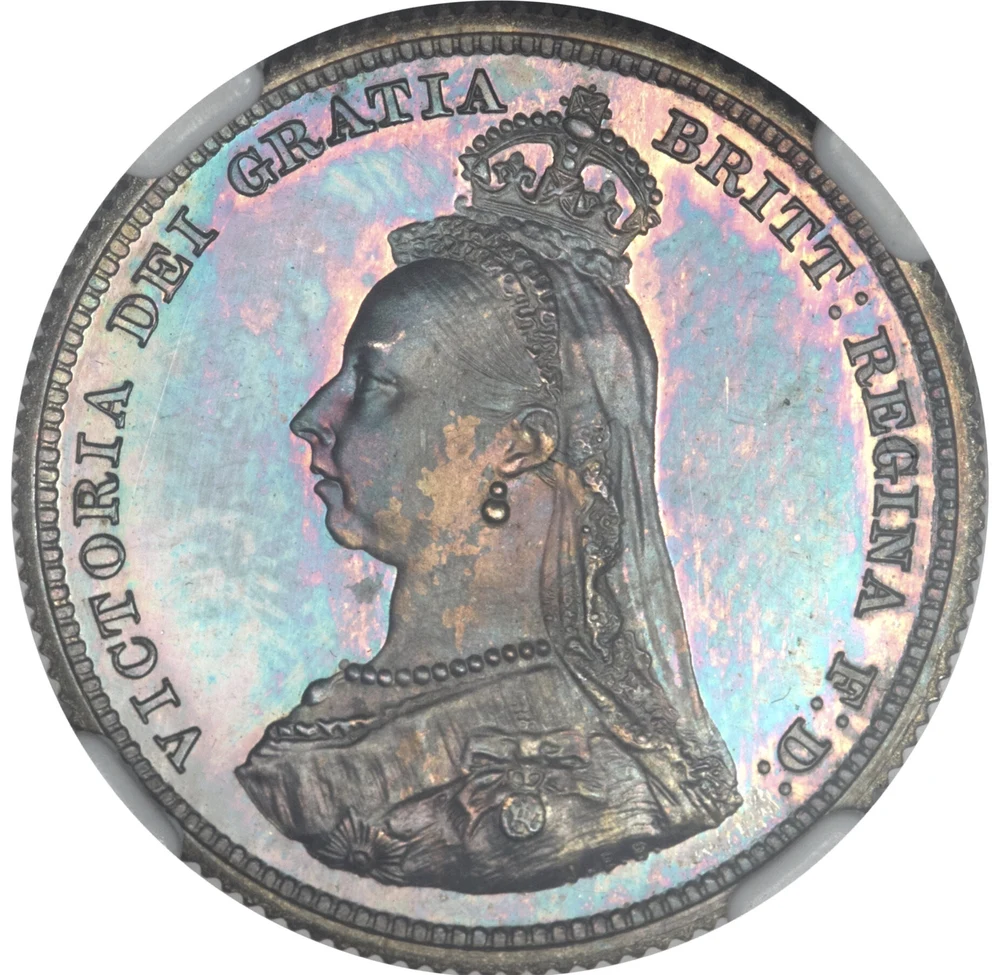
Photo credits and rights on the linked coin profile.
United Kingdom • 92.500% silver; balance copper
Issue years: 1816–1821, 1823–1827, 1829, 1831, 1834–1846, 1848–1919
Fine silver: 0.168200 troy oz
Photographs can help identify your coin. An appraisal may consider authenticity, condition and collector demand as well as metal content.
Request a photo appraisal View current silver coin buying information
