


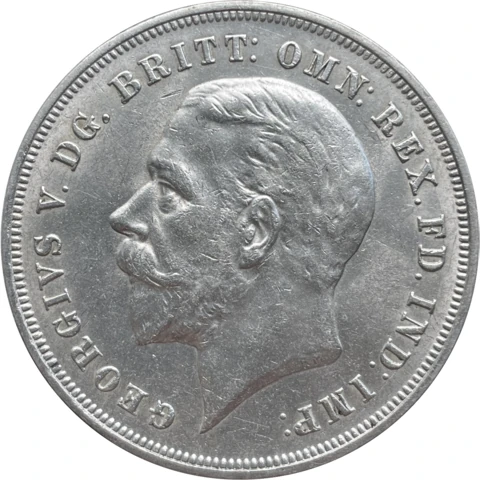
British Silver Crown — .500 Dated Types
Photo credits and rights on the linked coin profile.
United Kingdom • 50% silver; remaining alloy metals not independently verified
Issue years: 1927–1937
Fine silver: 0.454500 troy oz
United Kingdom • half crown
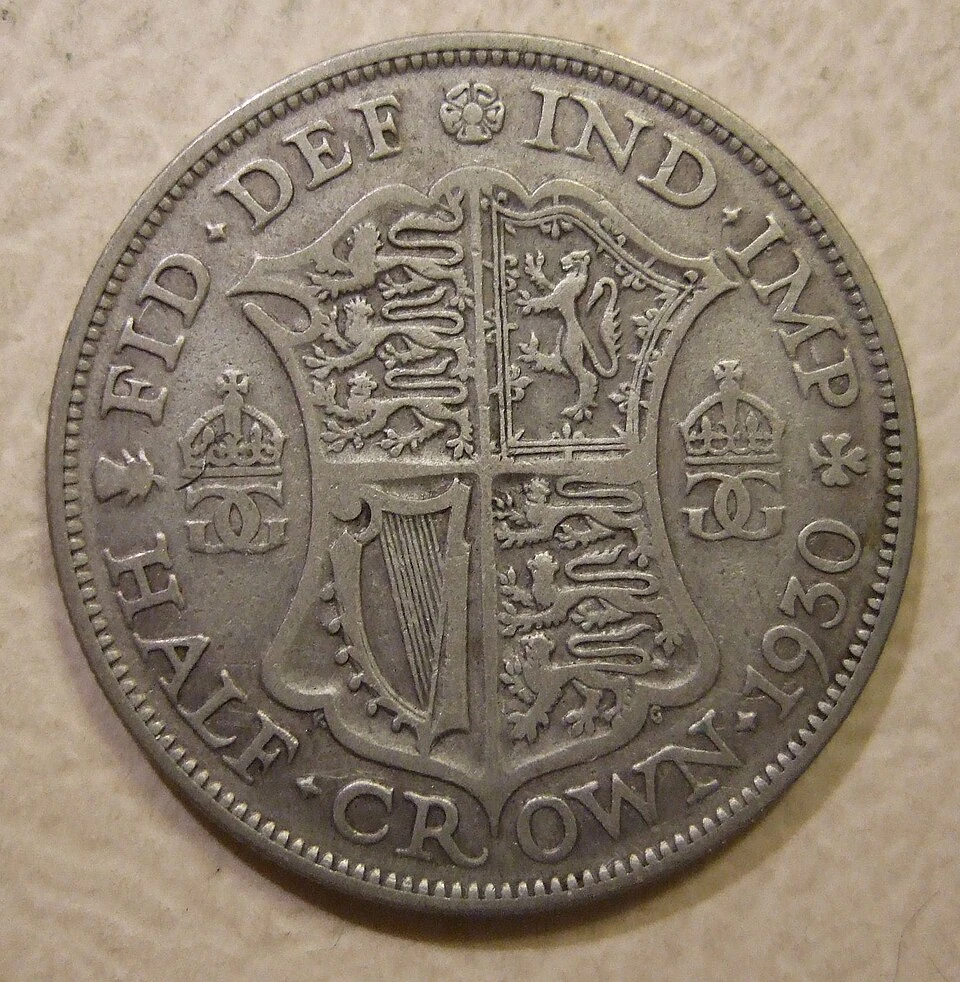
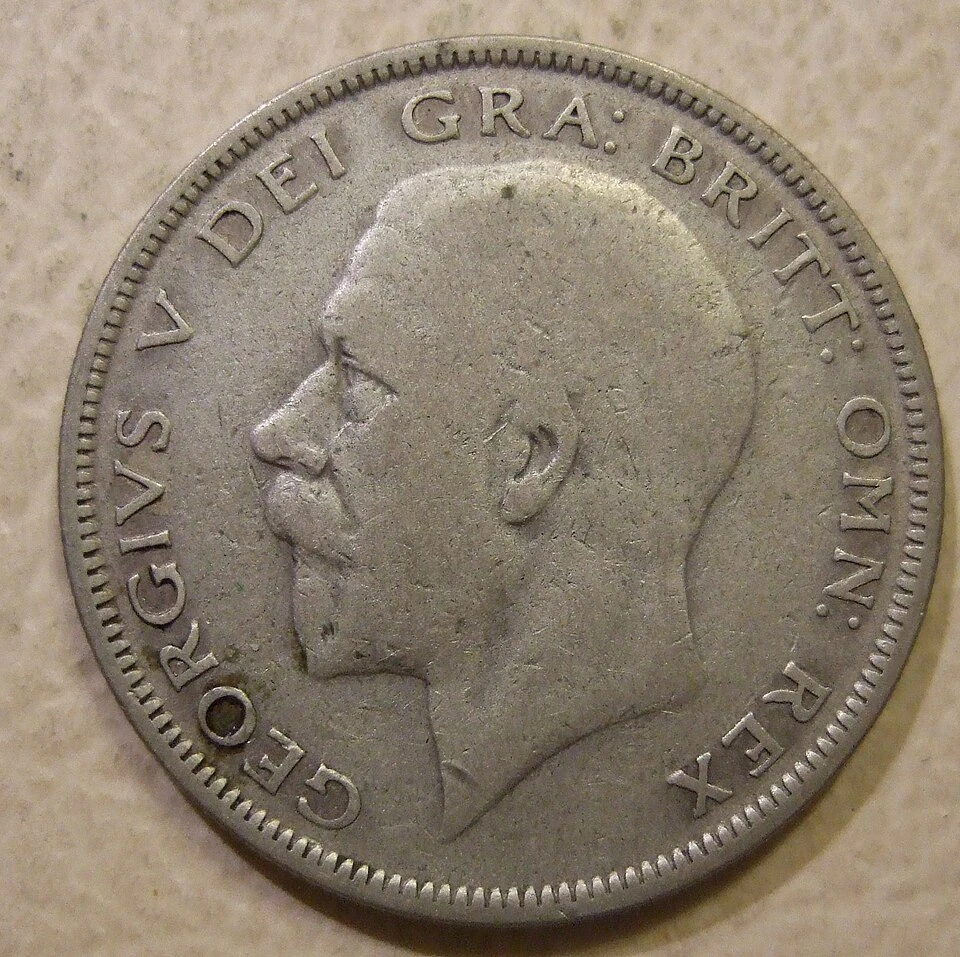
British .500 silver half crowns use 14.138 nominal gross grams and .2273 reference fine silver troy ounce per matching coin. Five inspected types collectively establish 1920–1946. The genuine 1930 photographs show George V KM835. Earlier .925 half crowns and later base-metal coins require different metal specifications.
When a fresh spot bid is available, melt values use fine-metal content × spot bid. CashForCoins guide buying offers use the separately configured percentage for each metal. Selected rare/numismatic coins require an appraisal. Dollar amounts remain unavailable when a fresh quote or buying percentage is missing.
Twenty-seven actual family years across KM818.1a, KM818.2, KM830, KM835 and KM856. Designs overlap in 1922, 1926 and 1927. Proof and specimen availability varies; photographs represent 1930 KM835 only. Earlier sterling, patterns, later base-metal coins and replicas are excluded.
Formula: specified fine-metal troy ounces × quantity. Dollar melt value additionally requires an approved current metal price.
The illustrated obverse shows George V facing left, surrounded by his name and royal titles. The reference distinguishes a modified larger-bead portrait on KM830 from the other George V designs. Compare the real portrait and reverse together; the 1930 reference photograph does not illustrate every earlier portrait or finish.
The genuine 1930 reverse reads HALF CROWN around a quartered shield flanked by crowned royal monograms. The date is part of the outer legend. Earlier included designs surround the shield with a Garter band and distinguish whether the crown touches the shield or has a separating groove. George VI later uses a similar shield/monogram layout with a different portrait and royal lettering.
The .500 period spans changes in George V portrait and shield details, followed by George VI issues. Several types overlap: two shield treatments in 1922, a modified portrait in 1926–1927 and a new shield/monogram reverse beginning in 1927. These changes are meaningful for attribution even where the designated silver-content standard remains the same.
Read HALF CROWN, the full date, royal name and shield details before counting. The reference gives 32.3 mm for all five included types and reeded edges. Its designated melt standard is 14.138 g/.500; the early KM818.1a table rounds mass to 14.1400 g while retaining .2273 ASW. Do not treat that displayed precision difference as a newly assayed alloy. Earlier sterling pieces, patterns and replicas remain separate.
One matching half crown contributes 0.2273 reference fine silver troy ounce. Three contribute 0.6819 ounce and 42.414 nominal gross grams. Nominal fine silver mass follows gross mass ×.500; reference ounces retain the reference’s designated rounding. Count only coins matching the verified design and composition. Worn, plated or altered specimens require separate assessment.
Actual listed issue years for the included types collectively cover 1920–1946. This includes specialised finishes and overlapping designs; it does not promise a regular circulation strike for every type and year.
Three specific annual dates use the older George V portrait and Garter shield. This .500 type is separate from earlier sterling half crowns.
Specific annual rows cover 1922–1926; a 1924 satin specimen is separately labelled. The design overlaps KM818.1a in 1922 and KM830 in 1926.
The table lists both dates with larger portrait-side beads and a Garter shield. It overlaps the later shield/monogram type in 1927.
Specific annual rows cover 1927–1936, with regular/proof availability varying. The genuine 1930 pair illustrates this design; it does not establish a proof or matte finish.
Specific annual rows cover all ten dates, with proof entries separately listed. Identify the actual portrait, date and finish. Edward VIII patterns are not added to this calculator.
Preserve portrait, reverse, date and finish information with each specimen. A 1922 or 1926 date can belong to overlapping design types. Reference metal content cannot express collector premiums for a particular finish, condition or attribution. Do not infer a proof strike from shine or from the presence of a proof row in a catalogue.
Provide both complete faces, the full denomination and issue date, plus an edge photograph and actual measured mass/diameter where available. These genuine reference photographs assist attribution but do not establish authenticity, fineness or finish of your coin. Keep uncertain pieces separate; do not rely only on colour or a matching portrait.
Sort matching .500 half crown pieces away from sterling, other denominations, base-metal issues and unresolved objects. The existing quote link carries the selected coin and quantity for collection details and photographs. Dollar pricing is unavailable until live pricing is configured. Reference metal content is not a purchase offer or a guaranteed recovery amount.
The designated reference melt reference and four dated types give 14.138 g/.500/.2273 ASW. KM818.1a displays 14.1400 g while agreeing on fineness and ASW; the designated mass remains controlling without averaging. All five types specify 32.3 mm and reeded edges. Thickness and remaining alloy-metal identities are not independently verified. Actual annual rows and independent photograph permissions were inspected on 2026-10-11. The displayed photograph represents the 1930 KM835 George V half crown only. Source faces are retained without invented artwork or upscaling; permitted scan splitting and WebP conversion are disclosed in the image credits. No reference price estimates or copied descriptive article text are republished.
Yes. The inspected types overlap in 1922, 1926 and 1927. Read the portrait beads, crown/shield junction and reverse layout as well as the issue date.
Three matching coins contain 0.6819 fine silver troy ounce using the designated 0.2273 per coin. This is reference metal content, not a dollar offer.
No. They illustrate a sourced representative design. Your actual denomination, date, edge, finish, dimensions and metal attribution still require review.
Content maintained by CashForCoins. Last substantive record update: 2026-10-11. Report a specification or attribution issue through our contact page.
Photo credits and rights on the linked coin profile.
United Kingdom • 50% silver; remaining alloy metals not independently verified
Issue years: 1927–1937
Fine silver: 0.454500 troy oz
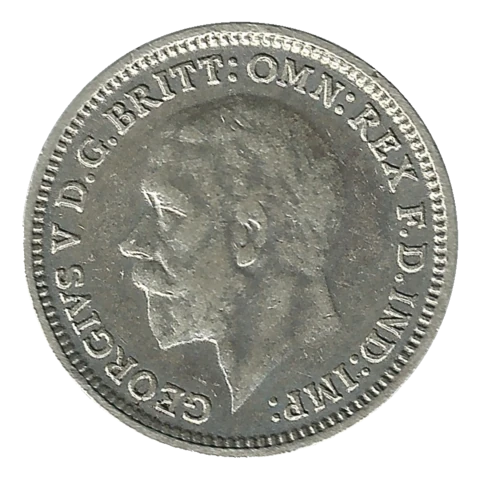
Photo credits and rights on the linked coin profile.
United Kingdom • 50% silver; remaining alloy metals not independently verified
Issue years: 1920–1946
Fine silver: 0.022700 troy oz
Photographs can help identify your coin. An appraisal may consider authenticity, condition and collector demand as well as metal content.
Request a photo appraisal View current silver coin buying information
