

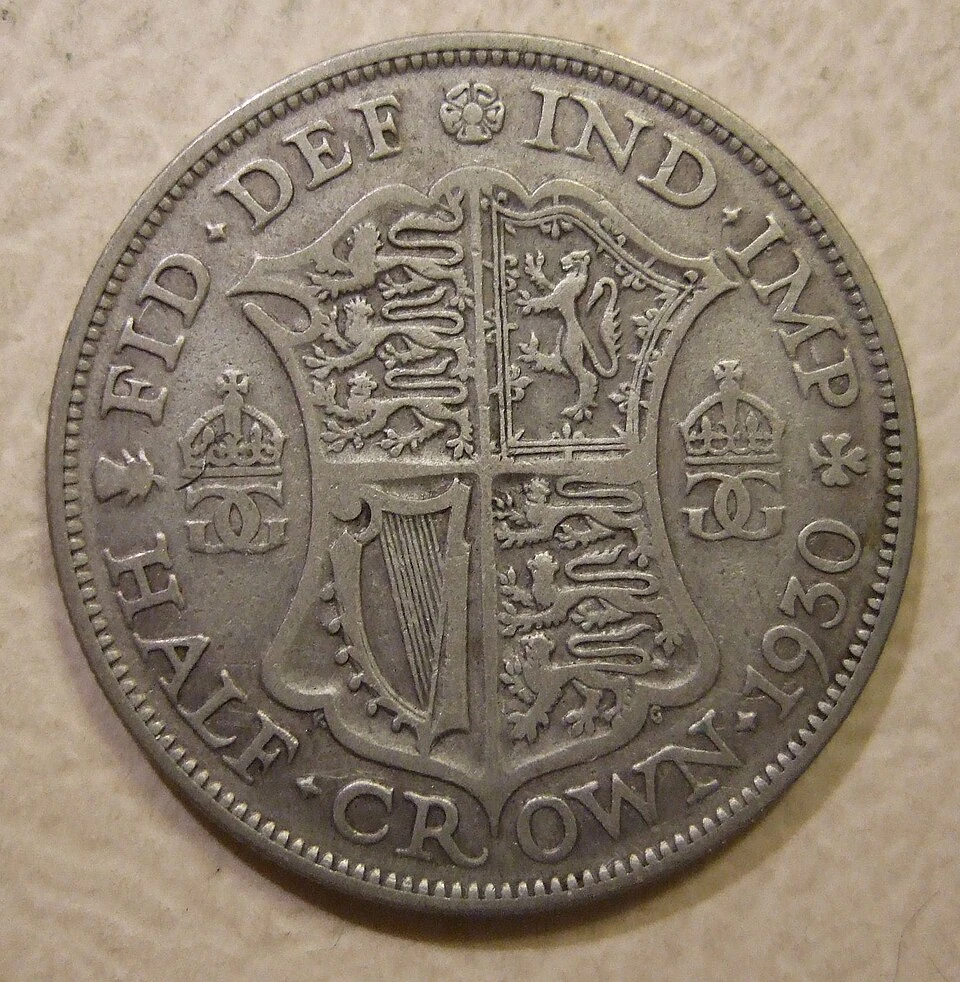
British Silver Half Crown — .500 Dated Types
Photo credits and rights on the linked coin profile.
United Kingdom • 50% silver; remaining alloy metals not independently verified
Issue years: 1920–1946
Fine silver: 0.227300 troy oz
United Kingdom • 1/2 crown (2 shillings 6 pence)
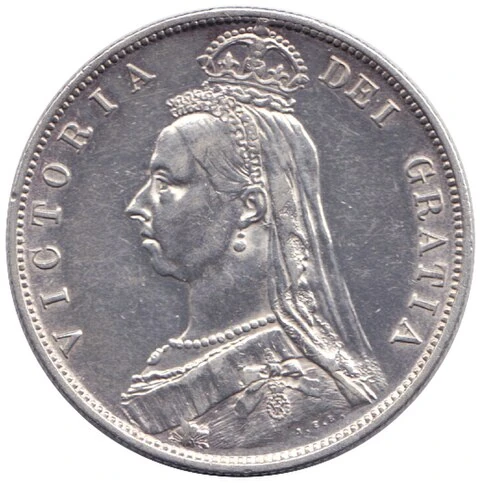
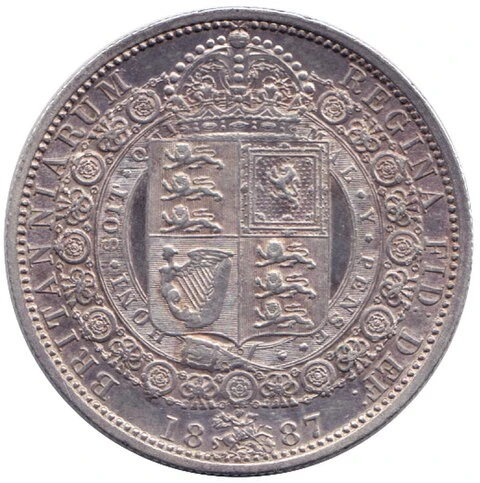
A matching sterling half-crown contains 0.4204 reference fine silver troy ounce using the reference’s designated standard. The included types have 77 specific issue years, not continuous production throughout the broad envelope. The genuine 1887 photographs illustrate KM764 Victoria Jubilee only. Match denomination, date, portrait and composition before counting a coin.
When a fresh spot bid is available, melt values use fine-metal content × spot bid. CashForCoins guide buying offers use the separately configured percentage for each metal. Selected rare/numismatic coins require an appraisal. Dollar amounts remain unavailable when a fresh quote or buying percentage is missing.
Seventy-seven actual annual dates across thirteen matching sterling half-crown types. Keep gaps, portrait overlaps, overdates, initials/date-size differences and plain/reeded proof edges. Isolated later young-head proofs do not fill the intervening years. Later .500 half-crowns and patterns remain separate.
Formula: specified fine-metal troy ounces × quantity. Dollar melt value additionally requires an approved current metal price.
The genuine 1887 obverse shows Victoria’s Jubilee bust facing left, wearing a small crown, veil, necklace and earrings. It represents KM764 Victoria Jubilee, rather than every portrait in the guide. Earlier or later rulers and Victorian portrait revisions need their own dated reference. Similar royal portraits appear on other denominations; identify both faces and preserve the full legend.
On the reference reverse, crowned quartered royal arms sit within an ornate order chain, with the issue date 1887 below. Read the complete denomination and date together. Other included types can change the arms, wreath, lettering, date arrangement or surrounding ornament. A matching photograph helps compare design but cannot establish a specimen’s measured mass, alloy, grade or authenticity.
The included half-crowns span George III through George V, with substantial gaps in annual production and isolated proof issues. George III’s large and small heads overlap in 1817. George IV has multiple portrait and reverse types; William IV has proof and modified-head entries. Victoria’s long young-head sequence stops before later resumed production, while her second young head and Jubilee designs overlap in 1887. Edward VII and George V form the final annual sequences through 1919.
Read both complete faces, the issue date, portrait and edge. Compare the relevant dated type rather than applying the photographed 1887 design to every year. Retain overdates, numeral styles and initials where visible. Source-supported dimensions are type-specific; this combined guide leaves numeric diameter empty. A coin’s apparent size in an unscaled photograph does not establish its mass or metal content.
One matching coin contributes 0.4204 reference fine silver troy ounce. Three contribute 1.2612 fine silver ounces and 42.414 nominal gross grams. Nominal fine-metal mass is gross mass multiplied by .925; the designated reference table supplies the rounded fine-ounce input. Separate .500 coins, lighter standards and uncertain pieces before entering quantities. Wear and actual condition can differ from nominal specifications.
Specific source-supported issue years: 1816–1821, 1823–1826, 1828–1829, 1831, 1834–1837, 1839–1846, 1848–1850, 1853, 1862, 1864, 1874–1919. George III has large-head and small-head types, with plain and reeded proof edges. George IV’s KM676 omits 1822, while KM688 covers 1823–1824; KM695 has actual 1825, 1826, 1828 and 1829 rows, not every year in its heading. William IV’s 1831 entries are proofs, while the modified-head type includes 1834 initials styles and an 1836/5 overdate. Young-head Victoria has relief/incuse initials, 1848/6, two 1849 date sizes and isolated later proofs. Second young-head Victoria includes 1876/5 and plain-edge proofs. Jubilee overlaps that design in 1887. Mature Victoria has an 1893 proof; Edward VII has a 1902 matte-proof entry, and George V a 1911 proof. Repeated proof labels do not create a new year or authenticate finish.
Keep the type, annual date, overdate, initials, edge and any documented proof or prooflike attribution with each coin. An early or uncommon date, preserved surfaces and a correctly identified finish may matter independently of reference silver weight. Proof, matte proof and prooflike are different descriptions; a shiny or worn photograph does not prove any of them. Preserve packaging and collection labels, and avoid cleaning for comparison.
Provide complete photographs of both faces and the edge, including the full date and any unusual numeral or initials. Add actual measured mass and diameter when available. The licensed 1887 images are genuine reference photographs; they do not authenticate, grade, assay or establish the finish of another specimen. Keep patterns, replicas, wrong denominations and unresolved alloys separate.
Sort sterling half-crown coins separately from later .500 silver, base-metal coins, other denominations and uncertain pieces. Keep date and variety information with the photographs. The existing photo-appraisal link preserves your selected quantity for an enquiry. The reference fine-metal amount is not a purchase offer. Live dollar pricing remains unavailable until an approved provider supplies it.
The reference’s designated melt table gives 14.138 g/.925/.4204 reference fine silver ounce. All thirteen included dated types give 14.1380 g/.9250/.4205 ounce. The small ASW rounding difference is disclosed; this calculator retains the designated .4204 ounce. Some later tables give 32.3 mm and a reeded edge, while other types omit these fields or include plain-edge proofs. No shared diameter, edge or unverified alloy formula is inferred. 13 actual the reference dated tables and independent photographic permissions were inspected on 2026-10-11. Only specific annual rows establish the displayed years; broad headings do not fill gaps. Photo metadata does not override the reference specifications. WebP transformations retain complete faces, attribution, licence links and applicable share-alike terms without invented artwork or upscaling. No source prices, mintages or articles are reproduced.
Content maintained by CashForCoins. Last substantive record update: 2026-10-11. Report a specification or attribution issue through our contact page.
Photo credits and rights on the linked coin profile.
United Kingdom • 50% silver; remaining alloy metals not independently verified
Issue years: 1920–1946
Fine silver: 0.227300 troy oz
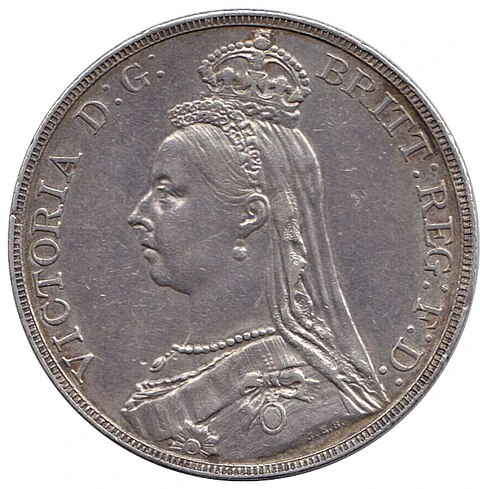
Photo credits and rights on the linked coin profile.
United Kingdom • 92.5% silver; remaining alloy metals not independently verified
Issue years: 1818–1822, 1826, 1831, 1839, 1844–1845, 1847, 1853, 1887–1900, 1902
Fine silver: 0.840900 troy oz
Photographs can help identify your coin. An appraisal may consider authenticity, condition and collector demand as well as metal content.
Request a photo appraisal View current silver coin buying information
