


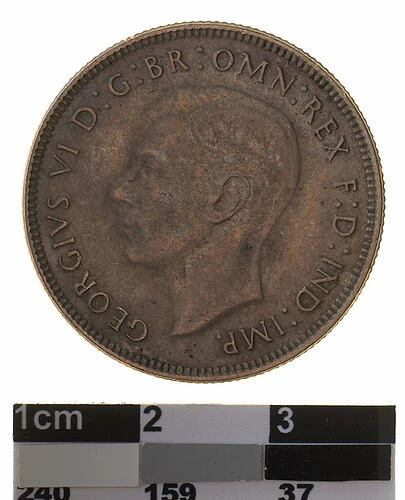
Australian Sterling Florin — 1910–1945 Issues
Photo credits and rights on the linked coin profile.
Australia • 92.5% silver; 7.5% alloy remainder
Issue years: 1910–1928, 1931–1936, 1938–1945
Fine silver: 0.336300 troy oz
Australia • sixpence
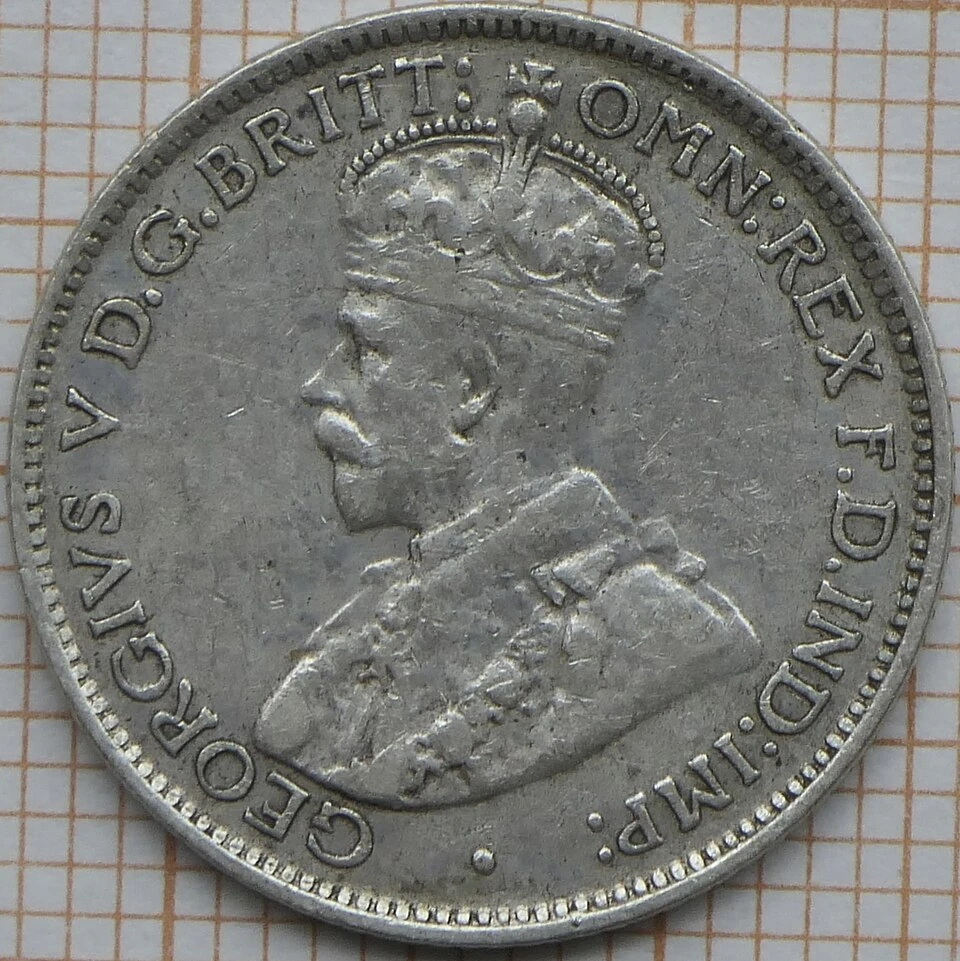
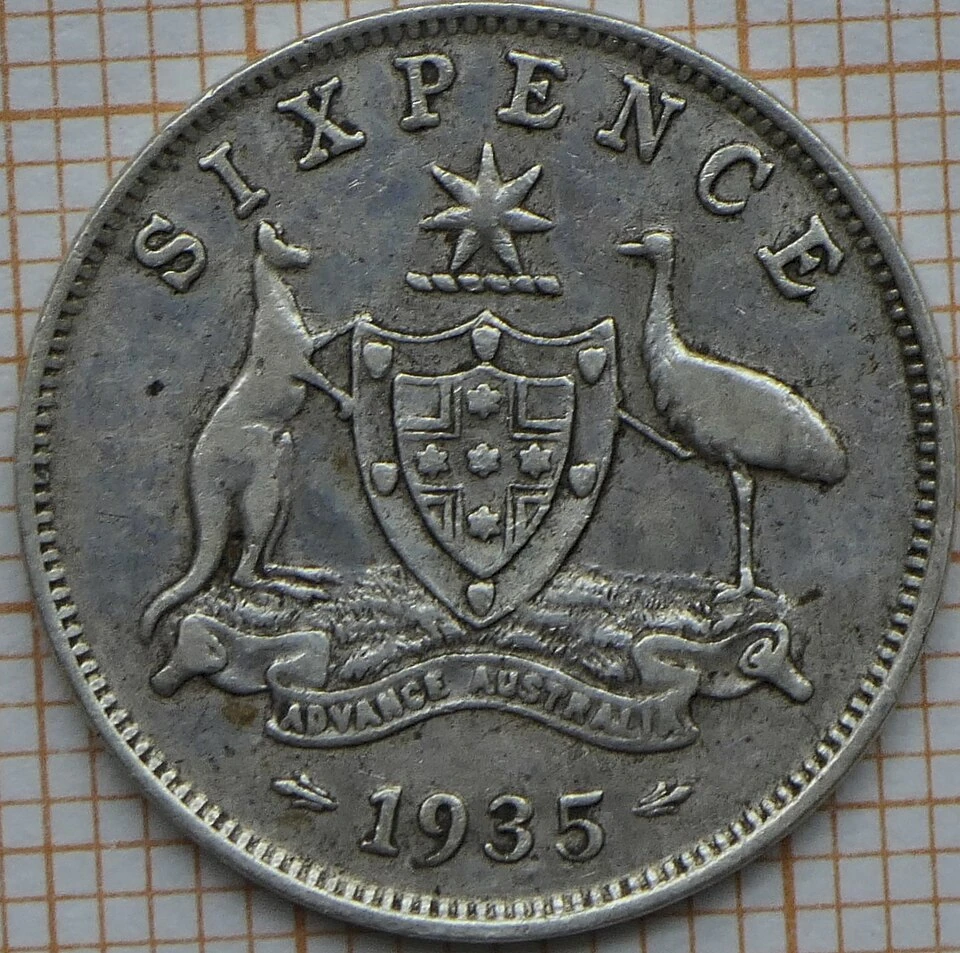
A matching Australian George V sterling sixpence contains .0839 reference fine silver troy ounce at the 2.82 g/.925 standard. The reference KM25 lists 19 specific issue years between 1911 and 1936, with substantial gaps. The genuine 1935 photographs illustrate this crowned George V and arms design. Match the complete date, denomination and dated mass standard before counting a coin.
When a fresh spot bid is available, melt values use fine-metal content × spot bid. CashForCoins guide buying offers use the separately configured percentage for each metal. Selected rare/numismatic coins require an appraisal. Dollar amounts remain unavailable when a fresh quote or buying percentage is missing.
Nineteen actual annual dates of matching 2.8200-g/.9250/.0839-oz KM25. No 1913, 1915 or 1929–1933 annual rows occur in this type. London, Melbourne and Sydney labels and proof availability remain year-specific. The 1910 KM19 and 1938–1945 KM38 types have a distinct 2.8300-g/.9250/.0842-oz standard and are excluded. Postwar .500 issues and replicas require separate identification.
Formula: specified fine-metal troy ounces × quantity. Dollar melt value additionally requires an approved current metal price.
The genuine 1935 obverse shows George V’s crowned bust facing left, with a surrounding royal legend. The reference credits E. B. Mackennal for the obverse. This portrait applies to KM25; Edward VII’s 1910 portrait and George VI’s later bare head belong to separately recorded 2.83 g standards. A similar royal portrait on another denomination does not establish a sixpence or its silver content.
The genuine 1935 reverse shows SIXPENCE above a star and shield supported by a kangaroo and emu. A scroll reads ADVANCE AUSTRALIA, and 1935 appears below. The reference identifies this reverse as arms and credits W. H. J. Blakemore. Retain the full denomination, date and any mint attribution; the arms motif alone does not establish the matching mass or alloy.
The inspected George V type begins in 1911 and ends in 1936, between the separately recorded Edward VII and George VI types. Its annual table omits 1913,1915 and 1929–1933. These gaps remain visible on the summary card and detailed page. This 2.82 g guide does not treat the broader 1910–1945 melt-group envelope as continuous issuance or as proof that every included portrait used the same nominal mass.
Identify both complete faces, the sixpence denomination, crowned George V portrait and an actual listed date. KM25 specifies 19.3 mm and a reeded edge; these are nominal reference dimensions, not measurements inferred from a photograph. Keep mint labels and any documented finish with the specimen. Separate the 1910 Edward VII,1938–1945 George VI, postwar .500 silver and unverified replica pieces.
One matching coin contributes .0839 reference fine silver troy ounce. Three contribute .2517 fine silver ounces and 8.46 nominal gross grams. The nominal fineness is .925; the designated reference value supplies the rounded fine-ounce input. A 2.83 g/.925 dated standard contributes .0842 reference ounce and is outside this page. Postwar .500 sixpence has a separate composition. Wear, assay results and an actual offer may differ from nominal reference metal content.
Specific source-supported issue years: 1911–1912, 1914, 1916–1928, 1934–1936. The reference retains 1911(L),1912(L),1914(L),1916M–1920M, later(m)/(sy) combinations and the resumed 1934–1936 sequence. Parentheses and mint labels are preserved in the dated reference; they do not establish a mark merely from this photograph. The table separately lists proofs for 1911,1916–1922,1924–1928 and 1934–1936. Not every mint/year/finish combination exists, and a polished surface does not authenticate a proof.
Preserve each coin’s actual date, mint attribution, surface condition and any independently documented proof identity. A coin may have collector interest beyond its .0839 reference silver ounce. The annual gaps distinguish actual issuance from a broad date heading; a missing year in this table is not automatically an undocumented discovery. Avoid cleaning and retain original packaging, collection notes or reputable certification.
Provide complete photographs of both faces and the edge, together with actual measured mass and diameter when available. The genuine 1935 reference pair illustrates design and its visibly worn surfaces; it does not authenticate another coin, establish grade, assay the alloy or prove a strike finish. A mismatched portrait, denomination or mass standard needs its own dated reference before calculation.
Sort matching 2.82 g George V sterling sixpence separately from other Australian denominations,2.83 g dated standards, .500 issues and uncertain pieces. Keep date and mint notes with the photographs. The existing photo-appraisal link preserves the selected quantity for an enquiry without making a purchase offer. Live dollar pricing remains unavailable until an approved provider supplies it; the fine-silver calculation is educational reference content.
The reference’s designated 1910–1945 melt group gives 2.82 g/.925/.0839 fine silver ounce. This page includes only dated KM25, which independently matches 2.8200 g/.9250/.0839 oz and 19.3 mm. KM19 (1910) and KM38 (1938–1945) give 2.8300 g/.9250/.0842 oz and are excluded; their master-group dates do not extend this matching 2.82 g standard. The calculator retains .0839 fine ounce. The dated tables are not silently normalized to a shared mass. The actual KM25 annual/specification/design table and both independent photographic permissions were inspected on 2026-10-11. The displayed 19 years come from specific annual rows. Other 6 inspected Australian sixpence tables are recorded separately, including divergent weights, fineness and dated gaps. Photo metadata does not override the reference. Complete CC0 faces are converted to WebP without upscaling, retouching or invented coin detail. No reference price, mintage or article is reproduced.
Content maintained by CashForCoins. Last substantive record update: 2026-10-11. Report a specification or attribution issue through our contact page.
Photo credits and rights on the linked coin profile.
Australia • 92.5% silver; 7.5% alloy remainder
Issue years: 1910–1928, 1931–1936, 1938–1945
Fine silver: 0.336300 troy oz
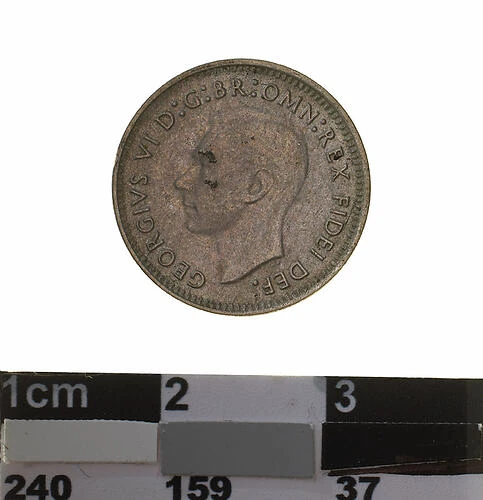
Photo credits and rights on the linked coin profile.
Australia • 50% silver; 50% alloy remainder
Issue years: 1947–1964
Fine silver: 0.022700 troy oz
Photographs can help identify your coin. An appraisal may consider authenticity, condition and collector demand as well as metal content.
Request a photo appraisal View current silver coin buying information
