
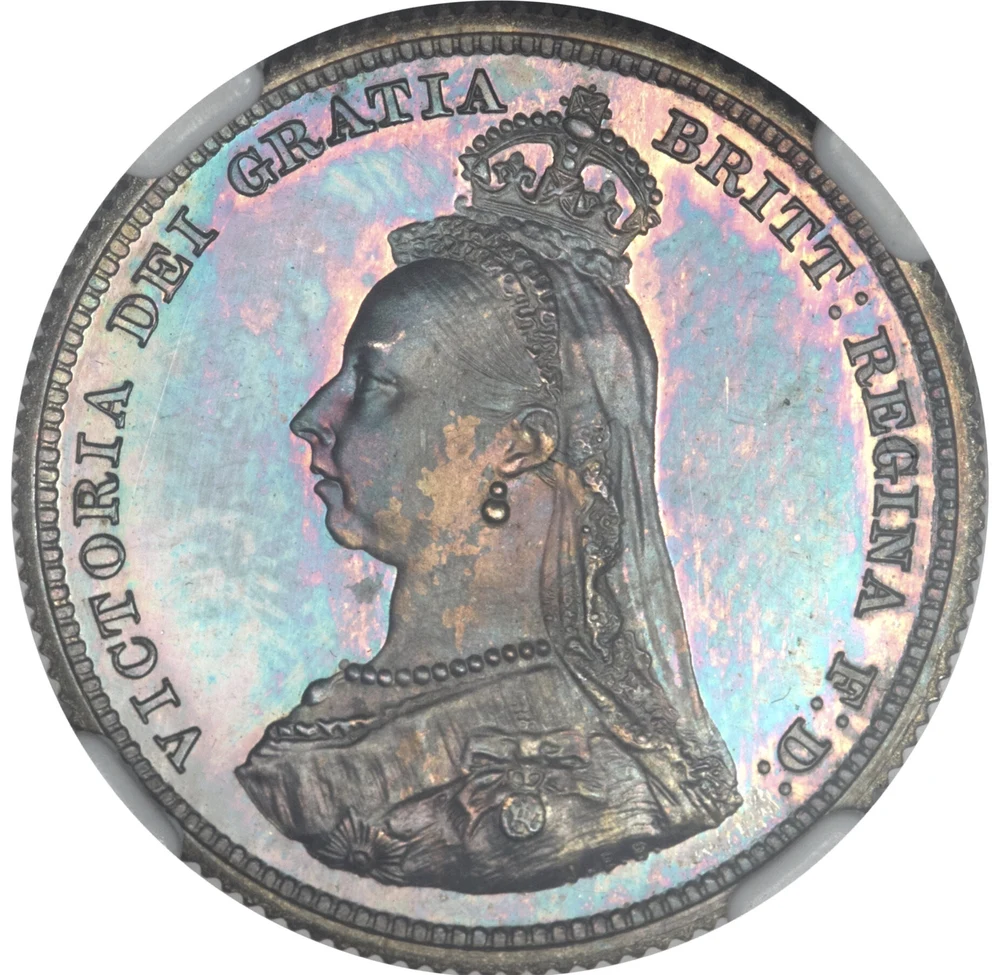
British Silver Shilling — 1816–1919
Photo credits and rights on the linked coin profile.
United Kingdom • 92.500% silver; balance copper
Issue years: 1816–1821, 1823–1827, 1829, 1831, 1834–1846, 1848–1919
Fine silver: 0.168200 troy oz
Australia • Crown (5 shillings)
The Australian silver crown was issued in 1937 and 1938. A matching KM34 crown has .925 silver fineness, 28.28 g nominal gross mass and .841 reference fine silver troy ounce according to the reference. A crown is five predecimal shillings. The genuine photographs show a 1937 Melbourne working strike; proofs of both years also appear in the reference dated table. Confirm country, denomination and date before using this calculator.
When a fresh spot bid is available, melt values use fine-metal content × spot bid. CashForCoins guide buying offers use the separately configured percentage for each metal. Selected rare/numismatic coins require an appraisal. Dollar amounts remain unavailable when a fresh quote or buying percentage is missing.
Both actual dates are listed for regular and proof issues in the reference KM34. The illustration is a 1937 Melbourne working strike; mint and proof attribution require the actual coin. Later replicas and modern commemoratives are excluded.
Formula: specified fine-metal troy ounces × quantity. Dollar melt value additionally requires an approved current metal price.
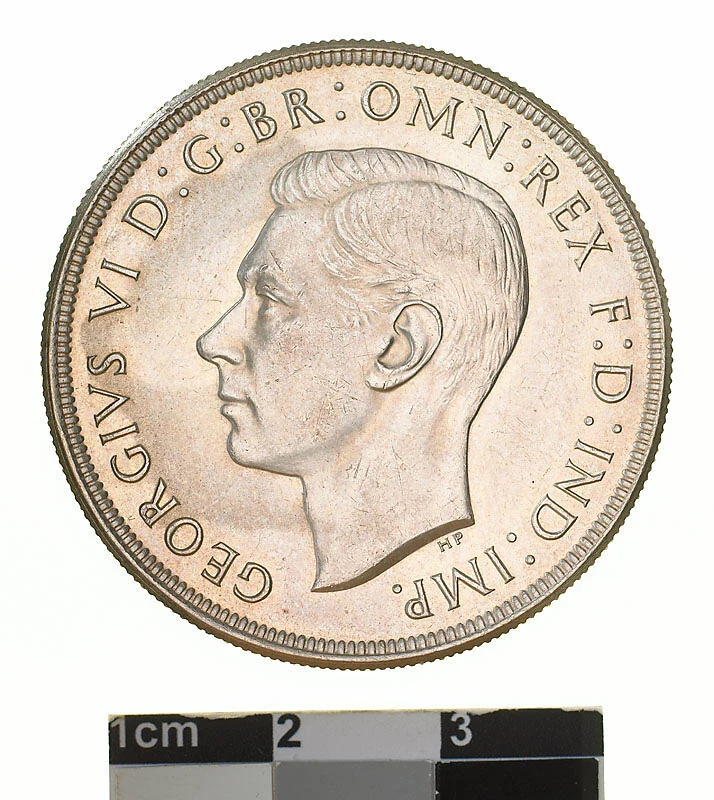
The photographed obverse shows the bare head of George VI facing left, with HP initials near the neck truncation. The surrounding legend includes GEORGIVS VI and IND IMP. The reference credits the portrait design to T. H. Paget. Include the complete rim and lettering in identification photographs: a George VI portrait by itself does not distinguish this Australian crown from other countries or denominations.
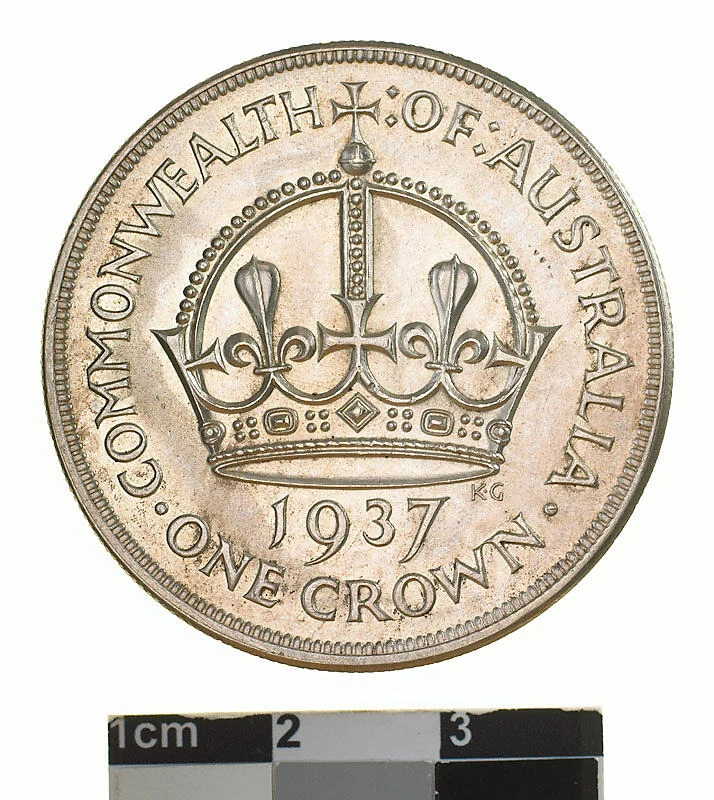
The reverse has a large crown above 1937 and ONE CROWN, surrounded by COMMONWEALTH OF AUSTRALIA. The small KG initials appear beside the crown. The reference credits the reverse design to George Kruger Gray. Read both the country and ONE CROWN; Australian florins, shillings and other royal-portrait coins have different masses and silver amounts. The supplied reverse is a genuine 1937 working strike rather than a reconstructed or generated design.
Museums Victoria describes the Australian crown as introduced in 1937 to commemorate George VI’s coronation and identifies this object as a Melbourne working strike, NU33026. The reference KM34 lists dated issues in 1937 and 1938. The two-year crown type belongs to Australia’s predecimal coinage. Its five-shilling denomination should not be confused with a modern Australian five-dollar issue or a British crown bearing another country’s design.
Look for COMMONWEALTH OF AUSTRALIA, ONE CROWN, the date 1937 or 1938, and the left-facing George VI portrait. The reference’s nominal reference is 28.28 g, 38 mm diameter and a reeded edge. Record actual mass, diameter and edge photographs separately from those reference figures. The museum’s measured object differs slightly from the nominal figures, as disclosed in the methodology. A portrait, date or bright silver appearance alone does not establish authenticity or alloy.
One matching crown contributes .841 reference fine silver troy ounce. Three crowns total 2.523 reference ounces and 84.84 nominal gross grams. The mass product is 28.28 g × .925 = 26.159 g nominal silver per coin. This calculator consistently uses the reference’s reported .841-ounce reference rather than silently substituting a different rounded conversion. Gross grams include the alloy; fine troy ounces describe the silver component. Proof status does not create a different metal amount in this sourced type.
Both issue years are explicitly confirmed: 1937 and 1938. The reference lists a regular issue and a proof row for each year. The following dated finish entries are mintage references, not current prices, rarity guarantees or grades. The (m) notation is the reference’s Melbourne mint code; do not assume that parenthetical code appears as a literal mint mark on the photographed coin.
The reference lists 1,008,000. The museum photograph represents a 1937 working strike.
The reference lists 100. Proof identification and condition require their own appraisal.
The reference lists 102,000. The date must be read from the actual coin.
The reference lists 250. A proof listing does not identify a customer coin as proof.
Keep 1937 and 1938 crowns identified separately, and preserve any credible proof attribution, provenance, grading documentation and original packaging. The dated table shows different mintages for the two years and finishes, but a metal calculator cannot establish a collector premium or sale price. The illustrated NU33026 object is a working strike, not a proof. Avoid cleaning surfaces to imitate the reference photographs; send unusual or attributed pieces for an individual assessment before treating them as a bulk silver lot.
Provide photographs of both complete faces, the date and country lettering, plus an edge view. Measure actual mass and diameter with suitable tools and report those measurements rather than copying nominal specifications. Correct weight is one useful check, but plated copies, altered coins and replicas require further examination. Keep unresolved pieces outside the counted lot until their identity and composition have been assessed. These photographs illustrate a documented museum coin; they do not authenticate another example.
Separate Australian crowns from smaller Australian silver denominations, British crowns and modern commemoratives. Count only matching 1937 or 1938 crowns here. The existing photo-appraisal form can carry the selected coin and quantity; include both faces, actual measurements and any proof or variety information. Dollar melt pricing is unavailable until an approved live feed is connected. Reference metal content is educational and is not an offer, a guaranteed assay or a collector valuation.
The reference’s selected melt table and KM34 type both report 28.28 g gross mass, .925 silver fineness and .841 fine silver troy ounce. KM34 gives 38 mm diameter and a reeded edge. Museums Victoria measures its photographed individual 1937 working strike at 28.18 g and 38.5 mm, with a milled edge; those specimen observations do not replace nominal calculator inputs. The reported ASW is a rounded reference, not an assay of a customer's coin. Rounded mass multiplied by fineness and converted to ounces need not reproduce every ASW digit. No thickness has been verified. Both years and both finish rows were read from the reference’s annual KM34 table. No future dates or later replicas are included. Museums Victoria identifies the photographed object and its designers and mint. Each image-specific caption independently credits Naomi Andrzejeski and permits CC BY 4.0 reuse. WebP conversion preserves the original 714 × 800 dimensions, ruler and genuine coin surfaces without upscaling or design alteration. The two dated finishes share the same type reference; no unsupported metal variant has been invented.
The reference KM34 and its world-silver melt table report .841 fine silver troy ounce, .925 fineness and 28.28 g nominal gross mass. Three matching crowns contain 2.523 reference silver ounces. Actual identity and composition still need verification.
The reference lists 1937 and 1938, with regular and proof rows in each year. The photographed coin is a 1937 working strike. These two confirmed dates do not imply any later crown, replica or modern five-dollar issue shares this calculation.
The proof rows belong to the same the reference KM34 silver type, so this reference calculation uses the same .841 fine-ounce amount. Proof attribution, condition and collector value require separate assessment; a proof label must not be inferred from the museum photographs.
Content maintained by CashForCoins. Last substantive record update: 2026-10-11. Report a specification or attribution issue through our contact page.
Photo credits and rights on the linked coin profile.
United Kingdom • 92.500% silver; balance copper
Issue years: 1816–1821, 1823–1827, 1829, 1831, 1834–1846, 1848–1919
Fine silver: 0.168200 troy oz
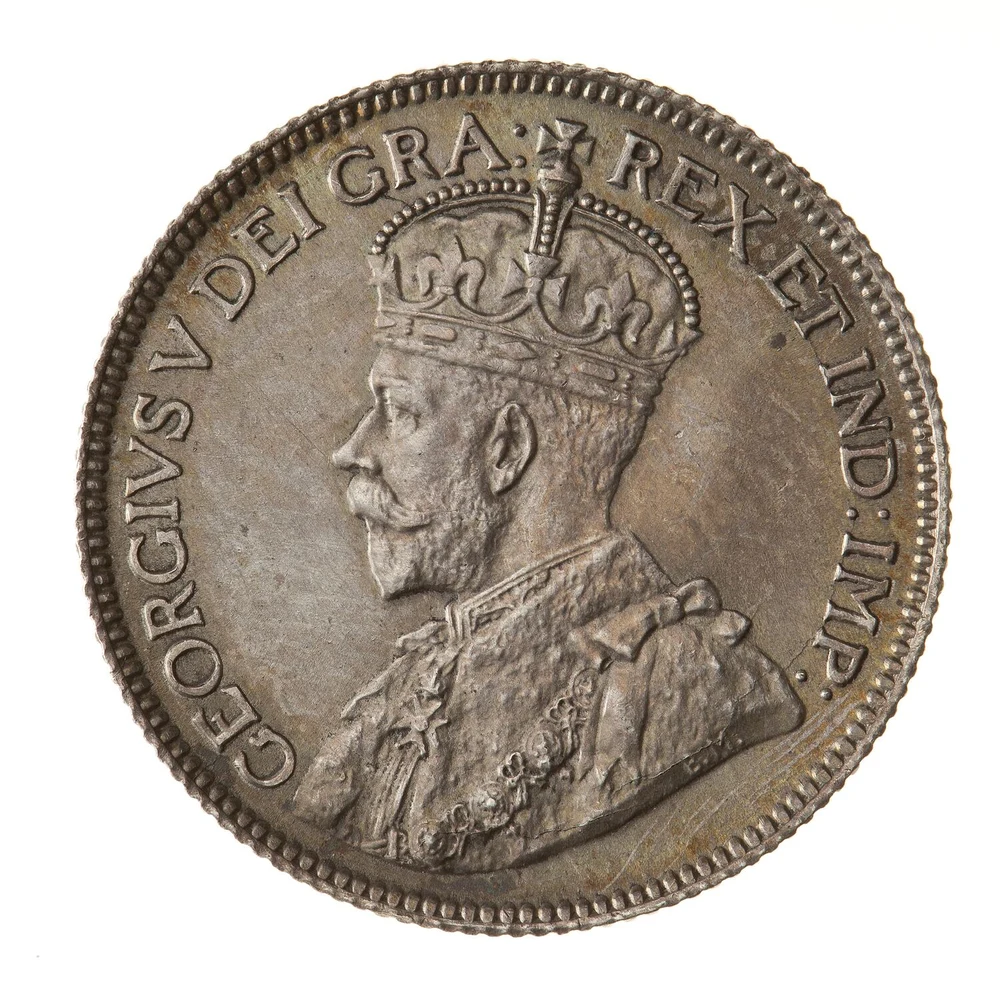
Photo credits and rights on the linked coin profile.
Canada • 92.5% silver; 7.5% copper
Issue years: 1910–1919
Fine silver: 0.173400 troy oz
Photographs can help identify your coin. An appraisal may consider authenticity, condition and collector demand as well as metal content.
Request a photo appraisal View current silver coin buying information
