
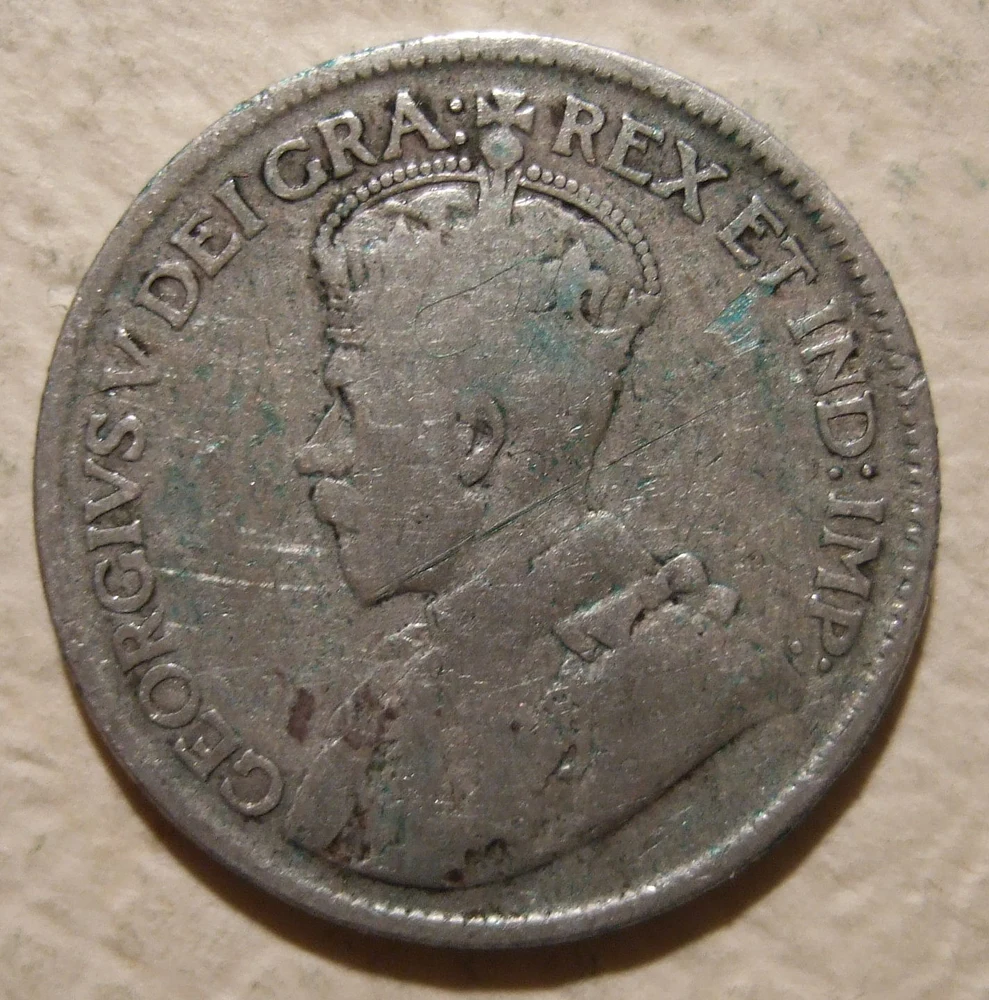
Canadian Quarter — 80% Silver
Photo credits and rights on the linked coin profile.
Canada • 80.0% silver; balance copper
Issue years: 1920–1921, 1927–1967
Fine silver: 0.150000 troy oz
Canada • 25 Canadian cents
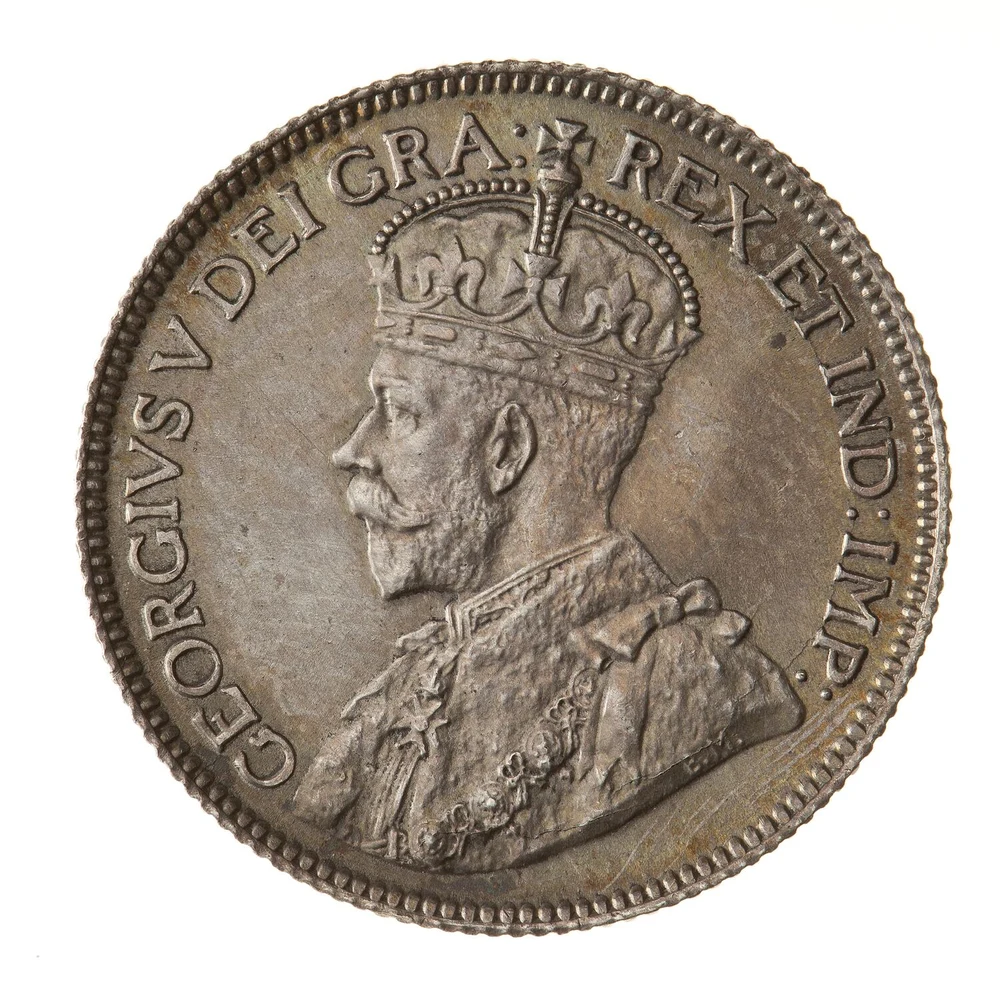
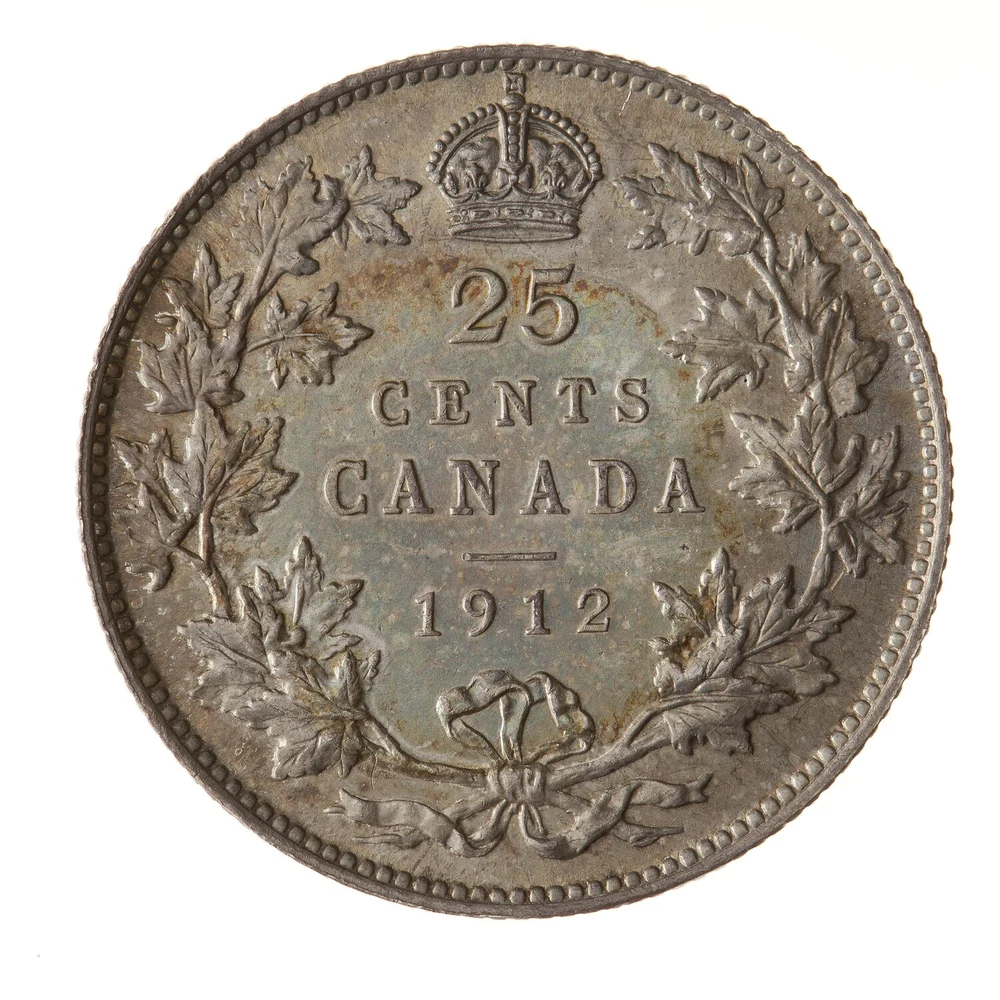
Canadian sterling quarters dated 1910–1919 in the heavier the reference type group contain .1734 reference fine silver troy ounce per matching coin. All ten dates are confirmed: 1910, 1911, 1912, 1913, 1914, 1915, 1916, 1917, 1918 and 1919. Earlier .925 quarters have a different nominal weight and .1728-ounce reference; keep them outside this calculation. The two genuine photographs show a 1912 George V working strike from Ottawa.
When a fresh spot bid is available, melt values use fine-metal content × spot bid. CashForCoins guide buying offers use the separately configured percentage for each metal. Selected rare/numismatic coins require an appraisal. Dollar amounts remain unavailable when a fresh quote or buying percentage is missing.
Ten confirmed dates for the heavier 5.8319-g / .1734-ounce sterling quarter: KM11a, KM18 and KM24. Earlier KM5/KM11 quarters have 5.8100 g / .1728 ounce and are excluded, despite the retained broad melt-reference URL. The quarter includes 1915, unlike the half dollar. Identify the 1911/1912 legend boundary and actual finish separately.
Formula: specified fine-metal troy ounces × quantity. Dollar melt value additionally requires an approved current metal price.
The illustrated obverse shows a crowned George V bust facing left, draped shoulders and B.M. initials near the bust truncation. Its outer legend includes GEORGIVS V and DEI GRA. This is the photographed 1912 type, not every quarter in the period. The 1910 Edward VII type faces right. The 1911 George V legend omits DEI GRA, which appears on the 1912–1919 type. Preserve the complete portrait and legend in an appraisal image rather than identifying by a cropped royal head.
The photographed reverse reads 25 CENTS, CANADA and 1912. A crown sits above the denomination, with maple branches enclosing the lettering and joining at a ribbon below. Read 25 carefully: other Canadian silver denominations share a crown-and-wreath arrangement. The date belongs to this physical coin’s design; the photograph does not certify the striking year, mint, grade or authenticity of another example. Later quarters also retain 25 cents as a denomination despite changes to their design and composition.
The reference distinguishes the heavier Edward VII quarter in 1910 as KM11a, followed by George V in 1911 as KM18 and the revised legend in 1912 as KM24. Earlier Victoria and Edward VII quarters belong to the lighter standard shown in the table below. The Royal Canadian Mint records the quarter’s first issue in 1870 and the maple-bough reverse through 1936. Sterling ends in 1919; the .800 silver standard starts in 1920. The familiar caribou reverse begins in 1937, after this profile’s sterling period.
Confirm CANADA, 25 CENTS, a date from 1910–1919 and the matching monarch/legend type before counting. The reference’s reference mass is 5.8319 g with .925 fineness. The illustrated KM24 reference diameter is 23.5 mm; the Mint’s 23.62-mm display differs and is disclosed below. The museum describes a milled edge. Record an actual coin’s mass, diameter and edge separately. A wreath, portrait or quarter denomination alone does not distinguish an earlier lighter sterling coin, a later .800 piece, a Newfoundland issue or a modern recreation.
One identified later sterling quarter contributes .1734 reference fine silver troy ounce. Three matching coins total .5202 reference ounce and 17.4957 nominal gross grams. The nominal mass product is 5.8319 g × .925 = 5.3945075 g silver per coin; converting rounded mass and fineness may not reproduce every reported ASW digit. Use the stated the reference consistently. Three earlier 5.8100-g quarters instead correspond to .5184 reference ounce using their .1728-ounce type figure, and must not be combined into this count.
5.8100 g; .925 silver; .1728 fine silver troy ounce. Earlier standard: exclude from this calculator.
5.8100 g; .925 silver; .1728 fine silver troy ounce. Earlier standard: exclude from this calculator.
5.8319 g; .925 silver; .1734 fine silver troy ounce. Included in this calculator after identification.
5.8319 g; .925 silver; .1734 fine silver troy ounce. Included in this calculator after identification.
5.8319 g; .925 silver; .1734 fine silver troy ounce. Included in this calculator after identification.
This heavier scope has ten confirmed issue years, 1910–1919. Unlike the half dollar, it includes a 1915 issue; the Mint records 242,382 quarters for that year. KM11a, KM18 and KM24 distinguish the 1910 monarch and the 1911/1912 legend boundary. Earlier types have other varieties: the reference lists 1872H with an inverted A for V, several 1880H zero forms, an 1886/3 overdate, 1902H and two 1906 crown sizes. Those earlier varieties are identification context, not additional .1734-ounce issues. Annual coverage does not promise every mint/finish combination.
A collector may distinguish legend, crown, overdate, mint and finish varieties that a metal-only calculation cannot price. Keep any certified attribution, provenance and original packaging with the coin. The illustrated museum object is catalogued as a working strike, not a proof or specimen strike; the photograph does not grade a customer coin. Send unusual letter forms, a possible overdate or a scarce attributed variety for qualified appraisal before mixing it into a bulk lot. Preserve the surfaces and avoid cleaning them to resemble the reference.
Photograph both complete faces, the date, outer legends and the actual edge. Measure mass and diameter with suitable tools, recording the result apart from nominal catalog specifications. Weight alone does not establish authenticity, especially when sources use different diameter precision and an individual coin may be worn or altered. Exclude plated, mounted, damaged or unresolved pieces from the counted lot until their identity and alloy are examined. A matching George V portrait is useful identification evidence but is not an assay or authentication certificate.
Separate the heavier 1910–1919 sterling quarters from earlier lighter sterling pieces, later .800 and .500 silver quarters, nickel coins and other denominations. Count only the identified heavier group in this calculator. Use the existing photo-appraisal form to send clear front and back images, and mention visible variety details and actual measurements. No live dollar quote is configured; reference metal content is educational and does not establish a purchase offer, collector premium or the amount recoverable from a worn individual coin.
This profile calculates only the heavier .925 sterling quarter dated 1910–1919: the reference KM11a, KM18 and KM24 each report 5.8319 g and .1734 fine silver troy ounce, matching the selected melt reference. Earlier KM5 and KM11 use 5.8100 g and .1728 ounce; do not count those coins here. The retained URL contains the broader melt-table envelope but does not broaden this calculator scope. The Mint rounds the later mass to 5.83 g and lists 23.62 mm diameter; the reference KM24 gives 23.5 mm, used here as the illustrated type reference. The reference KM5 gives 23.88 mm and KM11 23.4 mm. Those earlier diameter displays are not this type’s specification. The museum measures its individual 1912 object at 5.841 g and 23 mm; those observations do not replace nominal inputs. The issuer’s 5.81-g technical heading overlaps 1910, while its dated 1910 mintage and the reference KM11a establish the later type. Reported ASW is a reference, not a customer assay. The ten later years and the thirty earlier dates were independently read from five the reference annual type tables. The Mint’s dated mintages corroborate 1910–1919, including 1915. Museums Victoria identifies the photographed 1912 working strike as NU7617. Both image-specific captions independently credit Justine Philip and permit CC BY 4.0 reuse. Resized WebP derivatives preserve the genuine faces with attribution. Earlier lighter quarters remain a separate subtype research task; no unexplained mass average or alloy ratio is used.
The reference KM24 type and selected melt reference report .1734 fine silver troy ounce, with 5.8319 g gross mass and .925 fineness. Three matching coins total .5202 reference ounce. Actual customer composition still requires identification.
No. The reference’s earlier Victoria KM5 type reports 5.8100 g and .1728 fine silver troy ounce. This calculator covers only the heavier 1910–1919 group; separate the earlier coin even though both types are sterling silver.
Yes. The reference annual table lists a 1915 quarter and the Mint records 242,382 produced. The half-dollar gap in that year must not be copied into the quarter’s chronology.
Content maintained by CashForCoins. Last substantive record update: 2026-10-11. Report a specification or attribution issue through our contact page.
Photo credits and rights on the linked coin profile.
Canada • 80.0% silver; balance copper
Issue years: 1920–1921, 1927–1967
Fine silver: 0.150000 troy oz
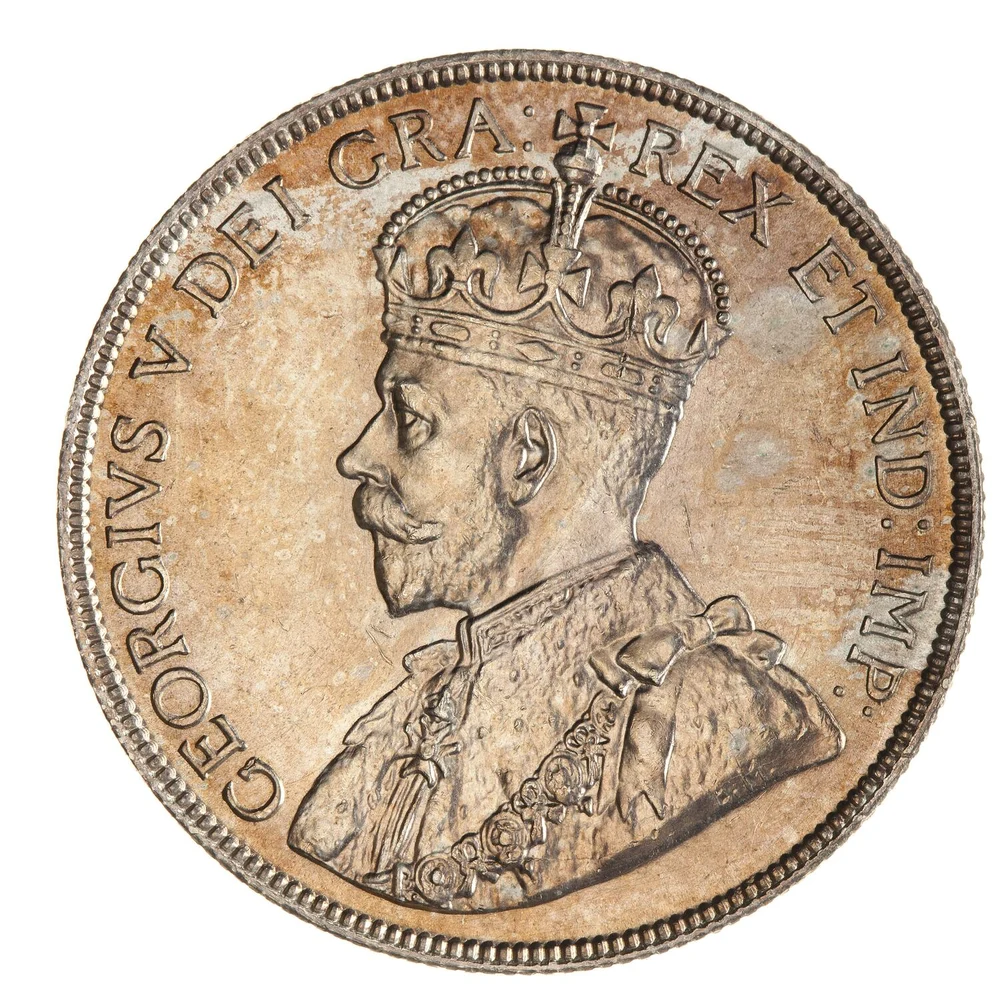
Photo credits and rights on the linked coin profile.
Canada • 92.5% silver; 7.5% copper
Issue years: 1870–1872, 1881, 1888, 1890, 1892, 1894, 1898–1914, 1916–1919
Fine silver: 0.346900 troy oz
Photographs can help identify your coin. An appraisal may consider authenticity, condition and collector demand as well as metal content.
Request a photo appraisal View current silver coin buying information
