Victoria Young Head Gold Sovereign uses the 22-carat sovereign standard, eleven-twelfths gold. At nominal standard mass 7.98805 g, fine gold is approximately 7.322379 g or 0.235420 troy oz. This is the full sovereign with Victoria’s young-head portrait and the standard British shield or St George reverse. A half sovereign, an earlier large Tudor sovereign and a distinct Sydney-type reverse are not identified by this photograph.
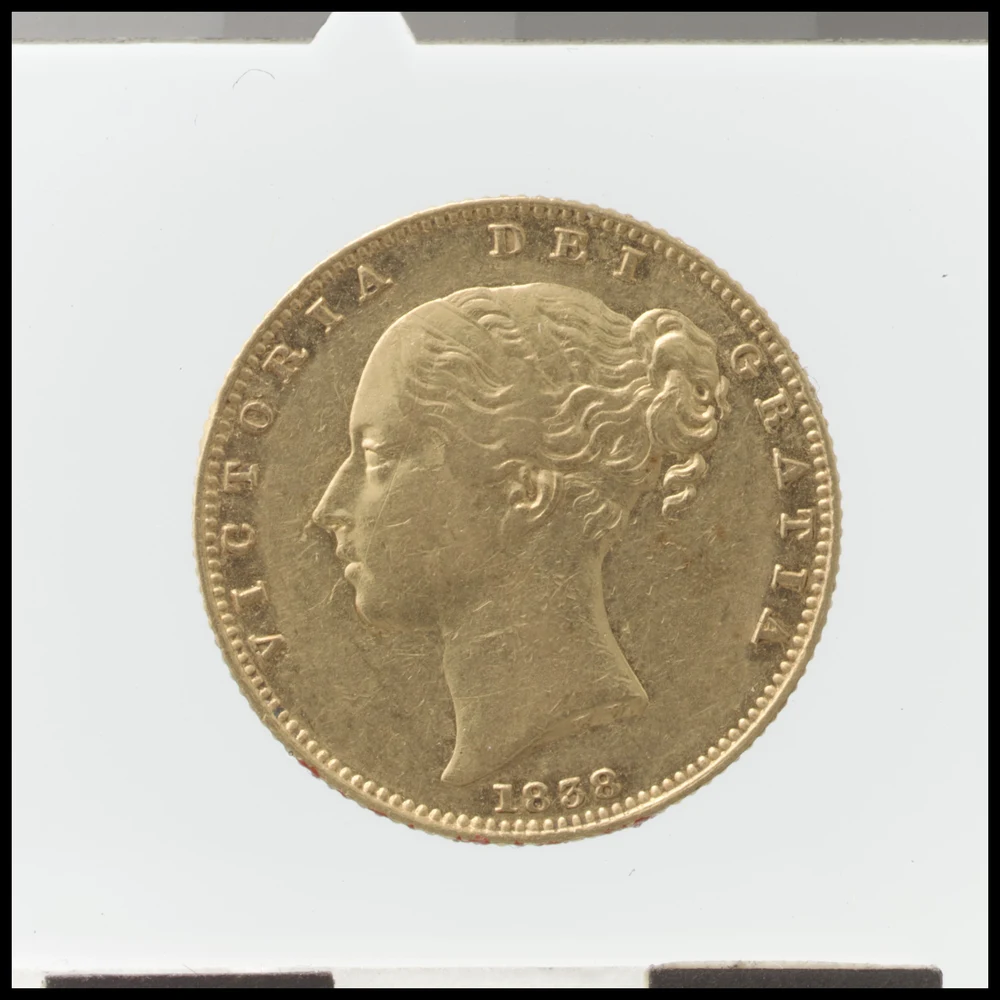
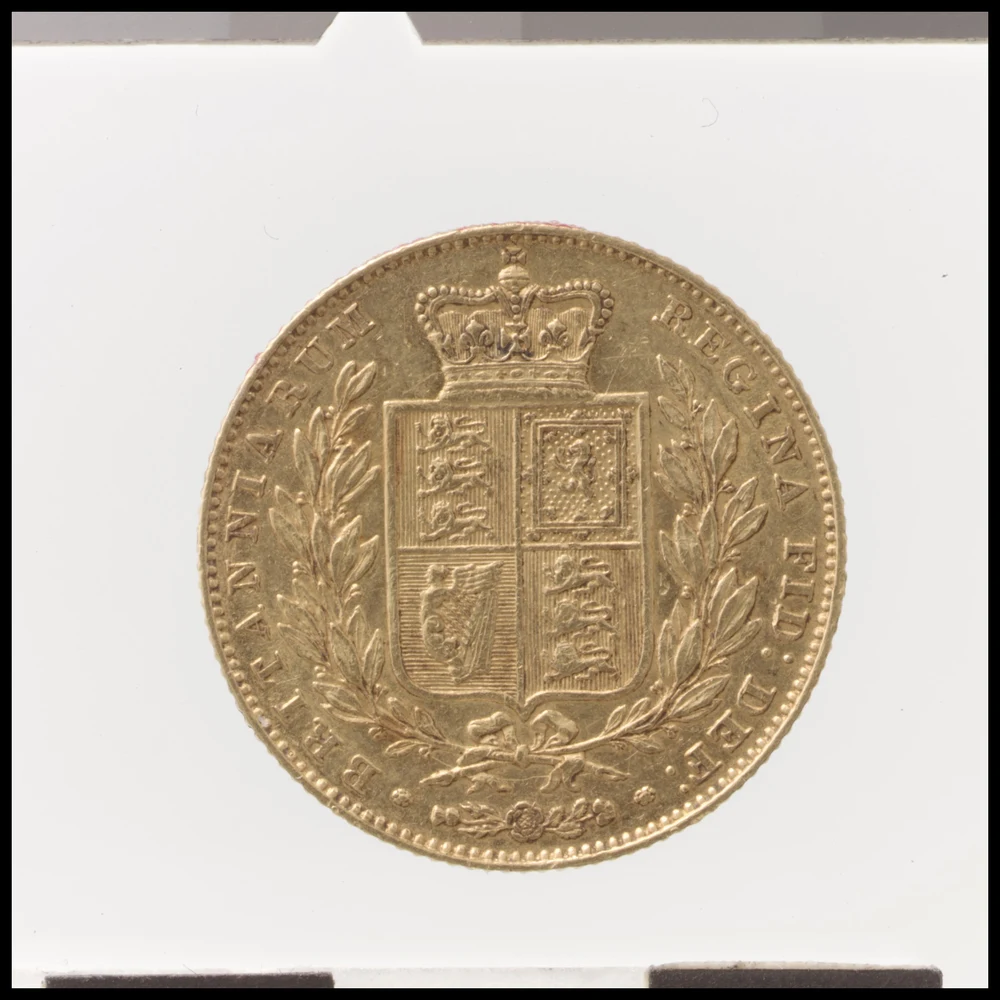
Obverse — 1838 Victoria young-head full sovereign with shield reverse; Met accession 2001.217.18 The Metropolitan Museum of Art; Open Access CC0; accession 2001.217.18; resized WebP; coin artist is separate from photographer · Image source · CC0 1.0 — Open Access photographReverse — 1838 Victoria young-head full sovereign with shield reverse; Met accession 2001.217.18 The Metropolitan Museum of Art; Open Access CC0; accession 2001.217.18; resized WebP; coin artist is separate from photographer · Image source · CC0 1.0 — Open Access photograph
When a fresh spot bid is available, melt values use fine-metal content × spot bid. CashForCoins guide buying offers use the separately configured percentage for each metal. Selected rare/numismatic coins require an appraisal. Dollar amounts remain unavailable when a fresh quote or buying percentage is missing.
Verified coin specifications
Country
United Kingdom
Face denomination
1 pound sterling
Composition
22-carat gold: eleven-twelfths gold and one-twelfth alloy metal
Gross weight (grams)
7.98805
Fineness
0.916666666667
Fine-metal weight (troy oz)
0.235419956867
Diameter (mm)
22.05
Edge
Issue-dependent; inspect reference
Mint
The Royal Mint; historical branch mint varies by issue
Mint mark
Varies by issue; record any mark
Issue years
1838–1839, 1841–1866, 1868–1887
These young-head dates cover London-type shield and St George reverses, including later Australian branches. The distinct early Sydney Mint reverse needs its own identification and is not used to fill this profile’s gaps. Multiple reverses and portraits overlap in 1871 and 1887.
Source precision
Historical standard 7.98805 g and eleven-twelfths fine gold. Fine-weight override calculated using 11/12, not the rounded 12-place fineness. Royal Mint sales pages display 7.98 g; diameter 22.05 mm is issuer reference. Special weights, patterns and reproductions excluded.
Calculate this coin’s metal content
Formula: specified fine-metal troy ounces × quantity. Dollar melt value additionally requires an approved current metal price.
Obverse: identify the front
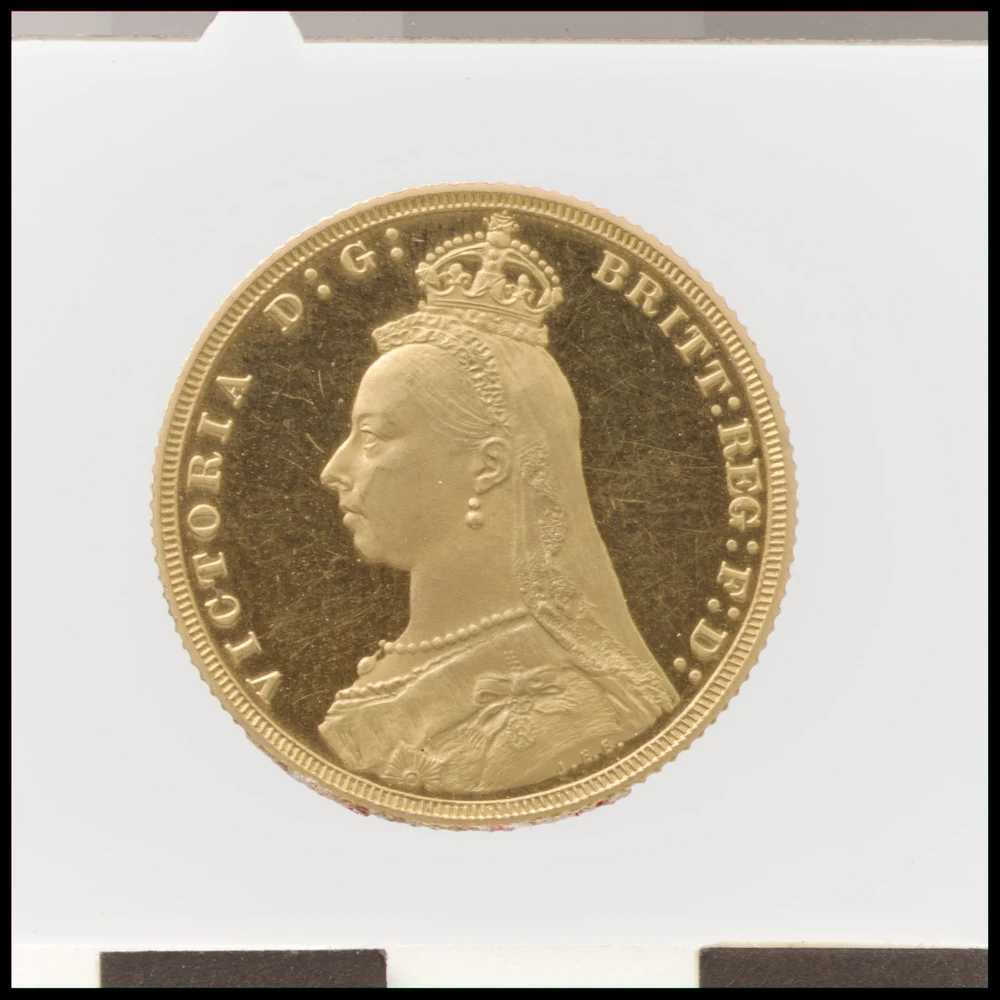
The museum specimen shows a young, uncrowned Victoria facing left. Her hair is gathered behind her head, VICTORIA DEI GRATIA surrounds the portrait and 1838 appears below. William Wyon’s portrait differs from the small crown and longer drapery of the later Jubilee head.
Reverse: identify the back
A crowned shield of the Royal Arms stands inside a wreath. The surrounding Latin legend names the queen, and floral emblems occupy the lower field. This 1838 shield reverse is representative of an early variety. Later young-head sovereigns also used St George and the dragon, so a different reverse does not automatically mean a different denomination.
History and purpose
Victoria’s sovereign coinage began in 1838. The young-head portrait continued until the Jubilee design arrived in 1887. The Royal Mint Museum describes the return of St George and the dragon in 1871; shield and rider reverses therefore need separate attribution within this portrait period.
How to identify this variant
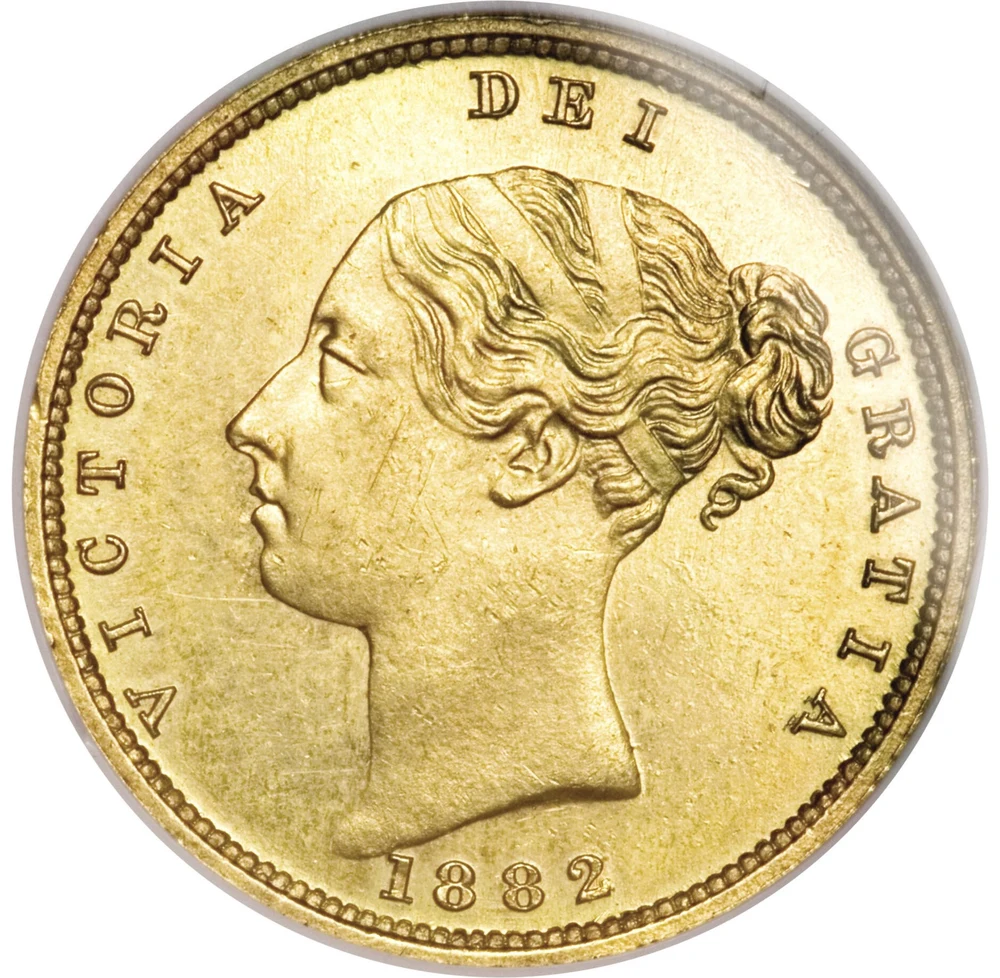
Confirm the full-sovereign size and mass before using the gold figure. These faces do not print a large ONE POUND denomination, and the related half sovereign can look similar in an unscaled photograph. Use the issuer reference of about 22.05 mm and the nominal sovereign standard together with the portrait, reverse and date.
Understanding its metal content
The calculation is 7.98805 g × 11 ÷ 12 = approximately 7.322379 g fine gold. Divide that result by 31.1034768 to obtain approximately 0.235420 troy oz. Eleven-twelfths is the 22/24 carat fraction; the database stores a rounded decimal fraction and a fine-weight override calculated from the rational standard. The remainder is alloy metal, not extra gold. This is nominal content, not an assay of a worn or mounted specimen.
Dates, varieties and composition changes
The 1838–1887 span is the portrait period, not a list of annual mint/reverse combinations. Both young-head and Jubilee-head coins can be dated 1887. Branch-mint marks, shield details and die variations are separate checks. The distinctive early Sydney design requires its own issue attribution and must not be assumed to match this London-type photograph.
Melt value versus collector value
The 1838 museum coin is a first-year visual example, not a rarity or grade assigned to another piece. Preserve dates, marks, original surfaces and any provenance. A shared sovereign gold standard does not make a circulated shield coin and a special collector issue equally valued.
Authenticity and condition
Compare both faces, the complete Latin legends, date, physical size and mass. Record the edge instead of assuming that a face photograph shows it. Patterns, replicas and jewelry mounts can complicate identification; have uncertain pieces evaluated without cleaning, filing or removing a mount yourself.
Selling this coin
Describe the lot as full Victoria young-head sovereigns and distinguish shield from rider reverses where possible. Include a measured diameter, both-side photos, any mint mark and packaging or holder details. A nominal gold total is useful for classification but does not establish an accepted purchase offer.
Sources and calculation methodology
The original 1870 schedule records the historical denomination standard; the 1971 schedule gives the same metric standard and eleven-twelfths gold fraction. The issuer’s coin pages use shorter display weights, which are retained as rounded references rather than substituted into the standard calculation. Historical legislation is cited for specifications, not current legal or tax advice. Design and date sources are recorded separately from photograph rights. No approved live gold-price feed is configured, so dollar melt values remain unavailable. Collector prices and buyer offers require separate evaluation.
Common questions
Does every young-head sovereign have a shield reverse?
No. The photographed 1838 example has a shield. The Royal Mint Museum records the return of St George and the dragon in 1871, so reverse attribution matters within the same portrait period.
Is a full sovereign a quarter ounce of pure gold?
No. At the documented sovereign standard it contains approximately 0.235420 troy oz nominal fine gold. A quarter-ounce bullion coin is a different amount and needs its own record.
References
Royal Mint: exact photographed denomination and design context — identity; photographed 1838 full sovereign; design William Wyon obverse, Jean Baptiste Merlen shield reverse; fineness 22 carat; rounded weight 7.98 g; diameter 22.05 mm (checked 2026-10-10)
Historical Coinage Act 1870: first schedule — identity; weight 7.98805 g historical metric standard; fineness eleven-twelfths; denomination standard, not a current legal claim (checked 2026-10-10)
Met collection: photographed 1838 sovereign — identity; date 1838; design William Wyon; accession 2001.217.18; image marked Public Domain; museum diameter rounded 23 mm is not used as the issuer specification (checked 2026-10-10)
We use cookies to offer you a better browsing experience, analyze site traffic and personalize content. Read about how we use cookies and how you can control them in our Privacy Policy. If you continue to use this site, you consent to our use of cookies.