


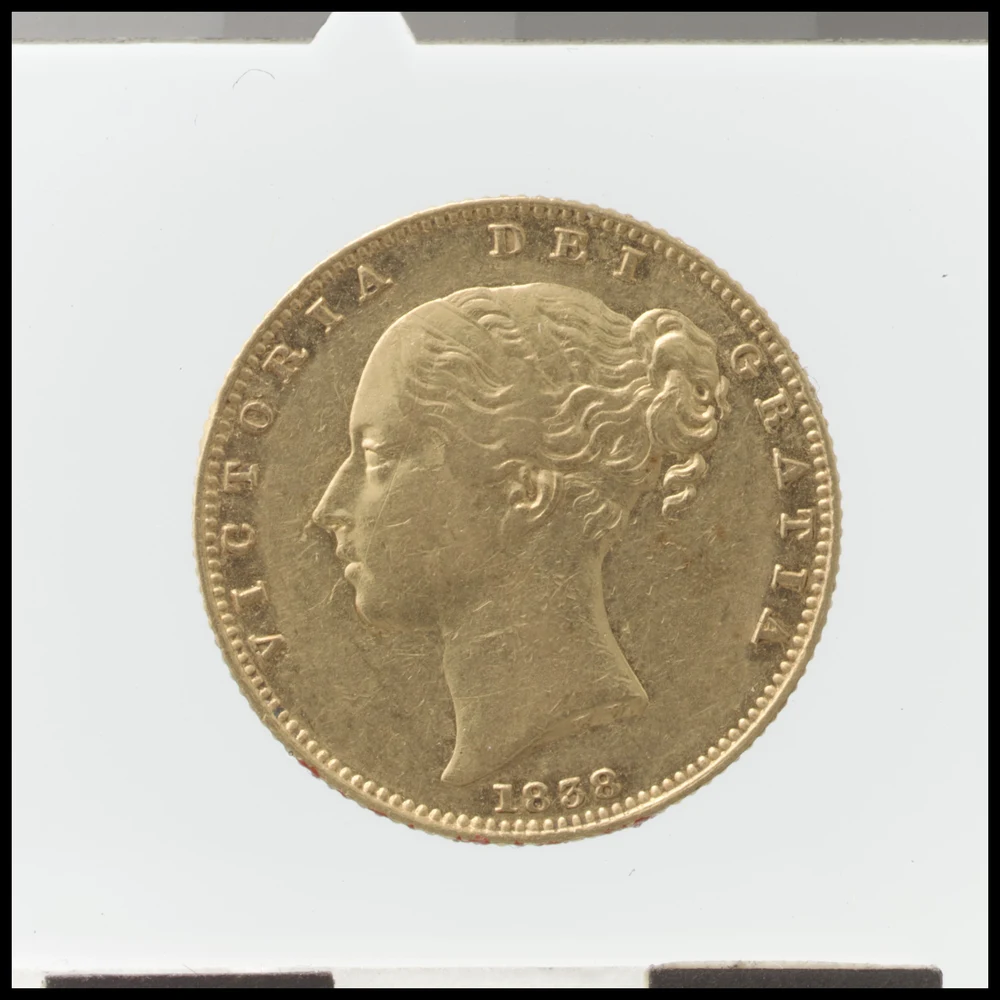
Victoria Young Head Gold Sovereign
Photo credits and rights on the linked coin profile.
United Kingdom • 22-carat gold: eleven-twelfths gold and one-twelfth alloy metal
Issue years: 1838–1839, 1841–1866, 1868–1887
Fine gold: 0.235420 troy oz
United Kingdom • 0.5 pounds sterling
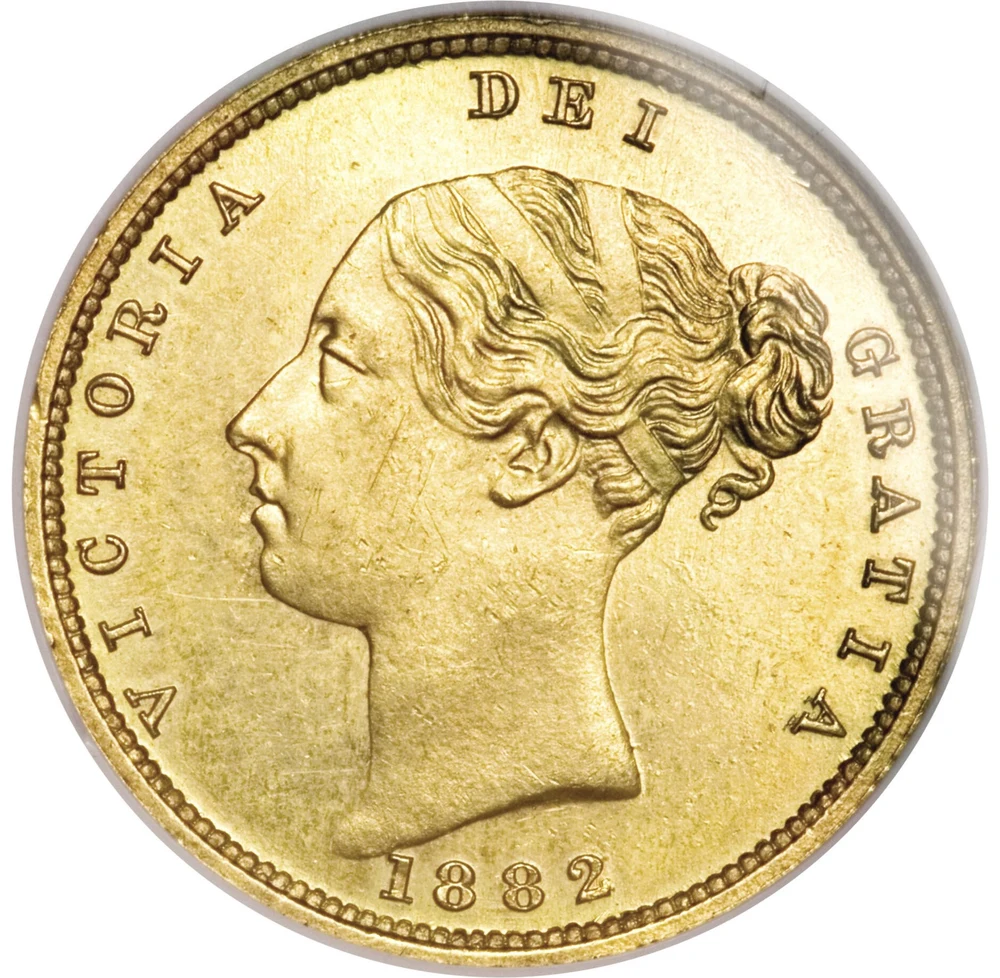
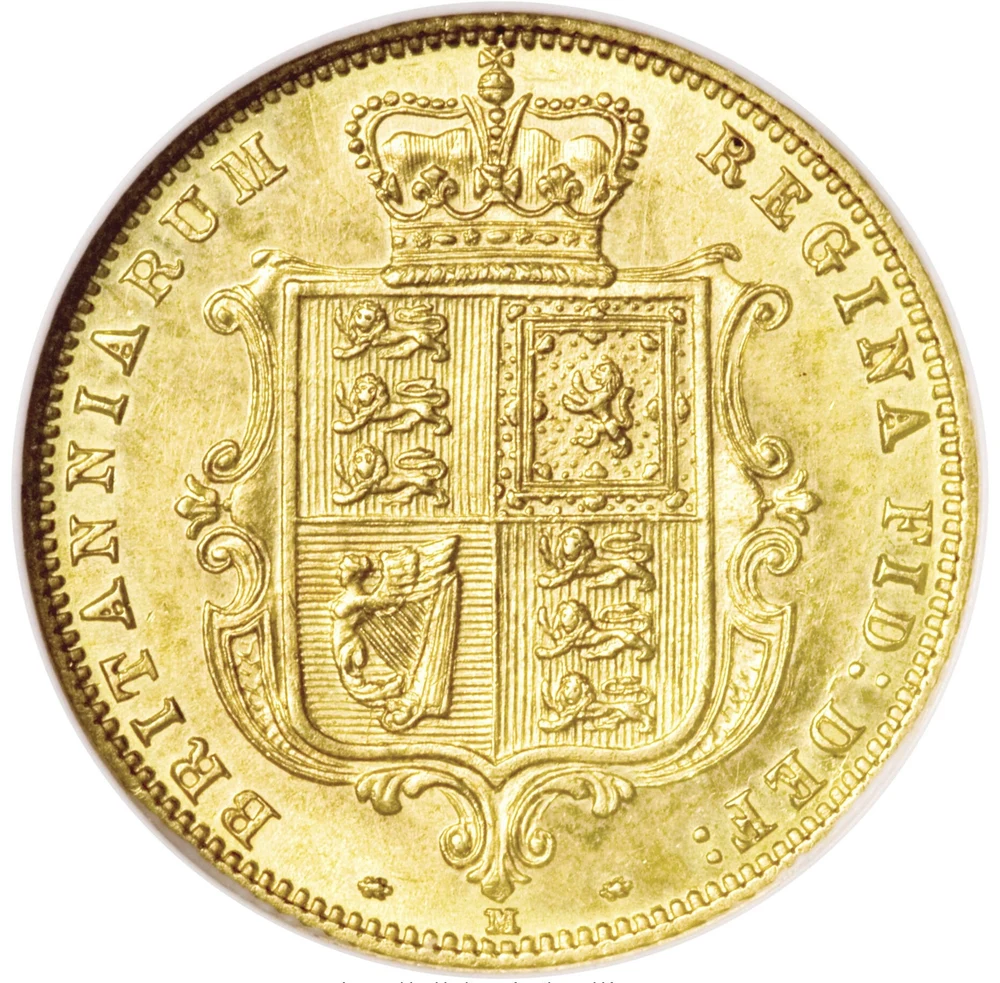
Victoria Young Head Gold Half Sovereign uses the 22-carat sovereign standard, eleven-twelfths gold. At nominal standard mass 3.99402 g, fine gold is approximately 3.661185 g or 0.117710 troy oz. This is the half denomination with Victoria’s youthful portrait, including documented Australian branch issues. It is smaller than the full sovereign. The representative 1882-M pair is a Melbourne coin, so its British denomination does not imply manufacture in London.
When a fresh spot bid is available, melt values use fine-metal content × spot bid. CashForCoins guide buying offers use the separately configured percentage for each metal. Selected rare/numismatic coins require an appraisal. Dollar amounts remain unavailable when a fresh quote or buying percentage is missing.
These young-head shield dates combine London and later Australian branch issues; 1839 is a proof date. The distinct early Sydney Mint reverse is outside this profile. Date, mint mark and reverse must be identified together.
Formula: specified fine-metal troy ounces × quantity. Dollar melt value additionally requires an approved current metal price.
Victoria faces left with her hair gathered behind her head. VICTORIA DEI GRATIA follows the rim and 1882 is below the neck on this specimen. William Wyon’s young portrait lacks the small crown of the Jubilee head and the veil of the later portrait.
A crowned shield occupies the center, with the royal legend around it. Look below the shield for the small Melbourne M on the reference coin. Jean Baptiste Merlen’s shield reverse is a denomination and type clue; it does not by itself distinguish a full sovereign from a half sovereign.
The Royal Mint’s Victoria half-sovereign set describes the young-head issue beginning in 1838. Its table ends that group at 1886, while the PCGS certification reference documents an 1887-S Australian young-head half sovereign. The broader date boundary here includes that branch issue rather than silently treating the issuer’s set table as a worldwide census.
Check the youthful portrait, date and shield together, then measure the coin. The half-sovereign reference diameter is 19.30 mm and its nominal standard mass is 3.99402 g. A similar full sovereign is 22.05 mm and almost twice as heavy. Screen dimensions and an auction holder cannot replace physical denomination checks.
The calculation is 3.99402 g × 11 ÷ 12 = approximately 3.661185 g fine gold. Divide that result by 31.1034768 to obtain approximately 0.117710 troy oz. Eleven-twelfths is the 22/24 carat fraction; the database stores a rounded decimal fraction and a fine-weight override calculated from the rational standard. The remainder is alloy metal, not extra gold. This is nominal content, not an assay of a worn or mounted specimen.
The 1838–1887 endpoints describe a type range, not uninterrupted production at every mint. Read the mint mark and verify the actual year against a denomination-specific reference. Australian branch geography matters when attributing the photographed M issue; it is not a modern service-area or location page.
A scarce date, mint, proof finish or unusually preserved shield can matter beyond the common gold standard. Preserve holders and provenance and separate type varieties before requesting an offer. This guide does not assign a grade or copy auction prices into the calculator.
Use both faces, lettering, date, mass and diameter as combined checks. A gold color or plausible shield does not establish authenticity. Mounted, filed or heavily worn coins need individual evaluation; do not clean the surface or infer an edge variety from these face photographs.
Describe these as Victoria young-head half sovereigns and list quantities by date and mint. Include a scale reading and clear photographs of the portrait, shield and small mint mark. Keep full sovereigns in a separate calculator entry so their larger gold content is retained.
The original 1870 schedule records the historical denomination standard; the 1971 schedule gives the same metric standard and eleven-twelfths gold fraction. The issuer’s coin pages use shorter display weights, which are retained as rounded references rather than substituted into the standard calculation. Historical legislation is cited for specifications, not current legal or tax advice. Design and date sources are recorded separately from photograph rights. No approved live gold-price feed is configured, so dollar melt values remain unavailable. Collector prices and buyer offers require separate evaluation.
No. The licensed 1882-M specimen is a Melbourne issue. The catalog’s British-denomination grouping is separate from the coin’s mint location.
The Royal Mint set table describes its own young-head group through 1886. A separately documented PCGS 1887-S young-head half sovereign establishes the Australian branch endpoint used in this broader type guide.
Content maintained by CashForCoins. Last substantive record update: 2026-10-10. Report a specification or attribution issue through our contact page.
Photo credits and rights on the linked coin profile.
United Kingdom • 22-carat gold: eleven-twelfths gold and one-twelfth alloy metal
Issue years: 1838–1839, 1841–1866, 1868–1887
Fine gold: 0.235420 troy oz
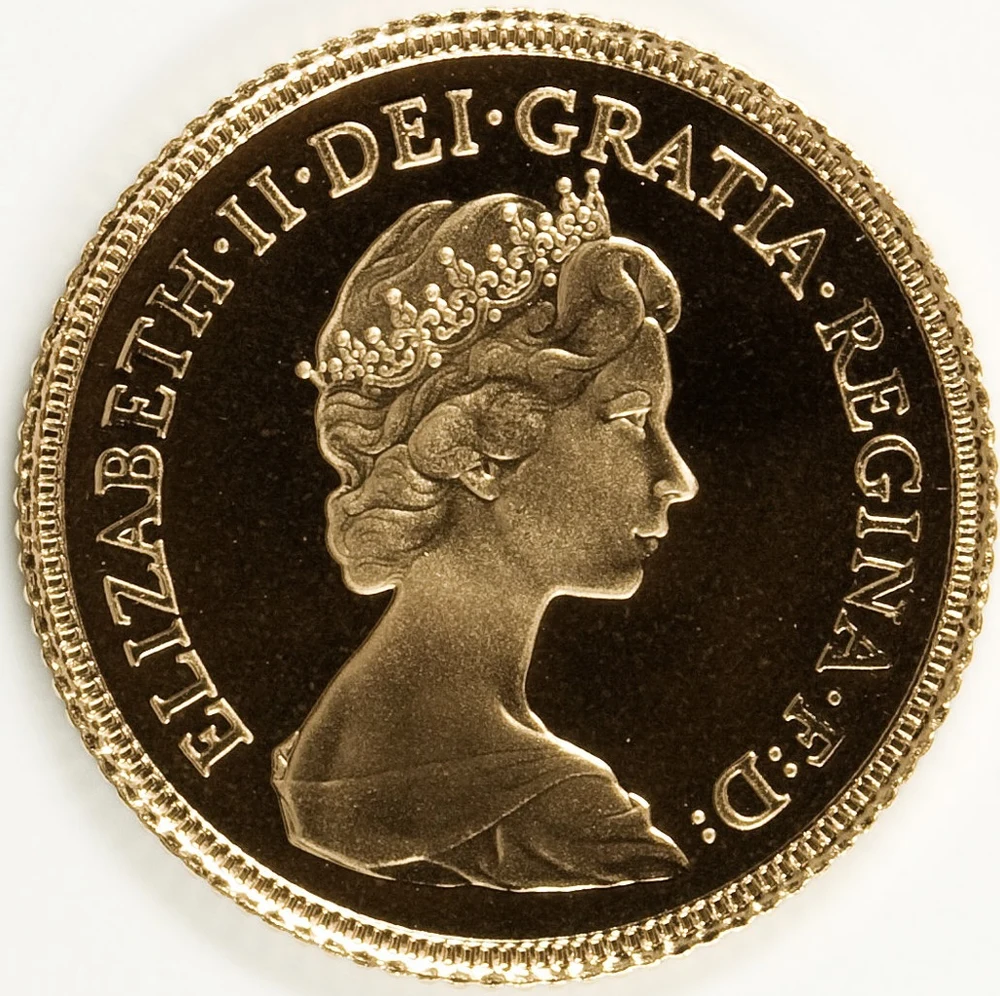
Photo credits and rights on the linked coin profile.
United Kingdom • 22-carat gold: eleven-twelfths gold and one-twelfth alloy metal
Issue years: 1980, 1982–2022
Fine gold: 0.117710 troy oz
Photographs can help identify your coin. An appraisal may consider authenticity, condition and collector demand as well as metal content.
Request a photo appraisal View current gold coin buying information
