


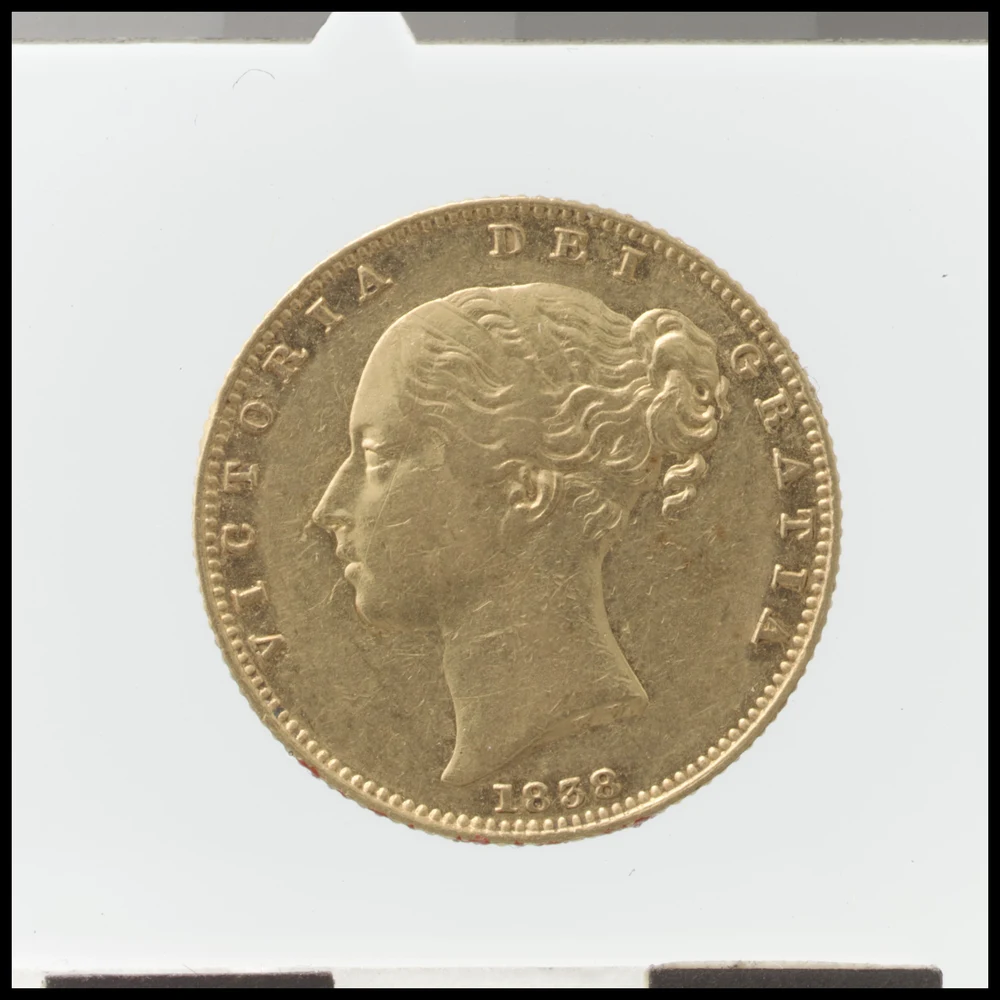
Victoria Young Head Gold Sovereign
Photo credits and rights on the linked coin profile.
United Kingdom • 22-carat gold: eleven-twelfths gold and one-twelfth alloy metal
Issue years: 1838–1839, 1841–1866, 1868–1887
Fine gold: 0.235420 troy oz
United Kingdom • 1 pound sterling
Victoria Jubilee Head Gold Sovereign uses the 22-carat sovereign standard, eleven-twelfths gold. At nominal standard mass 7.98805 g, fine gold is approximately 7.322379 g or 0.235420 troy oz. This covers the standard-weight full sovereign with Victoria’s Jubilee portrait. The pictured 1887 proof is representative of the design; proof quality and collector value are not transferred to all coins of the type.
When a fresh spot bid is available, melt values use fine-metal content × spot bid. CashForCoins guide buying offers use the separately configured percentage for each metal. Selected rare/numismatic coins require an appraisal. Dollar amounts remain unavailable when a fresh quote or buying percentage is missing.
The Jubilee portrait appears with the young head in 1887. Australian Jubilee issues continue in 1893, when the veiled portrait also appears. A date alone does not distinguish these portraits or mint-year combinations.
Formula: specified fine-metal troy ounces × quantity. Dollar melt value additionally requires an approved current metal price.
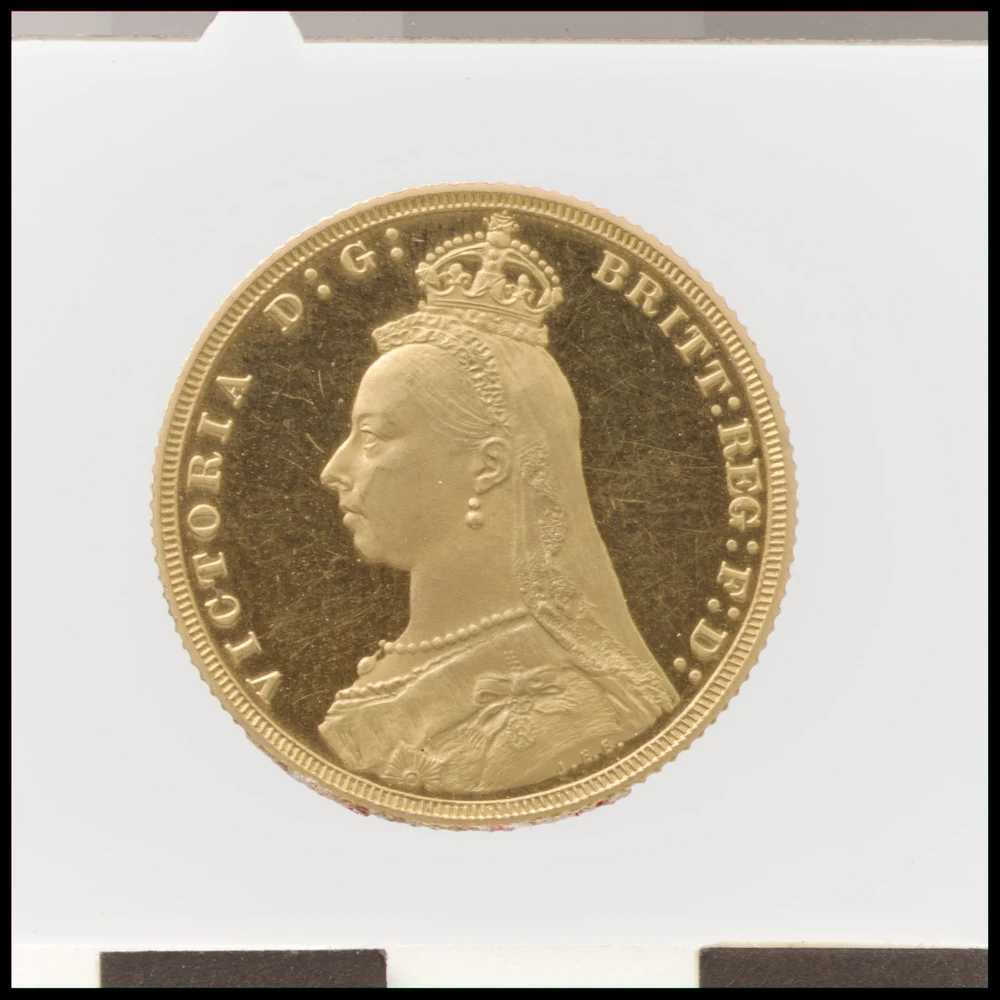
Victoria faces left with a small crown, veil, earrings and draped clothing. The longer bust and royal jewelry distinguish the Jubilee portrait from the earlier young head. The Latin legend follows the rim. The Met records Joseph Edgar Boehm as the portrait artist on its 1887 proof specimen.
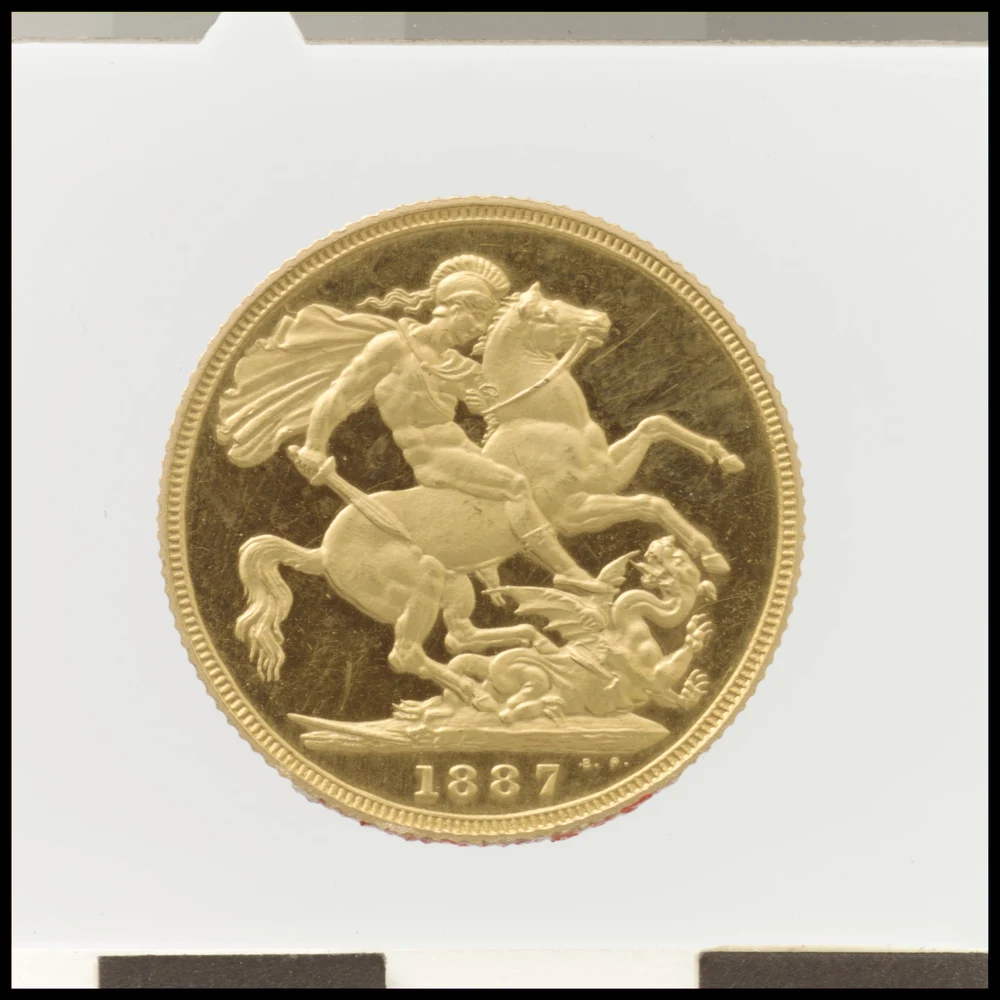
St George rides a rearing horse above a fallen dragon, with a flowing cape and the date 1887 in the lower field. This is Pistrucci’s rider design. The related Jubilee half sovereign has a different denomination and may have a shield reverse; confirm the full-sovereign dimensions rather than matching only the queen’s face.
The Jubilee portrait began in 1887, the fiftieth anniversary of Victoria’s accession. Royal Mint references place this portrait group in 1887–1893 before the veiled-head transition. The coin date refers to the issue, while the anniversary refers to the reign; those are different historical dates.
Look for the small crown and long draped bust, then the rider reverse and complete date. A full sovereign has a reference diameter of 22.05 mm and the documented standard mass, not the smaller half-sovereign size. These coins do not display a prominent one-pound face-value numeral, making physical denomination checks useful.
The calculation is 7.98805 g × 11 ÷ 12 = approximately 7.322379 g fine gold. Divide that result by 31.1034768 to obtain approximately 0.235420 troy oz. Eleven-twelfths is the 22/24 carat fraction; the database stores a rounded decimal fraction and a fine-weight override calculated from the rational standard. The remainder is alloy metal, not extra gold. This is nominal content, not an assay of a worn or mounted specimen.
Young-head and Jubilee coins overlap in 1887; Jubilee and veiled-head attribution requires care around 1893. Mint marks and portrait or legend details must be checked against the exact issue. A reflective surface alone does not establish a proof, and a reference proof photograph does not identify another coin’s finish.
Keep proofs, original packaging and certified pieces individually identified. The representative proof is in a museum collection with its own accession record. Its surfaces and attribution cannot grade another specimen. Nominal gold content remains separate from issue rarity, preservation and collector demand.
Examine the portrait, letters, date, rider details and physical measurements together. Check the actual edge rather than inferring it from two face photos; issuer descriptions identify the standard 1887 proof as milled. Preserve holders and avoid polishing or destructive tests when resolving an uncertain identification.
Separate full sovereigns from halves and record the date, mint mark and finish evidence. Both-side images should show the entire rim and lower date. A packaging or certificate photo can support an appraisal request without asserting a grade from the museum reference.
The original 1870 schedule records the historical denomination standard; the 1971 schedule gives the same metric standard and eleven-twelfths gold fraction. The issuer’s coin pages use shorter display weights, which are retained as rounded references rather than substituted into the standard calculation. Historical legislation is cited for specifications, not current legal or tax advice. Design and date sources are recorded separately from photograph rights. No approved live gold-price feed is configured, so dollar melt values remain unavailable. Collector prices and buyer offers require separate evaluation.
No. The museum example is an 1887 proof. Proof, circulation and other finish identification requires evidence about your actual coin and any original documentation.
No. Transition years can contain more than one portrait type. Read the bust and reverse as well as the date, especially in 1887 and 1893.
Content maintained by CashForCoins. Last substantive record update: 2026-10-10. Report a specification or attribution issue through our contact page.
Photo credits and rights on the linked coin profile.
United Kingdom • 22-carat gold: eleven-twelfths gold and one-twelfth alloy metal
Issue years: 1838–1839, 1841–1866, 1868–1887
Fine gold: 0.235420 troy oz
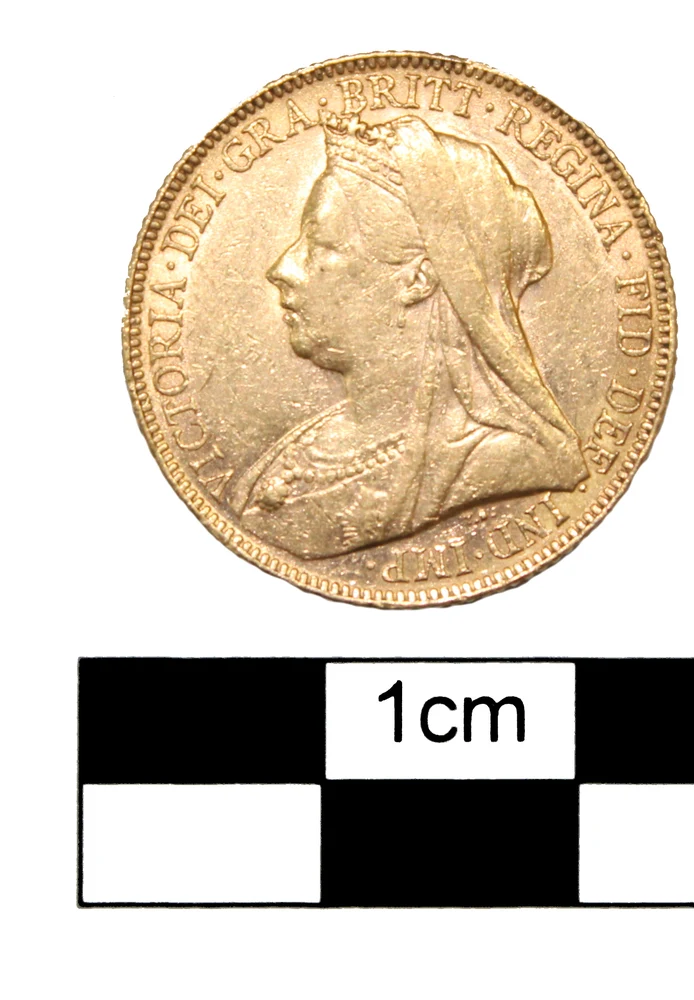
Photo credits and rights on the linked coin profile.
United Kingdom • 22-carat gold: eleven-twelfths gold and one-twelfth alloy metal
Issue years: 1893–1901
Fine gold: 0.235420 troy oz
Photographs can help identify your coin. An appraisal may consider authenticity, condition and collector demand as well as metal content.
Request a photo appraisal View current gold coin buying information
