


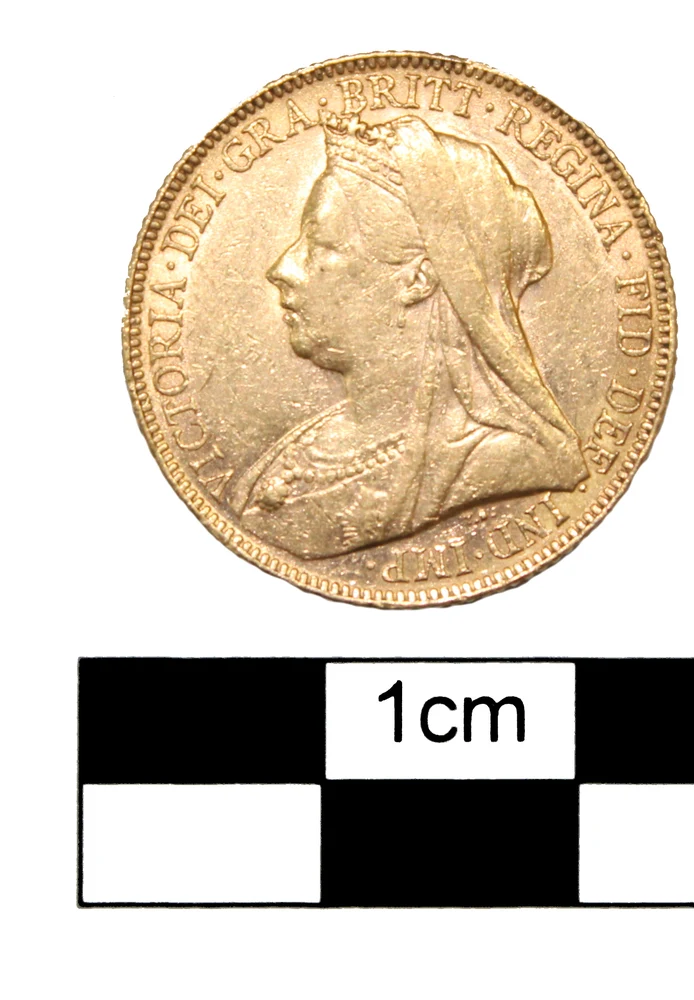
Victoria Veiled Head Gold Sovereign
Photo credits and rights on the linked coin profile.
United Kingdom • 22-carat gold: eleven-twelfths gold and one-twelfth alloy metal
Issue years: 1893–1901
Fine gold: 0.235420 troy oz
United Kingdom • 1 pound sterling
Edward VII Gold Sovereign uses the 22-carat sovereign standard, eleven-twelfths gold. At nominal standard mass 7.98805 g, fine gold is approximately 7.322379 g or 0.235420 troy oz. This is the standard-weight full sovereign of Edward VII’s coinage period. A similar portrait on a half, double or five-sovereign piece requires a different denomination record.
When a fresh spot bid is available, melt values use fine-metal content × spot bid. CashForCoins guide buying offers use the separately configured percentage for each metal. Selected rare/numismatic coins require an appraisal. Dollar amounts remain unavailable when a fresh quote or buying percentage is missing.
These Edward VII sovereign dates include branch mints and differing finishes. The monarch’s 1901 accession is not a dated issue in this profile.
Formula: specified fine-metal troy ounces × quantity. Dollar melt value additionally requires an approved current metal price.
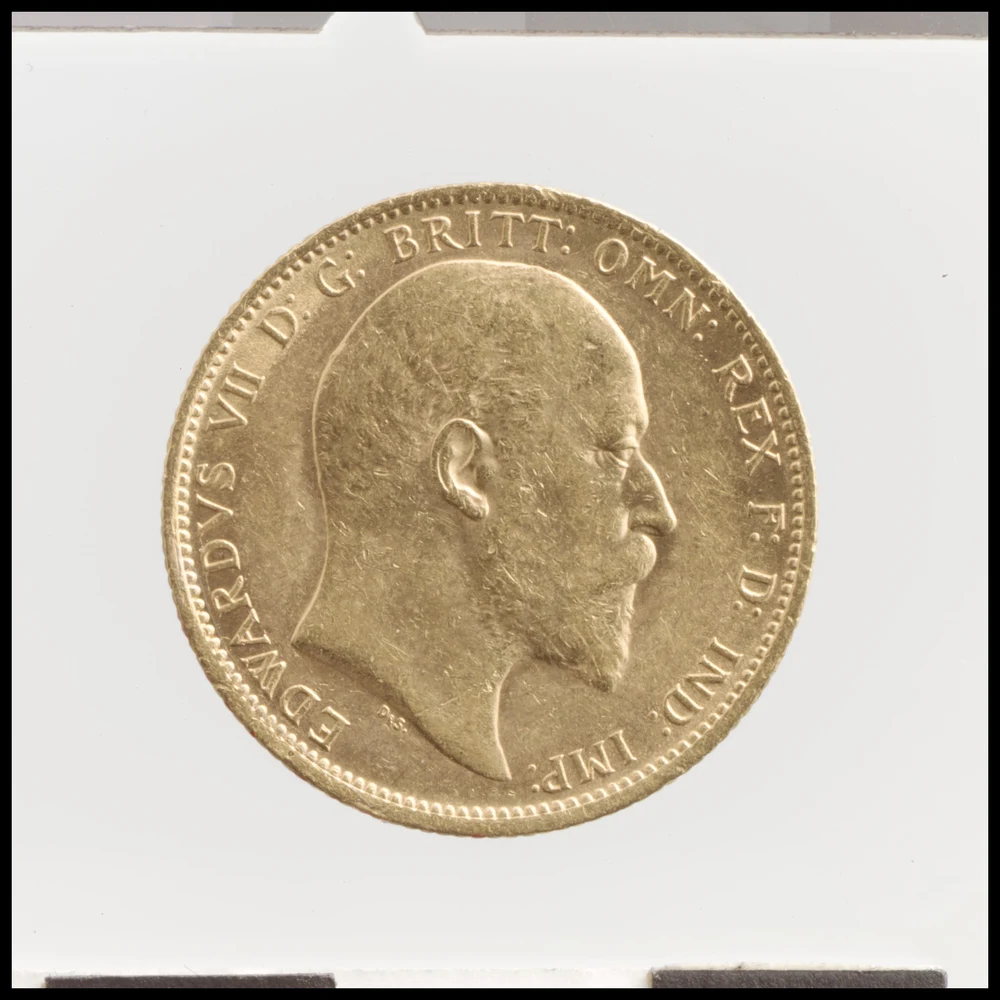
The 1902 museum example shows Edward VII facing right with a bare head and a short beard. The Latin royal legend circles the bust, and designer initials sit below its truncation. The portrait direction and beard distinguish Edward from the left-facing Victoria and later George V types.
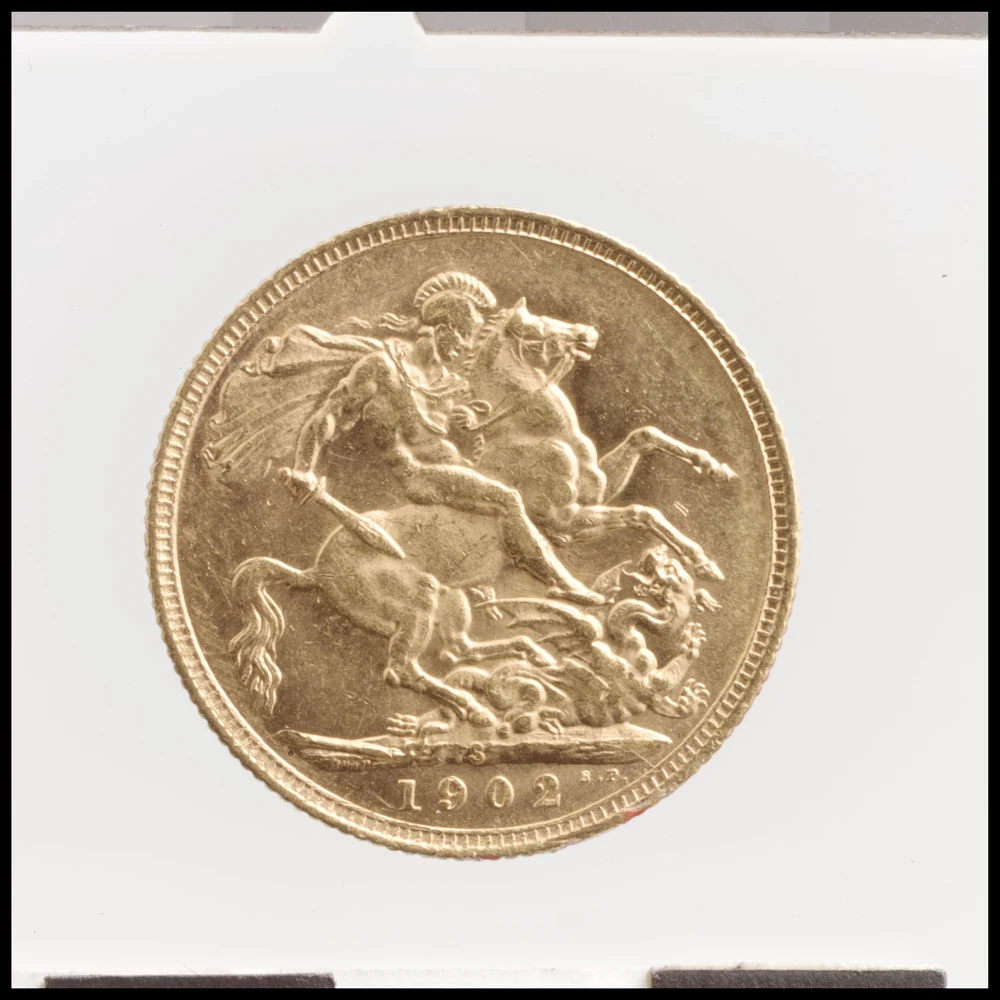
St George, mounted on a horse, strikes the dragon, with a cape extending behind him. The date 1902 lies below the scene. Pistrucci’s design also appears on other sovereign denominations, so the reverse motif is not a reliable size or fine-weight indicator by itself.
Edward became king after Victoria’s death in 1901, but his first sovereign coinage was dated 1902. The Royal Mint credits de Saulles with the portrait, paired with the established rider reverse. The last year of Edward’s reign and sovereign group was 1910, preceding George V’s coinage.
Read the full royal legend and year, then confirm that it is a full sovereign near the 22.05 mm issuer reference diameter and documented nominal mass. A photograph does not show a trustworthy scale. Record any branch-mint mark instead of interpreting every Edward portrait as a London-minted coin.
The calculation is 7.98805 g × 11 ÷ 12 = approximately 7.322379 g fine gold. Divide that result by 31.1034768 to obtain approximately 0.235420 troy oz. Eleven-twelfths is the 22/24 carat fraction; the database stores a rounded decimal fraction and a fine-weight override calculated from the rational standard. The remainder is alloy metal, not extra gold. This is nominal content, not an assay of a worn or mounted specimen.
The issue range is 1902–1910, rather than the 1901 accession date. Branch-mint coins and different collector finishes deserve issue-level attribution. Royal Mint examples distinguish Melbourne’s M mark; other marks need their own references. The museum’s ordinary-looking photograph does not establish the finish of a different specimen.
Retain any original holder, set or ownership history. A branch mark, unusual finish or especially well-preserved surface can matter beyond the shared nominal gold amount. No scarcity, condition grade or current market premium is assigned to a user’s coin by comparison with this museum example.
Compare the head, legend, rider, complete year, mint mark, measurements and actual edge. Do not infer the edge or authenticity from these two face photographs. Mounted and altered pieces require individual examination; keep any existing certification with the coin and avoid cleaning or filing.
Describe the quantity as Edward VII full sovereigns and list dates and visible marks. Show both faces of unusual pieces, plus the holder or set where relevant. Use nominal fine gold for a collection total; appraisal evidence is needed to determine an offer for actual condition and identity.
The original 1870 schedule records the historical denomination standard; the 1971 schedule gives the same metric standard and eleven-twelfths gold fraction. The issuer’s coin pages use shorter display weights, which are retained as rounded references rather than substituted into the standard calculation. Historical legislation is cited for specifications, not current legal or tax advice. Design and date sources are recorded separately from photograph rights. No approved live gold-price feed is configured, so dollar melt values remain unavailable. Collector prices and buyer offers require separate evaluation.
The standard coinage group starts with 1902. The accession year and first sovereign issue year are different; this profile covers 1902–1910.
No. The Royal Mint identifies M on a reviewed Edward VII sovereign as Melbourne. Mint location and the British sovereign denomination are separate facts.
Content maintained by CashForCoins. Last substantive record update: 2026-10-10. Report a specification or attribution issue through our contact page.
Photo credits and rights on the linked coin profile.
United Kingdom • 22-carat gold: eleven-twelfths gold and one-twelfth alloy metal
Issue years: 1893–1901
Fine gold: 0.235420 troy oz
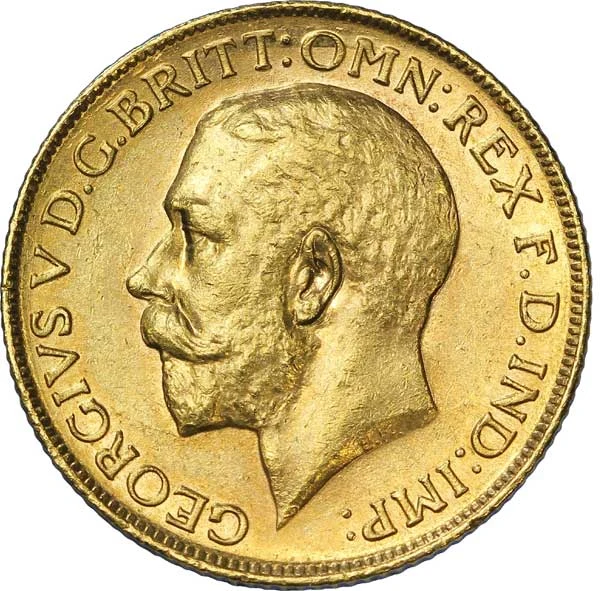
Photo credits and rights on the linked coin profile.
United Kingdom • 22-carat gold: eleven-twelfths gold and one-twelfth alloy metal
Issue years: 1911–1932
Fine gold: 0.235420 troy oz
Photographs can help identify your coin. An appraisal may consider authenticity, condition and collector demand as well as metal content.
Request a photo appraisal View current gold coin buying information
