

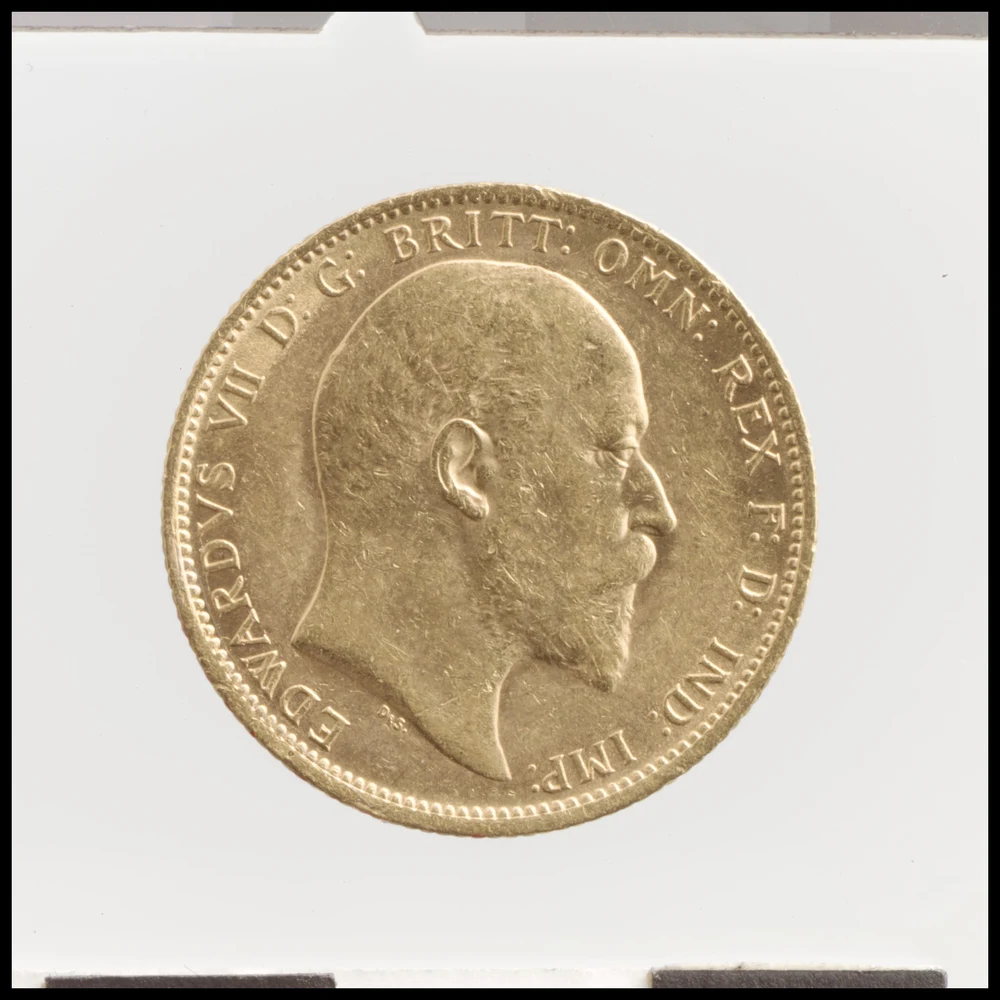
Edward VII Gold Sovereign
Photo credits and rights on the linked coin profile.
United Kingdom • 22-carat gold: eleven-twelfths gold and one-twelfth alloy metal
Issue years: 1902–1910
Fine gold: 0.235420 troy oz
United Kingdom • 1 pound sterling
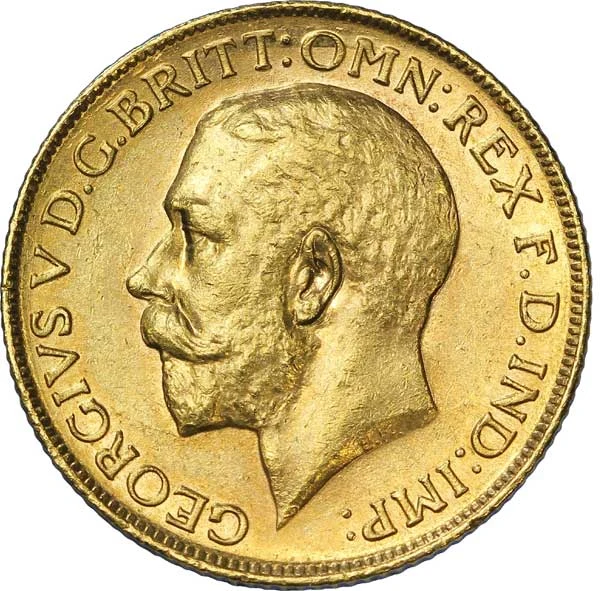
George V Gold Sovereign uses the 22-carat sovereign standard, eleven-twelfths gold. At nominal standard mass 7.98805 g, fine gold is approximately 7.322379 g or 0.235420 troy oz. This covers standard full sovereigns with George V’s portrait, including the later smaller-head type. The photographed 1912 pair shows the first portrait and St George reverse. Half sovereigns and other coins with George V’s head require their own denomination record.
When a fresh spot bid is available, melt values use fine-metal content × spot bid. CashForCoins guide buying offers use the separately configured percentage for each metal. Selected rare/numismatic coins require an appraisal. Dollar amounts remain unavailable when a fresh quote or buying percentage is missing.
These George V dates combine British and overseas branch mints. London dates are 1911–1917 and 1925; later Royal Mint restrikes retain 1925. Australian branches continue through 1931 and South Africa through 1932. The smaller portrait begins in 1929.
Formula: specified fine-metal troy ounces × quantity. Dollar melt value additionally requires an approved current metal price.
George V faces left, bareheaded, with a mustache and beard. The surrounding abbreviated royal legend includes GEORGIVS V. This 1912 example illustrates Bertram Mackennal’s first sovereign portrait; it does not illustrate the smaller effigy used on 1929–1932 issues.
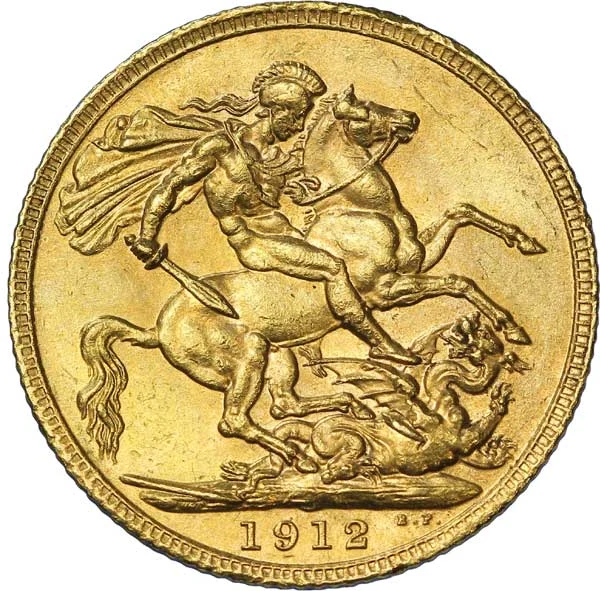
St George and his horse face right above the dragon. The complete 1912 date is below the ground line on the paired reference. Inspect any small mint letter separately; the horse-and-dragon design is shared by other sovereign denominations and monarchs.
The Royal Mint’s first-and-last set identifies 1911 and 1932 as this sovereign group’s endpoints. Its museum describes the end of everyday gold circulation during the First World War, interruptions in London production and continued branch minting. These changes in circulation history do not turn a sovereign into a one-ounce bullion coin.
Start with George V’s left-facing bare head and full sovereign size: approximately 22.05 mm with 7.98805 g nominal standard mass. Compare both faces and the date. A matching portrait on a 19.30 mm half sovereign represents a different gold quantity even when the reverse looks similar.
The calculation is 7.98805 g × 11 ÷ 12 = approximately 7.322379 g fine gold. Divide that result by 31.1034768 to obtain approximately 0.235420 troy oz. Eleven-twelfths is the 22/24 carat fraction; the database stores a rounded decimal fraction and a fine-weight override calculated from the rational standard. The remainder is alloy metal, not extra gold. This is nominal content, not an assay of a worn or mounted specimen.
The type range is 1911–1932, with production varying by mint and year. Royal Mint references identify the smaller portrait beginning in 1929 and continuing through 1932. Branch marks and portrait size are useful attribution details; do not infer continuous London production or identify a restrike’s actual striking year from its inscribed date alone.
A particular mint, portrait type, date or state of preservation may matter to a collector. The library supplies gold-content calculation and representative photographs, not a date-by-date rarity ranking. Retain certification and provenance if present; the reference photo’s appearance is not a grade for your coin.
Read the legend, complete date and any mint mark, then compare the horse, dragon, physical dimensions and measured mass. Neither a familiar monarch nor a gold-colored surface is sufficient. A suspicion of clipping, mounting or reproduction calls for individual evaluation before selecting a nominal calculator record.
Keep full and half sovereigns separate and list dates and visible mint marks. Include close views of the monarch and the date beneath St George. Explain unusual portrait or marking differences in the appraisal request; the theoretical gold total is separate from a buyer’s offer.
The original 1870 schedule records the historical denomination standard; the 1971 schedule gives the same metric standard and eleven-twelfths gold fraction. The issuer’s coin pages use shorter display weights, which are retained as rounded references rather than substituted into the standard calculation. Historical legislation is cited for specifications, not current legal or tax advice. Design and date sources are recorded separately from photograph rights. No approved live gold-price feed is configured, so dollar melt values remain unavailable. Collector prices and buyer offers require separate evaluation.
No. The 1912 photograph shows the first portrait. Royal Mint references identify a smaller second portrait on 1929–1932 sovereigns.
No. The Royal Mint Museum records interruptions in London production and continued minting at overseas branches. Verify the actual year and mint mark rather than treating the endpoints as an annual London issue list.
Content maintained by CashForCoins. Last substantive record update: 2026-10-10. Report a specification or attribution issue through our contact page.
Photo credits and rights on the linked coin profile.
United Kingdom • 22-carat gold: eleven-twelfths gold and one-twelfth alloy metal
Issue years: 1902–1910
Fine gold: 0.235420 troy oz
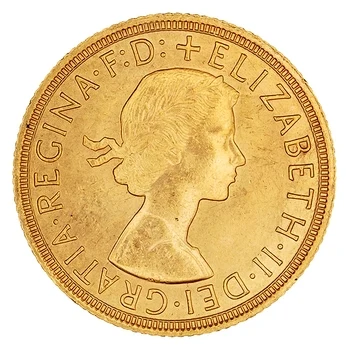
Photo credits and rights on the linked coin profile.
United Kingdom • 22-carat gold alloy
Issue years: 1959
Fine gold: 0.235400 troy oz
Photographs can help identify your coin. An appraisal may consider authenticity, condition and collector demand as well as metal content.
Request a photo appraisal View current gold coin buying information
