


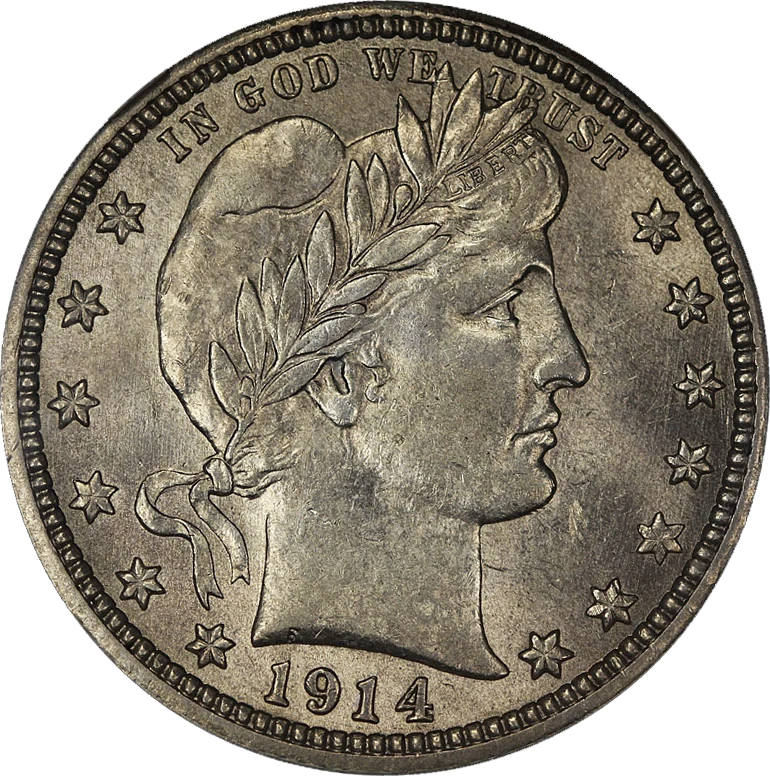
Barber Quarter
Photo credits and rights on the linked coin profile.
United States • 90% silver, 10% copper
Issue years: 1892–1916
Fine silver: 0.180848 troy oz
United States • 25 U.S. cents
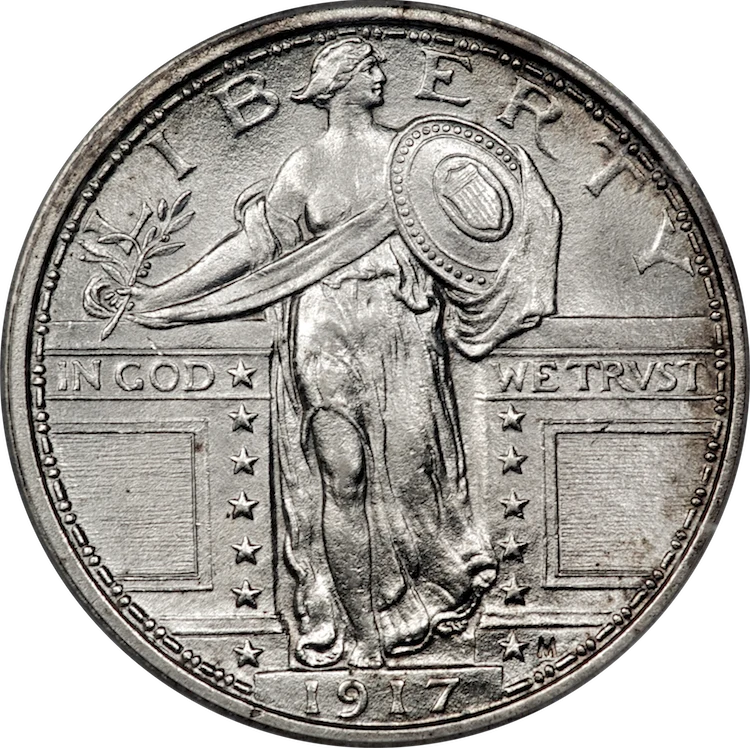
Standing Liberty Quarter contains 5.625 g of fine silver at its nominal 6.25 g gross weight and 90.0% silver alloy. That is approximately 0.180848 troy oz per genuine, correctly identified coin. Original Standing Liberty silver quarters are covered here. The representative photo is the 1917 Type 1 design; later design details differ without changing the nominal silver calculation.
When a fresh spot bid is available, melt values use fine-metal content × spot bid. CashForCoins guide buying offers use the separately configured percentage for each metal. Selected rare/numismatic coins require an appraisal. Dollar amounts remain unavailable when a fresh quote or buying percentage is missing.
No Standing Liberty quarters were issued in 1922. Type 1, exposed pedestal dates and recessed dates are distinct design variations within this silver family.
Formula: gross grams × fineness ÷ 31.1034768 × quantity. Dollar melt value additionally requires an approved current metal price.
Liberty stands between architectural elements, holding an olive branch and a shield. The date sits on the platform beneath her feet. On the pictured Type 1 coin the figure differs from the later covered-breast design; use a date-specific reference when attributing a subtype.
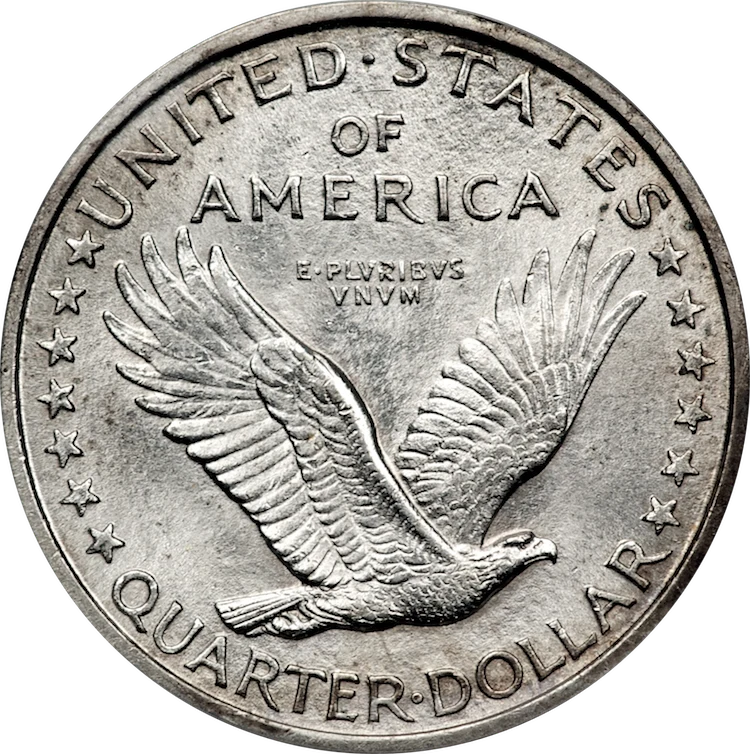
An eagle flies across the central field, surrounded by stars, with QUARTER DOLLAR below. The Type 1 photograph has no three-star group beneath the eagle. Other original issues use a changed star arrangement, so that detail should not be treated as universal.
The Mint credits Hermon MacNeil with the Standing Liberty quarter design and dates its original run to 1916–1930. It follows the Barber quarter and precedes Washington. The visual change does not mean its nominal quarter weight or .900 alloy changed.
Match the standing figure, shield and flying eagle, then inspect the date platform and mint mark. Worn dates can be difficult to read; record uncertainty instead of guessing an issue. The 6.25 g nominal mass and 24.3 mm diameter support identification but cannot certify a dateless piece.
The calculation is 6.25 g × 0.9 = 5.625 g fine silver; divide by 31.1034768 to convert grams to troy ounces. The rest of the coin is alloy metal. Quantity totals use nominal content; wear, damage or an incorrect identification can change the content of your actual coins.
The pictured 1917 Type 1 design is representative of one subtype, not every Standing Liberty quarter. Changes to the figure, eagle stars and date presentation need issue-level attribution. No scarce-date claim is made from a partially worn date.
Preserve worn and unworn pieces as found. Strong head detail, original surfaces, date and mint attribution may be relevant to a specialist, but this profile assigns no grade or strike designation. Melt weight alone cannot establish the value of a particular 1916 or other issue.
Check the figure, eagle, legends, edge, date and nominal physical dimensions together. Do not chemically restore a worn date or polish the shield to improve a photograph. Request evaluation where the date, metal or authenticity remains uncertain.
Separate readable-date coins from uncertain-date examples and explain that distinction in your appraisal request. Photograph the lower date platform and both sides clearly. Retain any grading documentation and avoid presenting a guessed year as fact.
The Mint reference supports the historical design or composition distinction described here. The separate specification record documents gross mass, silver fineness and diameter; numerical source claims are recorded individually. Fixed decimal arithmetic calculates silver content without copying a reference site’s prices. No approved live silver-price feed is configured, so dollar melt values remain unavailable. Photo identities and reuse rights are reviewed separately.
These original quarter design subtypes use the same nominal 6.25 g mass and .900 silver alloy. Their visual identification and collector attribution still differ.
No. A representative 1917 Type 1 photo cannot restore or establish your coin’s date. Record the uncertainty and request an examination.
Content maintained by CashForCoins. Last substantive record update: 2026-10-10. Report a specification or attribution issue through our contact page.
Photo credits and rights on the linked coin profile.
United States • 90% silver, 10% copper
Issue years: 1892–1916
Fine silver: 0.180848 troy oz
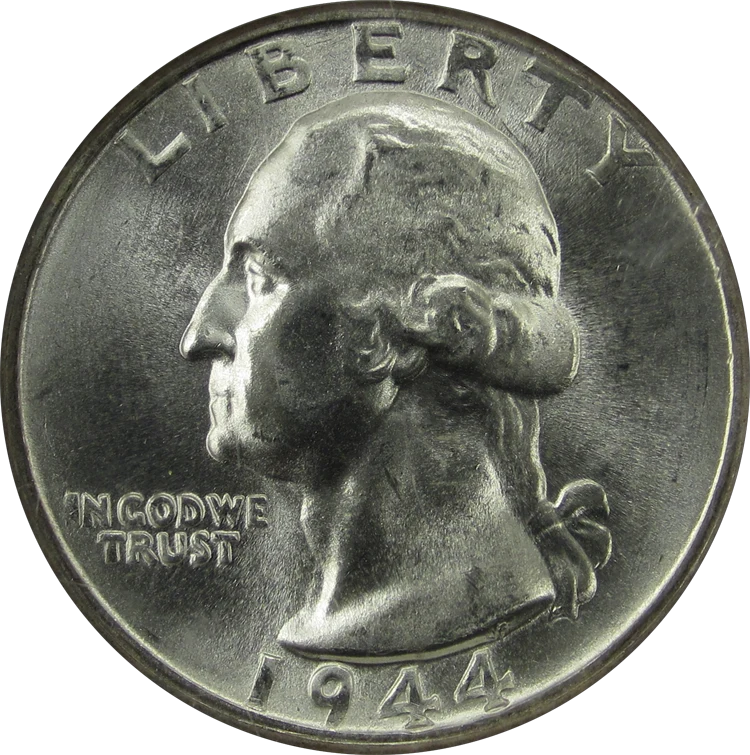
Photo credits and rights on the linked coin profile.
United States • 90% silver, 10% copper
Issue years: 1932, 1934–1964
Fine silver: 0.180848 troy oz
Photographs can help identify your coin. An appraisal may consider authenticity, condition and collector demand as well as metal content.
Request a photo appraisal View current silver coin buying information
