


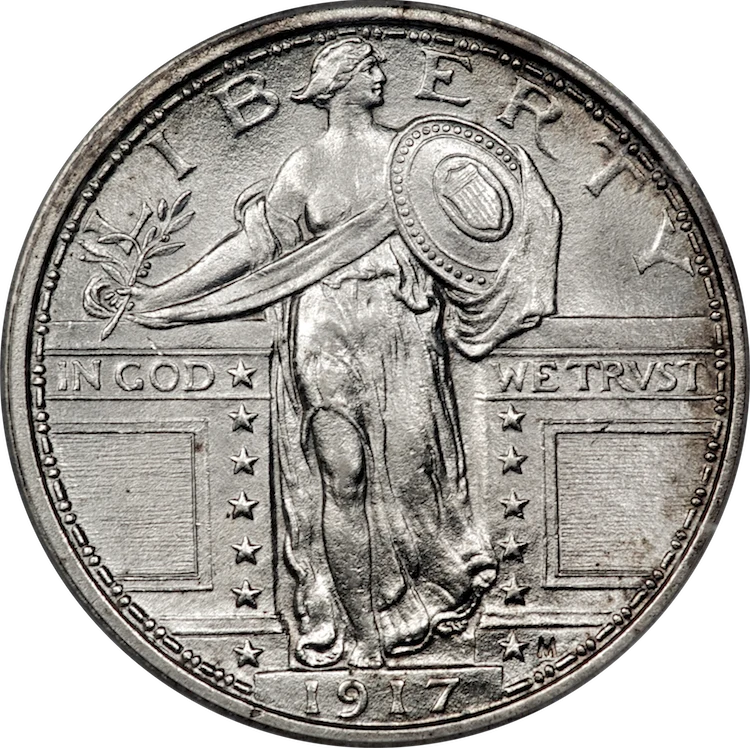
Standing Liberty Quarter
Photo credits and rights on the linked coin profile.
United States • 90% silver, 10% copper
Issue years: 1916–1921, 1923–1930
Fine silver: 0.180848 troy oz
United States • 25 U.S. cents
Washington Quarter — 1932–1964 Silver contains 5.625 g of fine silver at its nominal 6.25 g gross weight and 90.0% silver alloy. That is approximately 0.180848 troy oz per genuine, correctly identified coin. This record covers the original 1932–1964 90% silver Washington quarter. Later clad quarters and modern silver proofs require different identification and records.
When a fresh spot bid is available, melt values use fine-metal content × spot bid. CashForCoins guide buying offers use the separately configured percentage for each metal. Selected rare/numismatic coins require an appraisal. Dollar amounts remain unavailable when a fresh quote or buying percentage is missing.
No Washington quarters were issued in 1933. Later clad circulation coins and silver proof compositions require their own profiles.
Formula: gross grams × fineness ÷ 31.1034768 × quantity. Dollar melt value additionally requires an approved current metal price.
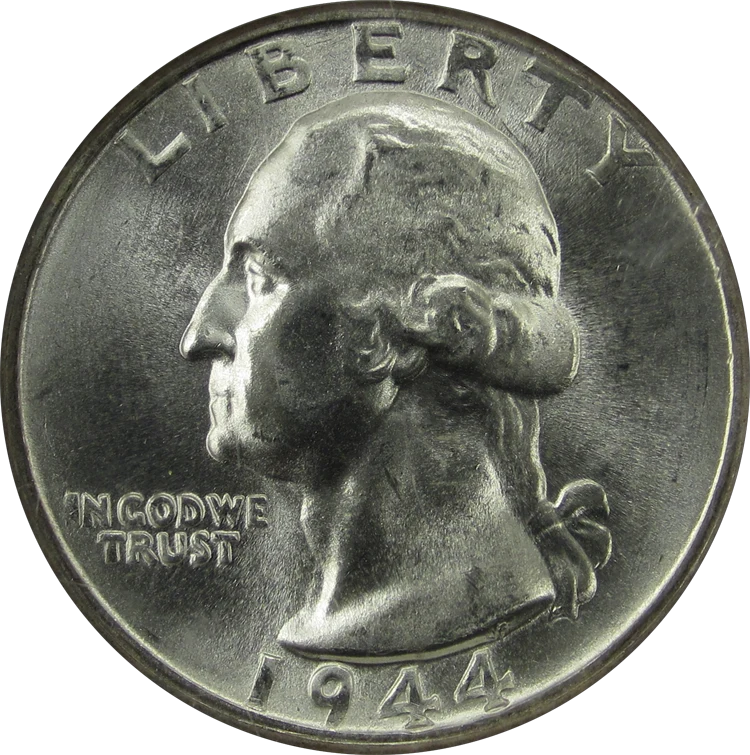
George Washington faces left, with LIBERTY above, IN GOD WE TRUST to the left and the date below. The representative is dated 1944. A Washington portrait also appears on later non-silver quarters, so the head alone is not a silver-content test.
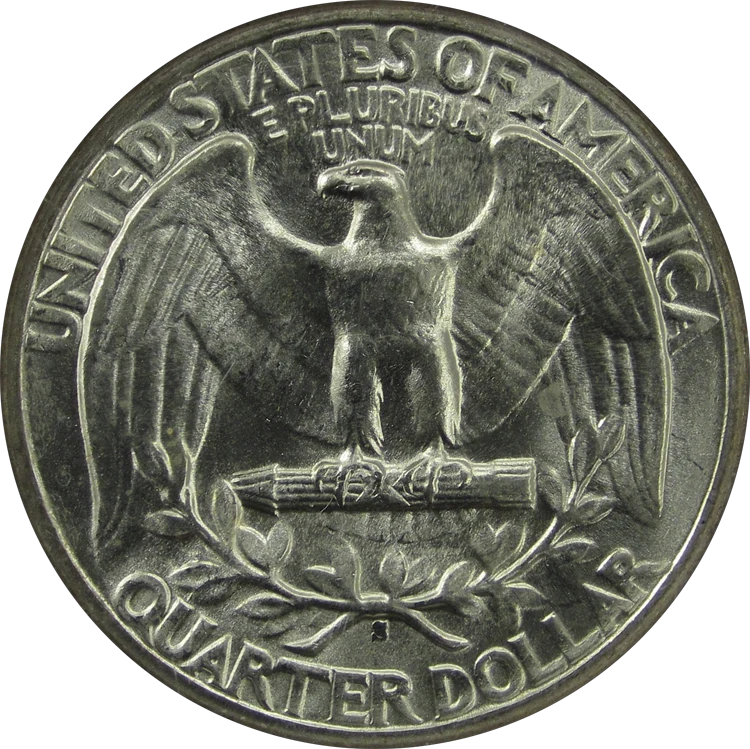
An eagle with spread wings stands on arrows above leafy branches. QUARTER DOLLAR appears at the bottom. The pictured S is below the wreath area on the reverse. Later quarter programs have different reverses, and some share only the portrait.
Washington’s portrait entered the quarter series in 1932. The Mint records removal of silver from circulation quarters in 1965. That composition boundary is the reason this calculation ends at 1964, even though the Washington design continued.
Read the complete date before counting a quarter as 90% silver. Check the eagle reverse, lettering, nominal 6.25 g mass and rounded 24.3 mm diameter. An edge check may help separate clad material, but plating or alteration means no single test establishes the alloy.
The calculation is 6.25 g × 0.9 = 5.625 g fine silver; divide by 31.1034768 to convert grams to troy ounces. The rest of the coin is alloy metal. Quantity totals use nominal content; wear, damage or an incorrect identification can change the content of your actual coins.
The 1932–1964 interval is the silver composition group, not a list of uninterrupted annual issues. Mint marks and collector varieties are recorded separately. Later silver proof quarters are outside this record and must not be classified from a shiny surface alone.
Keep unusual dates and sharp, original examples separate from worn common-date groups. The same nominal silver content applies across this composition, but collector assessment depends on the actual date, mint mark and condition. No fixed premium is assumed.
Compare the date, eagle, legends, reeded edge, mass and diameter. Silver color can be imitated by plating; a weight near nominal is not an assay. Avoid destructive tests or cleaning, and request review where date or alloy identification is uncertain.
List quantities of pre-1965 Washington quarters separately from clad and modern proof pieces. Include close photographs of dates and mint marks. The calculator can summarize nominal fine silver while the appraisal form captures details needed for a buying evaluation.
The Mint reference supports the historical design or composition distinction described here. The separate specification record documents gross mass, silver fineness and diameter; numerical source claims are recorded individually. Fixed decimal arithmetic calculates silver content without copying a reference site’s prices. No approved live silver-price feed is configured, so dollar melt values remain unavailable. Photo identities and reuse rights are reviewed separately.
No. This profile covers original circulation issues dated 1932–1964. The Mint removed silver from circulation quarters in 1965; later silver proofs are distinct products.
Four nominal 6.25 g coins at .900 fineness contain 22.5 g fine silver, approximately 0.723392 troy oz. They do not contain one full troy ounce of silver.
Content maintained by CashForCoins. Last substantive record update: 2026-10-10. Report a specification or attribution issue through our contact page.
Photo credits and rights on the linked coin profile.
United States • 90% silver, 10% copper
Issue years: 1916–1921, 1923–1930
Fine silver: 0.180848 troy oz
Photographs can help identify your coin. An appraisal may consider authenticity, condition and collector demand as well as metal content.
Request a photo appraisal View current silver coin buying information
