


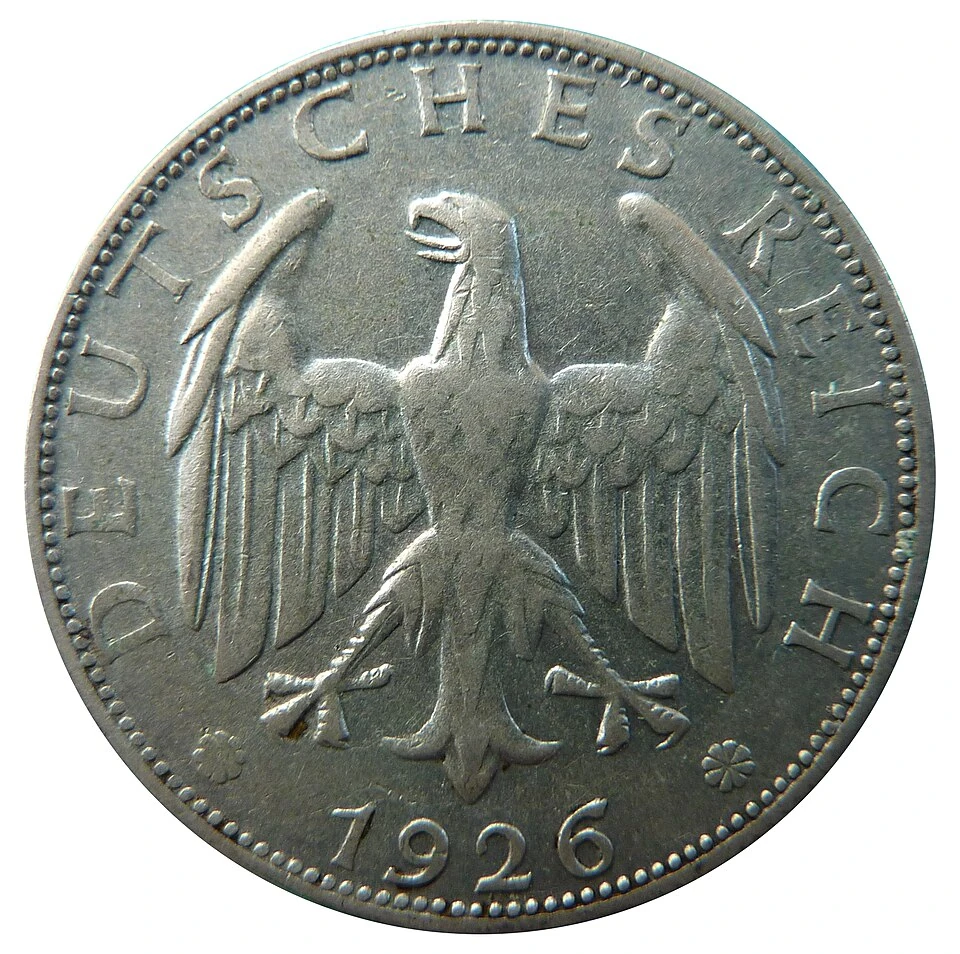
Weimar Silver 2 Reichsmark — .500 KM45
Photo credits and rights on the linked coin profile.
Germany • 50% silver; remaining alloy metals not verified
Issue years: 1925–1927, 1931
Fine silver: 0.160700 troy oz
Germany • 2 Reichsmark
These German two-Reichsmark silver designs use an 8-g, .625 nominal standard and .1607 reference fine silver troy ounce per matching coin. The verified issue years are 1933–1934 and 1936–1939. Four dated designs are distinguished below. The genuine 1937-F photographs illustrate the later Hindenburg KM93 design only; they do not represent the earlier Luther, Schiller or church designs.
When a fresh spot bid is available, melt values use fine-metal content × spot bid. CashForCoins guide buying offers use the separately configured percentage for each metal. Selected rare/numismatic coins require an appraisal. Dollar amounts remain unavailable when a fresh quote or buying percentage is missing.
Six specific annual years: KM79 Luther1933, KM81 dated church1934, KM84 Schiller1934 and KM93 Hindenburg1936–1939. No1935 annual row; undated common-date entries add no year. Life/commemorative dates do not replace issue dates. Mint/finish combinations differ; patterns, plated brass and replicas are excluded.
Formula: specified fine-metal troy ounces × quantity. Dollar melt value additionally requires an approved current metal price.
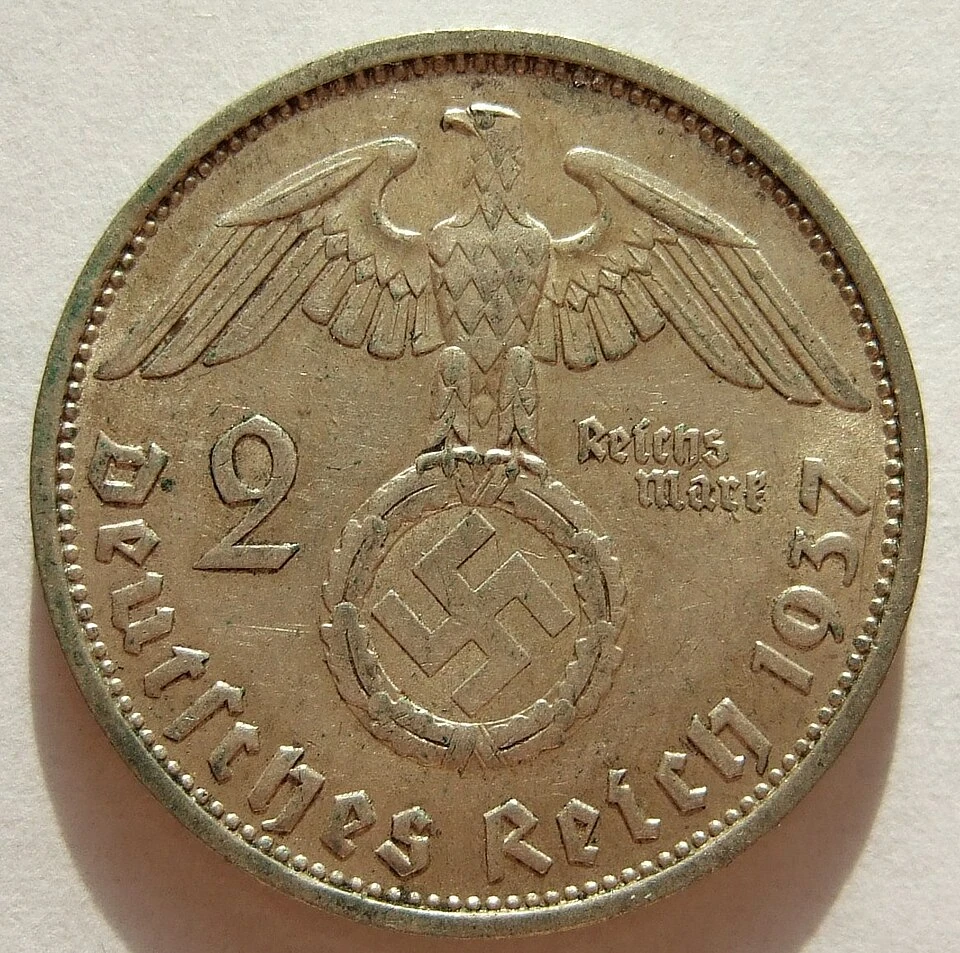
The illustrated KM93 obverse shows an eagle above a wreath containing the period swastika, the numeral 2 and Reichs Mark denomination, DEUTSCHES REICH and the complete 1937 date. The reference assigns this eagle face to the obverse. The historical imagery is retained for factual coin identification. Photograph the full denomination and date; five-Reichsmark coins can have similar artwork but belong to a different metal standard.
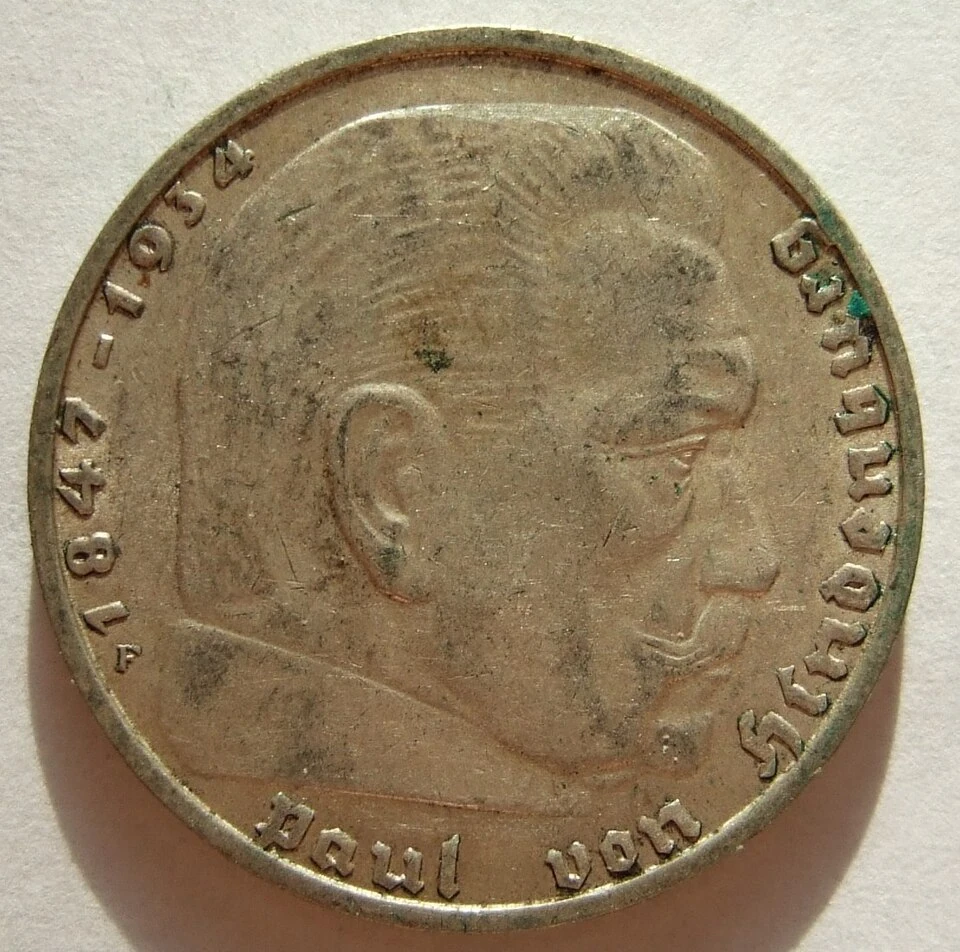
The pictured reverse has Paul von Hindenburg’s right-facing portrait, his name and 1847–1934 life dates, with F below the portrait. Those life dates are not the issue year; read the opposite face for 1937. This is a genuine two-Reichsmark reference photograph. A portrait from a different denomination is not substituted, even where the subject looks similar. The pictured mint letter does not identify an unrelated customer specimen.
The reference separates the broad 1933–1939 melt group into commemorative and later Hindenburg designs. Luther appears in 1933; the Potsdam church and Schiller types appear in 1934; the inspected KM93 Hindenburg annual list begins in 1936. The shared silver standard allows one nominal calculator while the dated designs remain explicit. The earlier Weimar two-Reichsmark reference uses 10 g/.500 and must remain separate despite a similar designated silver-ounce figure.
Read 2 REICHS MARK and identify the design, issue date and mint letter before counting. Supported catalogue types are KM79, KM81, KM84 and KM93. The reference gives 8-g nominal mass, .625 fineness and a 25-mm diameter reference for each. Actual measured dimensions do not establish an assay. Keep patterns, replicas, plated objects and uncertain pieces separate; the catalogued X27 silver-plated brass item is outside this silver-content profile.
One matching coin contributes .1607 reference fine silver troy ounce; three total .4821 ounce and 24 nominal gross grams. Nominal fine-silver mass is 8 g × .625 = 5 g per coin. The four dated tables display .1608 ASW, which is disclosed while the designated melt figure stays controlling. The earlier .500 two-Reichsmark has different gross mass and fineness and requires its own profile. Neither reference figure promises recoverable metal from worn or altered specimens.
Accepted issue years are 1933–1934 and 1936–1939. No 1935 annual row occurs in the four inspected type tables. Mint and proof combinations differ by design and must not be filled in from a broad date envelope.
The eagle/denomination face is paired with a left-facing Luther portrait and anniversary dates. Annual entries list A, D, E, F, G and J, with separate proof rows. Identify the actual finish; a mint letter does not prove a proof strike.
The eagle face divides dates and places the denomination below; the other face shows the Potsdam Garrison Church. Its inspected annual rows list A, D, E, F, G and J, with proof entries distinguished. The commemorative date in the design does not replace the issue year.
The eagle is flanked by oak leaves; the reverse has Schiller’s left-facing portrait. The inspected table lists 1934-F regular and proof entries. It does not establish availability at every other mint.
Specific annual rows cover 1936, 1937, 1938 and 1939 across A, D, E, F, G and J. An undated common-date row adds no issue year. The photographed 1937-F illustrates this later eagle/portrait design, not every mint or finish.
Keep the full issue date, mint letter, design, finish and provenance with each piece. Do not confuse Hindenburg’s life dates with the date of manufacture. A listed proof row does not establish that an actual worn coin is a proof. Collector interest depends on the identified specimen and condition, not just silver content. Preserve surfaces and old collection labels; request specialist assessment where attribution or finish is uncertain.
Supply photographs of both complete faces and the edge, plus actual mass and diameter where available. Include the full denomination, issue date and mint letter. Matching an illustration is an identification aid, not proof of authenticity or silver fineness. Plating, alteration, wear and the wrong denomination can mislead attribution. Keep unresolved pieces separate before including them in a counted metal-content lot.
Sort these identified .625 two-Reichsmark coins away from earlier .500 Weimar issues, other denominations and unresolved objects. The existing quote form retains the chosen coin and quantity for photographs and collection notes. Live dollar pricing remains unavailable. Reference silver ounces are theoretical content, not a purchase offer, collectible valuation or promise of recoverable metal.
The designated reference world-silver melt table and detail specify 8 g gross mass, .625 fineness and .1607 fine silver troy ounce. KM79, KM81, KM84 and KM93 agree on mass and fineness but show .1608 ASW. This calculator retains the designated .1607 without averaging or claiming the discrepancy is resolved. All four dated records give a 25-mm catalogue diameter. Thickness, edge and remaining alloy-metal identities are not independently verified; nominal catalogue figures do not authenticate or assay a customer coin. Actual annual rows and independent photo permissions were inspected on 2026-10-11. Jerry "Woody" supplies both genuine 1937-F faces under CC BY-SA 2.0, confirmed on their individual Commons pages. The actual downloaded 960-pixel photographs are converted to whole-face WebP derivatives under the same licence, with visible credit. No artwork is invented, enlarged or changed. Patterns and plated brass objects found during the denomination search are excluded rather than assigned .625 silver.
KM79 Luther is dated 1933; KM81 church and KM84 Schiller are dated 1934; KM93 Hindenburg covers 1936–1939. No 1935 annual row occurs in these inspected tables.
No. Those are life dates on the portrait face. Read the opposite face for the issue year, as shown by the genuine 1937-F photographs.
Three contain .4821 fine silver troy ounce using the designated .1607 per coin. The dated .1608 discrepancy is disclosed, and no dollar offer is supplied.
Content maintained by CashForCoins. Last substantive record update: 2026-10-11. Report a specification or attribution issue through our contact page.
Photo credits and rights on the linked coin profile.
Germany • 50% silver; remaining alloy metals not verified
Issue years: 1925–1927, 1931
Fine silver: 0.160700 troy oz
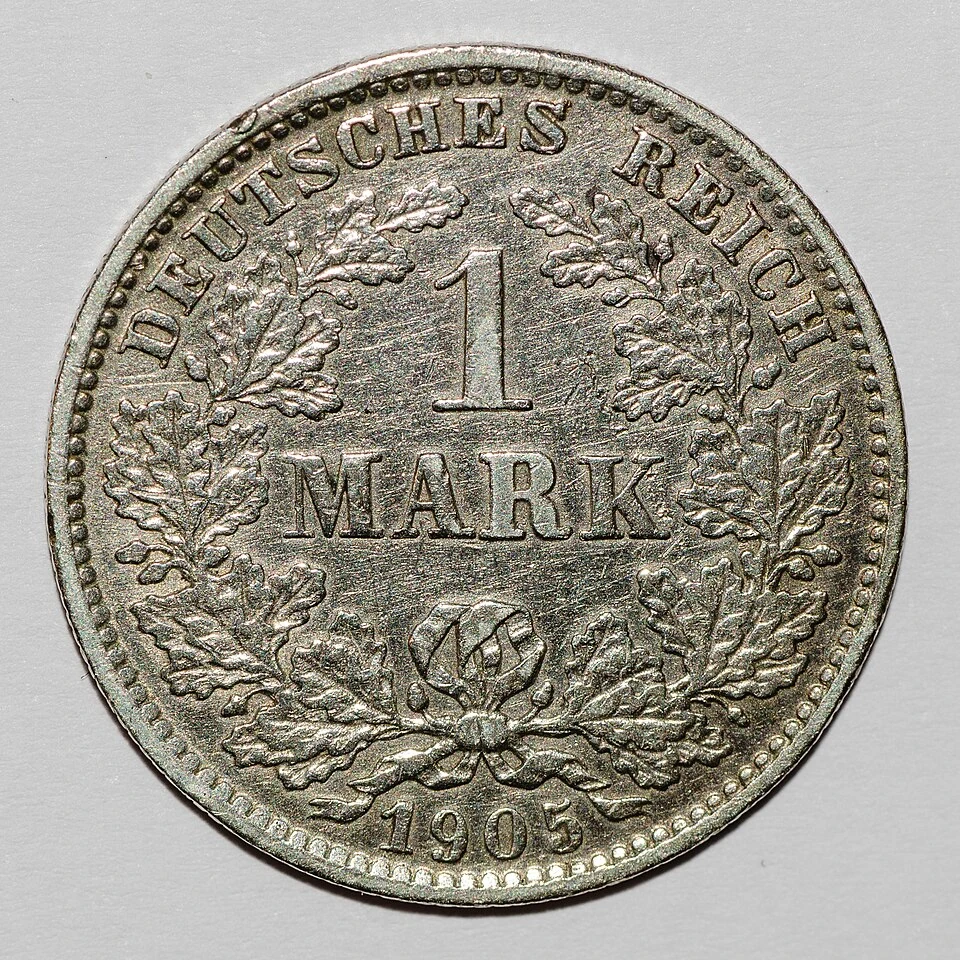
Photo credits and rights on the linked coin profile.
Germany • 90% silver; remaining alloy metals not independently verified
Issue years: 1873–1883, 1885–1887, 1891–1894, 1896, 1898–1916
Fine silver: 0.160600 troy oz
Photographs can help identify your coin. An appraisal may consider authenticity, condition and collector demand as well as metal content.
Request a photo appraisal View current silver coin buying information
