

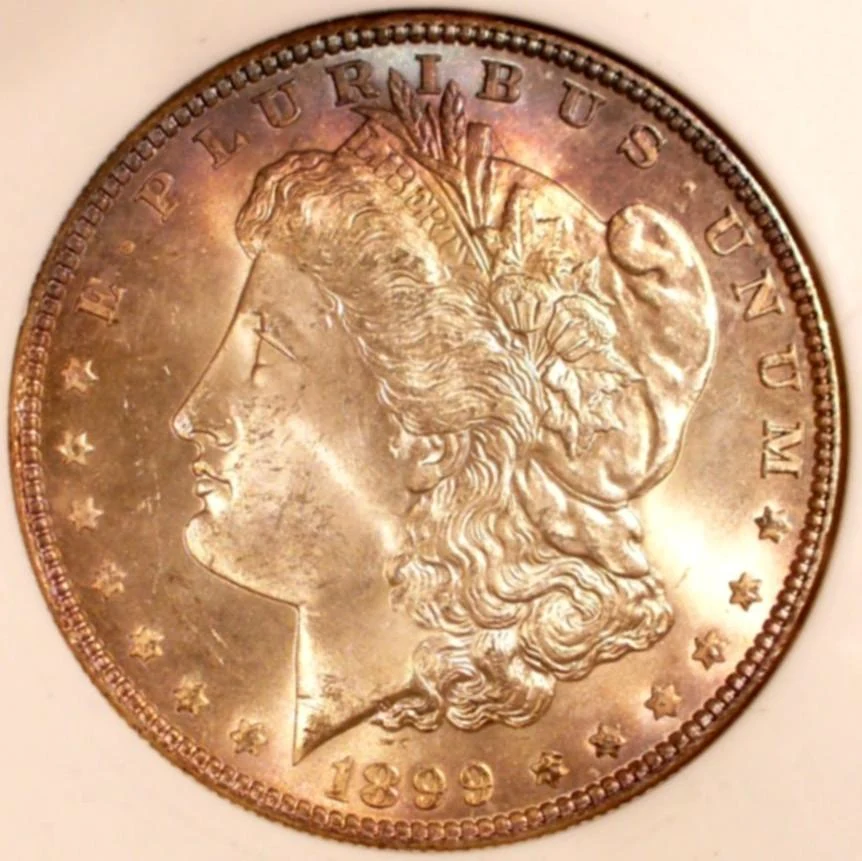
Morgan Silver Dollar — Original 90% Silver
Photo credits and rights on the linked coin profile.
United States • 90% silver, 10% copper
Issue years: 1878–1904, 1921
Fine silver: 0.773451 troy oz
Canada • 1 Canadian dollar
The 1965–1966 Canadian Voyageur dollar is an 80% silver circulation coin. At the Mint’s nominal 23.3 g gross mass, one coin contains 18.64 g of fine silver. Later nickel Voyageur dollars and modern loonie coins are excluded from this calculation.
When a fresh spot bid is available, melt values use fine-metal content × spot bid. CashForCoins guide buying offers use the separately configured percentage for each metal. Selected rare/numismatic coins require an appraisal. Dollar amounts remain unavailable when a fresh quote or buying percentage is missing.
This profile covers only the two stated Voyageur dollar issue dates; it does not absorb every dollar in the wider silver era.
Formula: gross grams × fineness ÷ 31.1034768 × quantity. Dollar melt value additionally requires an approved current metal price.
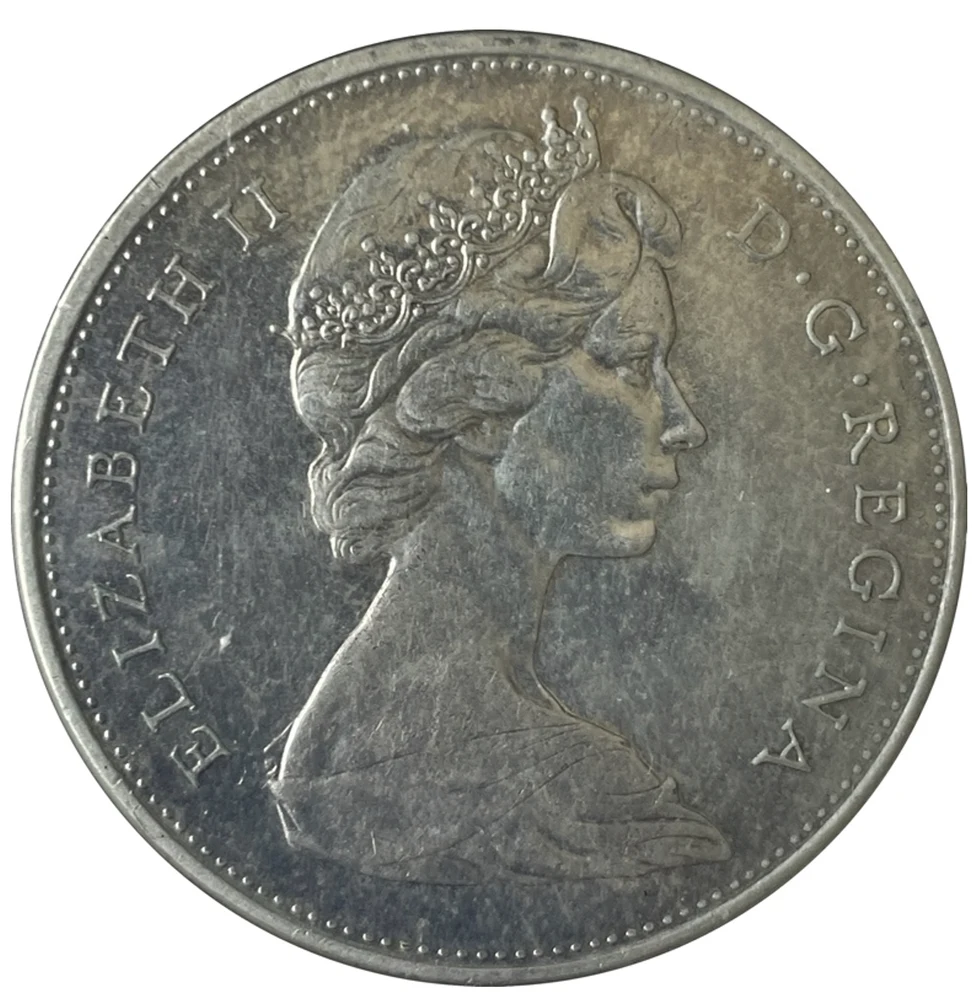
The representative 1965 obverse shows Elizabeth II facing right, wearing a tiara, with the royal legend around the rim. Compare the portrait and legends with both photographs. This guide deliberately uses the 1965–1966 design group rather than applying one portrait to every Canadian dollar.
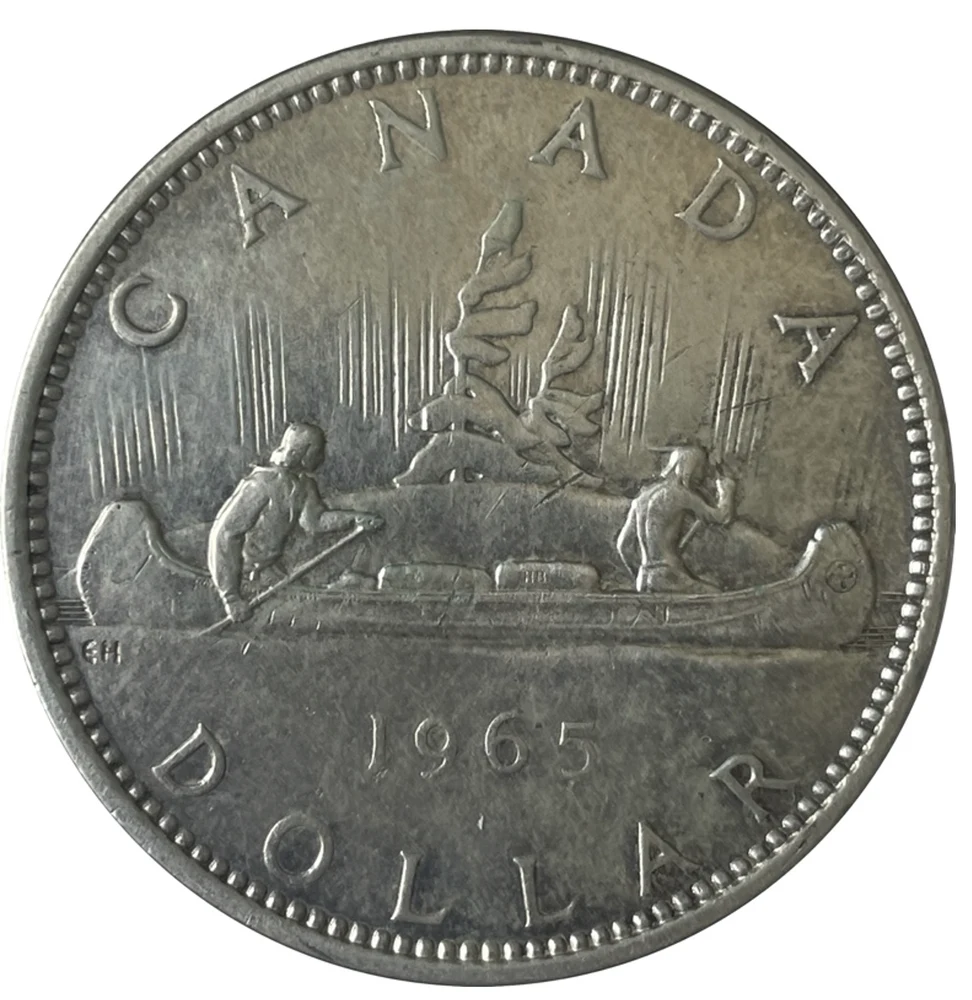
The canoe scene shows a voyageur and an Indigenous guide, with CANADA above and DOLLAR below. The pictured reverse is dated 1965. A similar canoe appears on later nickel coins, making the year and physical specifications essential identification clues.
The Royal Canadian Mint identifies Emanuel Hahn as the Voyageur reverse designer. Its circulation history lists multiple periods using the canoe design and intervening commemorative designs. This record isolates the 1965–1966 silver issues so design continuity does not conceal the later metal change.
Check CANADA, DOLLAR, the canoe reverse, the Elizabeth II portrait and the year. Compare the nominal 36.06 mm diameter and 23.3 g mass with a genuine silver issue. A 1968-or-later canoe dollar must not be entered under this silver profile simply because its reverse looks familiar.
Multiply nominal gross mass by .800 to obtain 18.64 g fine silver, then divide by 31.1034768 to convert to troy ounces. The result is approximately 0.59929 troy oz per coin. Neither the Canadian face value nor the coin’s entire 23.3 g mass is its fine-silver content.
This reviewed profile covers 1965 and 1966. It does not assert that every Canadian dollar in the wider 1935–1967 silver era has the same portrait or reverse. Date-specific bead, numeral and other collector varieties require separate examination; the library does not assign a variety from this representative image.
Metal content is one component of evaluation. Date, condition and identifiable varieties may warrant collector assessment before coins are grouped for sale. Preserve original surfaces and packaging. The calculated silver weight does not establish a collectible premium or a buyer’s offer.
Use clear photographs of both sides, a scale and a diameter measurement as initial checks. A familiar canoe image alone cannot distinguish silver from later nickel or establish genuineness. Avoid destructive testing or cleaning; ask for review if the date, dimensions or design disagree.
Describe these as 1965–1966 Canadian silver Voyageur dollars, and list quantities by year where possible. Include photographs of representative pieces and unusual details. Use the existing appraisal form for evaluation instead of treating a calculator result as an accepted purchase offer.
Specifications and the silver-to-nickel distinction are taken from the Royal Canadian Mint’s circulation-dollar reference. Fine content uses nominal gross grams and .800 fineness. The 1965 photo pair by Windrain has been separated into sides and resized, with its CC BY-SA 4.0 attribution retained.
The nominal 23.3 g gross weight and .800 silver alloy give 18.64 g fine silver, approximately 0.59929 troy oz per coin.
No. The Royal Canadian Mint records the later nickel composition. A similar canoe design does not establish silver content.
No approved live feed is configured. Verified metal weight remains available; dollar melt value is unavailable rather than shown as zero.
Content maintained by CashForCoins. Last substantive record update: 2026-10-09. Report a specification or attribution issue through our contact page.
Photo credits and rights on the linked coin profile.
United States • 90% silver, 10% copper
Issue years: 1878–1904, 1921
Fine silver: 0.773451 troy oz
Photographs can help identify your coin. An appraisal may consider authenticity, condition and collector demand as well as metal content.
Request a photo appraisal View current silver coin buying information
