


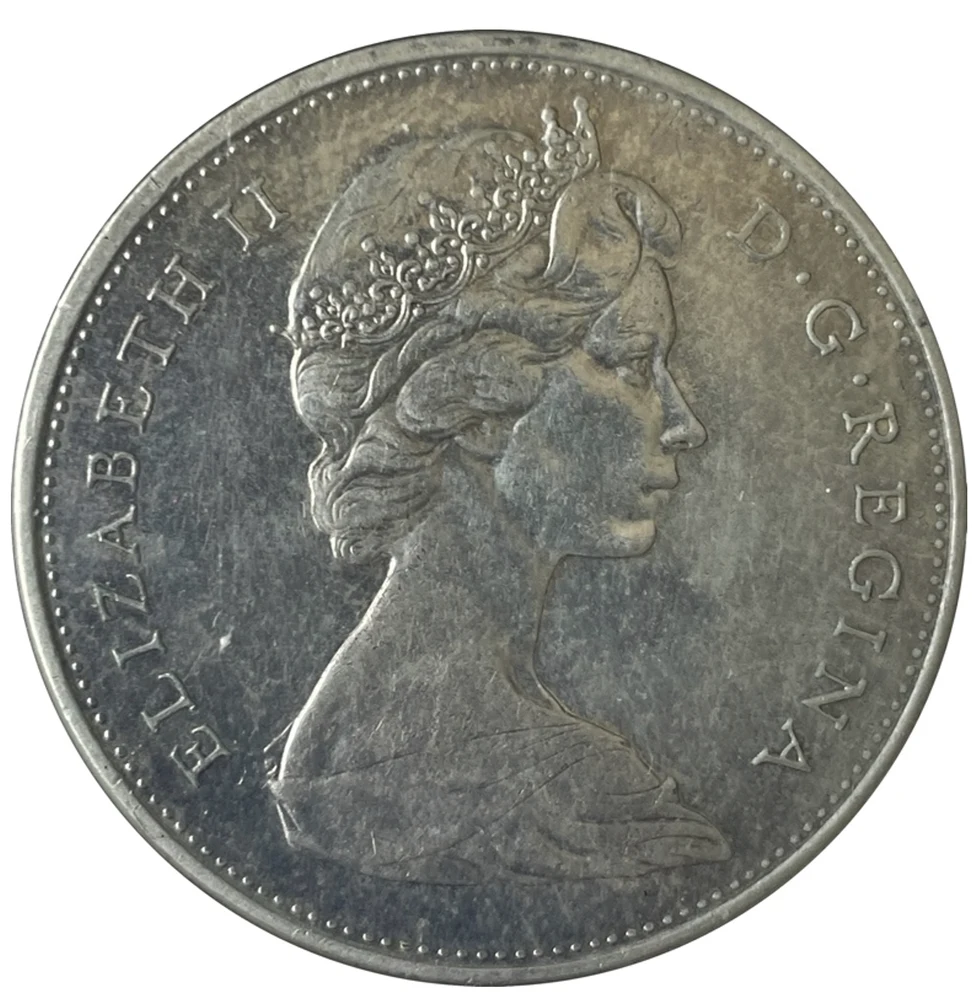
Canadian Voyageur Silver Dollar — 1965–1966
Photo credits and rights on the linked coin profile.
Canada • 80% silver, 20% copper
Issue years: 1965–1966
Fine silver: 0.599290 troy oz
United States • 1 U.S. dollar
An original Morgan silver dollar contains 90% silver by mass. Its nominal 26.73 g gross weight corresponds to 24.057 g of fine silver. This profile covers the original 1878–1904 and 1921 issues; modern .999 silver Morgan collector coins require a different record.
When a fresh spot bid is available, melt values use fine-metal content × spot bid. CashForCoins guide buying offers use the separately configured percentage for each metal. Selected rare/numismatic coins require an appraisal. Dollar amounts remain unavailable when a fresh quote or buying percentage is missing.
No original Morgan dollars were issued in 1905–1920. Mint-year combinations vary; modern .999 issues have a separate profile.
Formula: gross grams × fineness ÷ 31.1034768 × quantity. Dollar melt value additionally requires an approved current metal price.
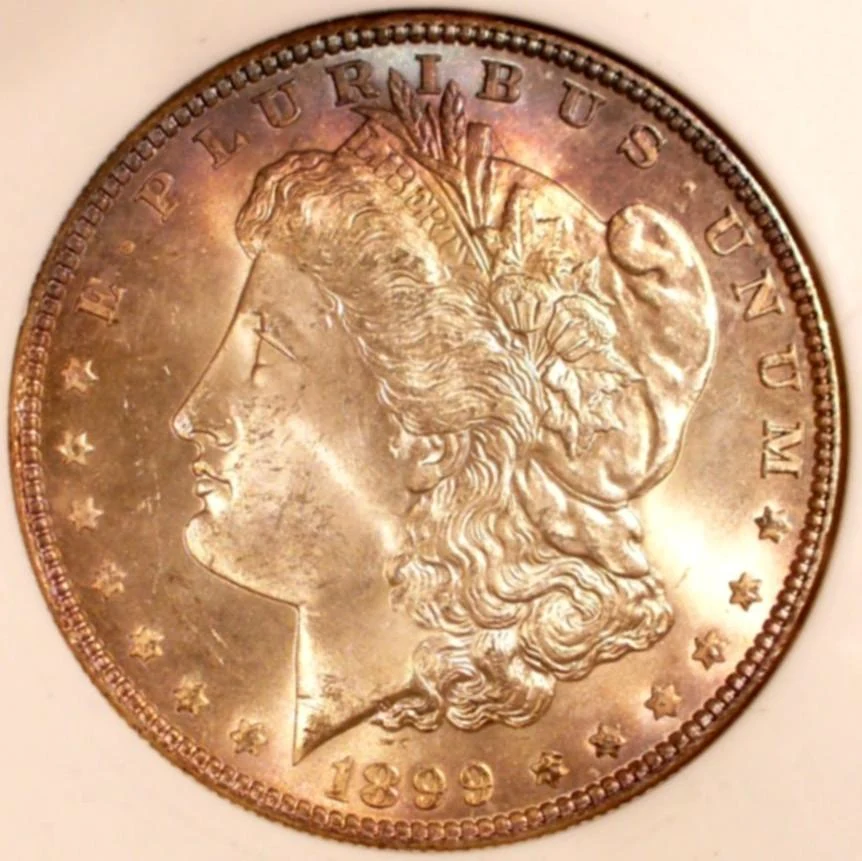
Look for Liberty facing left, a cap and wreath in her hair, stars around the lower rim and the date below. The pictured coin is an 1899 example. Use the date and lettering together; a portrait alone cannot establish authenticity.
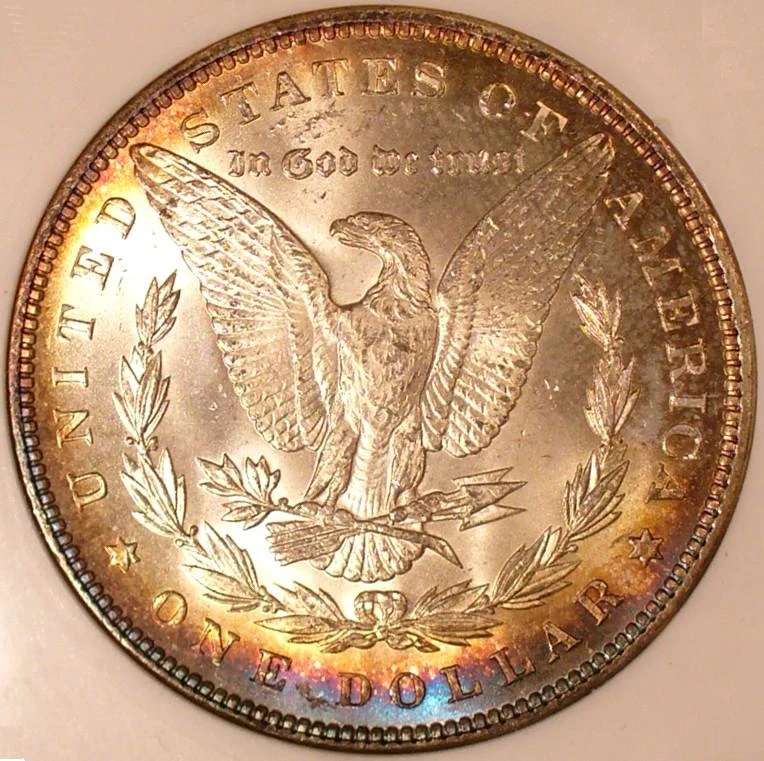
An eagle with spread wings holds arrows and an olive branch above a wreath. ONE DOLLAR appears around the lower rim. Inspect the space below the wreath for a mint mark when present; the illustrated reverse is representative of the original series.
The Morgan dollar takes its name from designer George T. Morgan. The U.S. Mint connects its introduction to the Bland–Allison Act and restored silver-dollar coinage. Production stopped after 1904 and resumed in 1921 before the Peace dollar replaced it. That history explains why a continuous 1878–1921 filter range does not mean every intervening year exists.
Match the Liberty portrait, eagle reverse, ONE DOLLAR inscription and date. Then record the mint mark separately. A 1921 dollar can be a Morgan or a Peace dollar; the date alone is insufficient. Compare diameter and weight with nominal specifications, while allowing for wear rather than diagnosing a coin from one measurement.
The alloy includes copper, so gross weight is greater than fine-silver weight. Calculation uses 26.73 × 0.900 ÷ 31.1034768 troy ounces per coin. These are nominal specifications for a correctly identified genuine coin. Wear, damage and authenticity can affect an individual piece.
Original issues were struck in 1878–1904 and again in 1921. No Morgan dollars were produced in 1905–1920. Mint marks and die varieties distinguish collector issues without changing this nominal alloy calculation. Modern Morgan collector issues beginning in 2021 are .999 silver and are excluded here.
Melt content does not price an 1899 coin, a Carson City issue or a particular die variety. Preserve the date, mint mark, surfaces and any grading holder when requesting evaluation. Scarcity and condition can justify separate numismatic review; this calculator supplies neither a grade nor a market quotation.
Photograph both sides and the edge in natural light. Compare legends, design details, mass and diameter together. Do not clean, file or acid-test a potentially collectible coin. A photograph or a single home test cannot certify authenticity; request professional evaluation when details do not agree.
Keep dates and mint marks visible when organizing a Morgan collection. Use the photo appraisal link below and note grading holders or provenance. The silver buying page describes company purchasing information; its bids are distinct from this library’s theoretical metal calculation.
The U.S. Mint supplies the nominal alloy, gross mass, date groups and design history. Diameter is separately cross-checked in the internal reference source record. Fixed decimal arithmetic calculates fine weight to 12 decimal places for aggregation; no current silver price has been supplied. Images are credited separately from specification sources.
Nominal 26.73 g gross weight at .900 fineness gives 24.057 g fine silver, approximately 0.77345 troy oz. Modern .999 Morgan collector coins need a separate profile.
No. Original production was 1878–1904 and resumed in 1921. The date-range filter does not assert issues in the intervening years.
No approved live feed is configured. Verified metal weight remains available; dollar melt value is unavailable rather than shown as zero.
Content maintained by CashForCoins. Last substantive record update: 2026-10-09. Report a specification or attribution issue through our contact page.
Photo credits and rights on the linked coin profile.
Canada • 80% silver, 20% copper
Issue years: 1965–1966
Fine silver: 0.599290 troy oz
Photographs can help identify your coin. An appraisal may consider authenticity, condition and collector demand as well as metal content.
Request a photo appraisal View current silver coin buying information
