
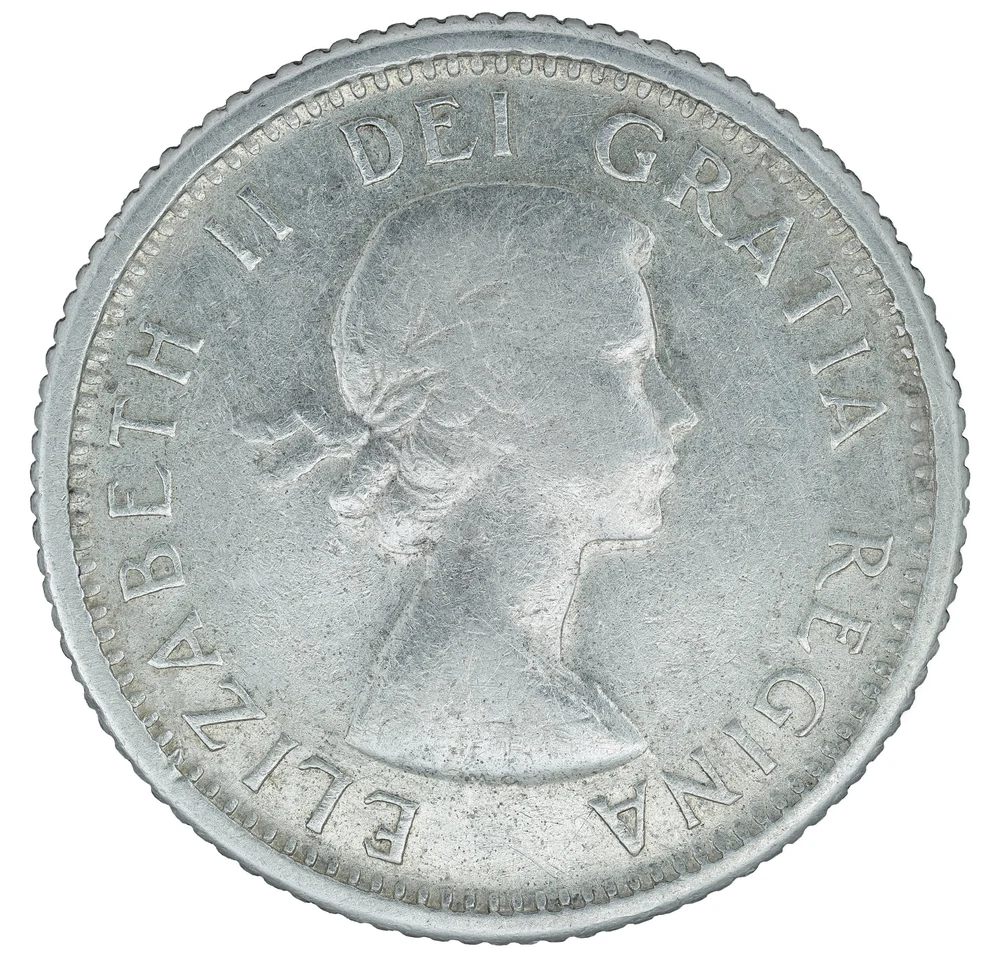
Canadian Dime — 80% Silver
Photo credits and rights on the linked coin profile.
Canada • 80.0% silver; balance copper
Issue years: 1920–1921, 1928–1967
Fine silver: 0.060001 troy oz
Canada • Ten cents
A matching canadian half-silver dime contributes 0.0375 reference fine silver troy ounce at 2.3328 g and .500 fineness. Its specific issue years are 1967 and 1968. Both years also contain other-alloy counterparts. Confirm the specimen’s composition before using this calculation rather than assigning every coin of those dates to half-silver.
When a fresh spot bid is available, melt values use fine-metal content × spot bid. CashForCoins guide buying offers use the separately configured percentage for each metal. Selected rare/numismatic coins require an appraisal. Dollar amounts remain unavailable when a fresh quote or buying percentage is missing.
Exact reviewed annual issue dates for this assigned metal/weight scope. Mint, design, overdate and finish combinations remain type-specific; broader headings do not fill absent annual rows. Source precision exceptions and separate alloy standards are explained in the guide.
Formula: specified fine-metal troy ounces × quantity. Dollar melt value additionally requires an approved current metal price.
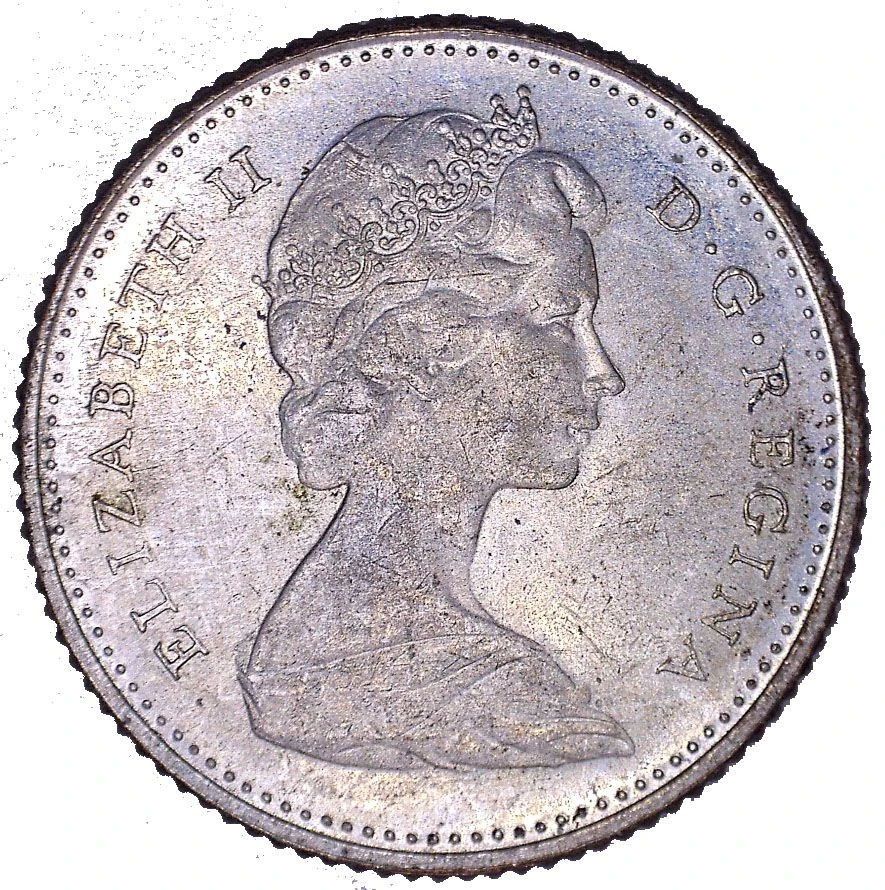
Both matching dated references depict Elizabeth II facing right. The 1968 reference identifies Arnold Machin as the portrait designer. Record the entire royal legend, denomination and date attribution. A matching portrait establishes a design family; it cannot distinguish silver from an identical-design nickel issue.
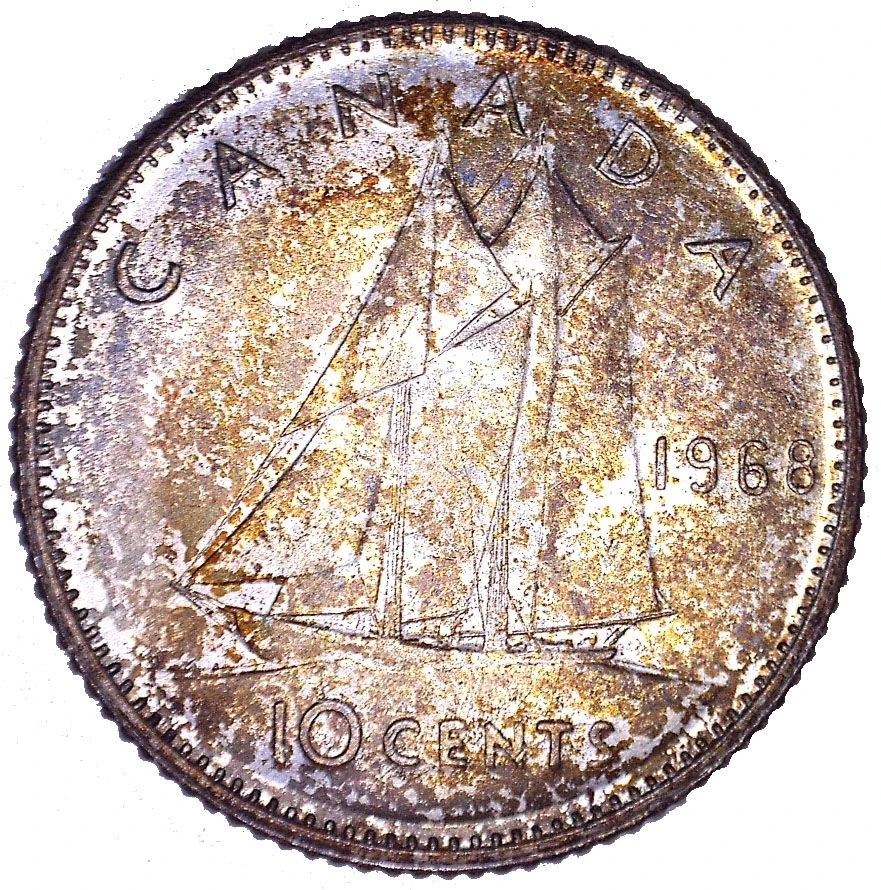
The 1967 centennial reverse depicts an atlantic mackerel. Its paired 1867–1967 dates commemorate Confederation; they do not mean the coin was issued in 1867. The 1968 reverse shows bluenose sailing left. Retain complete inscriptions and dates in photographs. Different reverses belong within this guide only when their actual .500 alloy has been established.
The inspected dated .500 types provide two actual issue years. The 1967 centennial issues overlap the earlier .800 silver standard, and 1968 also has nickel coins. These transition dates are useful sorting information, but neither date is a universal assay result. Other Canadian denominations followed their own composition schedules and need separate references.
Matching reference nominal dimensions are 2.3328 g and 18.03 mm. No visible mintmark is specified in these dated entries. The reference notes pointed deep edge grooves for the Ottawa dime, but its nickel KM 72a description uses the same feature. Philadelphia nickel KM 73 instead has flat deep grooves. A pointed groove is therefore not proof of silver. Nickel KM 73 has a nominal 2.33 g mass very close to the silver reference; gross weighing alone cannot reliably determine composition. Edge and thickness are not otherwise independently approved here.
Three correctly attributed .500 coins contribute 0.1125 reference fine silver troy ounce and 6.9984 nominal gross grams. The ASW input retains the reference’s published rounding. A .800 coin or a nickel coin cannot inherit this calculation just because its date matches. Nominal content is distinct from actual assay, collector value and a purchase offer.
Specific source-supported issue years: 1967, 1968. The 1967 source row is inscribed 1867–1967 and has no mintmark; the 1968 row also has no mintmark. These references do not separately establish proof finishes or additional .500 varieties. The .800 1967 and nickel 1968 counterparts are excluded composition families, not extra approved silver varieties.
Keep original packaging, certification and documented composition with the specimen. Preserve the centennial design and actual 1967 attribution. A collector may value condition or provenance above nominal metal content. Do not assign a proof finish from a shiny surface or remove patina to identify an alloy.
Supply both complete faces, the edge, measured mass and any established metal attribution. A photo showing the correct date and design may still depict the excluded alloy. Non-destructive professional examination is appropriate when composition is unresolved. Do not damage the coin to perform an improvised identification test.
Separate confirmed .500 coins from .800 silver, nickel and uncertain transition-year material. Tell the appraisal team when alloy remains unverified and include available provenance. Selected quantity can describe a holding in the existing CashForCoins photo-appraisal enquiry. Educational metal content is not an automatic purchase offer.
The designated world-silver melt reference and matching 1967/1968 dated types agree on 2.3328 g gross mass, .500 fineness and 0.0375 reference fine silver troy ounce. Diameter 18.03 mm comes from those dated types. The 1867–1967 centennial inscription represents the actual issue year 1967, not a 101-year production interval. Other alloys share these dates and designs; date alone cannot establish .500 silver. Public reference dated specifications, actual annual rows and nickel exclusions were inspected on 2026-10-12. The issuer circulation reference is additional context, not a silent replacement for designated reference values. No prices or mintages are republished.
The actual dated representative photographs and independent reuse permissions were inspected. Complete faces are retained, with WebP conversion and no enlargement, retouching or synthetic reconstruction; joined source images are split with complete rims. These photographs do not assay another specimen. Actual staging rendering and calculator acceptance are separately recorded.
Content maintained by CashForCoins. Last substantive record update: 2026-10-12. Report a specification or attribution issue through our contact page.
Photo credits and rights on the linked coin profile.
Canada • 80.0% silver; balance copper
Issue years: 1920–1921, 1928–1967
Fine silver: 0.060001 troy oz
Photographs can help identify your coin. An appraisal may consider authenticity, condition and collector demand as well as metal content.
Request a photo appraisal View current silver coin buying information
