
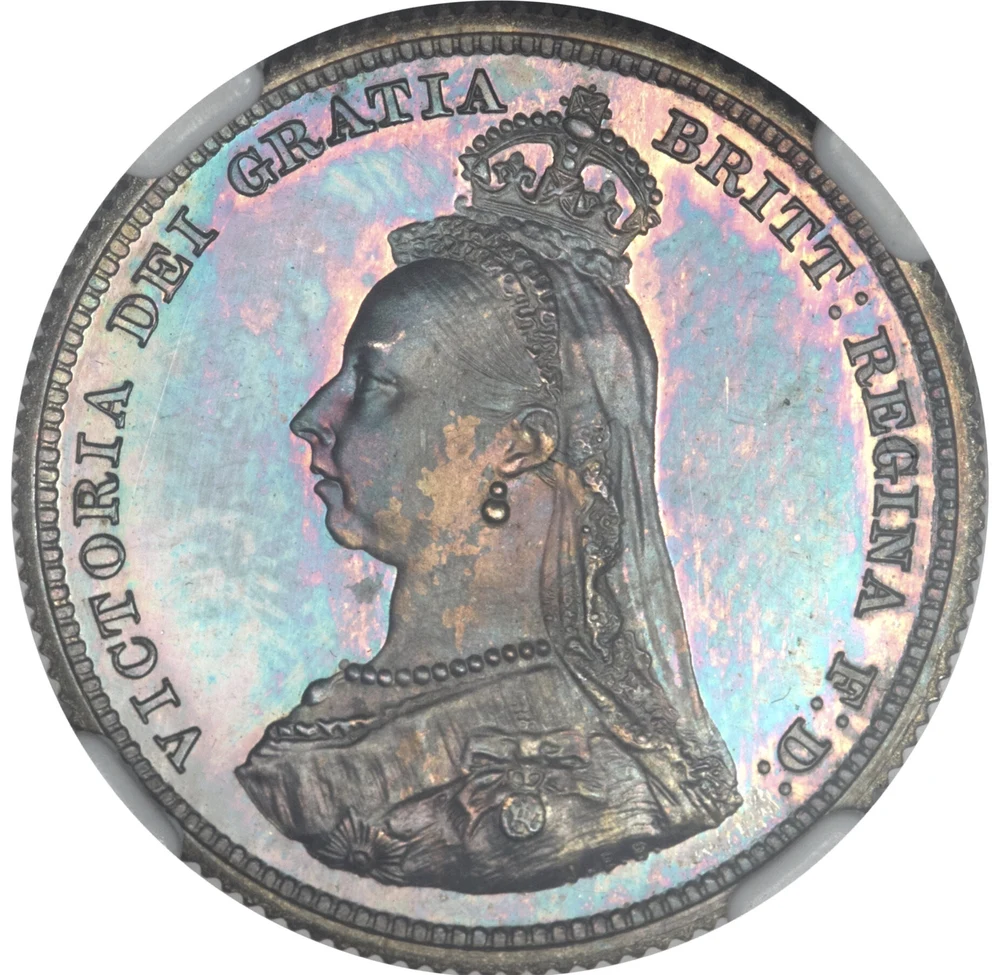
British Silver Shilling — 1816–1919
Photo credits and rights on the linked coin profile.
United Kingdom • 92.500% silver; balance copper
Issue years: 1816–1821, 1823–1827, 1829, 1831, 1834–1846, 1848–1919
Fine silver: 0.168200 troy oz
United Kingdom • Shilling (12 pence)
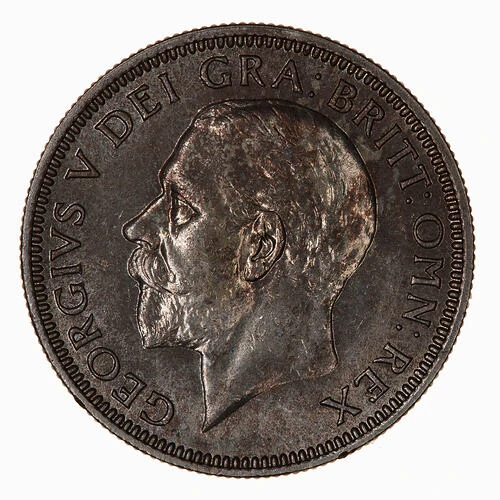
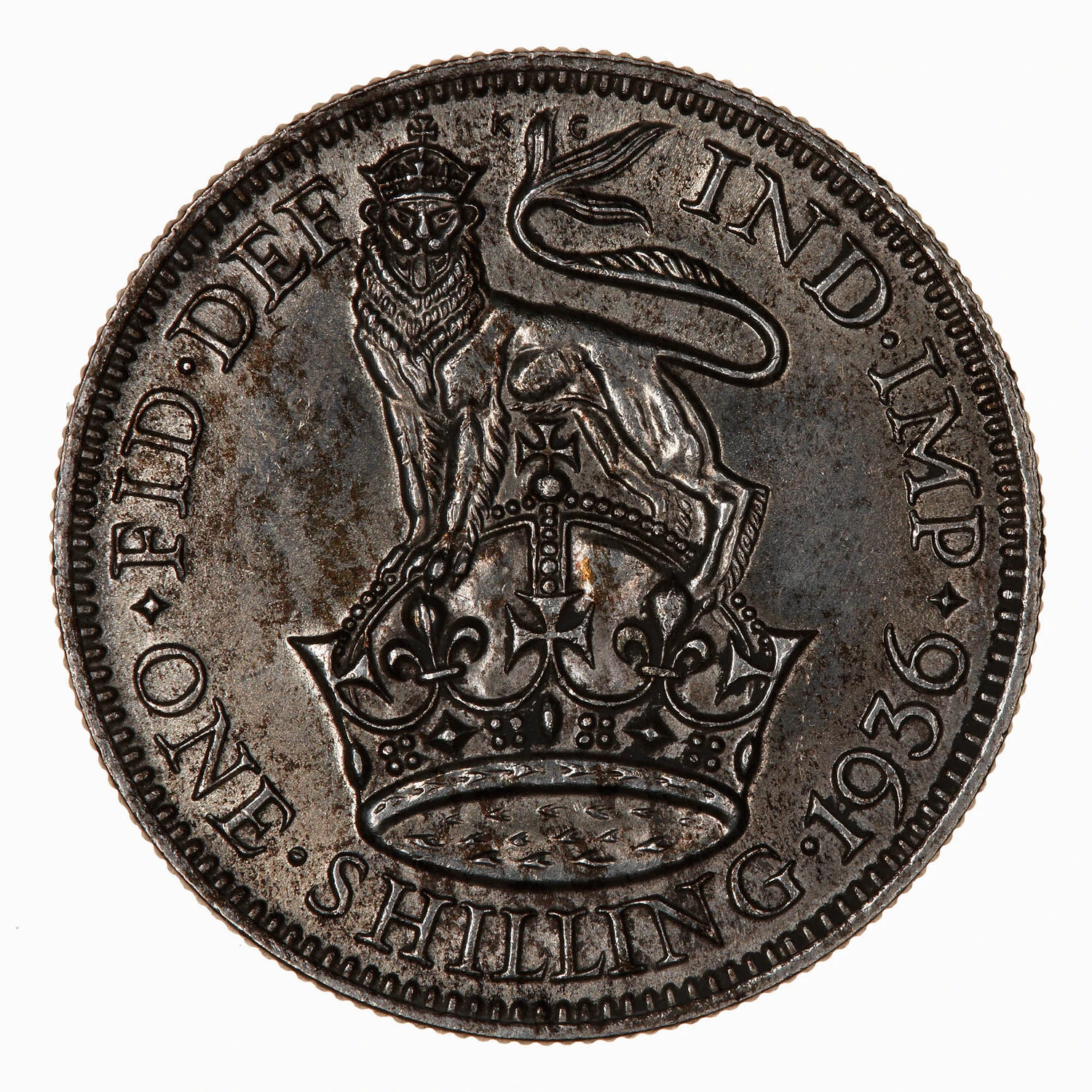
A matching British 1920–1946 shilling contributes .0909 reference fine silver troy ounce at 5.6552 g/.500. Actual annual rows collectively support every year from 1920 through 1946. George V and George VI use distinct portrait families, while 1937–1946 George VI has separate English and Scottish reverses. The 1936 museum photographs illustrate a George V specimen, not every design in this group.
When a fresh spot bid is available, melt values use fine-metal content × spot bid. CashForCoins guide buying offers use the separately configured percentage for each metal. Selected rare/numismatic coins require an appraisal. Dollar amounts remain unavailable when a fresh quote or buying percentage is missing.
Exact reviewed annual issue dates for this assigned metal/weight scope. Mint, design, overdate and finish combinations remain type-specific; broader headings do not fill absent annual rows. Source precision exceptions and separate alloy standards are explained in the guide.
Formula: specified fine-metal troy ounces × quantity. Dollar melt value additionally requires an approved current metal price.
George V's head faces left in KM 816a and KM 833; the reference credits Bertram MacKennal. The 1936 museum example shows small B.M. initials and the surrounding royal legend. George VI replaces this portrait with T.H.Paget's left-facing head in KM 853 and KM 854. Retain the complete legend and date when separating these monarch families.
George V references show a lion atop a crown; the date placement distinguishes the inspected descriptions. George VI KM 853 shows the English lion atop a crown dividing the date. KM 854 shows a seated Scottish lion above a crown, holding a sword and sceptre with shields to either side. The reference attributes both George VI reverses to George Kruger Gray. These reverse types share the matching half-silver calculator standard but remain separate visual identities.
The designated half-silver category begins with 1920 and ends with 1946. Its dated families comprise KM 816a for 1920–1926, KM 833 for 1927–1936 and KM 853/KM 854 for 1937–1946. Earlier sterling shillings belong in the .925 guide. Later dates are outside this half-silver identity. A familiar lion or monarch portrait alone does not establish the alloy standard.
Match ONE SHILLING, the full actual 1920–1946 date, appropriate monarch and reverse. The reference specifies 5.6552 g and 23.5 mm for these dated references. The 1936 museum records 24 mm and 5.65 g for its specimen; those observed object measurements are disclosed separately. KM 854 explicitly describes a reeded edge, and the museum records a milled edge on 1936. Photographs, mass and diameter do not verify .500 fineness or proof manufacture.
Three matching half-silver shillings contribute .2727 reference fine silver troy ounce and 16.9656 nominal gross grams. Retain the reference’s rounded .0909 ASW input without silently substituting mass-derived precision. Earlier .925 shillings contribute .1682 reference ounce each and must not use this calculator. Wear, authentication and actual purchase offers require individual assessment.
Specific source-supported issue years: 1920–1946. KM 816a lists each 1920–1926 year and a separate 1924 satin specimen. KM 833 lists each 1927–1936 year and proof rows, with a separate 1927 matte-proof entry. KM 853 and KM 854 each list the 1937–1946 annual English or Scottish reverses, regular and proof rows, plus 1937 matte proofs. Do not turn a polished surface into a proof attribution or apply a Scottish reverse label to a George V coin.
Preserve date, monarch, English or Scottish reverse and any documented proof or specimen attribution. Different finishes and varieties may have collector value beyond nominal silver. Cleaning, polishing and uncertain finish descriptions can reduce the information available for appraisal. Retain provenance and established certification.
Provide both full faces and the edge, plus measured mass and diameter where available. The licensed 1936 museum specimen supplies a matching design reference; it does not certify another coin. A reeded edge or lion motif alone is insufficient to establish a date-specific alloy. Altered dates, replicas and plated pieces need separate examination.
Sort actual 1920–1946 half-silver shillings separately from earlier sterling pieces. Keep the dated monarch, reverse and finish with each photo pair. The established CashForCoins appraisal enquiry accepts selected quantity as context without generating an automatic purchase offer. Fine-metal reference content helps describe a holding while individual collector value remains a separate question.
The reference designated 1920–1946 shilling group and dated KM 816a, KM 833, KM 853 and KM 854 agree on 5.6552 g/.500/.0909 fine silver troy ounce, with 23.5 mm dated reference diameter. The licensed 1936 museum specimen has a separately recorded 24 mm/5.65 g measurement; it does not replace the nominal the reference calculator inputs. The 1920 start and 1946 end come from actual annual rows. Distinct monarch portraits, Scottish/English reverses and proof finishes retain their identity. The public reference designated group and dated annual/specification tables were inspected on 2026-10-12. Annual years were read across all four families; they were not inferred from reign dates. Museums Victoria permits reuse of Justine Philip's genuine 1936 paired photographs under CC BY 4.0. No price table or mintage figures are republished.
The actual dated representative photographs and independent reuse permissions were inspected. Complete faces are retained, with WebP conversion and no enlargement, retouching or synthetic reconstruction; joined source images are split with complete rims. These photographs do not assay another specimen. Actual staging rendering and calculator acceptance are separately recorded.
Content maintained by CashForCoins. Last substantive record update: 2026-10-12. Report a specification or attribution issue through our contact page.
Photo credits and rights on the linked coin profile.
United Kingdom • 92.500% silver; balance copper
Issue years: 1816–1821, 1823–1827, 1829, 1831, 1834–1846, 1848–1919
Fine silver: 0.168200 troy oz
Photographs can help identify your coin. An appraisal may consider authenticity, condition and collector demand as well as metal content.
Request a photo appraisal View current silver coin buying information
