


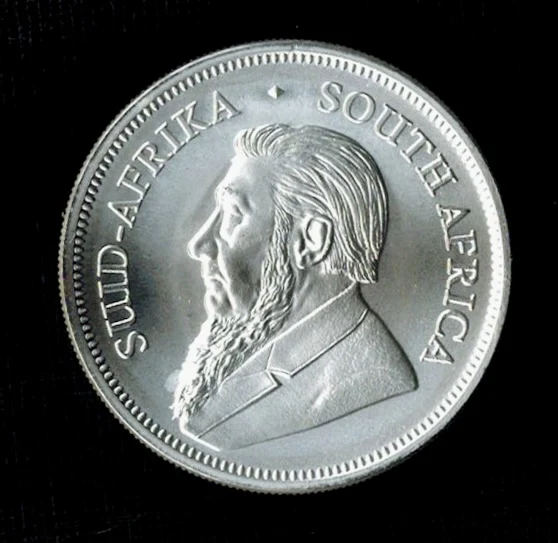
South African Silver Krugerrand, One Ounce
Photo credits and rights on the linked coin profile.
South Africa • 99.900% silver; balance alloy metal
Series dates: 2017–2026 (continuing)
Fine silver: 1.000000 troy oz
South Africa • One-ounce gold Krugerrand
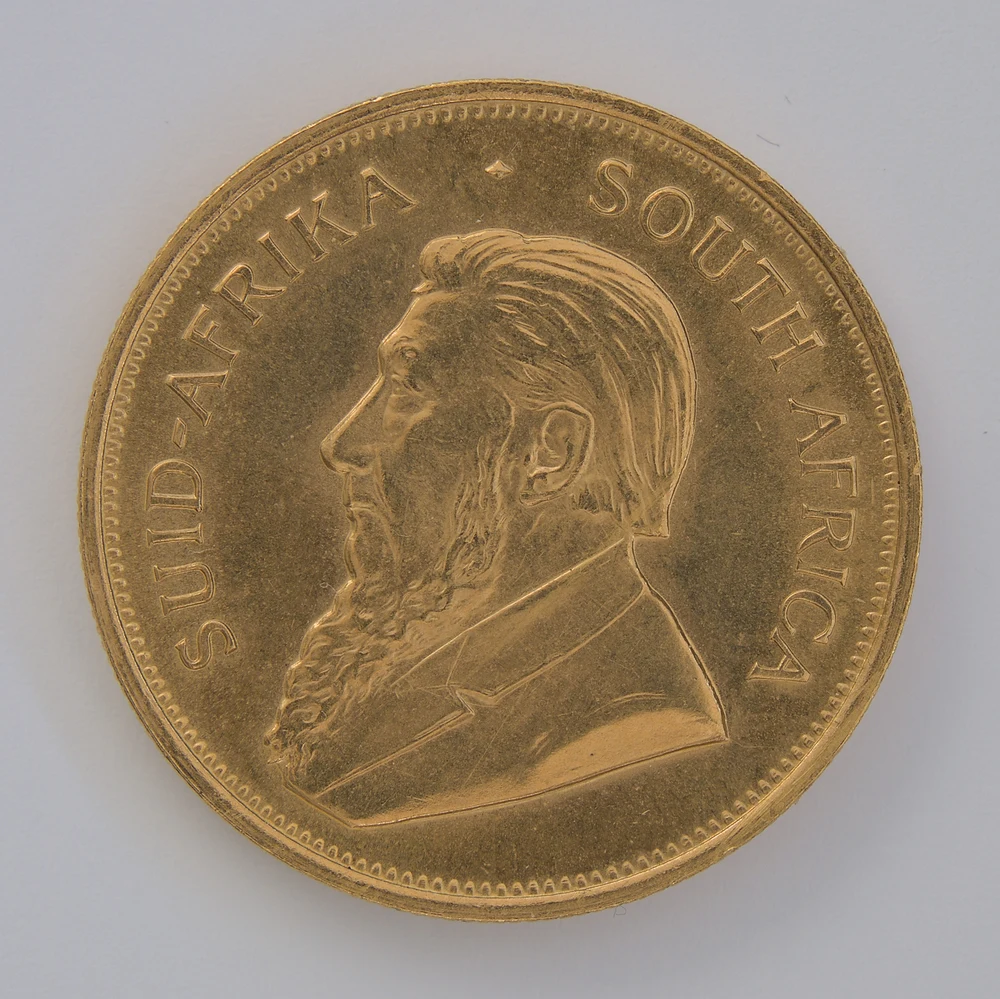
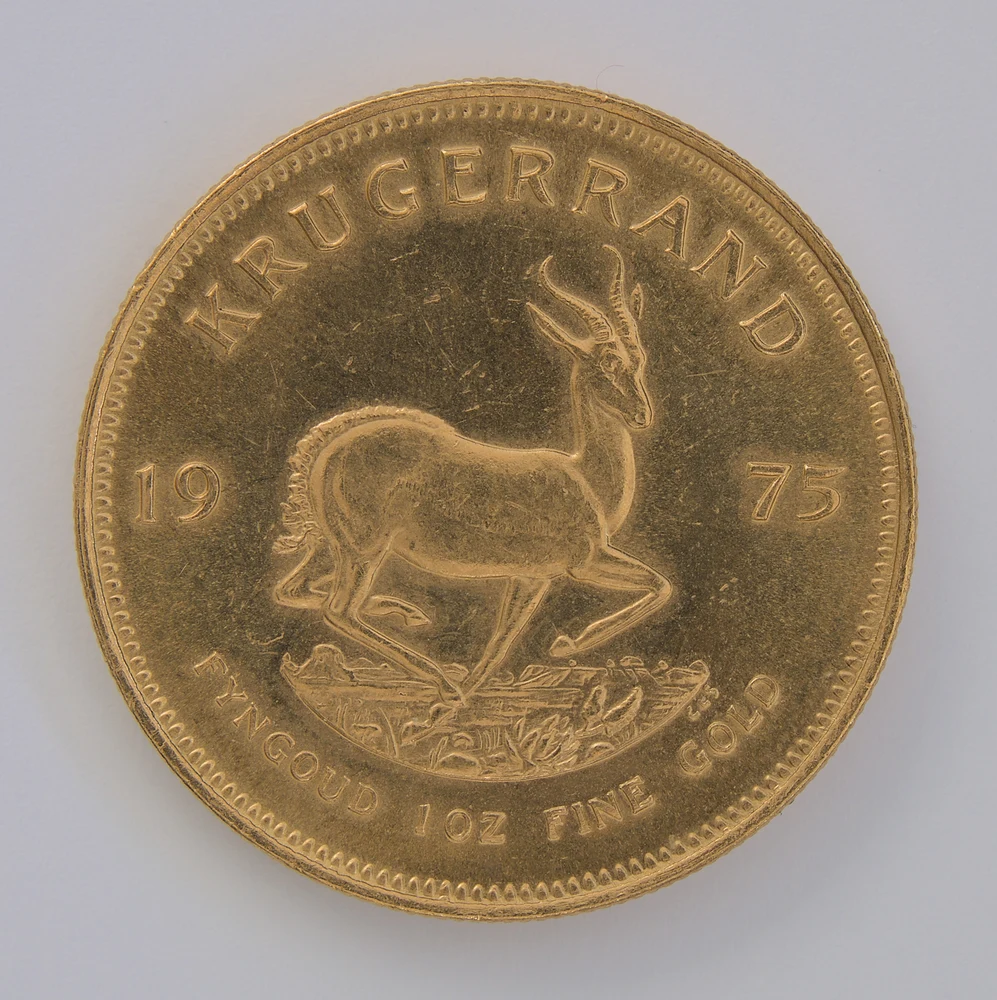
South African Gold Krugerrand, One Ounce is the one-ounce type illustrated here. This reference calculator uses 1.0003 troy oz fine gold per correctly identified coin. Reported gross mass is 33.93 g and fineness is 0.917. The photographs show a 1975 gold one-ounce issue. The reference’s rounded 1.0003 AGW is the calculation basis; the issuer’s one-fine-ounce denomination is explained separately.
When a fresh spot bid is available, melt values use fine-metal content × spot bid. CashForCoins guide buying offers use the separately configured percentage for each metal. Selected rare/numismatic coins require an appraisal. Dollar amounts remain unavailable when a fresh quote or buying percentage is missing.
These one-ounce gold issue dates include proof-only years: the Mint’s historical table records only proofs for this size in 1986 and 1997. Fractional sizes, silver Krugerrands and their separate release dates require matching profiles; future releases are not certified.
Formula: specified fine-metal troy ounces × quantity. Dollar melt value additionally requires an approved current metal price.
Paul Kruger’s profile faces left, surrounded by SUID-AFRIKA and SOUTH AFRICA. Read the reverse before determining the metal and denomination, because the later silver series shares this portrait. The corrected source-photo ordering places the actual portrait side here regardless of the uploader’s original side label.
The springbok appears beneath KRUGERRAND. The 1975 date is split 19 and 75, with FYNGOUD 1 OZ FINE GOLD below. The explicit gold and one-ounce wording establishes the reference size. Keep smaller fractional gold Krugerrands separate even though their central designs look similar.
The owner-selected reference dates the gold one-ounce family from 1967. Rand Refinery describes a gold-copper alloy and distinguishes bullion from proof edge treatment. The photographed 1975 issue is a historical example within the retained type, rather than a claim about the year or finish of an unexamined customer specimen.
Confirm 1 OZ FINE GOLD with the full date and both designs. The South African Mint’s one-ounce reference gives 32.69 mm diameter; the reference’s named table reports 33.93 g gross. A copper-alloy appearance alone does not establish authenticity. Measure an intact coin and keep any original finish attribution with it.
Three identified coins total 3.0009 troy oz fine gold on the cited reference basis. Separately multiplying the reported gross mass and fineness gives 31.11381 g, approximately 1.000332 troy oz. Rounded nominal displays and a mint’s stated fine-ounce content are different records; the source precision note explains this entry’s choice. This calculation does not measure an individual coin or include a collector premium.
Fractional gold coins and later silver Krugerrands need their own entries. Bullion and proof finishes can have different edge detail; count actual serrations only if a clear rim examination supports it. Do not assign a proof label from polished-looking photographs or apply a later collector privy mark to this 1975 reference.
Preserve any original holder, unusual privy details and condition evidence before grouping a lot solely by fine metal. A gold coin’s quoted price can include a premium, but this guide does not fabricate that premium or infer a grade. An unusual or altered date deserves separate identification.
Start with the actual metal inscription and denomination, then compare the complete date and both designs. Photograph the rim and any original packaging. A photograph, matching color or plausible mass alone does not authenticate a coin. Use a suitable scale and caliper without scratching, bending or cleaning the surface; leave an uncertain specimen aside for professional examination. Security details must be assessed against the actual issue year, rather than inferred from a newer reference coin.
Group this one-ounce type separately from smaller fractions, proof sets and similar designs in another metal. Record readable dates and the number of identified coins; keep uncertain pieces out of the quantity total. Preserve original holders and obtain clear photographs of both faces. The existing quote link carries the selected coin context so the lot can be reviewed. Reference metal content, a collectible assessment and a purchase offer are separate steps.
The reference’s named world-gold table controls 33.93 g, .917 and 1.0003 oz AGW. The issuer describes the full coin as one fine ounce and reports a more precise approximately .91667 alloy. That precision difference is disclosed; the calculator does not silently substitute 1.0000 for the owner-selected reference figure. Neither table rounding nor the face inscription is a new assay of this photographed coin. The reference is the owner-selected deciding source for uncertain metal input. A missing table row is not described as a reference specification. Photograph identity, face ordering and reuse rights are reviewed independently. No customer assay, grade or current trading price is inferred. An approved live quote feed is unavailable, so the calculator displays metal quantities without invented dollar amounts.
It uses the owner-selected reference table’s 1.0003 oz AGW per one-ounce Krugerrand. Three total 3.0009 oz on that rounded reference basis; the issuer’s one-fine-ounce denomination is disclosed separately.
The standard coin includes alloy metal as well as gold. The reference reports 33.93 g gross and 91.7% gold; gross weight and fine gold are different measurements.
No. Read the actual fractional denomination. This profile covers the full one-ounce gold type.
Content maintained by CashForCoins. Last substantive record update: 2026-10-10. Report a specification or attribution issue through our contact page.
Photo credits and rights on the linked coin profile.
South Africa • 99.900% silver; balance alloy metal
Series dates: 2017–2026 (continuing)
Fine silver: 1.000000 troy oz
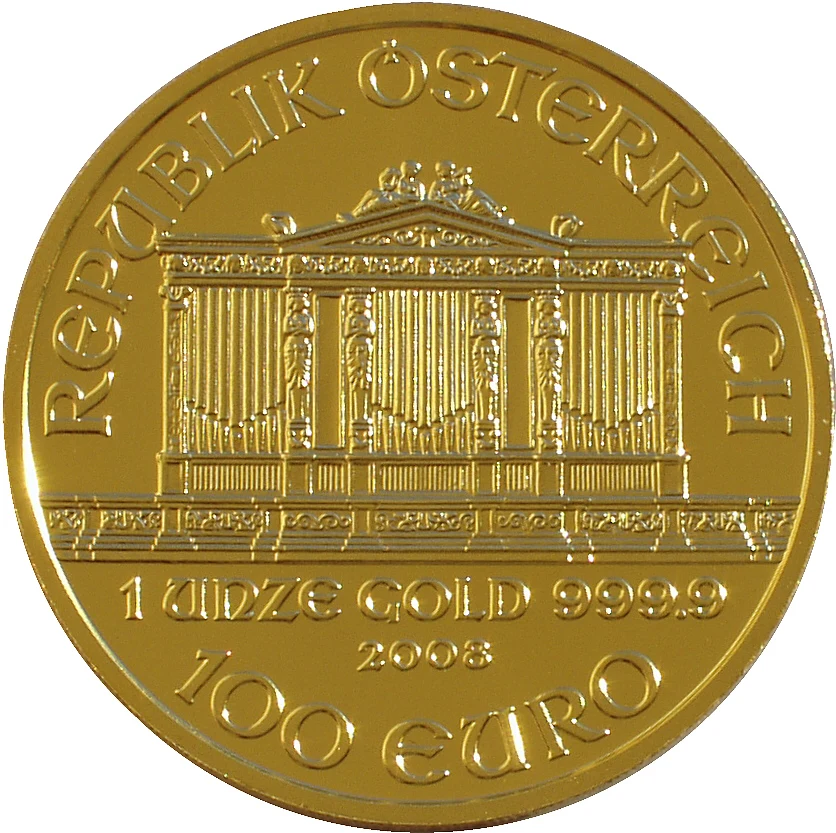
Photo credits and rights on the linked coin profile.
Austria • 99.9900% gold; balance alloy metal
Series dates: 2002–2026 (continuing)
Fine gold: 0.999900 troy oz
Photographs can help identify your coin. An appraisal may consider authenticity, condition and collector demand as well as metal content.
Request a photo appraisal View current gold coin buying information
