

.jpg)
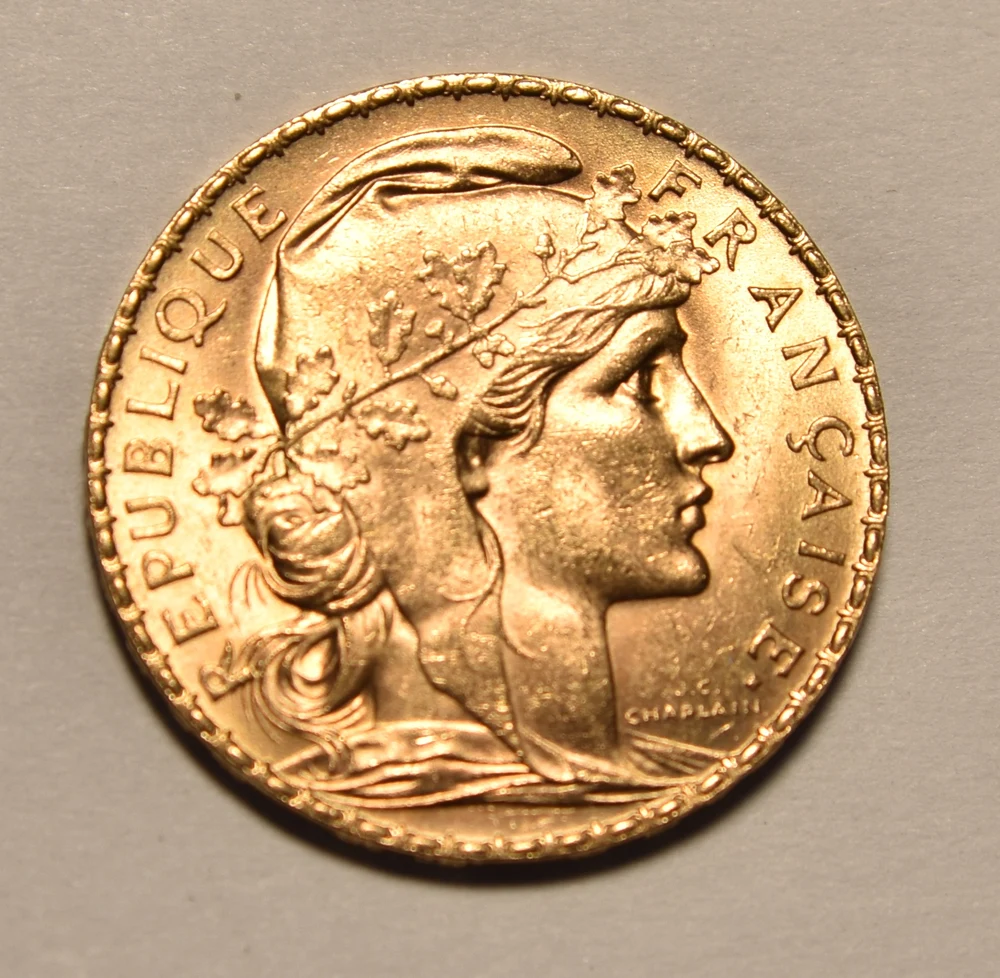
French Marianne Rooster Gold 20 Francs
Photo credits and rights on the linked coin profile.
France • 90% gold; 10% alloy metal
Issue years: 1899–1914
Fine gold: 0.186682 troy oz
France • 10 French francs
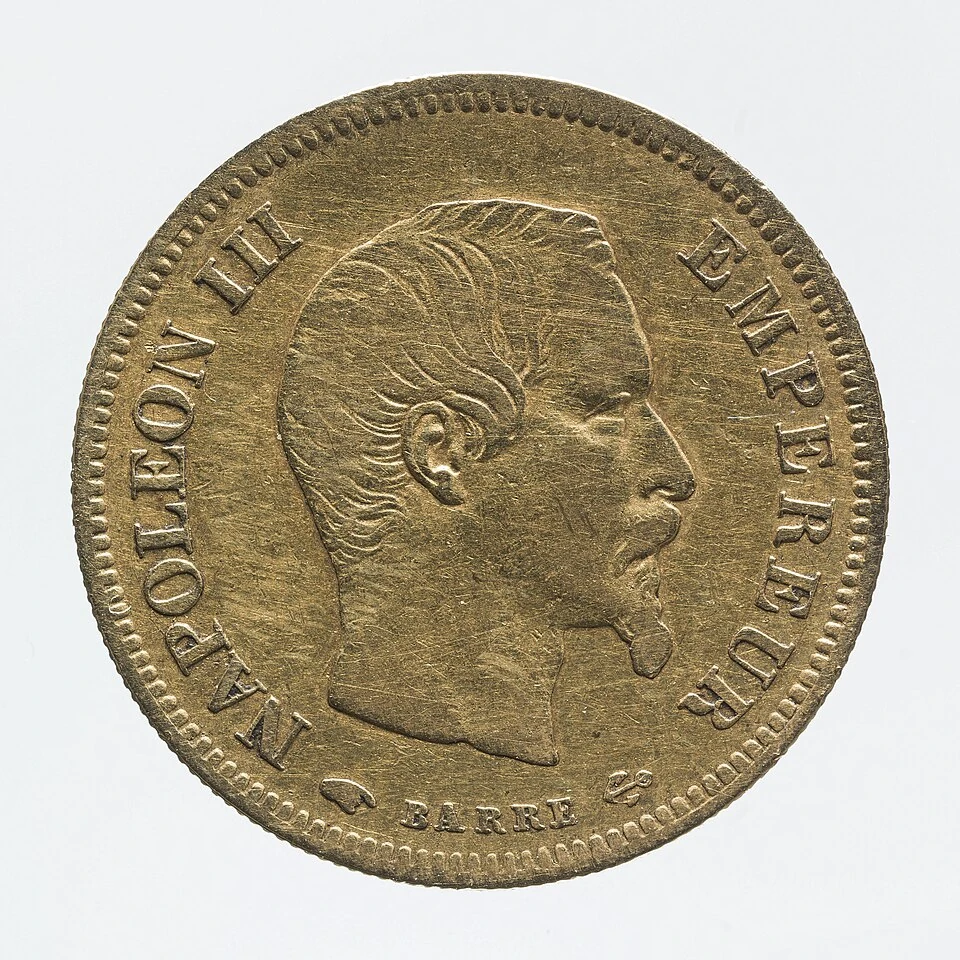
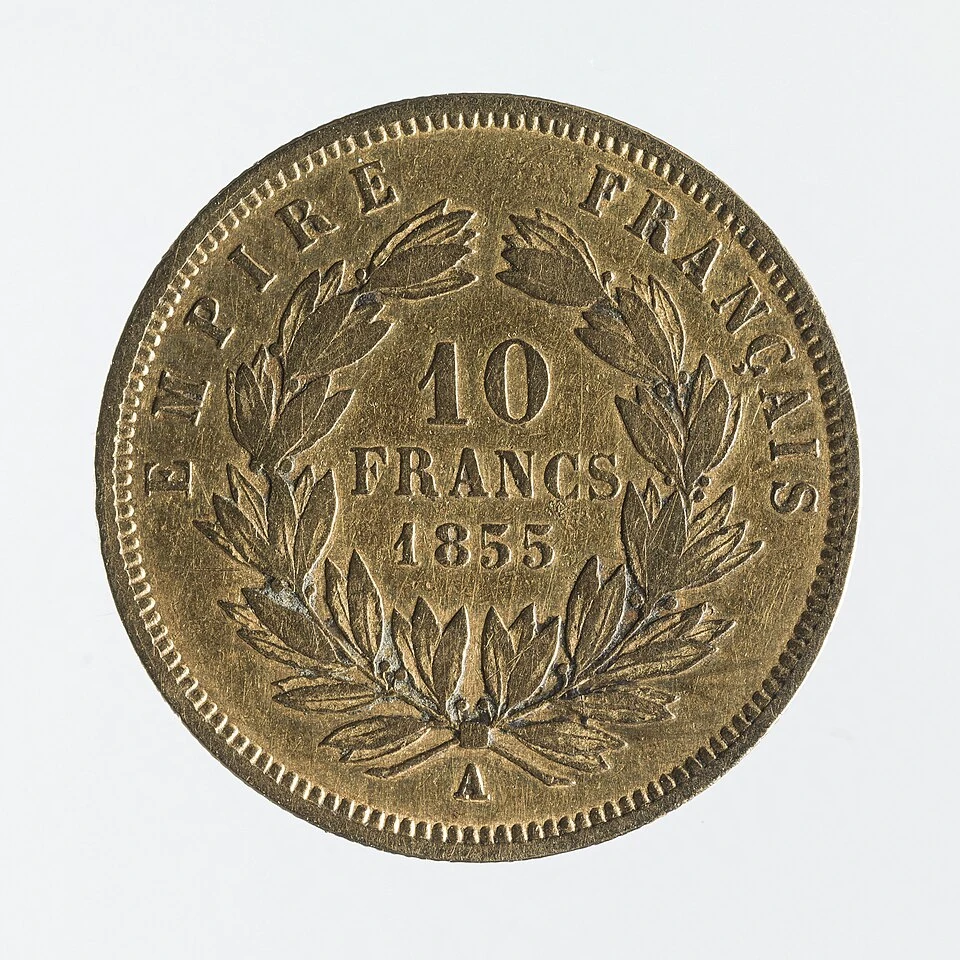
Napoleon III normal gold ten francs have reviewed actual issue years 1854–1860 and 1862–1868. The reference nominal reference is 3.2258 g gross, .900 gold and .0933 fine troy ounce. Small and enlarged modules, bare and laureate heads, and edge differences need their own attribution. The genuine reference photographs show one enlarged bare-head 1855-A specimen; they do not illustrate every subtype.
When a fresh spot bid is available, melt values use fine-metal content × spot bid. CashForCoins guide buying offers use the separately configured percentage for each metal. Selected rare/numismatic coins require an appraisal. Dollar amounts remain unavailable when a fresh quote or buying percentage is missing.
Exact reviewed annual face/issue years for the assigned standard, retaining mint and design gaps. Overdate undernumerals and commemorative life dates do not add annual issues. Separate alloys, weights, designs and finish availability are explained in the guide. Additional1861/1869 third-party catalogue rows remain an unresolved chronology conflict and are excluded from this confirmed date list.
Formula: specified fine-metal troy ounces × quantity. Dollar melt value additionally requires an approved current metal price.
Napoleon III faces right, surrounded by his imperial name and title. Early coins show a bare head; later laureate types add a wreath. The photographed 1855-A Carnavalet coin shows the bare head and BARRE signature. Its museum attribution identifies Albert-Désiré Barre for this object. Designer signatures and changes should be checked by subtype rather than assigning one personal name to every early and late coin in the family.
The denomination 10 FRANCS and actual face date appear inside a wreath, with the imperial French legend around the edge and a mint letter below. The matching 1855 museum example has A for Paris. BB identifies Strasbourg on documented historical issues. Read all ten-franc details instead of relying on a similar twenty-franc portrait. The later Ceres and rooster designs are separate coin families and do not belong to Napoleon III merely because they share a denomination.
Gold ten-franc coins provided a smaller denomination alongside the better-known twenty francs during the Second Empire. The normal bare-head sequence includes small and enlarged modules before the laureate portrait. The later French republic used different imagery even where the nominal gold standard remained comparable. A shared reference gold amount does not merge these different issuers, portraits and actual issue dates into one historical identification.
Check the imperial portrait, 10 FRANCS reverse, actual year, mint mark and physical module together. The reference lists 17.2 mm for an early small type; Carnavalet’s photographed 1855 enlarged type measures 19 mm. There is deliberately no universal diameter applied to all Napoleon III tens. The museum specimen weighs 3.18 g in its current condition, while the nominal calculation retains the reference’s 3.2258 g standard. An individual worn or mounted coin is not an assay of the standard.
The reference supplies .0933 reference fine troy ounce for this normal standard. For orientation, 3.2258 g × .900 gives 2.90322 nominal fine gold grams. The calculator retains the reference’s rounded published troy-ounce figure rather than silently replacing it with a longer calculated decimal. Ten matching standard coins total .933 reference fine troy ounce. This is a nominal-content calculation, independent of the individual coin’s condition, collector interest and authenticity.
The original Le Franc dated types support bare-head small issues in 1854–1855, the enlarged bare head in 1855–1860, and laureate issues in 1862–1868. The first 1862 laureate hybrid has a smaller denomination numeral; the definitive large-numeral series has separately listed A and BB varieties. The 1854 smooth-edge and reeded-edge types need separate attribution. The reference’s third-party KM 800 annual table additionally lists 1861 and 1869, while the reference’s own registry ends at 1868 and Le Franc’s complete engraved-date catalog excludes both extra dates. Those conflicting rows are retained in the research log for review.
Record the actual mint letter, portrait, edge and module before grouping a lot. Early smooth-edge and small-module pieces are distinguishable from ordinary large-module bare or laureate coins. These differences may matter in appraisal, but this guide does not assign an unexamined specimen a grade, scarcity rating or price. Preserve original surfaces and any documented provenance; cleaning or polishing can erase useful attribution and condition evidence.
Compare both faces, the complete imperial legends, denomination, date, edge, mass and module. A gold-colored copy or another French ten-franc design may resemble a cropped emperor photograph. Correct weight alone is insufficient to establish genuineness. Keep any plated piece, damaged attribution or doubtful engraved date separate until an individual assessment resolves it. Do not scratch or acid-test a collector coin yourself to fit a nominal calculator record.
Separate Napoleon III ten francs from twenties and from the later Ceres or rooster tens. Add actual face years, A or BB marks, module measurements and clear edge photographs to the existing CashForCoins appraisal submission. Standard gold content helps describe matching pieces, while an actual purchase offer can depend on authentication, condition and collector demand. Missing live market data remains unavailable rather than appearing as a guaranteed dollar value.
The designated reference metal table controls the 3.2258 g/.900/.0933 nominal reference. Original Le Franc dated classifications and the reference registry support fourteen engraved issue years; additional third-party annual rows for 1861 and 1869 remain an explicitly documented chronology discrepancy. Paris Musées identifies the genuine 1855-A object NM228, its 19 mm module and current worn specimen mass of 3.18 g. That measurement does not replace the reference nominal mass. The museum’s original object page explicitly releases both photographs under CC0; the coin engraver is not asserted to be their photographer.
No. The reference lists a 17.2 mm early small-module type, while the photographed 1855 large-module museum object is 19 mm. Attribute the exact module.
No. Its recorded 3.18 g describes that object. The normal nominal calculation retains the reference’s 3.2258 g/.900/.0933 oz reference.
The third-party KM 800 table lists 1861 and 1869, but the original Le Franc engraved-date classification and the reference registry have different boundaries. The discrepancy is documented rather than presented as a confirmed normal date.
Content maintained by CashForCoins. Last substantive record update: 2026-10-12. Report a specification or attribution issue through our contact page.
Photo credits and rights on the linked coin profile.
France • 90% gold; 10% alloy metal
Issue years: 1899–1914
Fine gold: 0.186682 troy oz
Photographs can help identify your coin. An appraisal may consider authenticity, condition and collector demand as well as metal content.
Request a photo appraisal View current gold coin buying information
