

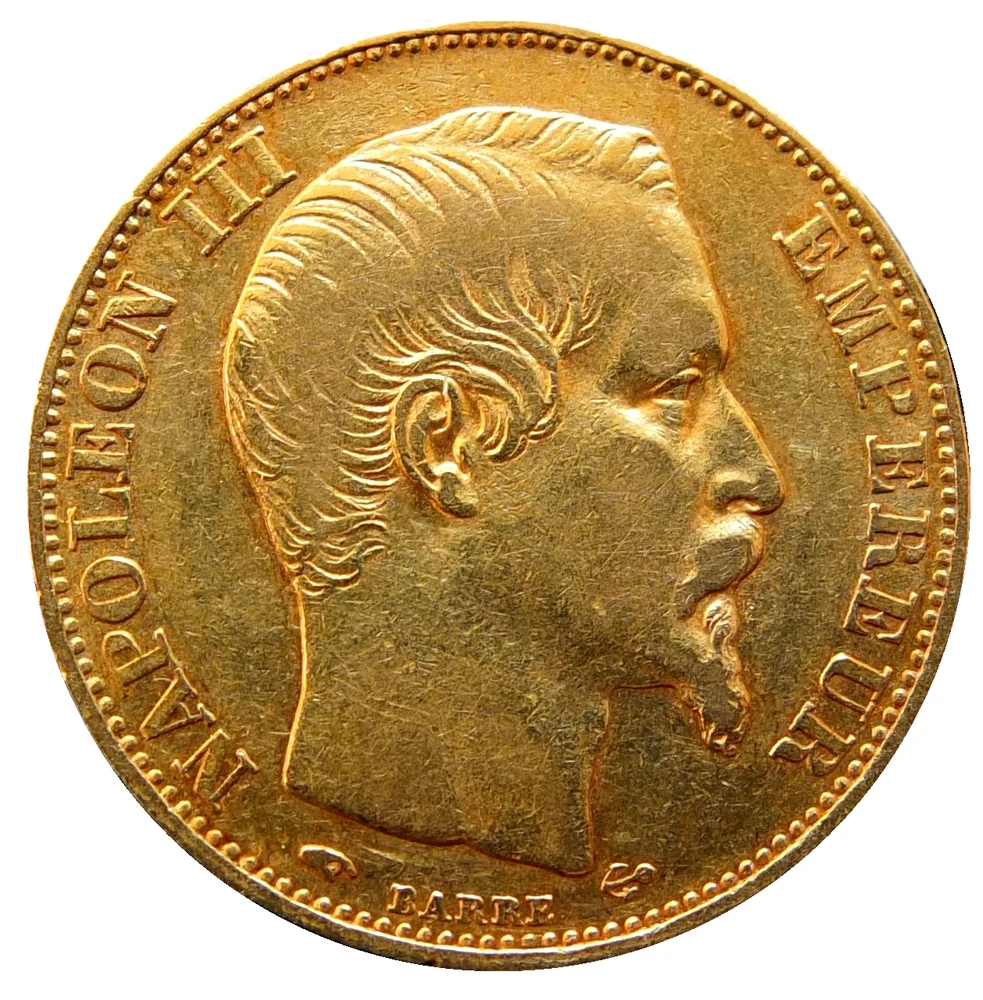
Napoleon III French Gold 20 Francs
Photo credits and rights on the linked coin profile.
France • 90% gold; 10% alloy metal
Issue years: 1853–1870
Fine gold: 0.186682 troy oz
France • 20 French francs
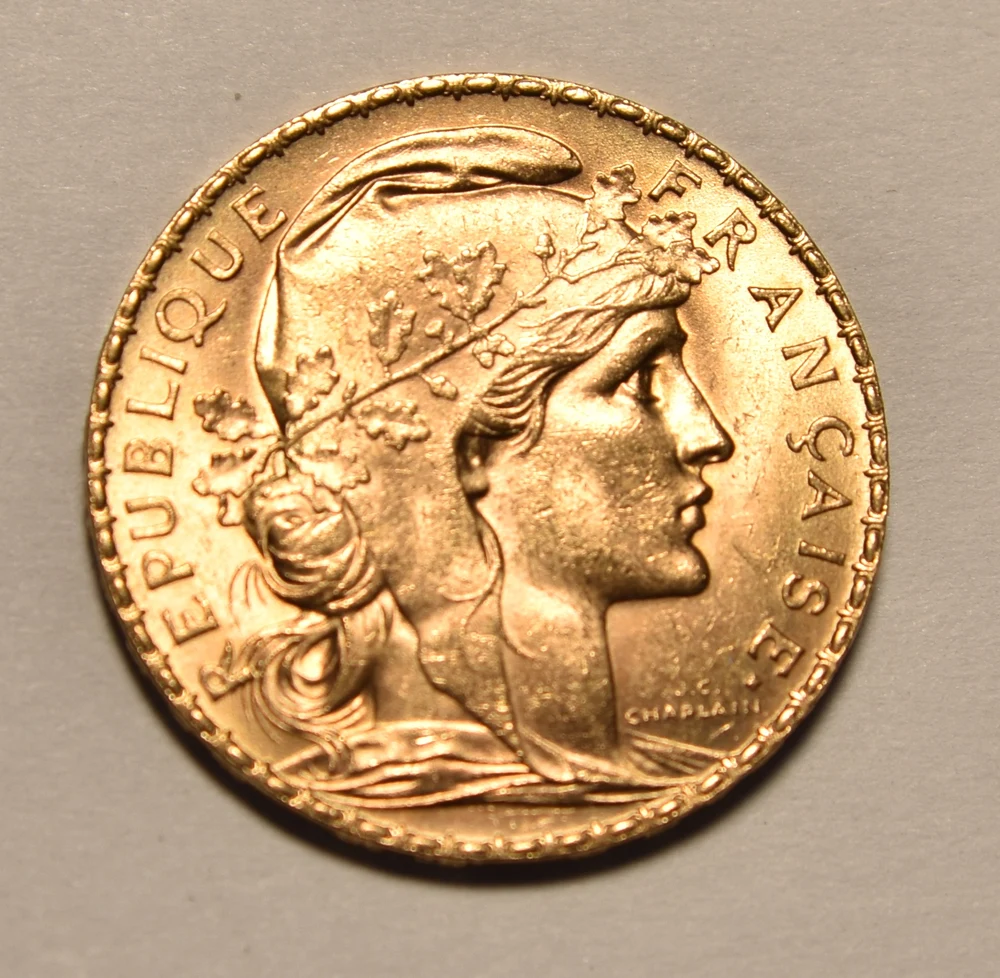
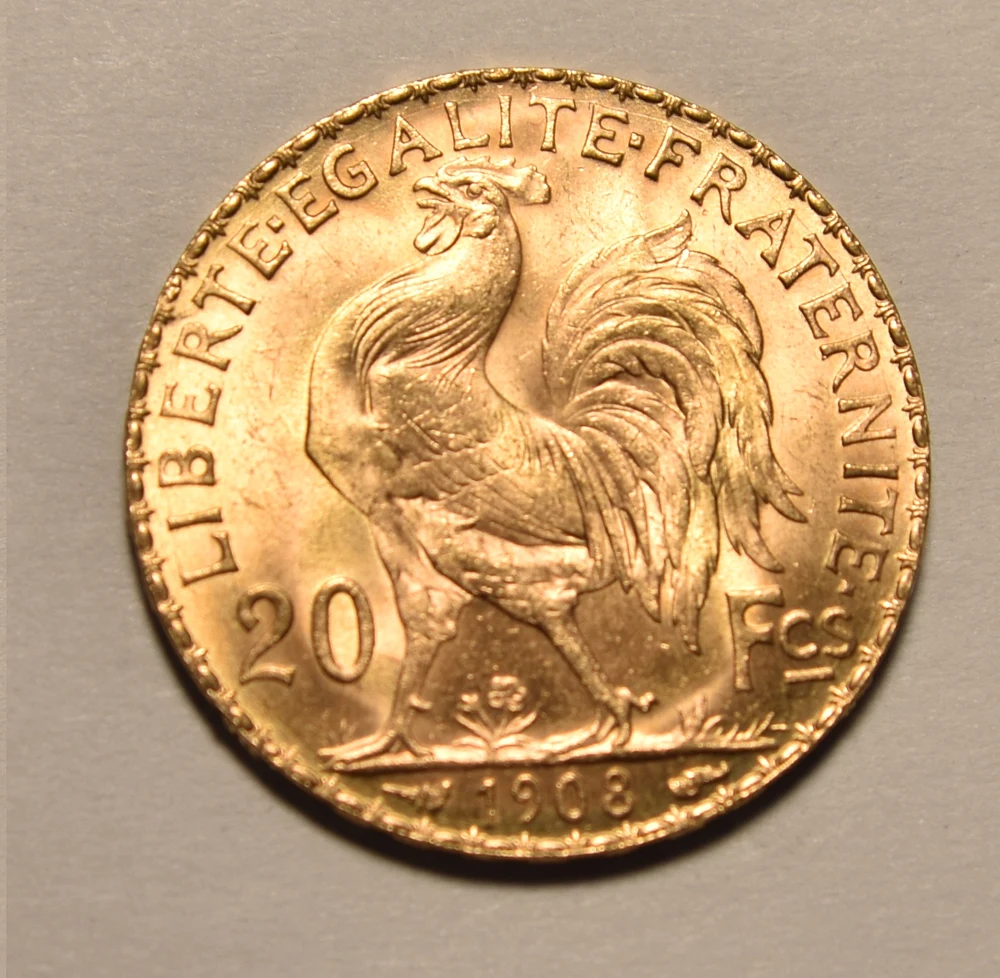
French Marianne Rooster Gold 20 Francs is a .900 gold twenty-unit coin. The nominal monetary standard is 6.45161 g gross, 5.806449 g fine gold and approximately 0.186682 troy oz. Marianne faces the viewer’s right on the obverse, and a standing rooster appears on the reverse. The illustrated 1908 coin establishes the twenty-franc design and face date; its date alone does not establish when the specimen was struck.
When a fresh spot bid is available, melt values use fine-metal content × spot bid. CashForCoins guide buying offers use the separately configured percentage for each metal. Selected rare/numismatic coins require an appraisal. Dollar amounts remain unavailable when a fresh quote or buying percentage is missing.
The twenty-franc dated circulation sequence is continuous. Official restrikes retain dates 1907–1914, so a face date does not prove the manufacturing year. The edge legend changes in 1907.
Formula: gross grams × fineness ÷ 31.1034768 × quantity. Dollar melt value additionally requires an approved current metal price.
Marianne wears a cap and a wreath. REPUBLIQUE FRANÇAISE surrounds the portrait. Compare the complete circular legend and rim with the reference, keeping scratches and reflected light separate from the engraved design.
The rooster stands between 20 and FCS, with 1908 below. LIBERTE EGALITE FRATERNITE follows the rim. Read 20 before choosing a calculator entry: the ten-franc rooster has a similar subject but half the nominal gold standard.
The dated circulation series runs from 1899 through 1914. Official later restrikes retain earlier face dates. This makes a distinction between the engraved year, the minting event and an individual specimen’s provenance useful when describing a coin for appraisal.
Confirm Marianne and rooster, 20 FCS, the face date and approximately 21 mm diameter. The Paris circulation type has no mint letter. Gold color or the rooster alone cannot distinguish a correct denomination, a reproduction or an altered specimen.
The nominal calculation is 6.45161 g × 0.900 = 5.806449 g fine gold. Divide by 31.1034768 g per troy ounce to obtain approximately 0.186682 troy oz. The remaining tenth is alloy, not additional gold. A quantity of three represents approximately 0.560045 troy oz at standard weight. The theoretical metal amount is separate from a collector premium or buyer offer; it is not a measured assay of your specimen.
The edge wording changes with the dated subgroup in 1907. Capture the full edge rather than inferring its wording from the two face photographs. A 1907–1914 date can occur on an official restrike, so retain provenance and avoid describing every dated piece as an original contemporary strike.
Preservation, proof or pattern status and documented originality can matter beyond gold content. An attractive uncirculated surface does not establish either originality or a guaranteed premium. Ask for an individual assessment when the coin differs from an ordinary circulation reference.
Use the actual denomination, both faces, date, mint details, edge, mass and diameter together. A plausible portrait or matching gold color is insufficient. Check an intact specimen with a suitable scale and caliper, keeping measurements separate from the nominal calculator. Worn, clipped, mounted or suspicious pieces need individual examination. Do not clean a coin or damage its edge to test it. These photographs identify representative designs; they do not authenticate a customer coin or assign a grade.
Group the same denomination and type together, and record quantities, dates, mint marks and any original holders. Supply readable photographs of both faces and a separate edge view when inscriptions or damage matter. Request an appraisal for the actual lot rather than treating the nominal gold total as a guaranteed payment. Keep ten-unit gold, silver coins and replicas out of this entry. The collection calculator can combine separately identified coins while retaining each composition.
The calculator retains the five-decimal twenty-unit nominal mass in Article 2 of the original 1865 monetary convention, reproduced in the Swedish parliamentary report. This is historical specification evidence, not current legal or tax guidance and not a claim that an earlier coin was first issued under that convention. Design and issue dates are checked separately against issuer or coin-type references. Shorter catalog weights and the photographed specimen’s condition are not substituted for the nominal standard. Original photograph licenses and transformations are recorded separately. No approved live gold-price feed is configured, so dollar melt values remain unavailable.
No. Official restrikes exist with earlier dates. The face date is a design identifier; actual striking and provenance require separate evidence.
No. Their designs are similar, but the ten-franc denomination is approximately half the nominal gold of the twenty francs.
No. It calculates nominal fine gold. Dollar melt requires an approved price feed, and collectible value or an offer requires a separate assessment.
Content maintained by CashForCoins. Last substantive record update: 2026-10-10. Report a specification or attribution issue through our contact page.
Photo credits and rights on the linked coin profile.
France • 90% gold; 10% alloy metal
Issue years: 1853–1870
Fine gold: 0.186682 troy oz
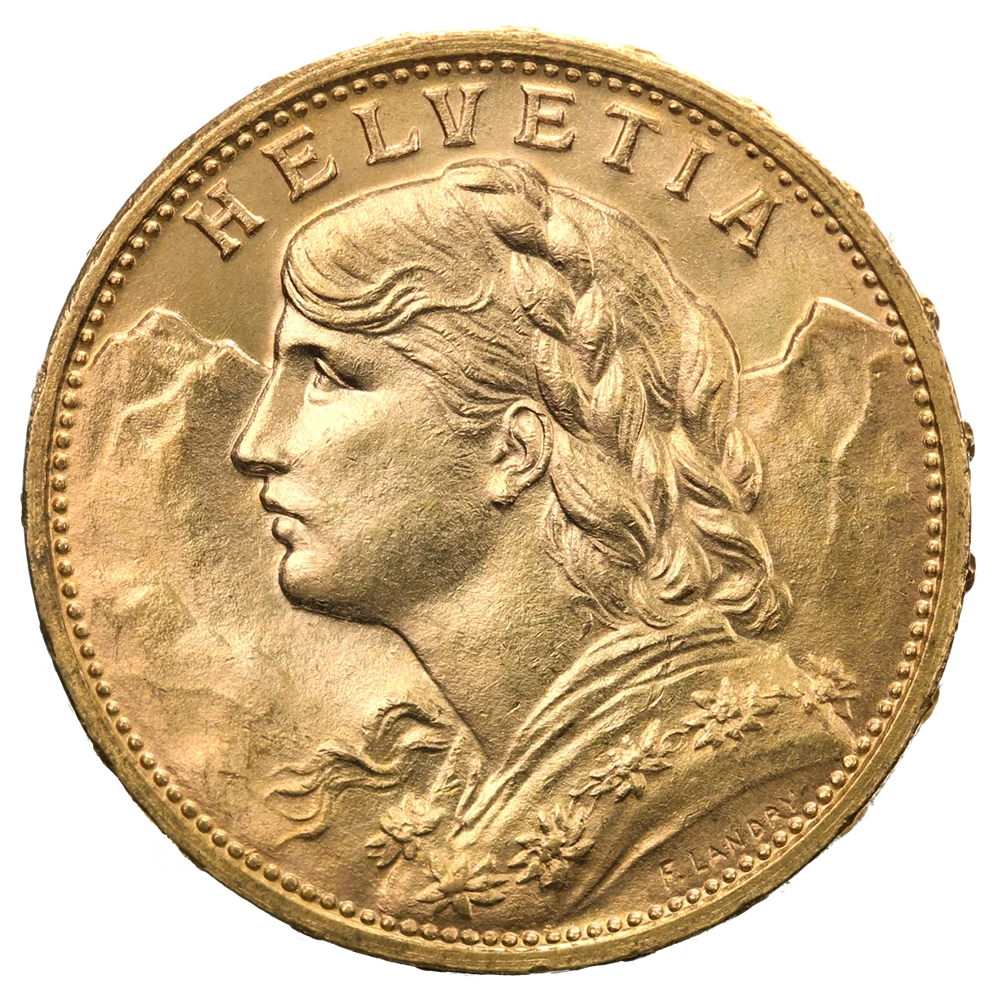
Photo credits and rights on the linked coin profile.
Switzerland • 90% gold; 10% alloy metal
Issue years: 1897–1916, 1922, 1925–1927, 1930, 1935, 1947, 1949
Fine gold: 0.186682 troy oz
Photographs can help identify your coin. An appraisal may consider authenticity, condition and collector demand as well as metal content.
Request a photo appraisal View current gold coin buying information
