

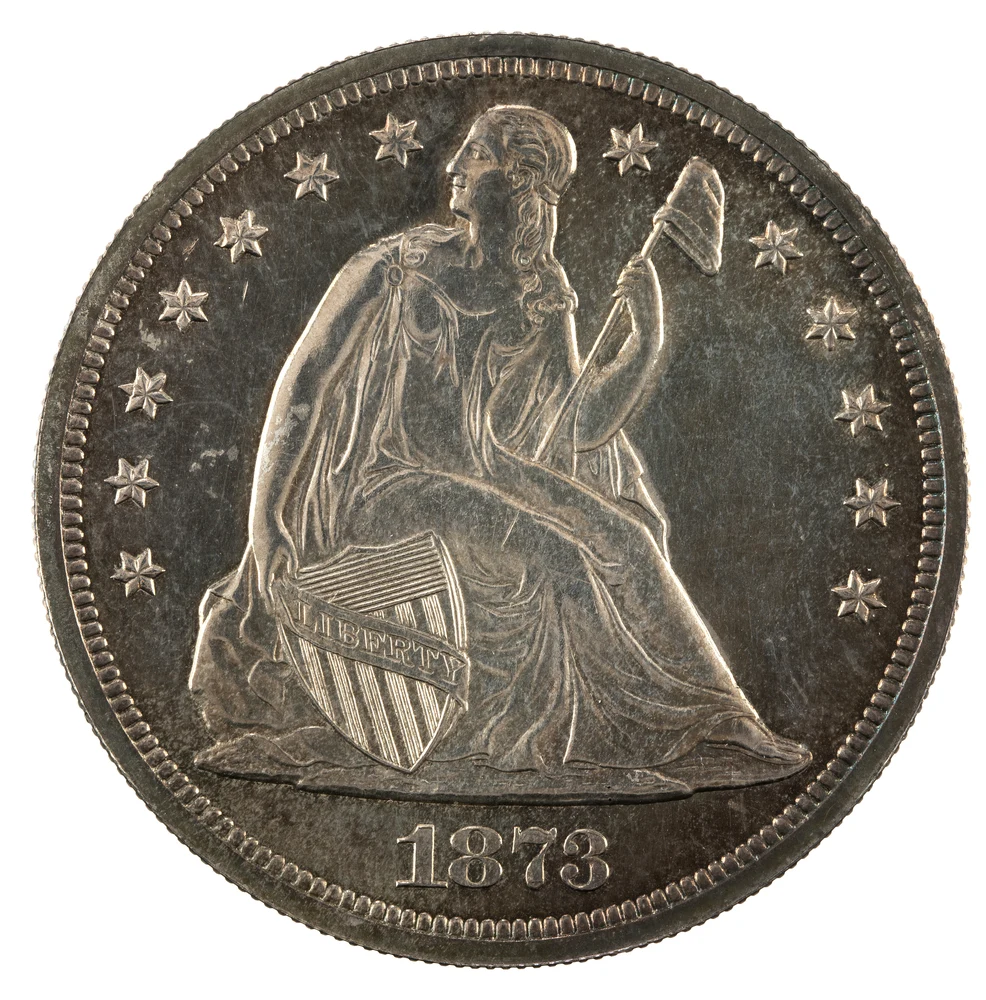
Liberty Seated Silver Dollar
Photo credits and rights on the linked coin profile.
United States • 90.0% silver; balance copper
Issue years: 1840–1873
Fine silver: 0.773400 troy oz
United States • 1 U.S. trade dollar
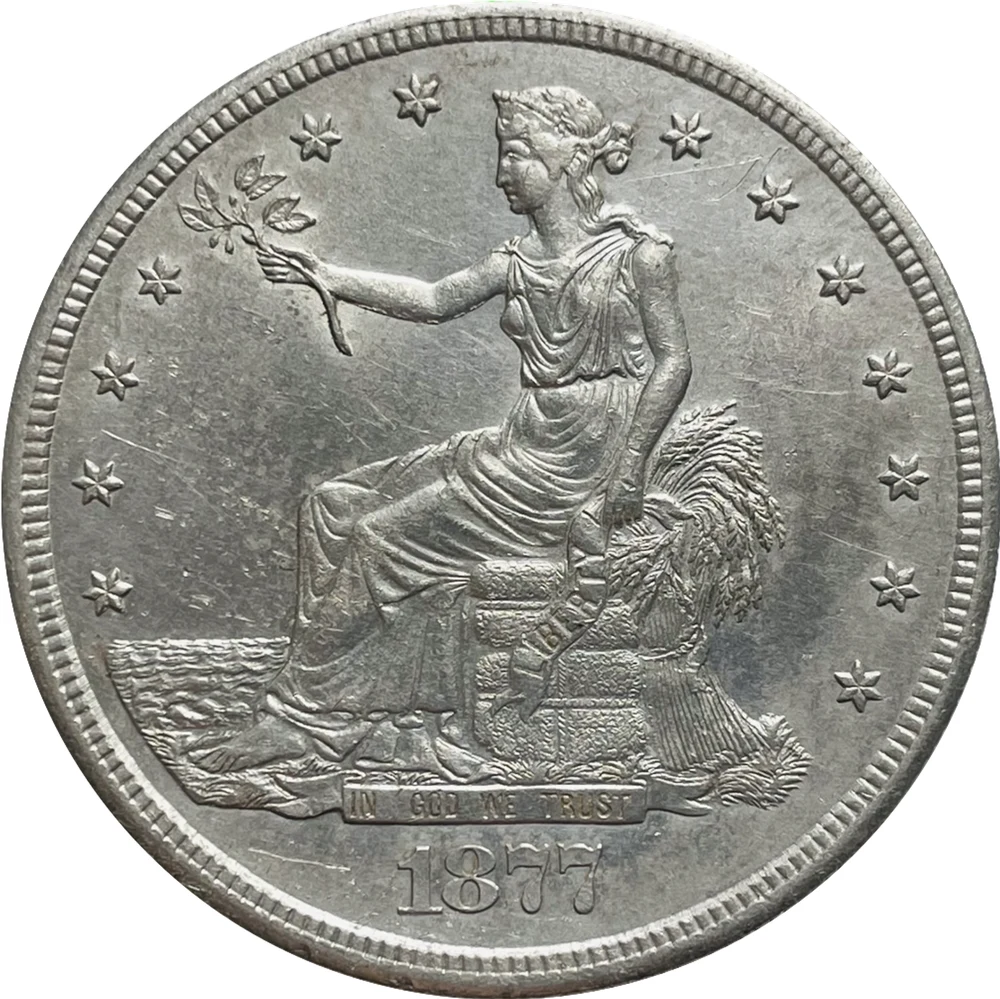
U.S. Trade Dollar contains 0.7876 troy oz of reference fine silver per correctly identified coin, following the matching reference specification. Reported gross mass is 27.22 g and silver fineness is 0.900. The genuine photographs illustrate an 1877-S coin. The Trade dollar is a distinct denomination/type from the lighter original Morgan and Seated dollars.
When a fresh spot bid is available, melt values use fine-metal content × spot bid. CashForCoins guide buying offers use the separately configured percentage for each metal. Selected rare/numismatic coins require an appraisal. Dollar amounts remain unavailable when a fresh quote or buying percentage is missing.
Regular strikes end in 1878; later dates are proof issues. The extremely rare 1884–1885 dated pieces need specialist attribution.
Formula: specified fine-metal troy ounces × quantity. Dollar melt value additionally requires an approved current metal price.
Liberty sits facing left, extending an olive branch toward the rim. The full date appears below the seated figure. Compare the hand, branch, seat and surrounding stars together; a generic seated portrait is not enough to distinguish the Trade dollar from the Seated Liberty dollar.
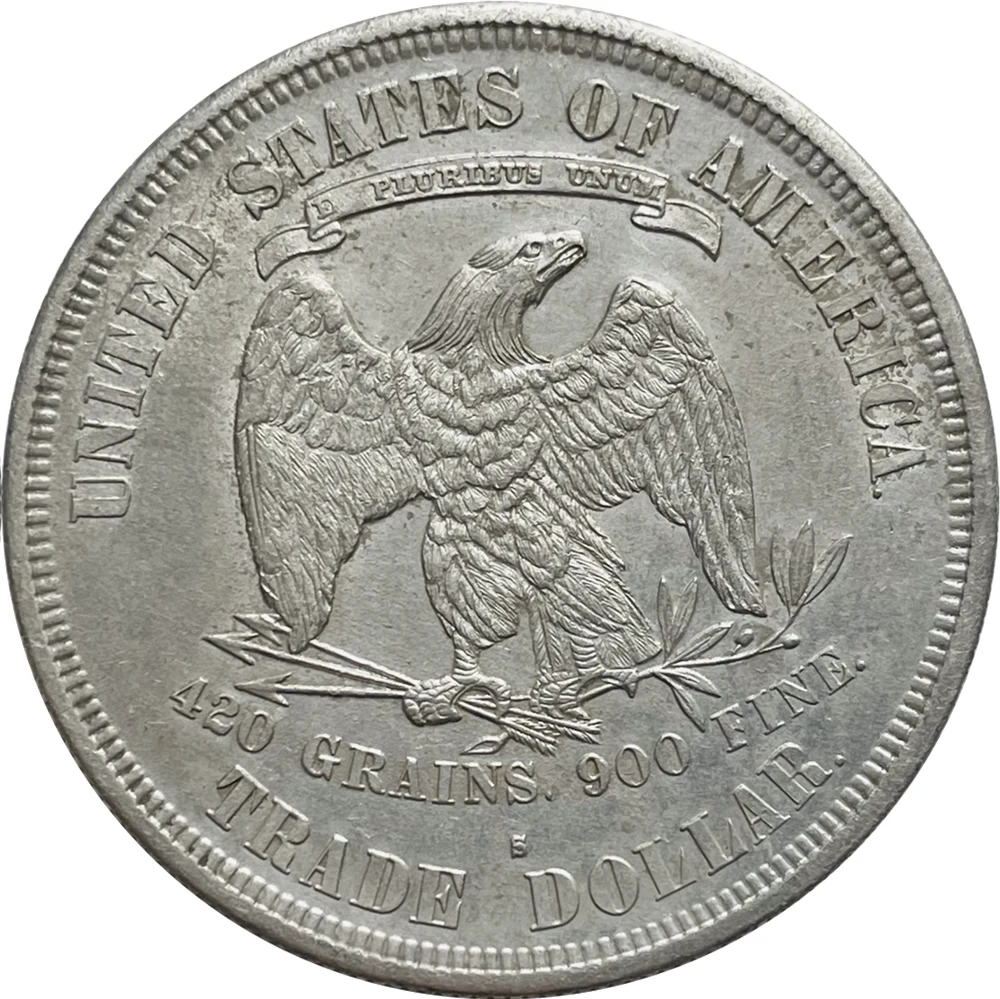
An eagle carries arrows and an olive branch above the denomination TRADE DOLLAR. The explicit 420 GRAINS, 900 FINE inscription distinguishes the design and states its historic nominal standard. The illustrated reverse shows an S below the eagle; preserve that detail rather than assigning every example to San Francisco.
The reference series covers 1873–1885 and arose from silver trade with Asian markets. The reference’s account of the 1877-S issue describes exports, melting and later circulation. This context helps explain chopmarked examples, but it does not authorize treating a historic merchant mark as a modern assay or overlooking alteration.
Look for TRADE DOLLAR and 420 GRAINS, 900 FINE, then compare the mint mark and full date. The exact the reference 1877-S record gives 38.1 mm diameter, 27.22 g gross and .900 silver. A different inscription, counterfeit surface or unexplained mass difference warrants review before the piece is counted.
Three matching coins total 2.3628 fine silver troy oz on this reference basis. Separately multiplying 27.22 g by 0.900 gives 24.49800 g of nominal silver, or approximately 0.787629 troy oz. The calculator uses the reported reference ASW; it does not silently replace that amount with extra decimal places derived from rounded inputs. Wear, mounts and foreign material require separate examination.
The broad 1873–1885 series includes circulation and proof issues rather than an uninterrupted run of equivalent circulation coins. The reference identifies differing S mint-mark styles and varieties for 1877-S. Rare later dates and proof finishes should remain individual records; an image of the ordinary 1877-S type cannot certify those attributions.
Keep date, mint mark, surface condition and any chopmarks with the appraisal record. Specialist demand for a genuine date or variety can differ from a metal calculation. Do not polish off marks or flatten the surface to make a historic trade coin look newer.
Identify both designs, the complete denomination, actual date and mint details before using the quantity field. Preserve the surface and original holder; do not clean, scratch, bend or acid-test a collectible coin. A plausible weight or resemblance to the reference photographs cannot establish authenticity. Record the rim, scale reading and readable inscriptions for an individual review, and keep uncertain pieces outside the calculated lot.
Sort this identified type separately from coins with a similar name but another denomination or alloy. Photograph both sides and preserve packaging, certificates and prior provenance. Count the matching pieces and use the existing quote form, which carries the selected coin context. Reference silver content and a collector premium are different parts of appraisal; the calculator does not create an offer for an unseen specimen.
The named U.S. silver melt table omits the Trade dollar. The rendered reference 1877-S Coin Explorer record controls .900, 27.22 g and .7876 oz ASW. Its reported ASW is retained separately from the nominal mass product; no unsupported .7874 value is substituted. The reference governs uncertain metal specifications under the owner-selected source policy. Face identification and photograph reuse rights were reviewed separately. These figures describe reference coinage, not a first-party assay or condition grade. No approved live market feed is connected, so the calculator reports metal quantities without inventing dollar prices.
The reference’s rendered exact record reports .7876 oz ASW. Three correctly identified coins total 2.3628 fine silver troy oz.
No. Read the denomination and the 420 GRAINS, 900 FINE inscription. The Trade dollar has its own heavier gross specification.
No. Preserve them as part of its history and condition, then obtain an individual authenticity review.
Content maintained by CashForCoins. Last substantive record update: 2026-10-11. Report a specification or attribution issue through our contact page.
Photo credits and rights on the linked coin profile.
United States • 90.0% silver; balance copper
Issue years: 1840–1873
Fine silver: 0.773400 troy oz
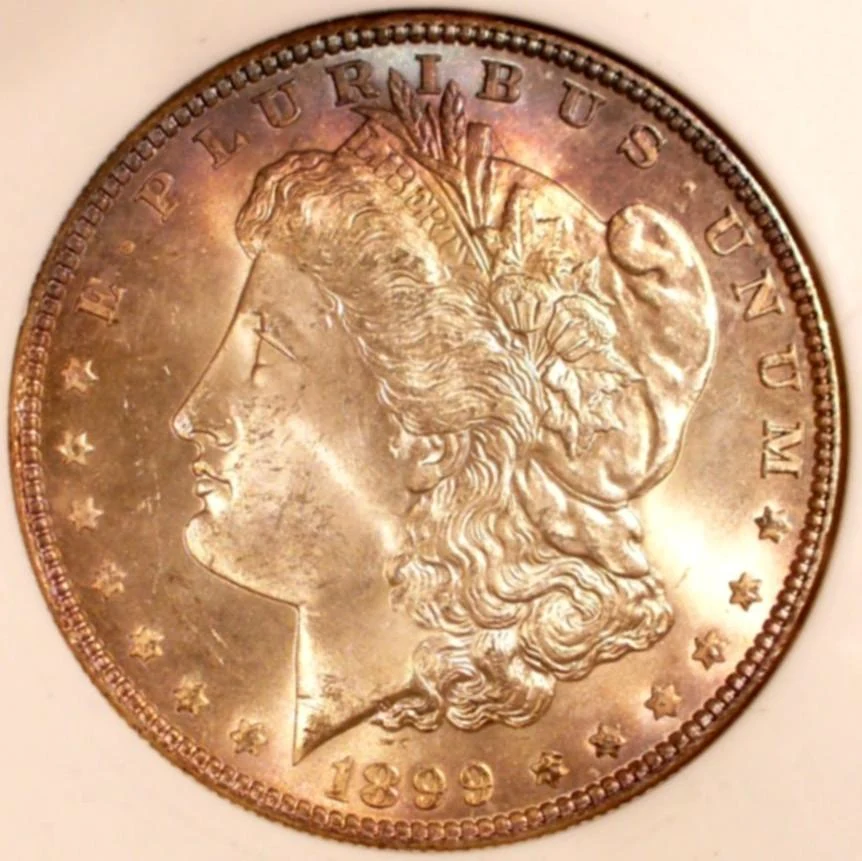
Photo credits and rights on the linked coin profile.
United States • 90% silver, 10% copper
Issue years: 1878–1904, 1921
Fine silver: 0.773451 troy oz
Photographs can help identify your coin. An appraisal may consider authenticity, condition and collector demand as well as metal content.
Request a photo appraisal View current silver coin buying information
