
.jpg)
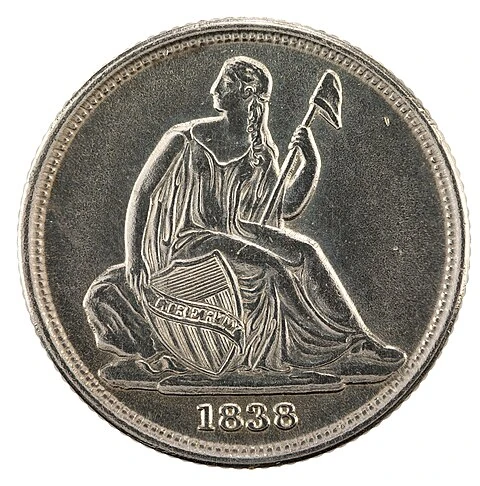
Seated Liberty Dime — Original Heavier Standard
Photo credits and rights on the linked coin profile.
United States • 90% silver, 10% copper
Issue years: 1837–1852; 1853 Philadelphia No Arrows
Fine silver: 0.077300 troy oz
United States • 10 U.S. cents
The verified early reduced-weight types use 2.49 gross grams, 90% silver and .072 fine silver troy ounce in the reference. Included dates are 1853–1855 with arrows, 1856–1859 with stars except 1859-S, and 1860-S with stars. The broader reduced-weight design period extends to 1873, but later Legend Obverse and conflicting references are outside this calculation.
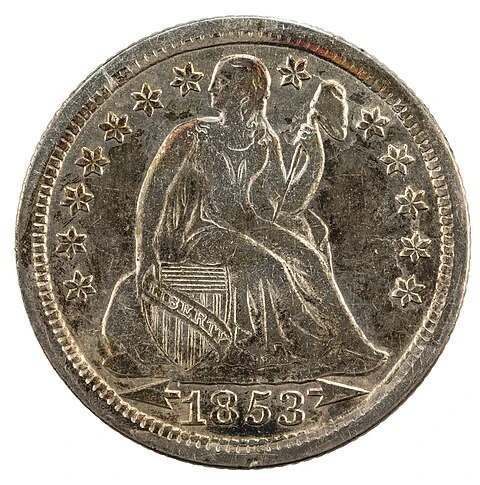
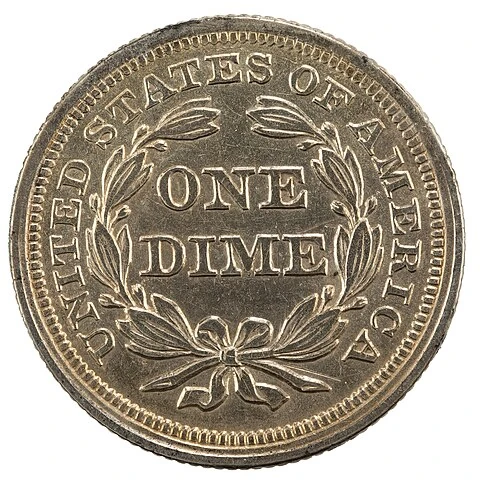
When a fresh spot bid is available, melt values use fine-metal content × spot bid. CashForCoins guide buying offers use the separately configured percentage for each metal. Selected rare/numismatic coins require an appraisal. Dollar amounts remain unavailable when a fresh quote or buying percentage is missing.
Actual source-reviewed issue years for this exact denomination, design and metal/weight scope. Overdates, mint combinations and proof availability remain type-specific; specimen photos and measurements do not certify other examples. 1853–1855 Arrows; 1856–1859 Stars except1859-S;1860-S Stars only. Later Legend and conflicting reference rows are excluded.
Formula: specified fine-metal troy ounces × quantity. Dollar melt value additionally requires an approved current metal price.
The 1853–1855 type has stars around Liberty and arrows beside the date. The arrows disappear on the resumed Stars type from 1856; their removal did not reinstate the heavy standard. Liberty remains seated with the shield and pole. The 1860-S Stars design must be distinguished from 1860 Legend Obverse dimes.
ONE DIME sits within a wreath, with UNITED STATES OF AMERICA around the border on the included Stars types. Later Legend Obverse dimes move the country name to the obverse and use a different wreath arrangement. That change in lettering alone does not establish a new silver ratio.
The February 21, 1853 legislation sets the half dollar at 192 grains and the dime at one fifth of that weight: 38.4 grains. At .900 fineness this is .072 fine silver troy ounce and 2.488278144 nominal gross grams. The reference rounds the included types to 2.49 g. The later 1873 legislation increases the dime to a metric 2.5 g standard.
Inspect date, arrows, stars and mint mark together. The 1853 date occurs on both heavy No Arrows and reduced Arrows coins. The included 1860 date requires the S mint mark and Stars design. Set an 1859-S or a later Legend Obverse dime aside for its exact dated reference rather than assigning this calculation from the portrait alone.
The selected reference is 2.49 gross grams, .900 fineness and 0.072 fine silver troy ounce per matching dime. Three matching coins contribute 7.47 reference gross grams and 0.216 reference fine silver troy ounce. Gross alloy weight includes copper; use fine silver weight for a silver spot-price calculation. A spot quote is per troy ounce, and a reference melt estimate is not a collector valuation or buying offer.
Included calendar years are 1853, 1854, 1855, 1856, 1857, 1858, 1859 and 1860. The final year applies only to the 1860-S Stars type. The KM A63.2 table lists 1859-S, but its .072 ASW conflicts with a dated Coin Explorer .0723 presentation, so 1859-S is excluded here. The 1860 Legend introduction, 1861–1872 Legend issues and 1873 No Arrows remain part of the historical sequence; they are not counted as verified calculation coverage.
| Dated type | Observed years | Identification scope | The reference |
|---|---|---|---|
| KM 77 | 1853, 1854, 1855 | Arrows at date only | 2.4900 g / .900 / 0.072 fine silver troy oz |
| KM A63.2 | 1856, 1857, 1858, 1859, 1860 | Stars without arrows; 1860-S only. 1859-S excluded pending conflicting Coin Explorer reference reconciliation. | 2.4900 g / .900 / 0.072 fine silver troy oz |
A metal estimate is a reference for silver content, not a collector valuation. Date, mint, condition, original surfaces, finish and attribution can matter more than the silver amount. Keep certification labels and provenance with the coin and avoid cleaning or polishing before an appraisal.
Compare complete photographs of both faces and the edge, the readable date and mint mark, and measured mass and diameter. Wear and damage change a specimen's measured weight. A matching photograph or a single scale reading cannot certify authenticity; uncertain dates, altered markings and unusual surfaces need individual examination.
Separate identified weight families before counting a group of Seated Liberty dimes. Keep uncertain pieces aside and describe their dates, mint marks, arrows and finish in a CashForCoins appraisal request. Supply both faces rather than a photograph of a pile. The reference calculation does not establish a buying offer.
The calculation uses the .072 ASW reported by the reference KM 77 and A63.2. The reference’s URL spells the latter a6.3.2, while the visible catalogue label is A63.2. Multiplying its rounded 2.49 g by .900 gives about .07205 troy ounce, whereas the full 38.4-grain nominal standard gives .072 exactly. Those precision differences do not create a separate physical standard. Conflicting 1859-S and 1871 .0723 entries, and the 1873 Open 3 No Arrows 2.5 g presentation, remain excluded until reconciled. Patterns and unverified transitional pieces are also excluded.
Content maintained by CashForCoins. Last substantive record update: 2026-10-12. Report a specification or attribution issue through our contact page.
Photo credits and rights on the linked coin profile.
United States • 90% silver, 10% copper
Issue years: 1837–1852; 1853 Philadelphia No Arrows
Fine silver: 0.077300 troy oz
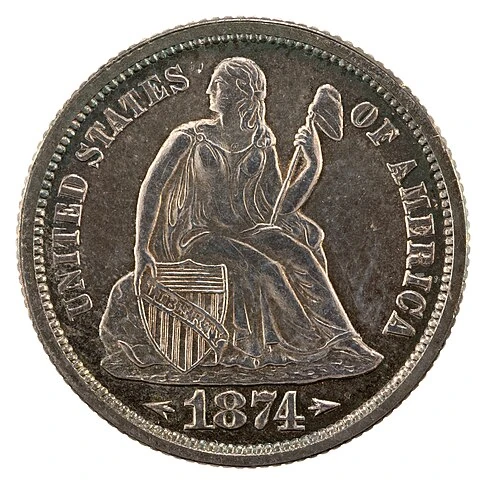
Photo credits and rights on the linked coin profile.
United States • 90% silver, 10% copper
Issue years: 1873–1874 Arrows; 1875–1891 No Arrows
Fine silver: 0.072300 troy oz
Photographs can help identify your coin. An appraisal may consider authenticity, condition and collector demand as well as metal content.
Request a photo appraisal View current silver coin buying information
