


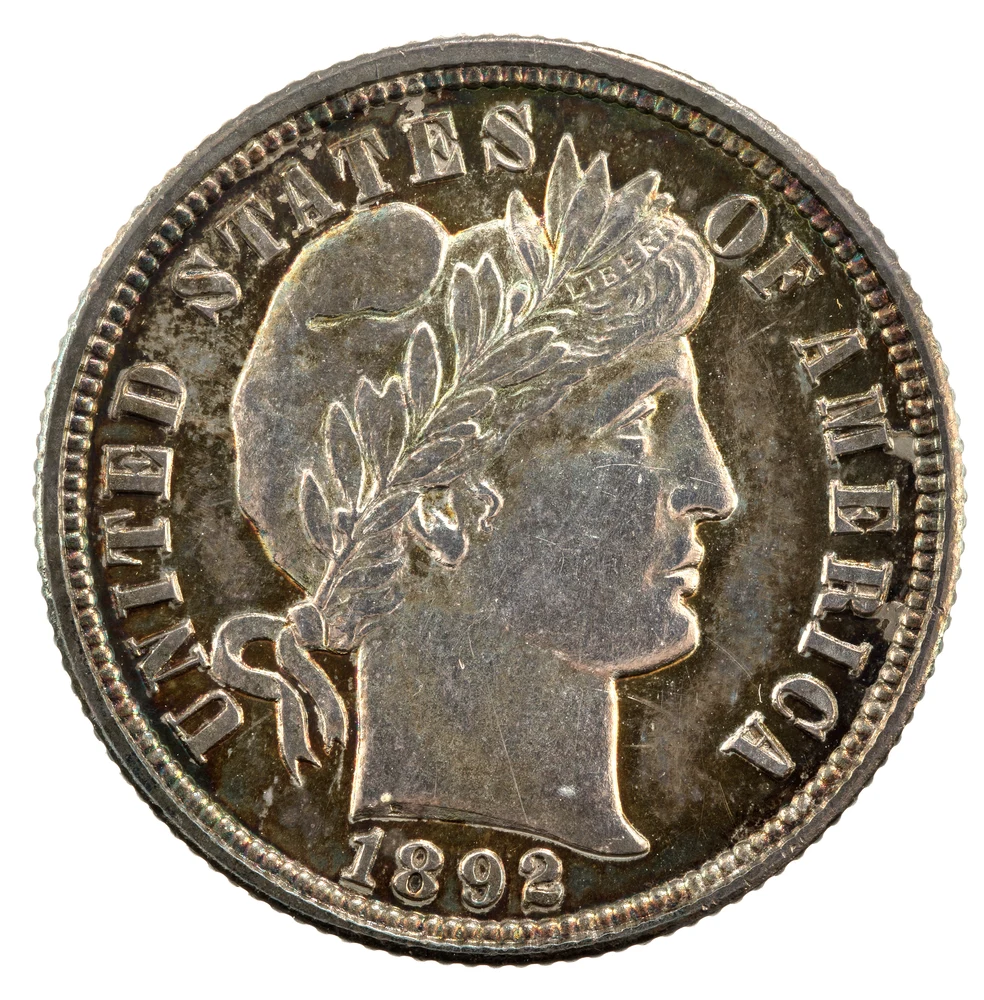
Barber Dime
Photo credits and rights on the linked coin profile.
United States • 90% silver, 10% copper
Issue years: 1892–1916
Fine silver: 0.072339 troy oz
United States • 10 U.S. cents
Mercury Dime — Winged Liberty contains 2.25 g of fine silver at its nominal 2.5 g gross weight and 90.0% silver alloy. That is approximately 0.072339 troy oz per genuine, correctly identified coin. This record covers original 1916–1945 silver circulation issues. A later gold centennial coin using a similar design is a different metal and product.
When a fresh spot bid is available, melt values use fine-metal content × spot bid. CashForCoins guide buying offers use the separately configured percentage for each metal. Selected rare/numismatic coins require an appraisal. Dollar amounts remain unavailable when a fresh quote or buying percentage is missing.
No Mercury dimes were issued in 1932–1933. Not every mint produced a coin in every listed year.
Formula: gross grams × fineness ÷ 31.1034768 × quantity. Dollar melt value additionally requires an approved current metal price.
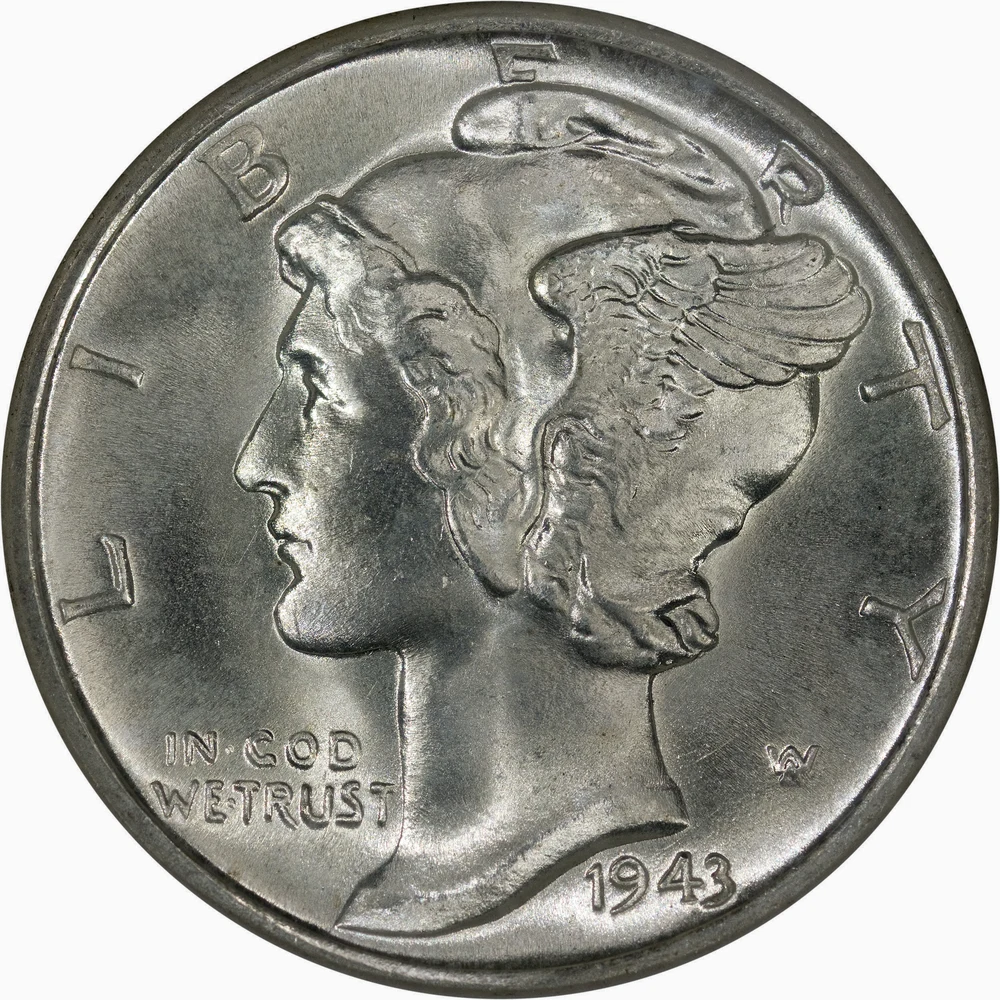
The head faces left and wears a winged cap. LIBERTY appears around the upper rim, with IN GOD WE TRUST beside the neck and the date below. The photograph shows 1943; the design depicts Liberty, despite the familiar Mercury nickname.
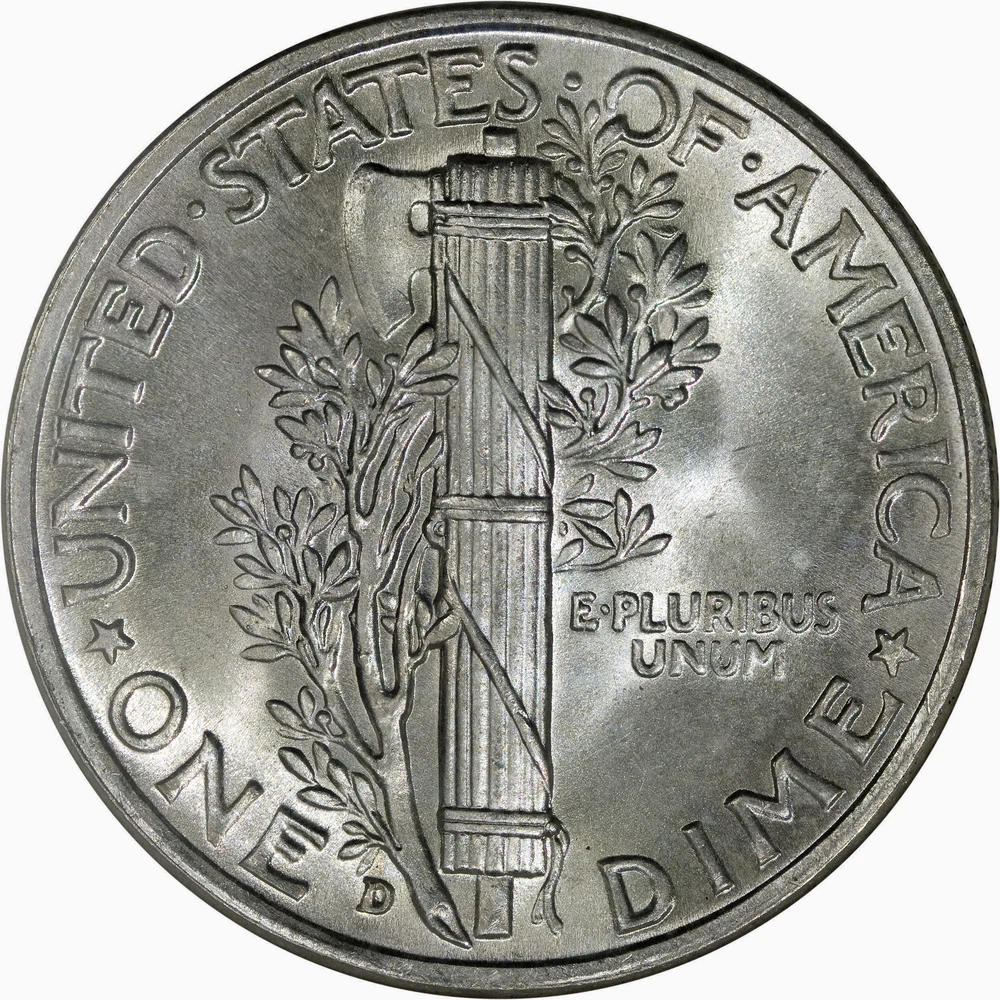
A bundle of rods and an axe, known as fasces, stands vertically beside an olive branch. ONE DIME and UNITED STATES OF AMERICA name the denomination and issuer. The photographed reverse has a D mint mark near the lower left of the central design.
The Mint identifies the design as Adolph Weinman’s Winged Liberty dime. It replaced the Barber dime and was followed by the Roosevelt design. Its nickname is a useful search term, but identifying the figure correctly avoids treating the portrait as the Roman god Mercury.
Match the winged cap with the fasces-and-olive-branch reverse, then record the date and mint mark. Check the nominal 2.5 g mass, approximately 17.9 mm diameter and reeded edge. A winged-cap image alone is insufficient for identifying the metal of a later commemorative.
The calculation is 2.5 g × 0.9 = 2.25 g fine silver; divide by 31.1034768 to convert grams to troy ounces. The rest of the coin is alloy metal. Quantity totals use nominal content; wear, damage or an incorrect identification can change the content of your actual coins.
This original silver group runs 1916–1945. Dates, mint marks, overdates and strike designations can matter to collectors without changing the nominal .900 alloy. The pictured 1943-D coin demonstrates a representative design; it does not identify a scarce variety in your collection.
Keep mint marks and reverse detail visible when sorting. Do not reduce an unusual date or a high-grade piece to its silver weight alone. Condition and correctly attributed varieties require examination of the actual coin, not just a library comparison image.
Compare both sides, legends, edge and measured dimensions. Added mint marks or altered dates can mislead a photograph-only comparison. Preserve original surfaces and request professional evaluation before destructive testing or selling a potentially important piece.
Organize Mercury dimes by date and mint mark, with questionable or unusually detailed pieces separate. Use the photo appraisal form to show the obverse date and reverse mark. A calculated quantity total records nominal silver, not a guaranteed bid.
The Mint reference supports the historical design or composition distinction described here. The separate specification record documents gross mass, silver fineness and diameter; numerical source claims are recorded individually. Fixed decimal arithmetic calculates silver content without copying a reference site’s prices. No approved live silver-price feed is configured, so dollar melt values remain unavailable. Photo identities and reuse rights are reviewed separately.
The Mint identifies the figure as Winged Liberty. Mercury is the common nickname for the original silver dime.
Ten nominal 2.5 g coins at .900 fineness contain 22.5 g fine silver, approximately 0.723392 troy oz. This assumes genuine, correctly identified coins and does not adjust for wear.
Content maintained by CashForCoins. Last substantive record update: 2026-10-10. Report a specification or attribution issue through our contact page.
Photo credits and rights on the linked coin profile.
United States • 90% silver, 10% copper
Issue years: 1892–1916
Fine silver: 0.072339 troy oz
Photographs can help identify your coin. An appraisal may consider authenticity, condition and collector demand as well as metal content.
Request a photo appraisal View current silver coin buying information
