


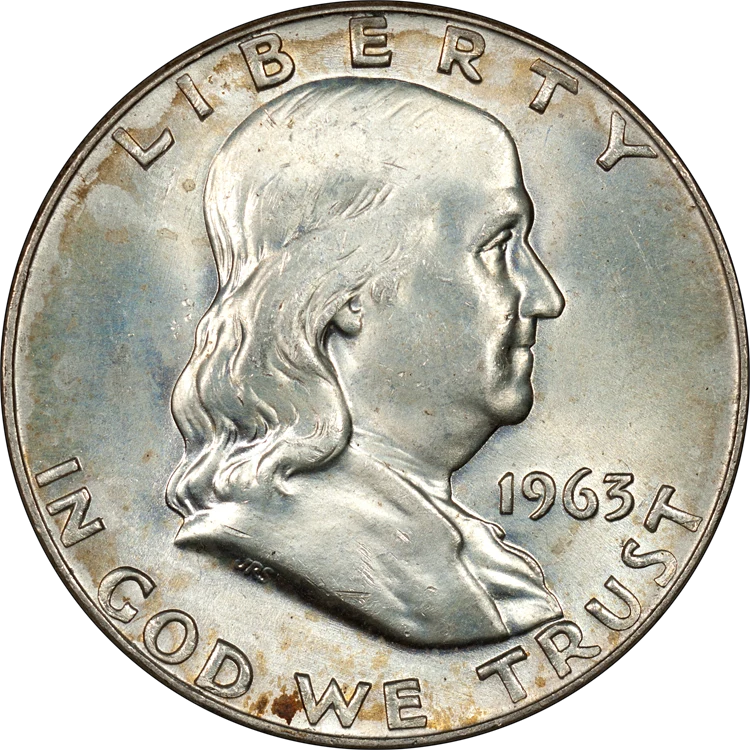
Franklin Half Dollar
Photo credits and rights on the linked coin profile.
United States • 90% silver, 10% copper
Issue years: 1948–1963
Fine silver: 0.361696 troy oz
United States • 50 U.S. cents
1964 Kennedy Half Dollar — 90% Silver contains nominally 11.25 g of fine silver, approximately 0.361696 troy oz, at 12.5 g gross mass and 90.0% silver overall. This is the original 1964 silver composition. Later 40% silver, copper-nickel and modern silver collector issues need their own identification and metal records.
When a fresh spot bid is available, melt values use fine-metal content × spot bid. CashForCoins guide buying offers use the separately configured percentage for each metal. Selected rare/numismatic coins require an appraisal. Dollar amounts remain unavailable when a fresh quote or buying percentage is missing.
This profile covers the stated dated issue. Other dates or composition standards require their matching profile.
Formula: gross grams × fineness ÷ 31.1034768 × quantity. Dollar melt value additionally requires an approved current metal price.
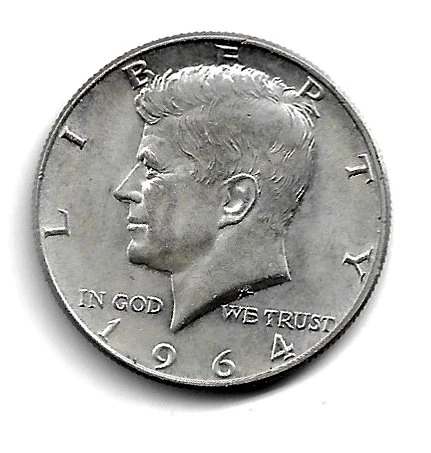
John F. Kennedy faces left, with LIBERTY around the upper rim, IN GOD WE TRUST below the portrait and 1964 at the bottom. The representative photograph shows the original design style. A familiar Kennedy head by itself does not distinguish silver from the later clad compositions.
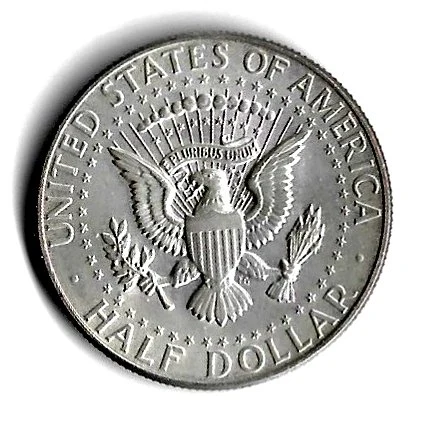
An eagle with a shield holds an olive branch and arrows within a ring of stars. UNITED STATES OF AMERICA and HALF DOLLAR follow the rim. The presidential-seal arrangement differs from the Liberty Bell on the preceding Franklin half dollar. Check the complete reverse rather than relying on the portrait alone.
The Mint introduced the Kennedy half in 1964 after the Franklin series. The original portrait is credited to Gilroy Roberts and the reverse to Frank Gasparro. The composition changed to silver clad for the 1965–1970 date group, then ordinary copper-nickel clad in 1971; collector issues require separate checks.
Read 1964 and HALF DOLLAR, then inspect any mint mark and compare the original portrait and seal design. Nominal mass is 12.5 g with a rounded 30.6 mm reference diameter and reeded edge. The 1964 date is essential: a 1967 half of similar appearance contains much less nominal silver.
Calculate 12.5 g × 0.9 = 11.25 g silver, then divide by 31.1034768 g per troy ounce. This is nominal metal content for a correctly identified genuine coin at standard weight, not an assay. Quantity totals use this nominal calculation; wear, damage and identification errors can affect an actual lot.
This record intentionally covers one date, 1964. Different finishes, mint marks and die varieties can have separate collector significance without changing this nominal composition. A polished surface does not establish a proof, and a photographic resemblance does not establish a specific die variety. Preserve packaging that identifies a special finish.
Separate coins with original packaging, certification or unusual details before counting a mixed bag for melt content. The common nominal silver specification does not mean every specimen has the same market value. No proof designation, grade, variety attribution or current premium is inferred from the reference photograph.
Check the date, denomination, both designs and physical properties together. Measurements are nominal references, not automatic pass/fail authentication thresholds. Have altered dates or inconsistent pieces evaluated without cleaning, scratching or relying on color. Existing grading documentation should stay with its coin.
List the quantity as 1964 Kennedy halves, separate from 1965–1970 halves and later dates. Show both sides of unusual examples and include packaging or holder details. The collection calculator can total nominal silver; an appraisal request supplies evidence for an actual offer.
The issuer reference documents the historical design or date distinction stated here. The separate specification record supports mass, silver fraction, diameter and edge. Fine-silver arithmetic uses fixed decimals without copying reference-site prices or rounded ounce totals. Photograph identity and reuse permission are reviewed separately. No approved live price feed is configured, so dollar melt values remain unavailable. A metal-content total, a collector assessment and an accepted offer are different results.
No. This calculation applies to the original 1964 composition. The 1965–1970 date group is 40% silver overall, while later collector silver and ordinary clad coins require separate records.
No. HALF DOLLAR is its face denomination. Nominal fine silver is 11.25 g, approximately 0.361696 troy oz, rather than half a troy ounce.
Content maintained by CashForCoins. Last substantive record update: 2026-10-10. Report a specification or attribution issue through our contact page.
Photo credits and rights on the linked coin profile.
United States • 90% silver, 10% copper
Issue years: 1948–1963
Fine silver: 0.361696 troy oz
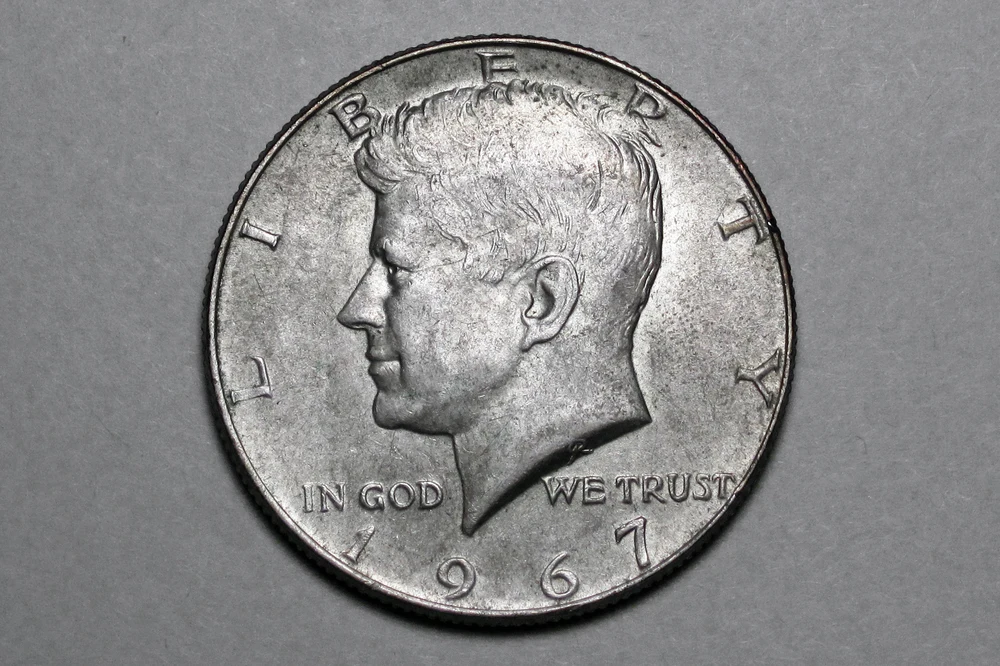
Photo credits and rights on the linked coin profile.
United States • 40% silver, 60% copper overall; silver-clad layered construction
Issue years: 1965–1970
Fine silver: 0.147893 troy oz
Photographs can help identify your coin. An appraisal may consider authenticity, condition and collector demand as well as metal content.
Request a photo appraisal View current silver coin buying information
