
_(obverse)_(54339953791).jpg)
_(reverse)_(54340166864).jpg)
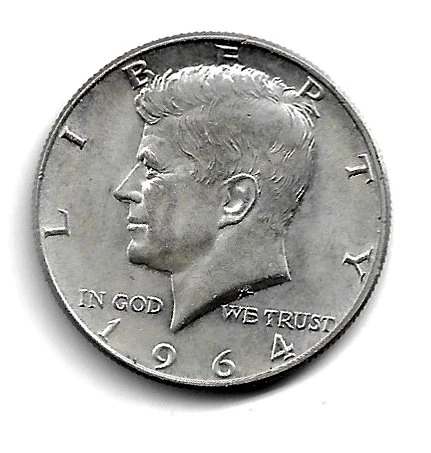
1964 Kennedy Half Dollar — 90% Silver
Photo credits and rights on the linked coin profile.
United States • 90% silver, 10% copper
Issue years: 1964
Fine silver: 0.361696 troy oz
United States • 50 U.S. cents
1965–1970 Kennedy Half Dollar — 40% Silver contains nominally 4.6 g of fine silver, approximately 0.147893 troy oz, at 11.5 g gross mass and 40.0% silver overall. This profile covers the 1965–1970 silver-clad date group, including collector-only issues within that period. It excludes 1964, Bicentennial silver collectors’ coins and later silver proofs.
When a fresh spot bid is available, melt values use fine-metal content × spot bid. CashForCoins guide buying offers use the separately configured percentage for each metal. Selected rare/numismatic coins require an appraisal. Dollar amounts remain unavailable when a fresh quote or buying percentage is missing.
This profile covers the original silver-clad period. The separately dated Bicentennial silver issue and modern silver proof coins require their matching profiles.
Formula: gross grams × fineness ÷ 31.1034768 × quantity. Dollar melt value additionally requires an approved current metal price.
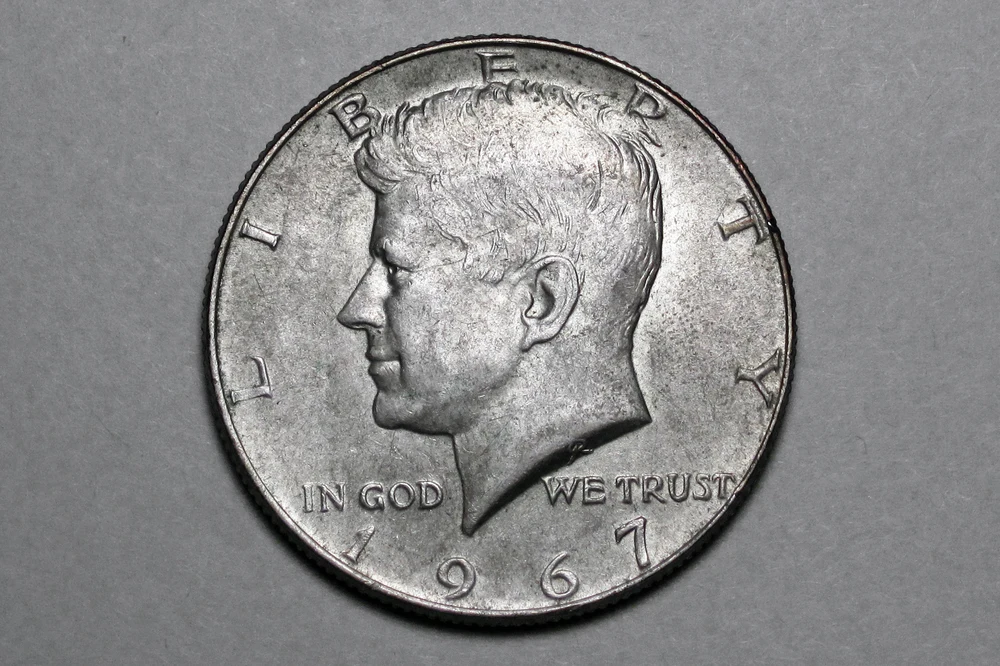
Kennedy faces left beneath LIBERTY. IN GOD WE TRUST sits beneath the portrait, and the date is at the bottom. The pictured 1967 piece is a representative of this composition period. Its portrait resembles the earlier silver type, making the readable year more useful than color alone.
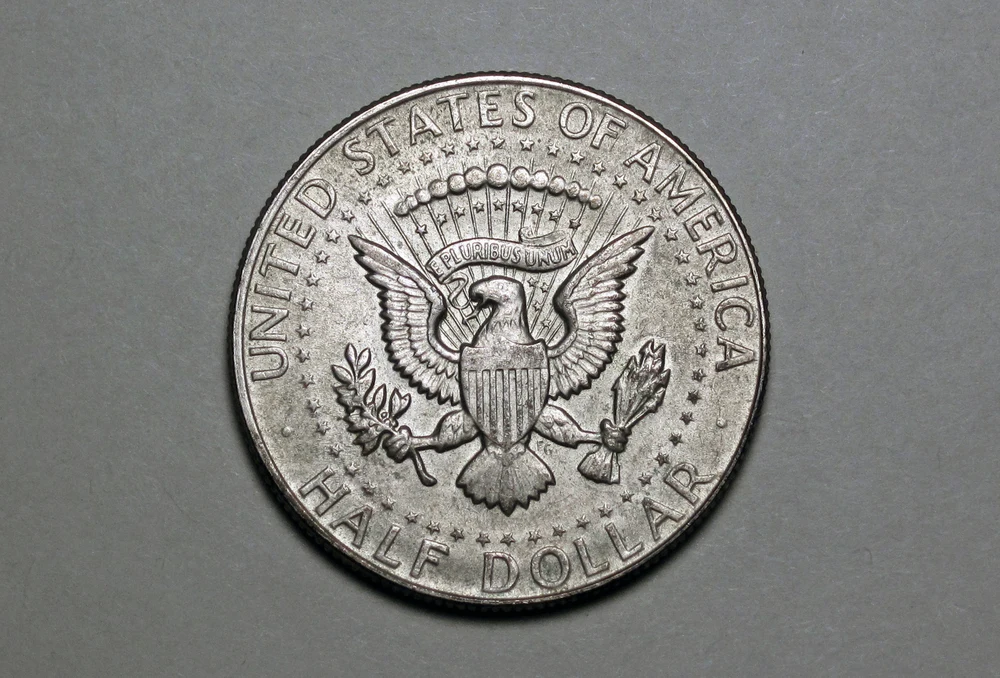
The presidential-seal eagle, shield, olive branch and arrows sit within a circle of stars. The outer legend reads UNITED STATES OF AMERICA and HALF DOLLAR. Similar devices appear on Kennedy halves of other compositions; this reverse confirms the denomination, not the silver fraction on its own.
After the original 1964 .900 silver issue, the 1965–1970 group used a silver-clad construction. Historical legislation specified silver-rich outer layers and a silver/copper core. Overall standard content is 4.6 g silver in an 11.5 g coin. Ordinary copper-nickel halves followed in 1971.
Read the year first, then the denomination and both designs. Compare nominal 11.5 g mass, approximately 30.6 mm diameter and a reeded edge. Keep this date group separate from 1964 halves, whose nominal fine silver is 11.25 g. An edge photograph can support examination but cannot alone authenticate composition.
Calculate 11.5 g × 0.4 = 4.6 g silver, then divide by 31.1034768 g per troy ounce. This is nominal metal content for a correctly identified genuine coin at standard weight, not an assay. Quantity totals use this nominal calculation; wear, damage and identification errors can affect an actual lot.
The 1965 statute specified .800 silver outer alloy and a silver/copper core arranged to yield 4.6 g silver plus 6.9 g copper overall. The .400 value in this calculation describes the complete coin, not a uniform alloy through every layer.
The 1965–1970 range is a composition boundary, not a statement that every issue entered general circulation. The reference identifies 1970-D as a set-only issue. Special Mint Set and proof finishes also deserve separate identification. This record does not automatically apply to dual-dated 1776–1976 collector silver halves.
Keep original sets, holders and unusually well-preserved coins intact. A 1970-D or a packaged special finish should not lose its identifying context when a group is counted. The nominal silver total does not grade the coin, identify a finish or establish what a collector or buyer will pay.
Use the complete year, mint mark if present, reverse, edge and physical properties together. Do not assume a bright Kennedy half is .900 silver or that a darker edge proves a base-metal coin. Resolve contradictory evidence through evaluation without polishing, cutting or destructive tests.
Separate 1965–1970 halves from 1964 and later coins and describe any original set packaging. Provide a readable date photo and the reverse. The calculator uses 4.6 g nominal fine silver per correctly classified coin; wear and mistaken composition can change the silver actually present.
The issuer reference documents the historical design or date distinction stated here. The separate specification record supports mass, silver fraction, diameter and edge. Fine-silver arithmetic uses fixed decimals without copying reference-site prices or rounded ounce totals. Photograph identity and reuse permission are reviewed separately. No approved live price feed is configured, so dollar melt values remain unavailable. A metal-content total, a collector assessment and an accepted offer are different results.
No. The historical silver-clad construction uses 80% silver outer alloy and a different silver/copper core. The entire nominal 11.5 g coin contains 4.6 g silver, or 40% overall.
No. A dual-dated 1776–1976 collector issue requires its own composition and finish identification. This record is limited to coins dated 1965–1970.
Content maintained by CashForCoins. Last substantive record update: 2026-10-10. Report a specification or attribution issue through our contact page.
Photo credits and rights on the linked coin profile.
United States • 90% silver, 10% copper
Issue years: 1964
Fine silver: 0.361696 troy oz
Photographs can help identify your coin. An appraisal may consider authenticity, condition and collector demand as well as metal content.
Request a photo appraisal View current silver coin buying information
