
.jpg)
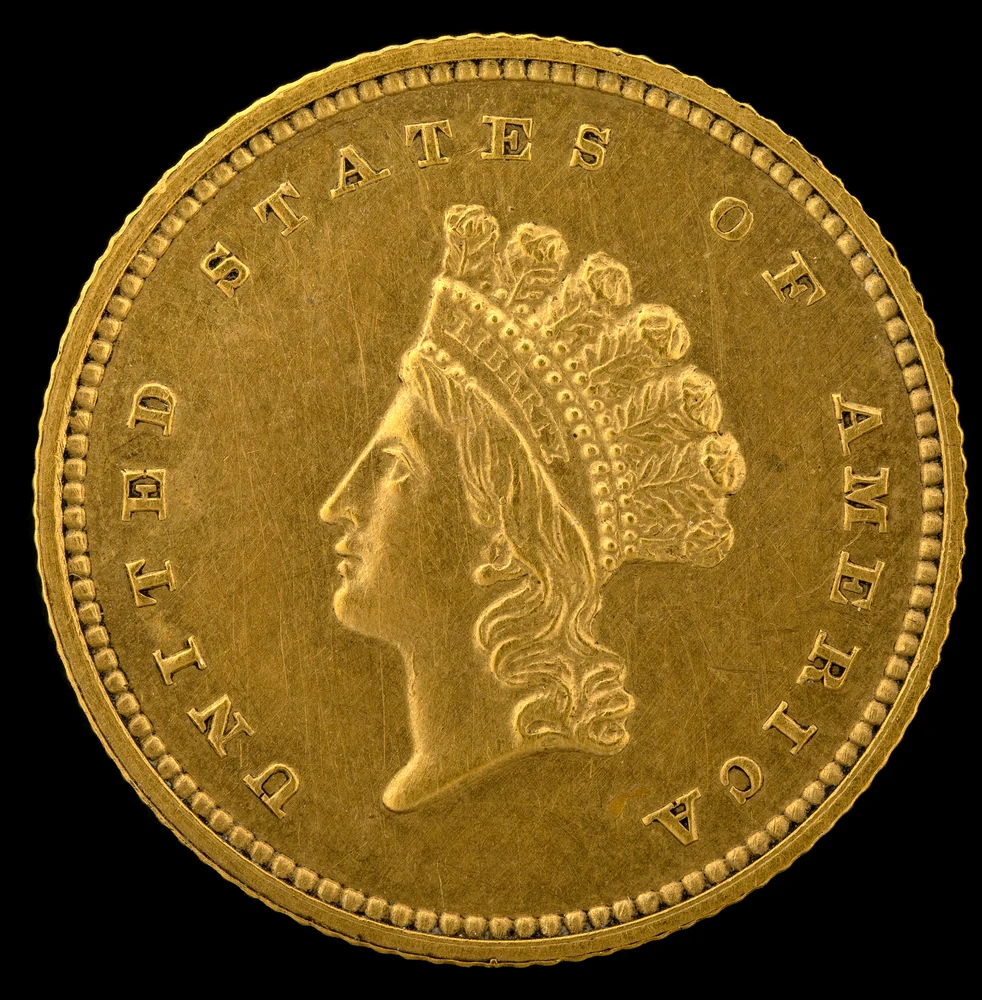
Indian Princess Gold Dollar — Type II Small Head
Photo credits and rights on the linked coin profile.
United States • 90% gold, 10% alloy metal; historical copper or copper/silver alloy
Issue years: 1854–1856
Fine gold: 0.048375 troy oz
United States • 1 U.S. dollars
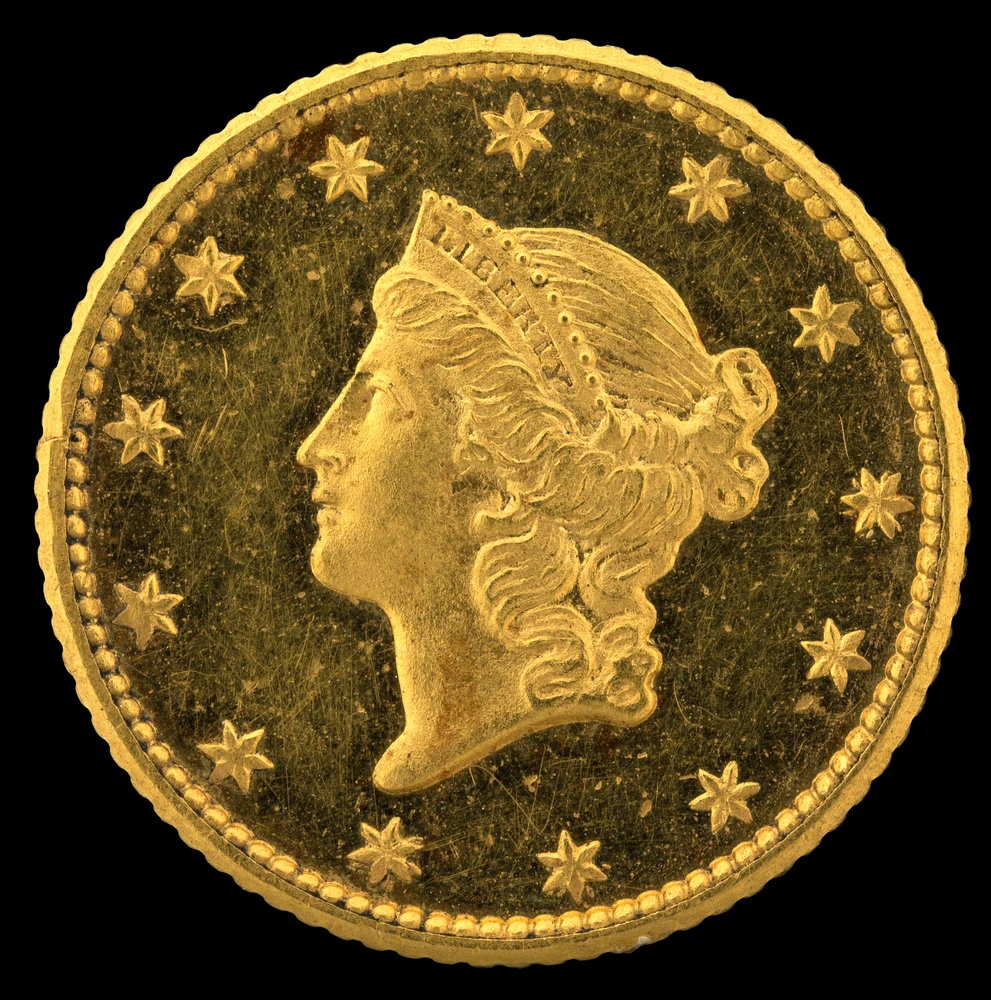
Liberty Head Gold Dollar — Type I has nominal fine gold of 0.048375 troy oz (1.504631 g) at the historical .900 standard. This is the original small Liberty-head dollar of 1849–1854. Gold color on a modern one-dollar coin does not identify this gold composition.
When a fresh spot bid is available, melt values use fine-metal content × spot bid. CashForCoins guide buying offers use the separately configured percentage for each metal. Selected rare/numismatic coins require an appraisal. Dollar amounts remain unavailable when a fresh quote or buying percentage is missing.
Liberty Head Type 1 dates overlap the introduction of the small-head type in 1854; use the design as well as the date.
Formula: specified fine-metal troy ounces × quantity. Dollar melt value additionally requires an approved current metal price.
The photographed 1849 coin shows Liberty facing left, a coronet marked LIBERTY and a ring of stars. Her curled hair gathers behind the head. The portrait differs from the feathered headdress on the two succeeding gold-dollar types.
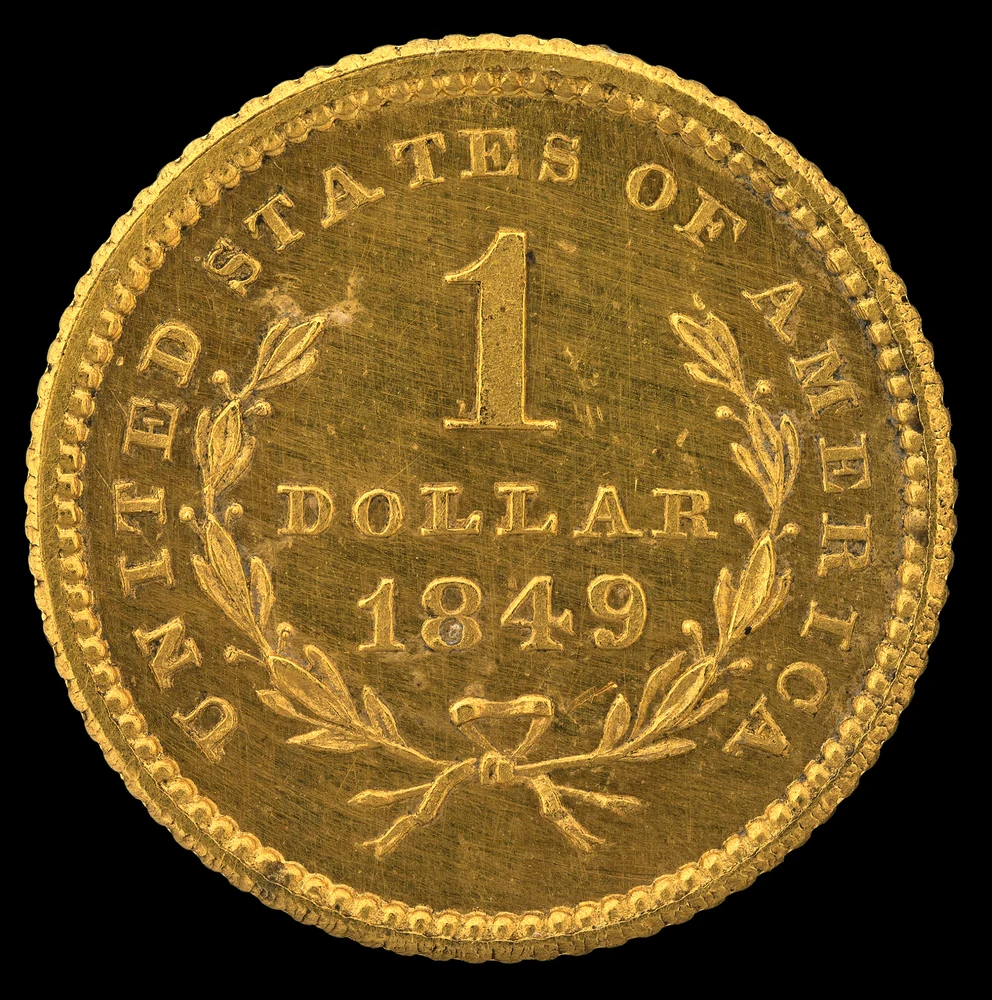
A wreath surrounds 1 DOLLAR and the date. UNITED STATES OF AMERICA appears around the rim. The photograph reads 1849 and has no eagle. That reverse denomination distinguishes this very small coin from a similarly colored quarter eagle.
The Mint introduced the gold dollar in 1849. This first portrait was followed by the small-head Indian Princess type in 1854, then the large-head type in 1856. The issuer names Longacre as the designer of the gold-dollar types.
Read 1 DOLLAR and the complete year before classifying the portrait. The Mint gives a nominal 13 mm diameter for Type I, illustrating its small size; other specialist catalogs may use a more precise or differently rounded figure. A photograph without scale cannot establish diameter.
The historical standard is 25.8 grains gross at .900 fineness. Multiply 25.8 by .900 and divide by 480 grains per troy ounce: 0.048375 fine-gold troy oz. Gross metric mass is derived using 0.06479891 g per grain; the displayed 1.67181188 g is a conversion of the nominal standard, not an assay or the measured mass of a worn coin. The remaining 10% is alloy metal; historical legislation permitted copper or a copper/silver alloy.
Type I spans 1849–1854. Both Type I and Type II coins can be dated 1854, so the year alone cannot distinguish them. Mint marks, lettering, die details and condition require issue-level attribution; this profile does not assign a rare variety.
A small face value is not a small collector interest. Record the mint mark and retain any holder, provenance or original surfaces. Jewelry mounts, solder and removed loops should be described because they affect the actual object and its evaluation.
Compare both designs, denomination, date, reeded edge and physical measurements. A nominal standard is not a test that certifies a coin. Have questionable pieces examined without cutting, polishing or removing a mount yourself.
Describe the coin as a Type I Liberty Head gold dollar and photograph the wreath, date and any mint mark clearly. Count it separately from modern base-metal dollars and other gold-dollar portraits before requesting an appraisal.
The historical Mint report and Coinage Act document nominal gold standards; NIST documents the unit conversions. The fine-weight override retains the result from grains instead of recalculating from a rounded catalog gram weight. Design and date references are separate from photographs. These calculations describe correctly identified genuine coins at standard weight. No approved live gold-price feed is configured, so dollar melt values remain unavailable. A collector assessment and a purchase offer are separate from metal content.
No. This record concerns original Type I gold dollars. Modern golden-colored circulation dollars use a different composition and cannot be counted here.
No. The date overlaps Type I and Type II. Check the Liberty portrait and reverse before selecting a profile.
Content maintained by CashForCoins. Last substantive record update: 2026-10-10. Report a specification or attribution issue through our contact page.
Photo credits and rights on the linked coin profile.
United States • 90% gold, 10% alloy metal; historical copper or copper/silver alloy
Issue years: 1854–1856
Fine gold: 0.048375 troy oz
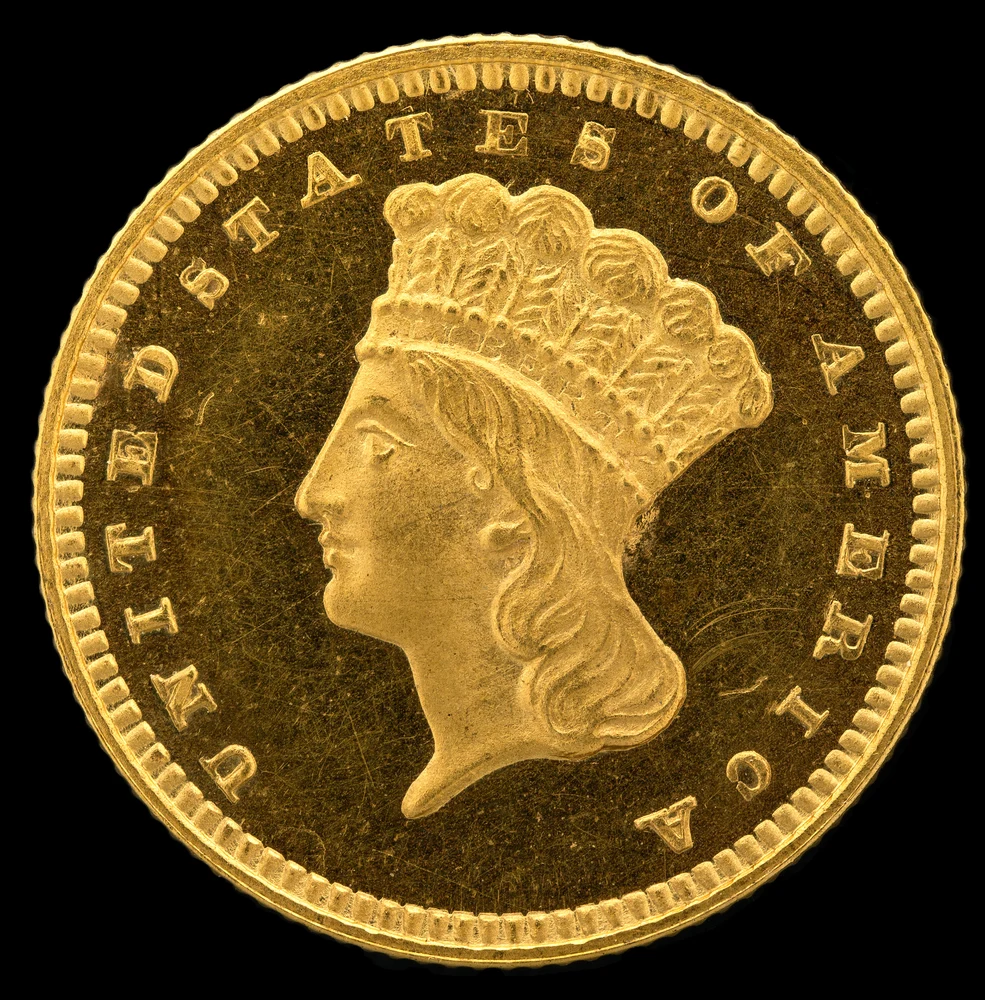
Photo credits and rights on the linked coin profile.
United States • 90% gold, 10% alloy metal; historical copper or copper/silver alloy
Issue years: 1856–1889
Fine gold: 0.048375 troy oz
Photographs can help identify your coin. An appraisal may consider authenticity, condition and collector demand as well as metal content.
Request a photo appraisal View current gold coin buying information
