
.jpg)
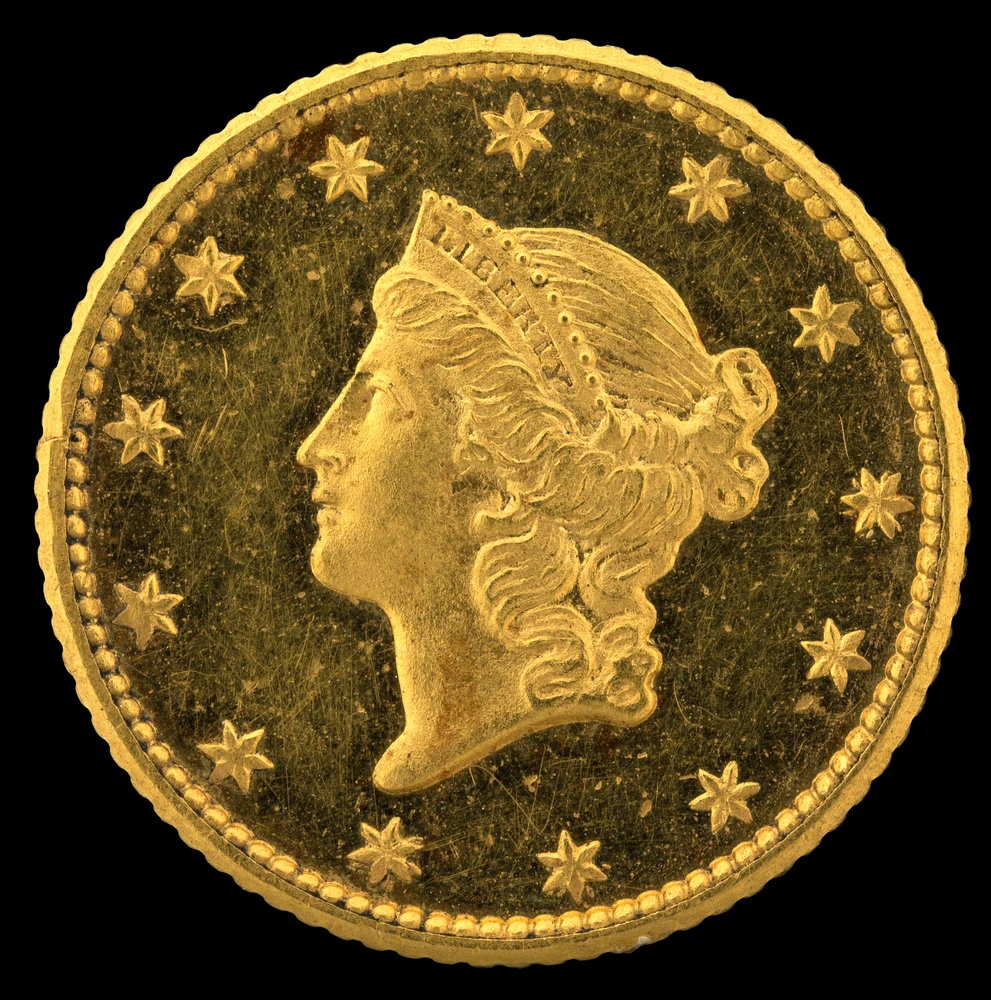
Liberty Head Gold Dollar — Type I
Photo credits and rights on the linked coin profile.
United States • 90% gold, 10% alloy metal; historical copper or copper/silver alloy
Issue years: 1849–1854
Fine gold: 0.048375 troy oz
United States • 1 U.S. dollars
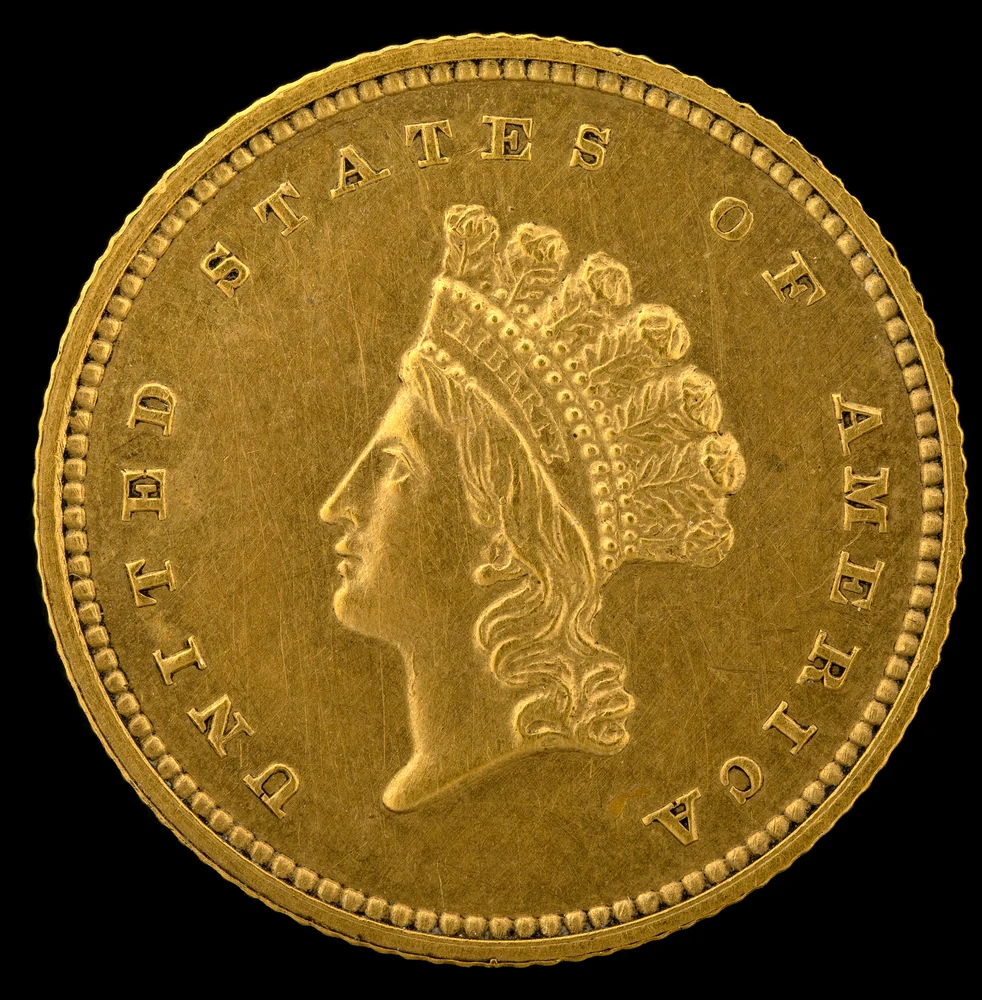
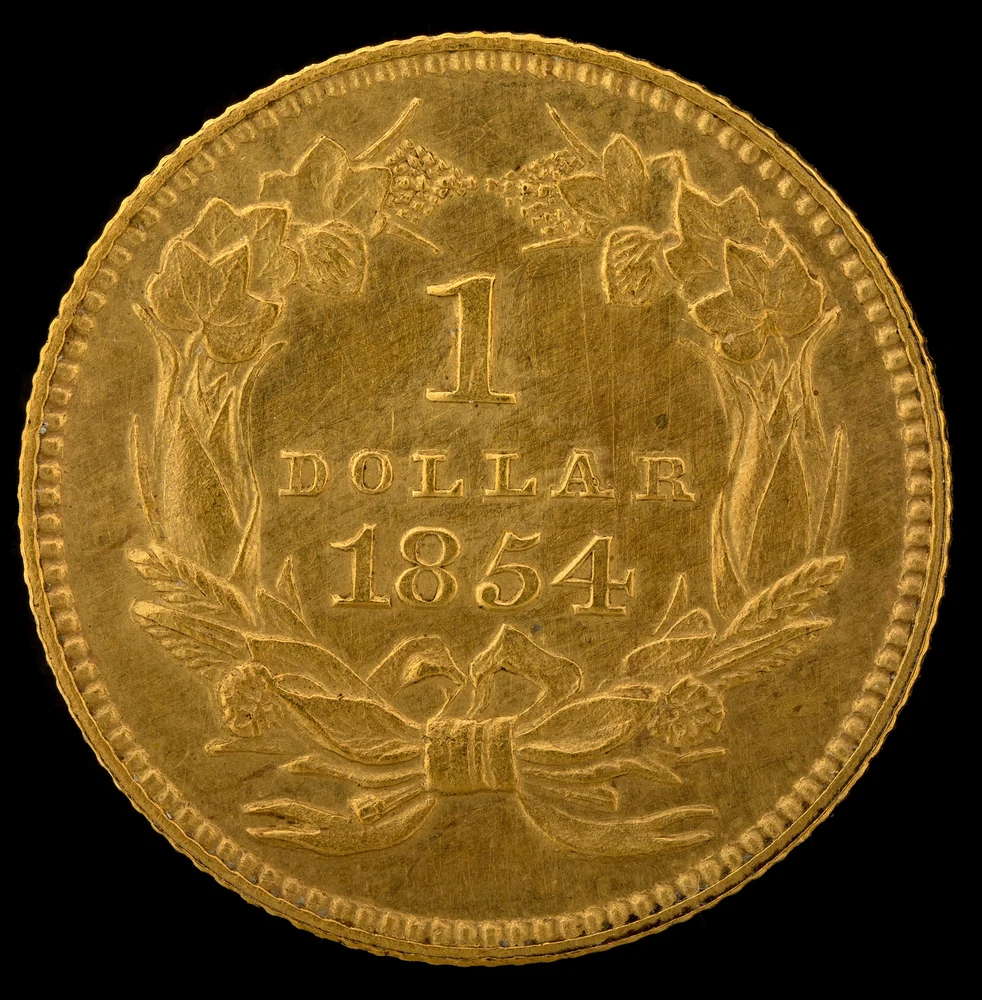
Indian Princess Gold Dollar — Type II Small Head has nominal fine gold of 0.048375 troy oz (1.504631 g) at the historical .900 standard. This profile covers the original small-head Indian Princess type, not the larger portrait on Type III. The 1854 representative is a genuine museum coin photographed on both sides.
When a fresh spot bid is available, melt values use fine-metal content × spot bid. CashForCoins guide buying offers use the separately configured percentage for each metal. Selected rare/numismatic coins require an appraisal. Dollar amounts remain unavailable when a fresh quote or buying percentage is missing.
The small-head Type 2 survives at San Francisco in 1856, when other mints use the large-head type. A year alone does not distinguish the design.
Formula: specified fine-metal troy ounces × quantity. Dollar melt value additionally requires an approved current metal price.
Liberty faces left wearing a feathered headdress, with UNITED STATES OF AMERICA around her. In the pictured Type II design the portrait occupies less of the central field than the Type III comparison. This is a depiction of Liberty, not an identified historical person.
The central 1 DOLLAR and 1854 date sit within a leafy wreath tied at its base. Parts of the date and denomination on the representative appear less sharply defined. Do not interpret a weakly visible digit as proof of another date.
The Mint identifies the 1854 change as the small-head Indian Princess type. It enlarged the gold dollar from the first design while preserving its nominal gold standard. The large-head redesign followed in 1856.
Match the small-head portrait to the wreath reverse and read 1 DOLLAR. This library uses the issuer’s nominal 15 mm diameter. PCGS and some specialist references give 14.3 mm; the recorded difference is a reference-precision issue requiring care in physical comparisons, not a reason to reject an actual coin from one dimension alone.
The historical standard is 25.8 grains gross at .900 fineness. Multiply 25.8 by .900 and divide by 480 grains per troy ounce: 0.048375 fine-gold troy oz. Gross metric mass is derived using 0.06479891 g per grain; the displayed 1.67181188 g is a conversion of the nominal standard, not an assay or the measured mass of a worn coin. The remaining 10% is alloy metal; historical legislation permitted copper or a copper/silver alloy.
The specialist type range is 1854–1856; the final-year small-head issue is from San Francisco. Type I overlaps in 1854 and Type III overlaps in 1856. Read the portrait subtype and mint mark rather than treating those years as an exclusive type filter.
Keep the date, mint mark and surface details visible. An imperfect strike and circulation wear are different observations, and neither can be graded from this representative image. Do not assign a collector premium solely because the type is short-lived.
Use design, date, denomination, edge, mass and dimensional references together. The documented 14.3-versus-15 mm catalog difference is not a counterfeit tolerance. Preserve weak details and request a specialist assessment if identification remains uncertain.
Identify the piece as Type II only after checking its portrait. Supply close photographs of the denomination/date and mint-mark area. Record uncertainty instead of turning a partially visible 1856 or S into an unsupported attribution.
The historical Mint report and Coinage Act document nominal gold standards; NIST documents the unit conversions. The fine-weight override retains the result from grains instead of recalculating from a rounded catalog gram weight. Design and date references are separate from photographs. These calculations describe correctly identified genuine coins at standard weight. No approved live gold-price feed is configured, so dollar melt values remain unavailable. A collector assessment and a purchase offer are separate from metal content.
No. The 1856 date occurs in the transition to Type III. Type II’s final-year issue is San Francisco; portrait and mint-mark attribution matter.
It follows the U.S. Mint’s nominal Type II figure. A specialist reference also gives 14.3 mm; the difference is disclosed and is not an authentication threshold.
Content maintained by CashForCoins. Last substantive record update: 2026-10-10. Report a specification or attribution issue through our contact page.
Photo credits and rights on the linked coin profile.
United States • 90% gold, 10% alloy metal; historical copper or copper/silver alloy
Issue years: 1849–1854
Fine gold: 0.048375 troy oz
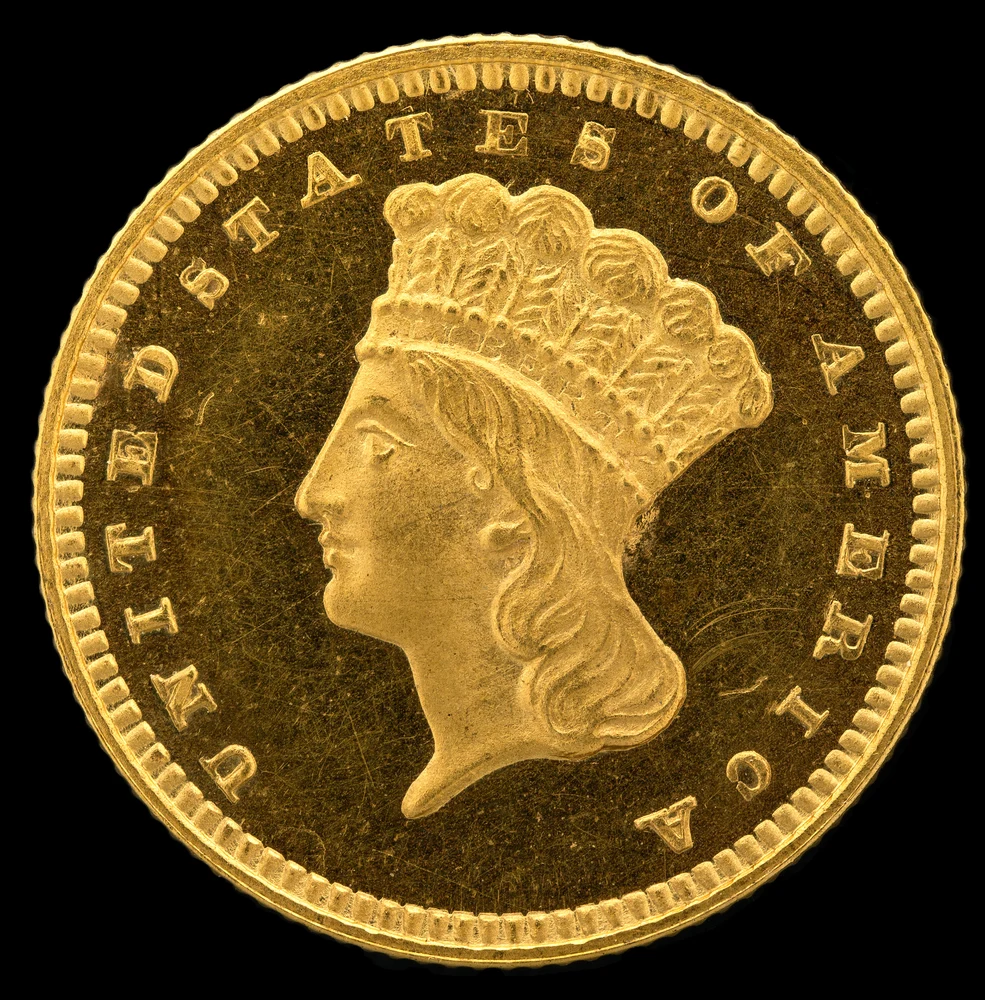
Photo credits and rights on the linked coin profile.
United States • 90% gold, 10% alloy metal; historical copper or copper/silver alloy
Issue years: 1856–1889
Fine gold: 0.048375 troy oz
Photographs can help identify your coin. An appraisal may consider authenticity, condition and collector demand as well as metal content.
Request a photo appraisal View current gold coin buying information
