
Canada • Twenty-five cents
Canadian Half-Silver Quarter — 1967 and 1968
Canadian .500 silver quarters were issued in 1967 and 1968. The reference lists the matching nominal reference as 5.8319 g gross, .500 fineness and .0937 fine troy ounce. Neither year guarantees that composition: 1967 also has .800 silver quarters, while 1968 also has nickel quarters. Confirm the actual coin’s metal before selecting the half-silver reference.
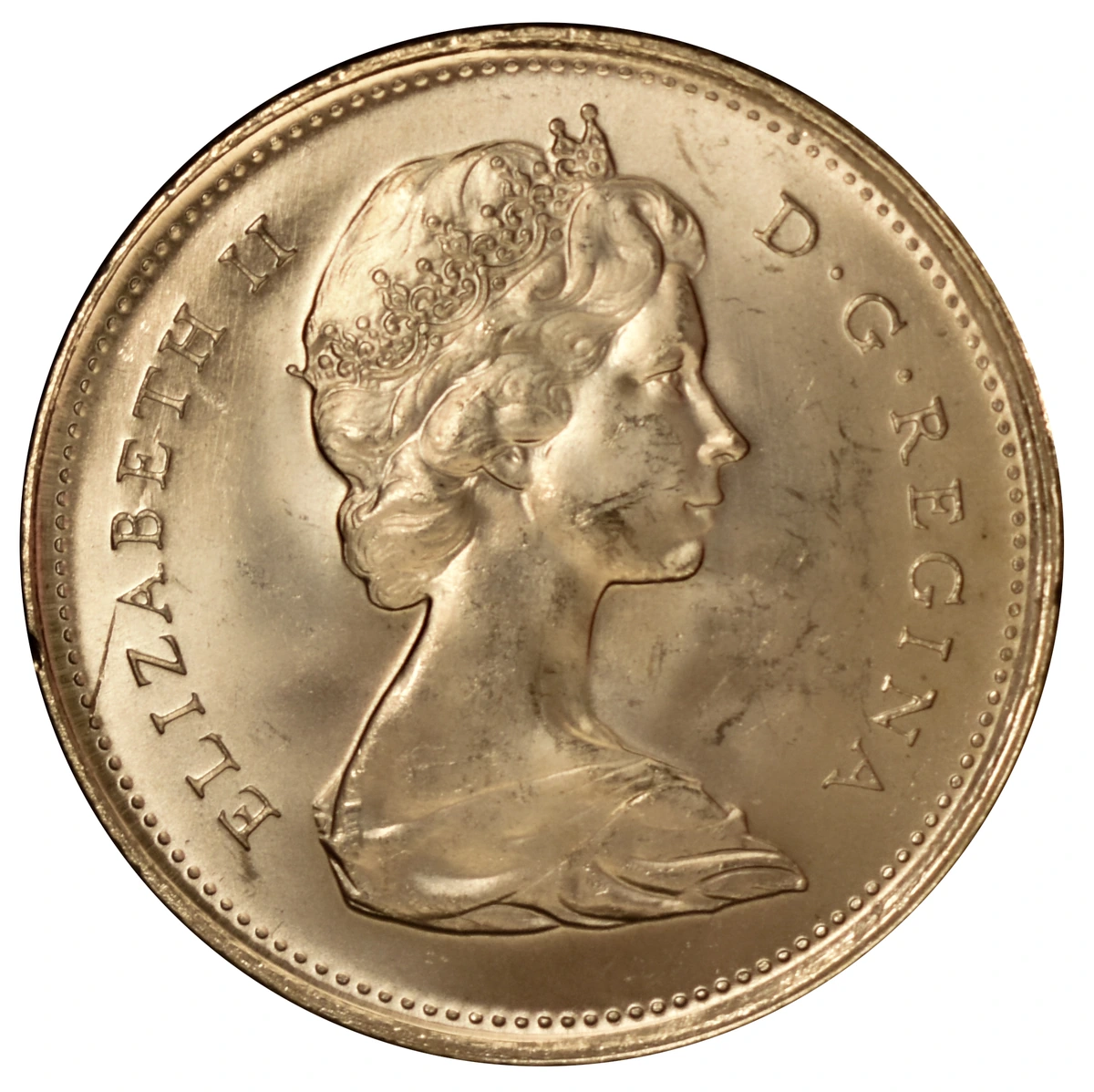
Images supplied by CashForCoins; used with permission. · Image source · CashForCoins website use authorized by site owner
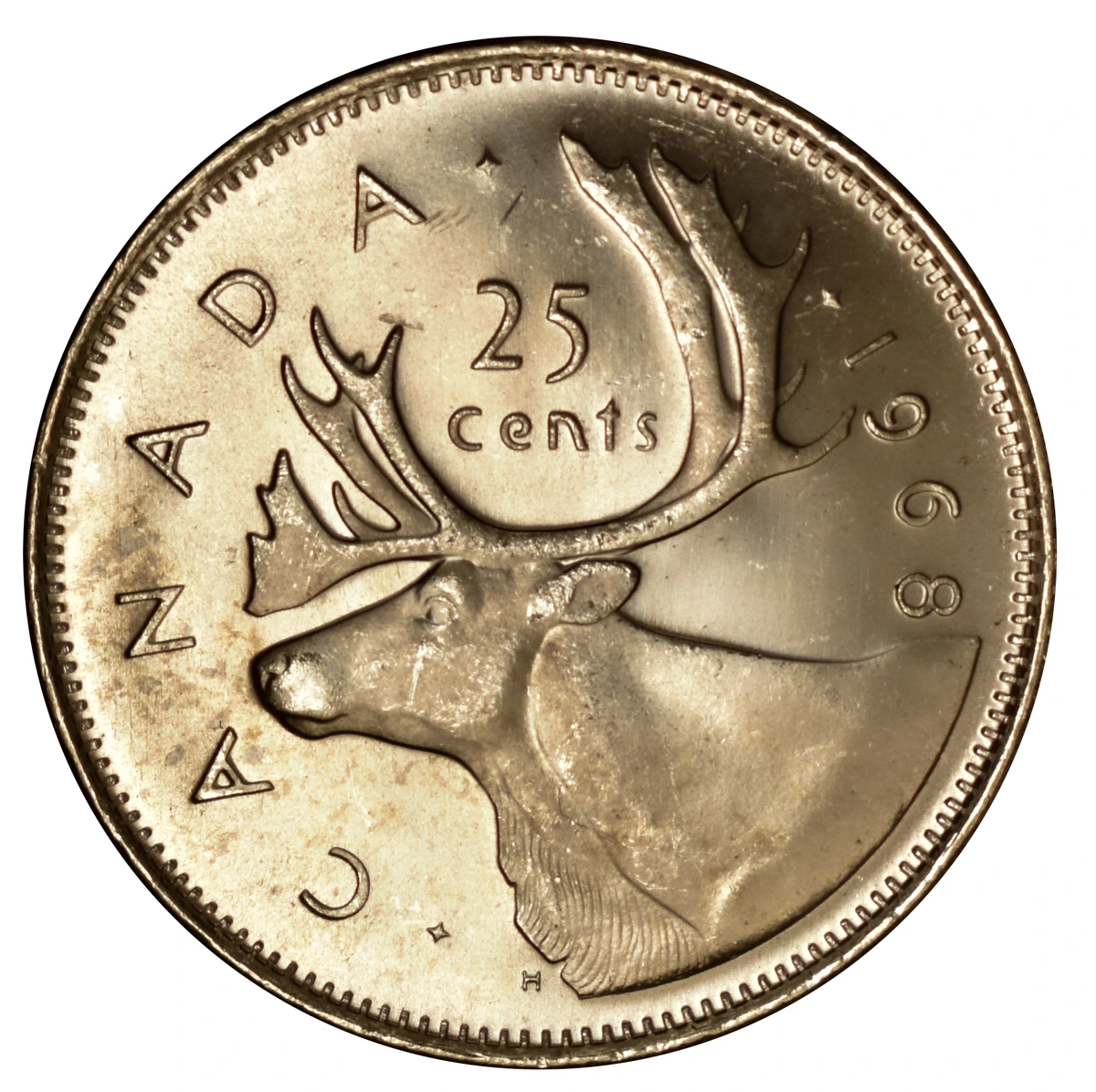
Images supplied by CashForCoins; used with permission. · Image source · CashForCoins website use authorized by site owner
When a fresh spot bid is available, melt values use fine-metal content × spot bid. CashForCoins guide buying offers use the separately configured percentage for each metal. Selected rare/numismatic coins require an appraisal. Dollar amounts remain unavailable when a fresh quote or buying percentage is missing.
Verified coin specifications
- Country
- Canada
- Face denomination
- Twenty-five cents
- Composition
- 50% silver reference; the issuer identifies the remaining alloy as copper
- Gross weight (grams)
- 5.8319
- Fineness
- 0.5
- Fine-metal weight (troy oz)
- 0.0937
- Diameter (mm)
- 23.8
- Mint
- Canadian circulation issues; individual mint attribution required
- Mint mark
- See dated mint attribution
- Restrikes
- Patterns, replicas and later reproductions excluded
- Issue years
- 1967–1968
Normal issue dates within this profile. Read the guide for changing designs, mint/finish differences and excluded material standards.
- Source precision
- The designated world-silver melt reference and matching 1967/1968 dated types agree on 5.8319 g gross mass, .500 fineness and 0.0937 reference fine silver troy ounce. Diameter 23.8 mm comes from those dated types. The 1867–1967 centennial inscription represents the actual issue year 1967, not a 101-year production interval. Other alloys share these dates and designs; date alone cannot establish .500 silver. The current issuer circulation page labels its 1967–1968 .500 row 5.05 g and 23.88 mm, conflicting with the reference nominal 5.8319 g and 23.8 mm. The reference inputs are retained per the designated source policy; this discrepancy is disclosed, not treated as an established separate silver standard. Mint mark: No mintmark in the matching dated reference entries.
Calculate this coin’s metal content
Formula: specified fine-metal troy ounces × quantity. Dollar melt value additionally requires an approved current metal price.
Obverse: identify the front
The dated reference types show Elizabeth II facing right. The 1968 entry attributes the portrait to Arnold Machin. Record the full royal legend and match the denomination through the reverse. This portrait occurs on more than one alloy, so it identifies a design family rather than a silver percentage. A photograph cannot establish the metal composition of a visitor’s coin.
Reverse: identify the back
The 1967 centennial quarter shows a wildcat walking left with the paired dates 1867–1967. The reference describes it as a lynx; the Royal Canadian Mint calls the same centennial design a bobcat. The issue year is 1967. In 1968 the quarter uses the caribou reverse, with the denomination above and the date at the right. Keep the complete dates and inscriptions visible when comparing examples.
History and purpose
The half-silver standard sits between Canada’s earlier .800 circulation quarters and the nickel quarter. Two actual dates belong to this guide: 1967 and 1968. The centennial reverse belongs to 1967, while the familiar caribou returns in 1968. Other denominations followed their own changes; a quarter’s dated standard cannot be transferred to a half dollar or dollar merely because the year is the same.
How to identify this variant
Read 25 CENTS, the complete year, portrait and reverse together. The reference gives the half-silver types a 5.8319-g gross reference and 23.8-mm diameter, with no mint mark in the matching dated rows. Its separate 1968 nickel type, KM62b, lists 5.06 g and the same 23.8-mm diameter. A scale reading, similar color or unscaled photograph is insufficient to assign .500 silver. Retain any reliable certification or non-destructive metal examination with the specimen.
Understanding its metal content
The preserved the reference ASW reference is .0937 fine troy ounce per correctly attributed .500 quarter. Three matching coins total .2811 reference fine troy ounce and 17.4957 nominal gross grams. Multiplication of the separately printed gross and fineness inputs gives 2.91595 nominal fine grams per coin; the reported ounce value retains the reference’s published rounding. These figures describe a reference standard, not an individual assay, collectible price or purchase offer.
Dates, varieties and composition changes
Actual issue years: 1967 and 1968. The reference identifies the 1967 half-silver centennial type as KM68a and the 1968 half-silver caribou type as KM62a. The similarly designed 1967 .800 quarter, KM68, belongs to its own silver reference. The 1968 nickel quarter, KM62b, also belongs to a different composition. The 1867 part of the centennial inscription does not add an 1867 quarter to this guide. These ordinary dated references do not automatically establish proof finishes, patterns or every die variety.
Melt value versus collector value
Preserve the original surfaces, packaging and any composition attribution. The centennial design can be of interest independently of its nominal metal quantity, and condition or a verified variety can matter to an appraisal. Do not infer proof manufacture from shine, assign a numeric grade from a generic image or clean the surface to identify the alloy. A documented examination of the actual specimen is more useful than an assumed silver percentage.
Authenticity and condition
Provide photographs of both complete faces, the edge and any trustworthy holder or certificate. Note measured mass separately from the reference specification. The 1967 .800 and .500 issues share the same centennial design, while 1968 silver and nickel issues share the caribou design. Consequently, a matching date and image can still belong to another material. Use an experienced numismatist or non-destructive professional examination when identity or composition is uncertain.
Selling this coin
Separate confirmed half-silver quarters from .800 quarters, nickel quarters and uncertain transition-year coins before totaling a collection. Record 1967 or 1968, the reverse design and the evidence supporting any metal attribution. Supply clear photographs and available certification through CashForCoins’ appraisal enquiry. Describe unresolved composition honestly; the nominal library figure does not establish an automatic buying offer.
Sources and calculation methodology
The calculator retains 0.0937 fine troy ounce per matching coin. The retained fineness is 0.500, and the nominal diameter is 23.8 mm. Nominal gross mass is 5.8319 grams. The references below distinguish the exact denomination and material standard from similar-looking coins. Reported fine content and rounded gross-mass arithmetic are separate conventions. The dated photographs supplied for CashForCoins use illustrate the identified type; they do not authenticate or grade an individual holding. A live market bid is obtained separately from specification references.
Common questions
Which years belong to the half-silver quarter reference?
The actual issue years are 1967 and 1968. The 1967 coin’s paired 1867–1967 dates commemorate Confederation and do not describe a production range.Are all 1967 quarters .500 silver?
No. The reference catalogs both .800 and .500 silver centennial quarters with the same general design. The year and a face photograph cannot distinguish their fineness.Does a 1968 quarter always contain silver?
No. The half-silver KM62a and nickel KM62b quarters share the 1968 date and caribou design. Establish the actual composition before using a silver reference.How much reference silver is assigned to three matching .500 quarters?
Three correctly attributed matching coins total .2811 reference fine troy ounce at the reference’s published .0937 oz per-coin precision; nominal gross weight totals 17.4957 g.Does the 1967 photograph prove the illustrated quarter is .500 silver?
No. Its photographed specimen’s fineness is not documented. The image is a shared-design reference, while the half-silver quantities come from the dated reference specifications.References
- NGC designated world-silver melt reference — designated weight; fineness; silver ounces; group dates (checked 2026-10-16)
- NGC 1967 half-silver centennial dated type — identity; weight; fineness; silver ounces; diameter; actual annual dates; design; mintmark (checked 2026-10-16)
- NGC 1968 half-silver dated type — identity; weight; fineness; silver ounces; diameter; actual annual dates; design; mintmark (checked 2026-10-16)
- NGC excluded nickel counterpart — nickel identity; overlapping date and design; exclusion (checked 2026-10-16)
- Royal Canadian Mint circulation denomination reference — composition chronology; centennial context; issuer values separately recorded (checked 2026-10-16)
- NGC excluded 1967 .800 centennial counterpart — identity .800 silver counterpart; same 1967 date and lynx design; excluded fineness and ASW reference (checked 2026-10-16)
- Awmcphee: independently CC0-licensed 1967 quarter design photograph — identity shared 1967 centennial quarter design; independent own-work photograph commercial CC0 permission; no specimen purity attribution (checked 2026-10-16)
Issue-year references
- NGC designated world-silver melt reference
- NGC 1967 half-silver centennial dated type
- NGC 1968 half-silver dated type
Content maintained by CashForCoins. Last substantive record update: 2026-10-16. Report a specification or attribution issue through our contact page.
Have this coin or a collection?
Photographs can help identify your coin. An appraisal may consider authenticity, condition and collector demand as well as metal content.
Request a photo appraisal View current silver coin buying information