
United Kingdom • Two pounds
British Silver Britannia .999 — One-Ounce Bullion
The modern two-pound silver Britannia bullion coin contains one troy ounce of fine silver at .999 fineness. The Royal Mint distinguishes this standard from the earlier .958 alloy. The supplied photograph shows the 2013 standing-Britannia issue. This record follows the bullion fine-content specification rather than borrowing a separate collector proof’s rounded gross mass.
Images supplied by CashForCoins; used with permission. · Image source · CashForCoins website use authorized by site owner
Images supplied by CashForCoins; used with permission. · Image source · CashForCoins website use authorized by site owner
When a fresh spot bid is available, melt values use fine-metal content × spot bid. CashForCoins guide buying offers use the separately configured percentage for each metal. Selected rare/numismatic coins require an appraisal. Dollar amounts remain unavailable when a fresh quote or buying percentage is missing.
Verified coin specifications
- Country
- United Kingdom
- Face denomination
- Two pounds
- Composition
- 99.9% silver; remaining alloy metals not independently verified
- Fineness
- 0.999
- Fine-metal weight (troy oz)
- 1
- Diameter (mm)
- 38.61
- Edge
- Reeded
- Mint
- The Royal Mint
- Restrikes
- Patterns, replicas and later reproductions excluded
- Issue years
- 2013–2026
Normal issue dates within this profile. Read the guide for changing designs, mint/finish differences and excluded material standards.
- Source precision
- Royal Mint specifies one troy ounce pure silver, .999 fineness and 38.61 mm for its 2013-onward two-pound bullion selection. No independently verified gross mass is supplied here. The unrelated KM 1258 Richard Hunt proof’s 31.21 g/1.0024 oz convention is not applied to this standing-bullion identity. The calculator uses the independently stated fine-metal amount directly. Gross mass is unavailable here; a rounded fine-weight display or inconsistent gross reference is not presented as a verified gross measurement.
Calculate this coin’s metal content
Formula: specified fine-metal troy ounces × quantity. Dollar melt value additionally requires an approved current metal price.
Obverse: identify the front
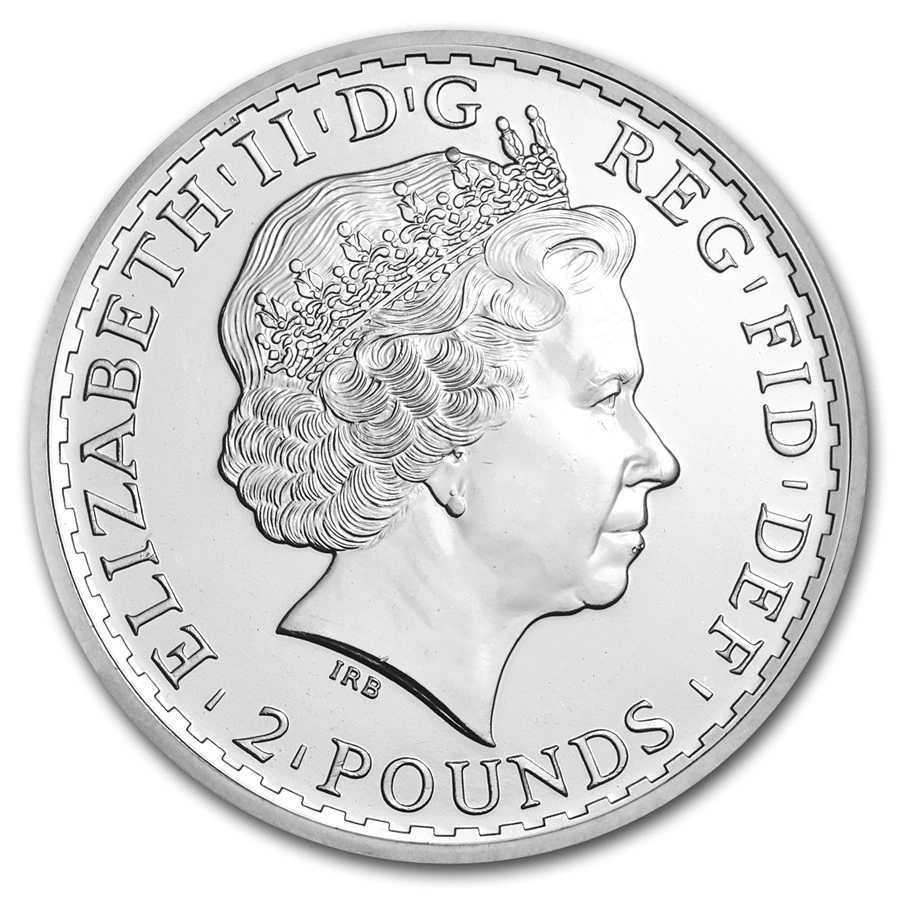
The supplied 2013 example carries Elizabeth II’s right-facing portrait and the two-pound denomination in the surrounding inscription. Later bullion issues use later royal portraits, including Charles III. A portrait change does not by itself determine metal content. Match the complete dated bullion type and denomination before adding a quantity.
Reverse: identify the back
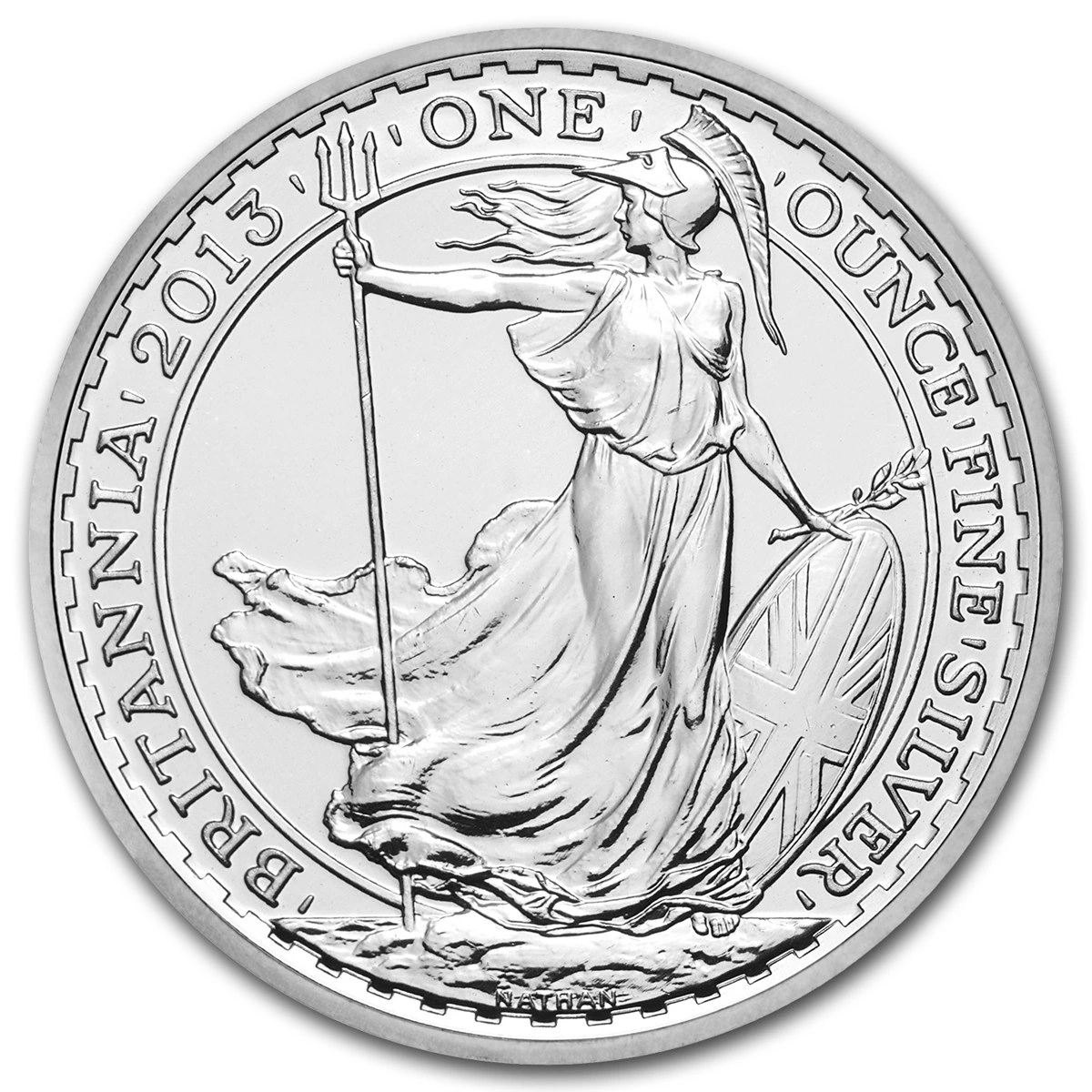
The supplied reverse shows Philip Nathan’s standing Britannia with trident, shield and olive branch. Its inscription identifies one ounce of fine silver and the date 2013. Later bullion issues add security details and changes to the field. Do not substitute the different annual proof artwork simply because it has the same denomination and issue year.
History and purpose
The Royal Mint changed silver Britannia from .958 to .999 fineness in 2013. The standing design became the recognizable standard for bullion issues while collector products continued to use separately attributed designs. This guide covers the modern one-ounce bullion material standard; it does not merge every proof, fractional or special-finish Britannia into one identity.
How to identify this variant
Confirm the two-pound denomination, actual date, one-ounce silver inscription and matching bullion design. The issuer’s nominal diameter is 38.61 mm. Earlier .958 issues are larger and belong to their matching reference. A white-metal colour or familiar standing figure alone cannot establish purity, authenticity or finish.
Understanding its metal content
One correctly identified bullion coin contains one fine silver troy ounce; three contain three fine ounces. The calculator uses that declared fine content directly. It does not multiply an already fine ounce by .999 a second time. Gross mass is left unavailable because no independently verified gross figure is used in this record.
The calculator uses the independently stated fine-metal amount directly. Gross mass is unavailable here; a rounded fine-weight display or inconsistent gross reference is not presented as a verified gross measurement.
Dates, varieties and composition changes
The .999 bullion standard begins in 2013. This maintained record currently covers issues through 2026, with portraits and security features varying by date. The supplied 2013 example illustrates the earlier appearance within that standard. Earlier .958 coins, fractional sizes, different denominations and separate proof types require their own attribution.
Melt value versus collector value
Bullion coins are primarily traded for their metal, but exact dates, condition, packaging and special varieties can still matter. Do not assume that all reflective coins are proofs or that every proof uses the standard bullion reverse. Keep potentially collectible pieces separately identified and request an appraisal when their status is uncertain.
Authenticity and condition
Inspect complete photographs of both sides, the edge and the measured diameter. Compare date-appropriate security features where present. Their absence on an earlier genuine issue should not be treated as an automatic fault. Do not clean or damage a coin to test it. An individual assessment is needed when measurements or attribution do not agree.
Selling this coin
Add confirmed one-ounce .999 bullion coins to your collection or offer estimate. Keep earlier .958 pieces and special collector versions on separate lines. Melt value uses a current silver bid; the buying estimate uses the configured offer policy and remains subject to inspection. Use the appraisal link for uncertain identities or possible collector premiums.
Sources and calculation methodology
The calculator retains 1 fine troy ounce per matching coin. The retained fineness is .999, and the nominal diameter is 38.61 mm. Gross mass is unavailable; the declared fine-metal content is used directly without inventing a gross measurement. The references below distinguish the exact denomination and material standard from similar-looking coins. Reported fine content and rounded gross-mass arithmetic are separate conventions. The dated photographs supplied for CashForCoins use illustrate the identified type; they do not authenticate or grade an individual holding. A live market bid is obtained separately from specification references.
Common questions
Can a similar-looking coin use the same calculation?
Only after its denomination, date and silver standard have been matched. A similar design alone is insufficient.Does melt value include collector premiums?
No. Melt value describes fine metal at the current bid. Condition, authenticity and collectible interest require a separate appraisal.Can I add several coins to an estimate?
Enter the quantity and add the coin to your collection or offer estimate. Keep uncertain coins separate and request an appraisal.References
- Royal Mint exact Britannia bullion specification — identity two-pound silver bullion Britannia; fine weight one troy ounce; fineness .999; diameter 38.61 mm; dates 2013 onward; designs and portraits vary (checked 2026-10-16)
- Royal Mint Britannia alloy and design history — identity; dates purity changed in 2013 from .958 to .999; design Philip Nathan standing Britannia became bullion standard (checked 2026-10-16)
Issue-year references
Content maintained by CashForCoins. Last substantive record update: 2026-10-16. Report a specification or attribution issue through our contact page.
Have this coin or a collection?
Photographs can help identify your coin. An appraisal may consider authenticity, condition and collector demand as well as metal content.
Request a photo appraisal View current silver coin buying information