
Russia • Ten roubles
Russian Nicholas II 10 Roubles Gold Coin
A matching Nicholas II 10-rouble gold coin uses 8.6026 nominal gross grams, .900 fineness and 0.2489 reference fine gold troy ounce. Actual covered years are 1898–1904; 1906 (proof); 1909–1911. Match both denomination and dated type before using this calculation; the same face value has existed under other standards.
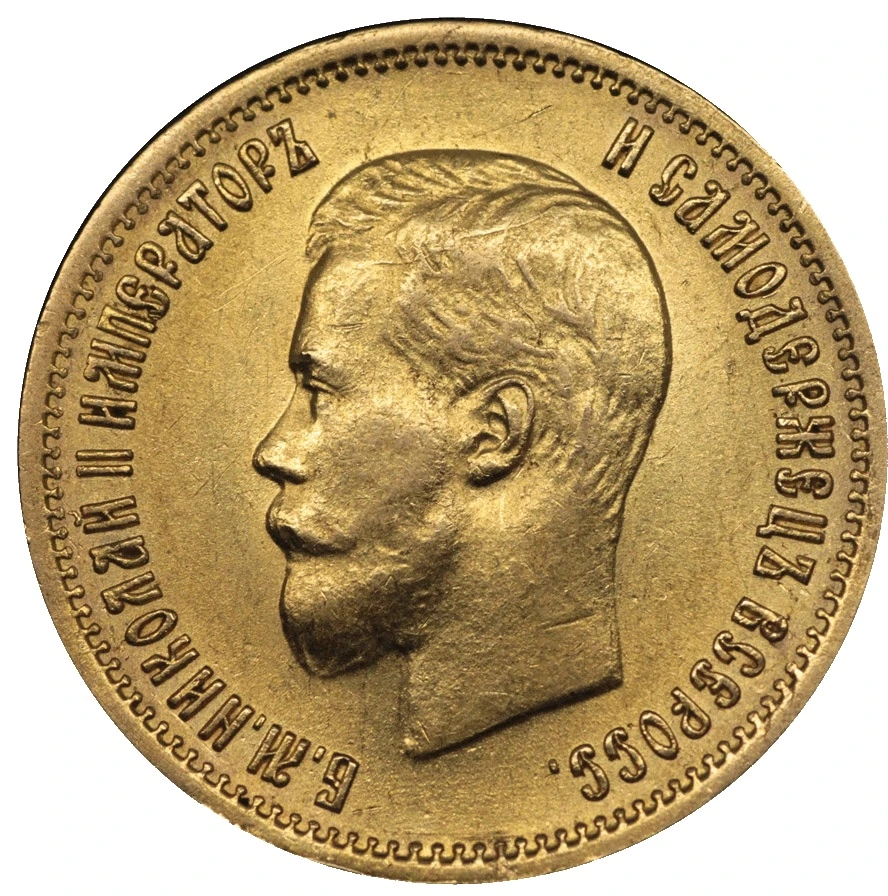
Elif68 / Wikimedia Commons / CC BY-SA 4.0 Changes: Separated this complete face from the paired photograph at the declared join; full image height and coin rim retained. Native888×896 pixel dimensions retained; no enlargement. Converted to WebP quality92. No retouching, synthetic reconstruction or rim trimming. · Image source · CC BY-SA 4.0
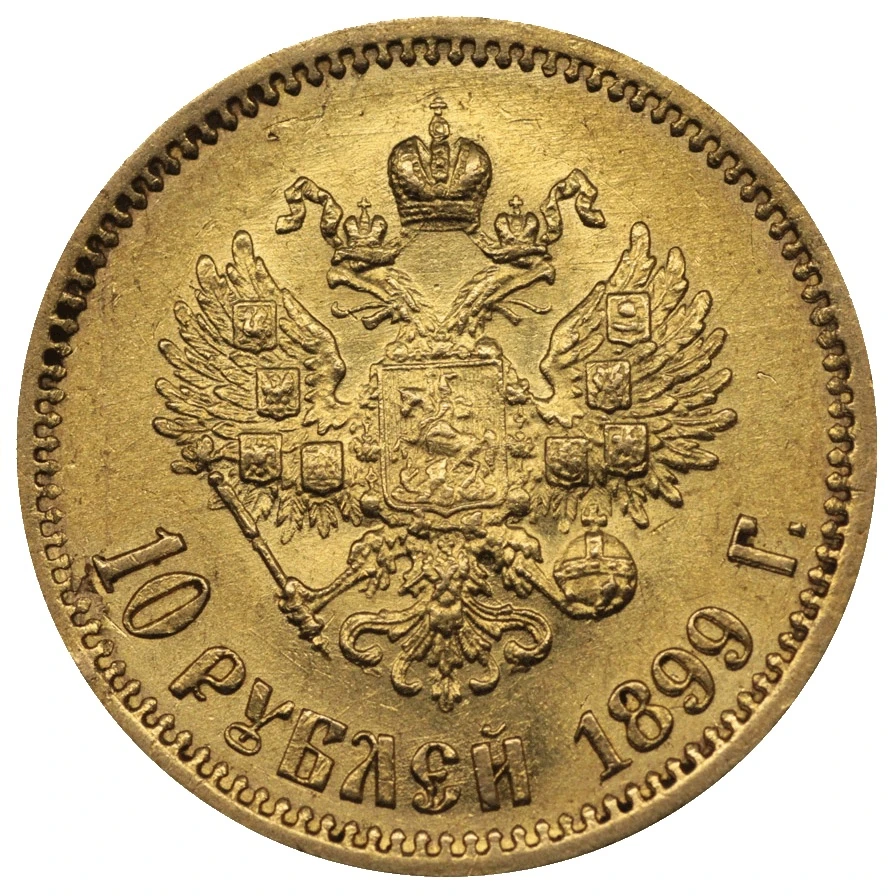
Elif68 / Wikimedia Commons / CC BY-SA 4.0 Changes: Separated this complete face from the paired photograph at the declared join; full image height and coin rim retained. Native888×896 pixel dimensions retained; no enlargement. Converted to WebP quality92. No retouching, synthetic reconstruction or rim trimming. · Image source · CC BY-SA 4.0
When a fresh spot bid is available, melt values use fine-metal content × spot bid. CashForCoins guide buying offers use the separately configured percentage for each metal. Selected rare/numismatic coins require an appraisal. Dollar amounts remain unavailable when a fresh quote or buying percentage is missing.
Verified coin specifications
- Country
- Russia
- Face denomination
- Ten roubles
- Composition
- 90% gold; remaining alloy metals not independently established
- Gross weight (grams)
- 8.6026
- Fineness
- 0.9
- Fine-metal weight (troy oz)
- 0.2489
- Diameter (mm)
- 22.6
- Edge
- Inscribed; inspect moneyer initials
- Mint
- Saint Petersburg Mint
- Mint mark
- None; moneyer initials on edge
- Restrikes
- Replicas, patterns and other standards excluded
- Issue years
- 1898–1904; 1906 (proof); 1909–1911
Actual source-observed issue-date labels for the bounded denomination, design and nominal standard. Catalogue endpoints do not imply annual mint production; overdates and proof/mint combinations remain type-specific. Specimen measurements and images do not certify another coin.1906 is an explicit proof row, not an inferred circulation date.
- Source precision
- The retained matching reference uses 8.6026 nominal gross grams, 0.900 fineness and 0.2489 fine gold troy ounce. Source-specific precision and any disagreement are documented in References. Actual specimen measurements do not replace the nominal reference.
Calculate this coin’s metal content
Formula: specified fine-metal troy ounces × quantity. Dollar melt value additionally requires an approved current metal price.
Obverse: identify the front
Nicholas II faces left, surrounded by the Cyrillic imperial title. Keep the full portrait, inscription and border in photographs. A familiar emperor alone does not establish denomination, date or gold standard. The paired photographic example represents one attributed specimen, not an authentication of another coin.
Reverse: identify the back
The crowned double-headed imperial eagle appears above the 10-rouble value and date. Read the denomination rather than identifying a gold coin only by its eagle. Clear photographs should preserve the complete number, Cyrillic wording and year so a different-sized or earlier-standard issue cannot be confused with this type.
History and purpose
This bounded guide follows the inspected Nicholas II Y 64 dated family. The 1895–1897 ten-rouble imperial has a different nominal mass and is outside this guide. Modern base-metal ten-rouble coins are also excluded. The series endpoints are a catalogue envelope; they are not evidence of annual production. Generic common-date proof headings are retained as reference notes, not expanded into individual issue years.
How to identify this variant
The nominal dated mass is 8.6026 g. Diameter 22.6 mm comes from the supplementary dated-type reference; it is not presented as a diameter supplied by the designated melt table. Match both full faces and record edge moneyer initials separately. An appropriate mass and diameter do not prove .900 gold or genuine manufacture.
Understanding its metal content
Three correctly attributed coins contribute 0.7467 reference fine gold troy ounce and 25.8078 nominal gross grams. The matching dated type agrees with the designated melt reference on 8.6026 g/.900/0.2489 troy ounce. Nominal metal value remains separate from wear, actual assay, collector premium and the terms of a purchase offer.
Dates, varieties and composition changes
Specific covered annual rows: 1898–1904; 1906 (proof); 1909–1911. The inspected rows distinguish АГ,ЗБ,ФЗ,АР and ЭБ labels, two 1904 head sizes and an explicit 1906 ЭБ proof. The generic 1901–11 common-date proof heading is not an annual-year list.
Melt value versus collector value
Record the actual date, moneyer initials, portrait detail and established finish with the specimen. Proof and rare-date attributions require specific evidence, and a collector premium may exceed nominal gold content. Keep certificates and provenance attached to the correct coin. Avoid cleaning or polishing inscriptions to make an uncertain attribution look clearer.
Authenticity and condition
Provide both complete faces, the edge, measured mass and diameter if available. Be explicit when moneyer lettering or composition is uncertain. Photographic similarity cannot certify fineness, an altered date or a claimed proof. Professional non-destructive examination is appropriate before treating a potentially collectible coin as scrap.
Selling this coin
Keep matching 10-rouble pieces separate from other denominations and earlier standards. Preserve actual annual and edge attribution, and label uncertain items honestly. Selected quantities and photographs can accompany the established CashForCoins appraisal enquiry. Metal content and collector value are assessed separately.
Sources and calculation methodology
The matching dated type agrees with the designated melt reference on 8.6026 g/.900/0.2489 troy ounce. Actual annual rows were inspected for Y 64; no gaps were filled from series endpoints or common-date proof categories. Coin specifications, measured specimen characteristics and authentication judgments remain distinct. Public primary dated-table search results and supplemental type evidence were reviewed on 2026-10-12. Reference price and mintage tables are not republished.
Common questions
Were these coins issued in every year of the catalogue range?
No. This guide uses individual observed annual rows and retains gaps.Do moneyer initials establish gold purity?
No. They help attribution, but purity and authenticity require separate evidence.Can every 10-rouble gold coin use this calculator?
No. The calculation is bounded to the matching Nicholas II Y 64 standard; other dated types can differ.References
- NGC world-gold melt reference — Identity of the exact denomination/type; designated nominal weight; fineness; rounded fine gold content (checked 2026-10-12)
- NGC Nicholas II ten-rouble Y64 complete dated rows — Dates and design scope; actual1898–1904,1906proof,1909–1911;8.6026/.900/.2489;1904headvarieties;edge (checked 2026-10-12)
- Nicholas II ten-rouble supplemental type reference — Reference diameter 22.6 mm; 22.6mm; inscribededge; earlierimperial exclusion (checked 2026-10-12)
- Genuine coin image and independent permission — Independent CC BY-SA 4.0 permission; creator/credit Elif68; genuine source photograph or scan; actual paired source photographs and optimized faces reviewed independently; publication remains a separate decision. (checked 2026-10-12)
Issue-year references
- NGC world-gold melt reference
- NGC Nicholas II ten-rouble Y64 complete dated rows
- Nicholas II ten-rouble supplemental type reference
Content maintained by CashForCoins. Last substantive record update: 2026-10-13. Report a specification or attribution issue through our contact page.
Have this coin or a collection?
Photographs can help identify your coin. An appraisal may consider authenticity, condition and collector demand as well as metal content.
Request a photo appraisal View current gold coin buying information