

Mexican Gold 2½ Peso — Quarter Hidalgo
Photo credits and rights on the linked coin profile.
Mexico • 90% gold alloy
Issue years: 1918–1920, 1944–1948
Fine gold: 0.060280 troy oz
Mexico • 2 Mexican pesos
Mexico 2 peso gold in the KM461 .900 standard contains 0.0482 reference fine gold troy ounce and has a nominal gross mass of 1.6666 grams in the reference melt table. Its confirmed dated issues are 1919–1920, 1944–1947. Use the exact design and denomination before counting; other peso standards and later restrikes require the distinctions below.


When a fresh spot bid is available, melt values use fine-metal content × spot bid. CashForCoins guide buying offers use the separately configured percentage for each metal. Selected rare/numismatic coins require an appraisal. Dollar amounts remain unavailable when a fresh quote or buying percentage is missing.
Confirmed KM461 dated issues; the 1920/10 overdate is catalogued. The reference lists 1948 with “No specimens known,” so it is not included as a confirmed issue. Later restrikes can retain 1945; silver and bimetallic two-peso designs are separate identities.
Formula: specified fine-metal troy ounces × quantity. Dollar melt value additionally requires an approved current metal price.
The official Banco de México photograph shows the Mexican national arms, with an eagle, snake and cactus, under ESTADOS UNIDOS MEXICANOS. Compare the complete arms and the opposite face together. The national emblem also appears on other denominations and alloys; it cannot establish metal content by itself.
The reverse places DOS PESOS inside a wreath with the date above. This design has no Hidalgo portrait. The small official photograph establishes the denomination and wreath; its tiny date should be read on the actual coin rather than inferred from this image.
Banco de México dates the introduction of the two-peso gold piece to 1919. It belongs to the .900 Centenario family, but its wreath reverse differs from the larger Hidalgo denominations. A silver two-peso coin is a different identity even though the face denomination is the same.
Match DOS PESOS, the wreath and national arms, then compare the 13 mm nominal diameter and 1.6666 g reference gross mass. A large Winged Victory two-peso silver coin or a later bimetallic circulation piece cannot use this gold record. The issuer illustration is low resolution; obtain sharp photographs of the actual date and rim for attribution.
Three correctly identified matching coins total 0.1446 fine gold troy ounces using the reference’s reported AGW. Gross mass includes alloy metal. A separate mass-times-fineness calculation uses the displayed 1.6666 g and .900 inputs; its rounding can differ from reported AGW. Neither calculation measures wear or tests an individual coin, and an uncertain or differently specified piece should not be included.
Confirmed dated issues are 1919–1920 and 1944–1947, with a catalogued 1920/10 overdate. The reference also lists 1948 with the explicit qualification “No specimens known”; it is not presented here as a confirmed issue. The reference records later restrikes commonly retaining 1945 and matte restrikes in 1996. A face date therefore does not prove when the coin was struck.
Keep the actual date, any overdate detail, finish, packaging and ownership records with the coin. A documented original issue and a later retained-date restrike can require different collector assessments despite a shared metal standard. Neither the nominal gold amount nor an attractive reference photograph supplies a grade or guarantees a premium. Preserve the existing surfaces for examination.
Photograph both faces and the complete rim in good light without polishing or scratching the coin. Compare the denomination, date, design and nominal dimensions, and keep any holder or certificate associated with its actual specimen. A correct-looking face or plausible mass is only an identification check. Leave an uncertain piece outside the count until its identity and metal are examined.
Sort 2-peso coins by the exact design and composition before entering quantities. Include clear face and rim photographs, the visible date and any finish or restrike evidence with the existing appraisal request. Older standards, mounted coins and pieces with uncertain identity need individual review. The reference calculation supplies a metal quantity, not a promised purchase price for an unseen coin.
The reference’s owner-selected world gold melt row controls 1.6666 g gross, .900 fineness and 0.0482 fine gold troy ounce. Banco de México displays 0.04823 fine ounce and supplies the 13 mm diameter. These published amounts have different rounding; the issuer display does not silently replace the selected reference. The reference’s matching dated type and issuer references are linked separately. Dates describe confirmed face issues and explicitly documented exceptions, not continuous production between endpoints. Genuine issuer photographs are attributed and retain their original dimensions; small reference images do not certify every date or finish. Market pricing remains unavailable until a live provider is approved, so a missing dollar value is not displayed as zero.
No. The reference records later official restrikes that retain 1945. The visible date is evidence of the design, not necessarily manufacture.
The reference lists the date with “No specimens known.” This guide lists confirmed dated issues through 1947 and explains the uncertain 1948 listing.
No. The wreath reverse and .900 gold standard must match. Silver and bimetallic two-peso coins require separate identification and metal inputs.
Content maintained by CashForCoins. Last substantive record update: 2026-10-11. Report a specification or attribution issue through our contact page.
Photo credits and rights on the linked coin profile.
Mexico • 90% gold alloy
Issue years: 1918–1920, 1944–1948
Fine gold: 0.060280 troy oz
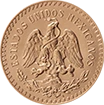
Photo credits and rights on the linked coin profile.
Mexico • 90% gold; balance alloy metal
Issue years: 1905–1907, 1910, 1918–1920, 1955
Fine gold: 0.120600 troy oz
Photographs can help identify your coin. An appraisal may consider authenticity, condition and collector demand as well as metal content.
Request a photo appraisal View current gold coin buying information
