Mexican Second Republic Gold Five Pesos — Actual Years and .875 Gold
Normal Mexican Second Republic gold five pesos contain .2380 reference fine gold troy ounce at 8.46 g gross and .875 fineness. Verified actual years are 1870–1884, 1886–1895, 1897–1898, 1900–1905. The radiant-cap-and-scales reverse distinguishes this denomination from the smaller gold one and two-and-a-half pesos. Later .900 five pesos have another mass and fine-gold quantity, even though the denomination is the same.
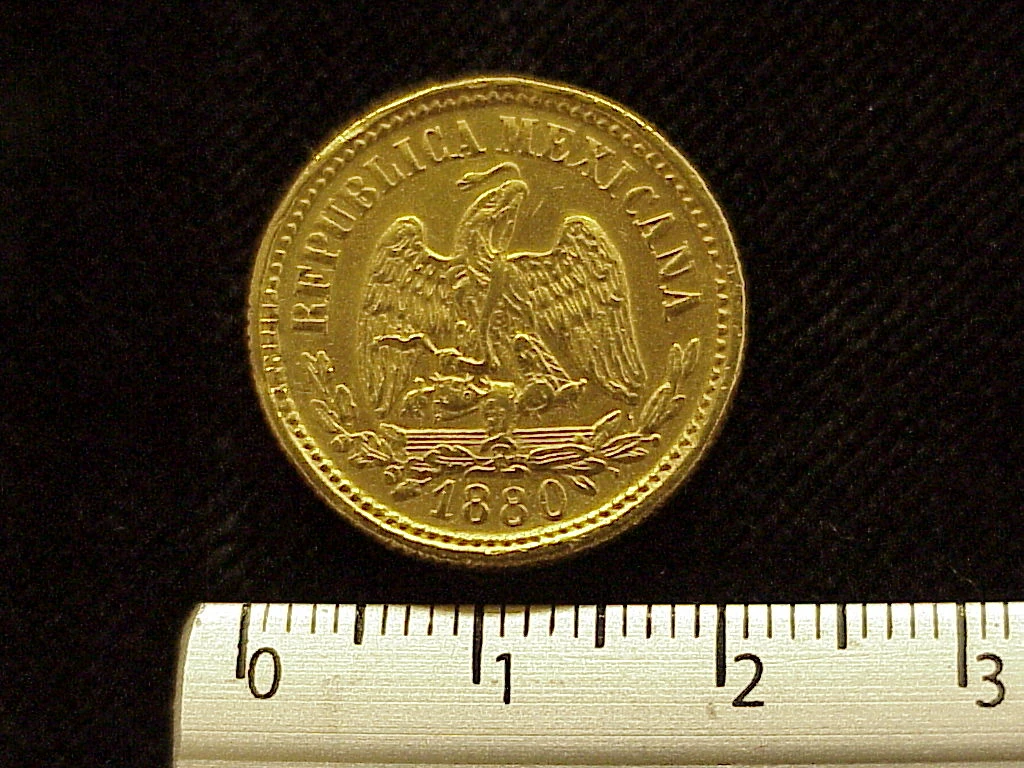
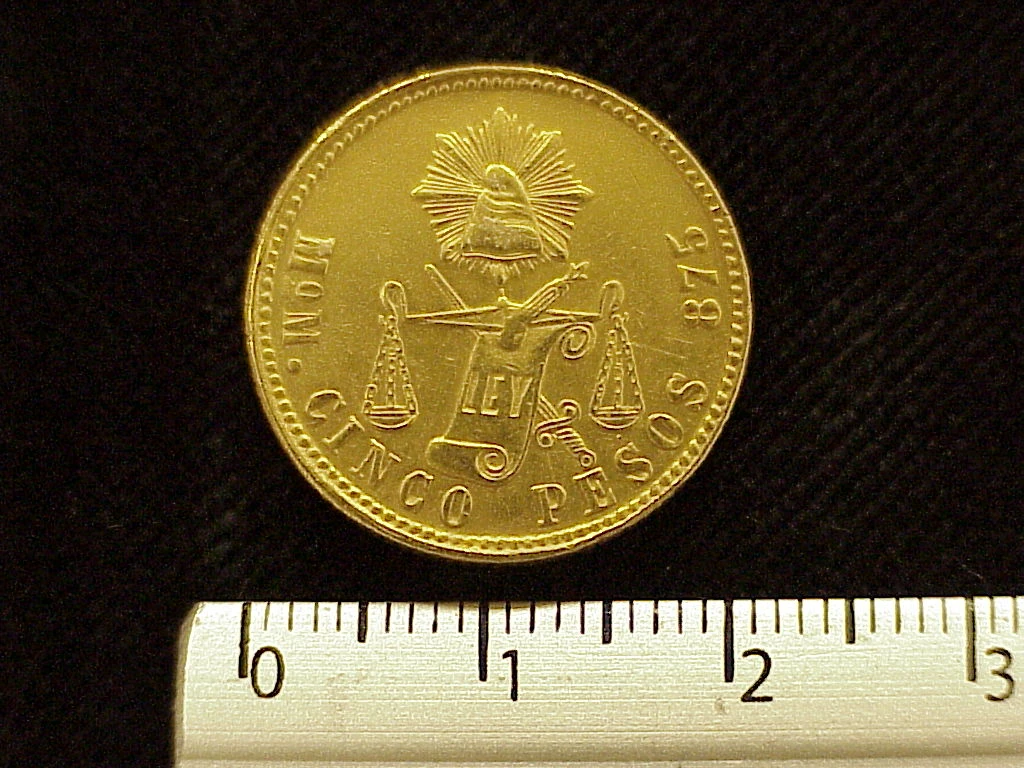
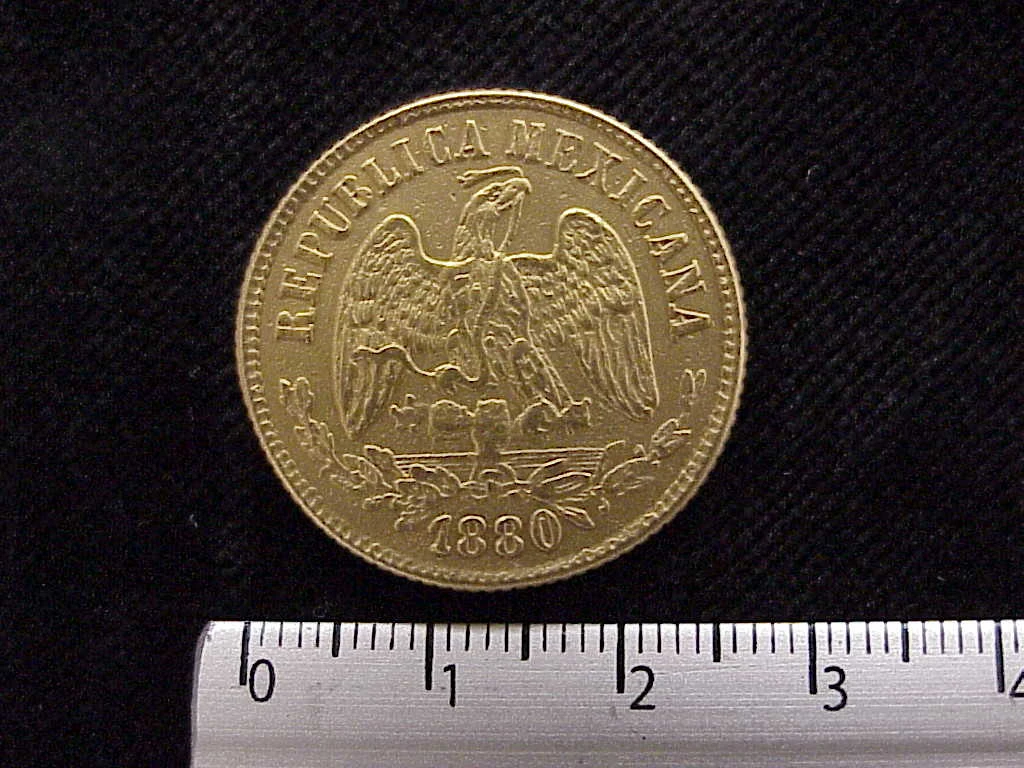
Obverse — 1880 specimen, obverse and reverse. Images: Banco de México, Colección Numismática (inventory 5024). Banco records this individual specimen at 8.42 g and 20.0 mm. Preserve the mapped the reference nominal 8.46 g, .875 fineness and .2380 reference fine ounce. These observed specimen measurements are not an additional issue variant and do not populate an otherwise unestablished family dimension. Images: Banco de México, Colección Numismática, inventory 5024, 1880; reproduced under its published collection use policy. · Image source · Banco de México published collection reproduction permissionReverse — 1880 specimen, obverse and reverse. Images: Banco de México, Colección Numismática (inventory 5024). Banco records this individual specimen at 8.42 g and 20.0 mm. Preserve the mapped the reference nominal 8.46 g, .875 fineness and .2380 reference fine ounce. These observed specimen measurements are not an additional issue variant and do not populate an otherwise unestablished family dimension. Images: Banco de México, Colección Numismática, inventory 5024, 1880; reproduced under its published collection use policy. · Image source · Banco de México published collection reproduction permission
When a fresh spot bid is available, melt values use fine-metal content × spot bid. CashForCoins guide buying offers use the separately configured percentage for each metal. Selected rare/numismatic coins require an appraisal. Dollar amounts remain unavailable when a fresh quote or buying percentage is missing.
Verified coin specifications
Country
Mexico
Face denomination
5 pesos
Composition
87.5% gold; alloy remainder not individually attributed
Gross weight (grams)
8.46
Fineness
0.875
Fine-metal weight (troy oz)
0.238
Mint
Multiple Mexican mints; attribute actual mint and assayer letters
Mint mark
Read dated mint and assayer marks
Restrikes
Normal .875 Second Republic issues only; trials, patterns and later .900 gold denominations excluded
Issue years
1870–1884, 1886–1895, 1897–1898, 1900–1905
Actual source-reviewed issue years for this exact denomination, design and metal/weight scope. Overdates, mint combinations and proof availability remain type-specific; specimen photos and measurements do not certify other examples.
Source precision
The reference designated World Gold and eight matching normal mint types agree on 8.4600 g/.875 gold/.2380 reference AGW. The union of actual annual rows supports 1870–1884, 1886–1895, 1897–1898, 1900–1905. No 1885, 1896 or 1899 annual entry is established by those tables. The exact five-peso reverse is a radiant cap above scales, distinct from the one/2.5-peso half-wreath designs. Diameter and edge attribution remain unverified; neither is guessed.
Calculate this coin’s metal content
Formula: specified fine-metal troy ounces × quantity. Dollar melt value additionally requires an approved current metal price.
Obverse: identify the front
The normal the reference types describe a facing eagle with a snake in its beak. REPUBLICA MEXICANA identifies the republic around the national emblem. Eagle details can vary between dies and mints; a familiar Mexican emblem alone does not identify metal, denomination or the correct historical standard. Keep the full rim, legends and the opposite face available when comparing a specimen with a catalogued issue.
Reverse: identify the back
The reference describes a radiant cap above scales for each matching normal five-peso mint type. Identify the complete 5 PESOS denomination, date and mint/assayer combination rather than relying on the national eagle alone. This design should not be replaced with the smaller denominations’ half-wreath value reverse. Complete rim photographs preserve the details needed to attribute an overdate or regional mint issue.
History and purpose
Mexico’s decimal Second Republic gold coinage included several peso denominations and regional mint/assayer combinations. This guide groups matching normal metal standards while preserving each dated mint variety for identification. Later .900 gold pesos and modern bullion belong to different coin families. A denomination reused in another period is not evidence that the same historical gold-content calculation applies.
How to identify this variant
Read 5 PESOS, the radiant cap and scales, the full dated mint/assayer combination and REPUBLICA MEXICANA. The normal reference mass is 8.46 g and the gold fineness is .875. A later Mexican .900 five-peso design is a separate standard. Physical diameter and edge still require a matching primary reference; those unknown dimensions are not fabricated. Color and mass alone do not authenticate an individual specimen.
Understanding its metal content
The reference reports .2380 reference fine gold troy ounce per matching normal five pesos. Three correctly identified coins total .7140 reference fine ounces and 25.38 nominal gross grams. Mass times .875 gives 7.4025 fine grams per coin, approximately 0.237996 troy ounce. This arithmetic is disclosed separately from the rounded designated AGW. The alloy remainder is not additional gold, and a worn or damaged coin requires individual assessment.
Dates, varieties and composition changes
Accepted actual engraved issue years are 1870–1884, 1886–1895, 1897–1898, 1900–1905. No 1885, 1896 or 1899 year is established by the inspected annual tables. Mexico City supplies many years with overdates including 1871/69, 1873/2, 1875/3, 1876/5, 1878/7 and 1879/8. Guanajuato lists 1871 and 1887; its separately selected 1893GoR row is marked rare. Other matching mint types include Álamos, Chihuahua, Culiacán, Durango, Hermosillo and Zacatecas. Catalogued singleton rare entries are not an annual unbroken run, and no market premium is assigned here.
Melt value versus collector value
A dated regional mint issue, overdate or die combination may need individual numismatic appraisal before a metal-content sale. Preservation, cleaning, mounting and retained certification affect that assessment. This guide assigns no grade, scarcity claim, current catalog price or expected premium. Keep each coin’s full attribution and original surfaces intact instead of treating an unexamined historical lot solely as scrap.
Authenticity and condition
Photographs, yellow color and a scale reading cannot authenticate a coin by themselves. Document the complete faces, rim and edge without cleaning, acid testing or scraping. Confirm the catalogued date/mint combination and obtain the missing physical reference dimensions where needed. Exclude uncertain pieces, altered denominations and unidentified replicas from a confirmed nominal collection total until examined.
Selling this coin
Separate these .875 Second Republic gold issues from later .900 pesos, silver pesos and modern bullion. Supply dated mint/assayer notes, full-rim both-side photographs and any original certification through the existing CashForCoins appraisal process. A nominal fine-gold quantity helps describe a lot; it is not a guaranteed offer. Missing market-provider data must remain unavailable rather than displaying a zero-dollar melt value.
Sources and calculation methodology
The reference designated World Gold and eight matching normal mint types agree on 8.4600 g/.875 gold/.2380 reference AGW. The union of actual annual rows supports 1870–1884, 1886–1895, 1897–1898, 1900–1905. No 1885, 1896 or 1899 annual entry is established by those tables. The exact five-peso reverse is a radiant cap above scales, distinct from the one/2.5-peso half-wreath designs. Diameter and edge attribution remain unverified; neither is guessed. All three actual the reference five-peso search pages and the eight normal type records were inspected; copper pattern KM-Pn131 is excluded. Selected rare rows and annual tables were retained separately. Prices and mintages were not copied.
Common questions
Does a Mexican peso denomination identify its metal?No. Mexican pesos include distinct silver and gold families. Match the full dated type, denomination and material before calculating metal content.Did every mint issue every year listed?No. The family years are the union of actual dated mint records. An individual mint or finish must be checked separately.Can later .900 Mexican gold use this .875 record?No. Later issues have separately documented weights and purities and need their own coin identity and calculation.
We use cookies to offer you a better browsing experience, analyze site traffic and personalize content. Read about how we use cookies and how you can control them in our Privacy Policy. If you continue to use this site, you consent to our use of cookies.