
South Africa • .1 fine troy ounce gold; no rand face amount
Gold Krugerrand — Tenth Ounce, Actual 1980–2026 Years
The gold tenth-ounce Krugerrand contains exactly .1 fine troy ounce in a 22-carat gold-and-copper coin. Its standard gross mass is 3.393 g. Actual normal bullion dates include every year 1980–2026. Read the fractional weight on the springbok face: a familiar portrait alone cannot distinguish this size from a full ounce or another fraction.
Images supplied by CashForCoins; used with permission. · Image source · CashForCoins website use authorized by site owner
Images supplied by CashForCoins; used with permission. · Image source · CashForCoins website use authorized by site owner
When a fresh spot bid is available, melt values use fine-metal content × spot bid. CashForCoins guide buying offers use the separately configured percentage for each metal. Selected rare/numismatic coins require an appraisal. Dollar amounts remain unavailable when a fresh quote or buying percentage is missing.
Verified coin specifications
- Country
- South Africa
- Face denomination
- .1 fine troy ounce gold; no rand face amount
- Composition
- 22-carat gold; 11/12 gold and 1/12 copper
- Gross weight (grams)
- 3.393
- Fineness
- 0.916666666667
- Fine-metal weight (troy oz)
- 0.1
- Diameter (mm)
- 16.55
- Edge
- Bullion technical reference: milled, 115 serrations; proof must be checked separately
- Mint
- South African Mint; blanks produced by Rand Refinery
- Mint mark
- See dated mint attribution
- Restrikes
- Normal fractional gold bullion only; silver/platinum and other weights excluded
- Issue years
- 1980–2026
Normal issue dates within this profile. Read the guide for changing designs, mint/finish differences and excluded material standards.
- Source precision
- Named reference World Gold melt table contains no matching fractional Krugerrand row. Original issuer confirms exact .1 fine troy ounce and 11/12 gold, 1/12 copper. Manufacturer-supplied technical reference retains 3.393 g standard gross mass and 16.45–16.55 mm bullion diameter interval; diameter_mm stores its upper bound, not a claimed universal measured size. 2026 proof issuer rounds diameter differently. All actual annual bullion dates 1980–2026 appear in original CDN dated series. Proof finish and exact edge-count attribution must be checked independently. Mint mark: Normal bullion date and issue attribution; do not infer a proof privy.
Calculate this coin’s metal content
Formula: specified fine-metal troy ounces × quantity. Dollar melt value additionally requires an approved current metal price.
Obverse: identify the front
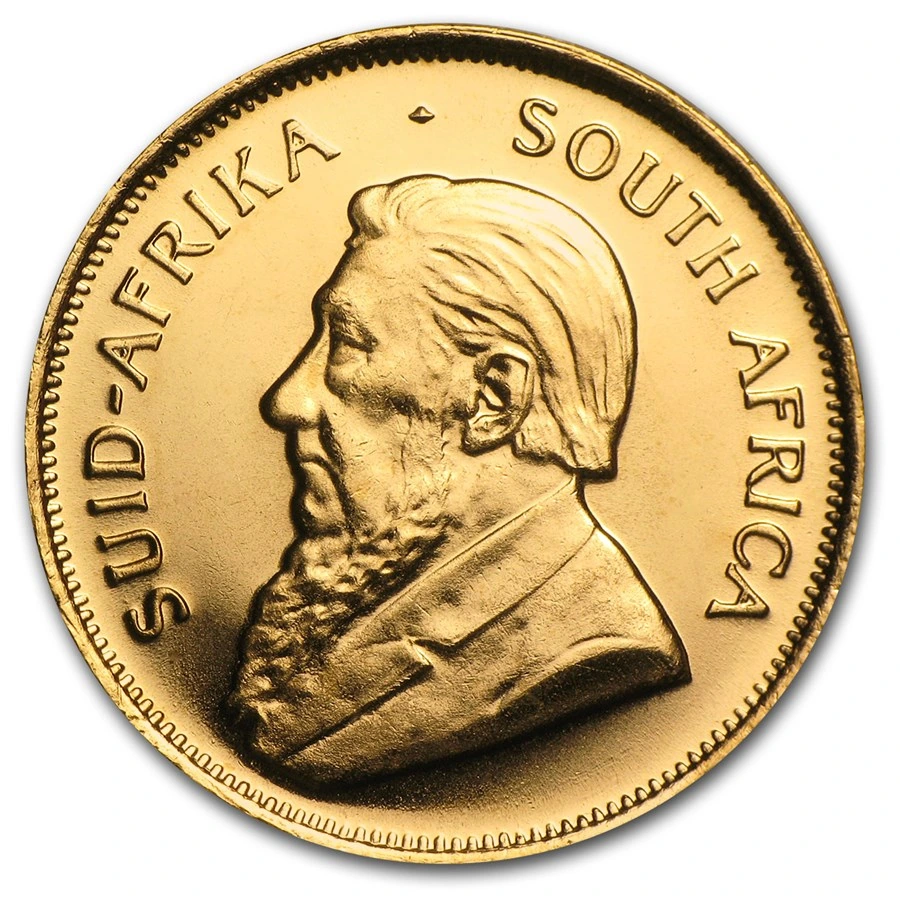
Paul Kruger appears on the portrait side, with South Africa named in English and Afrikaans. This familiar national portrait occurs across multiple Krugerrand weights and later other metals. Keep the complete face and opposite inscription available when identifying a coin. A grading holder or clear portrait photograph is useful documentation, but neither establishes the gold weight without the matching denomination and material.
Reverse: identify the back
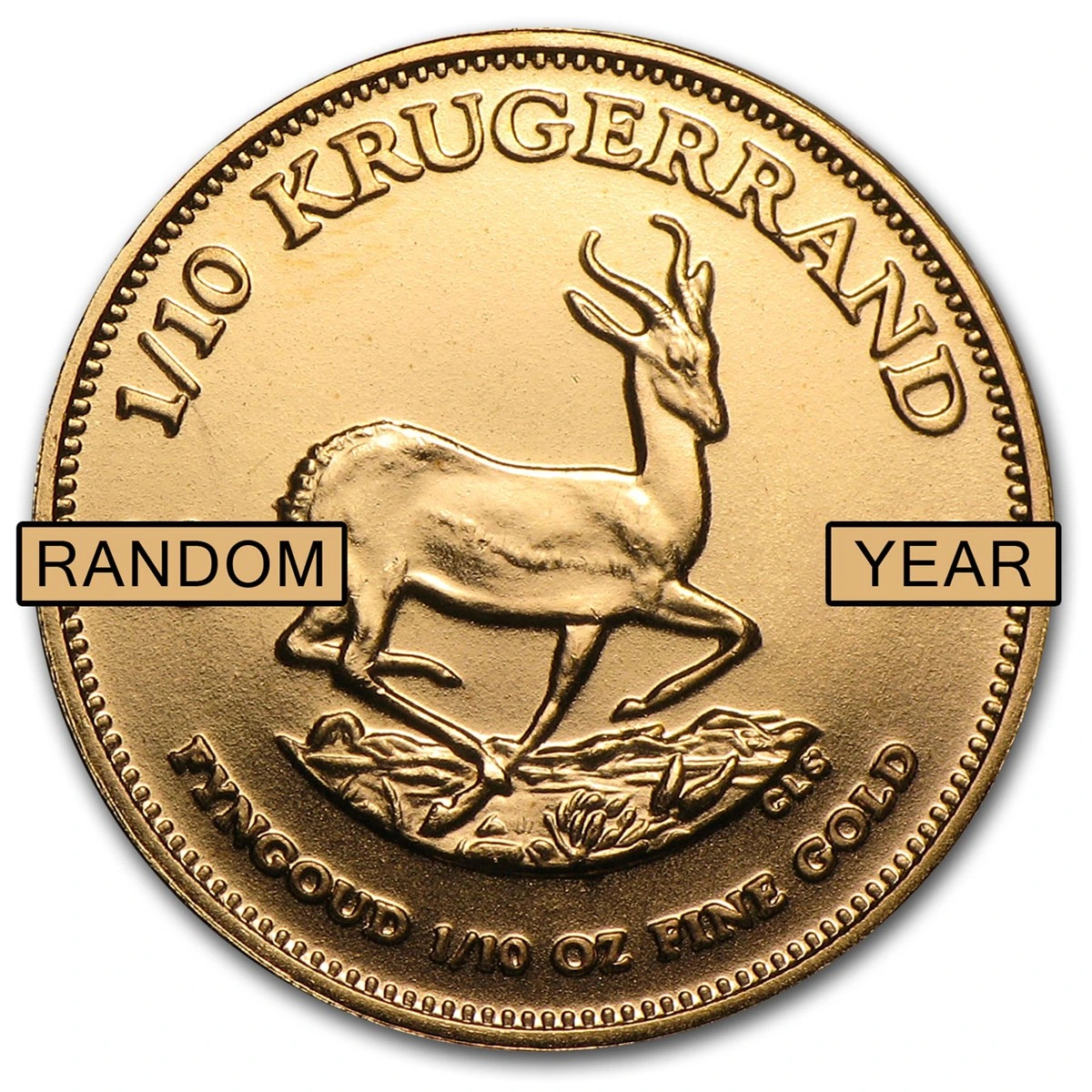
A springbok appears with the coin name, actual year and bilingual fine-gold wording. Confirm the .1-ounce inscription instead of choosing a record from visual scale on a screen. Small denomination photographs should retain the whole rim so the weight marking remains readable. A silver or platinum springbok coin is a separate material identity and must not use this gold calculation.
History and purpose
The original one-ounce program began in 1967, while the three smaller normal gold sizes were introduced in 1980. The fractional issue date therefore differs from the familiar full-size launch date. An annually changing date does not establish that every collector finish or special privy exists in each year. Preserve the actual coin attribution and original packaging for a more precise review.
How to identify this variant
Match the .1-ounce gold inscription, complete actual date and national portrait. The manufacturer-supplied bullion diameter interval is 16.45–16.55 mm and nominal gross mass is 3.393 g. Proof references can round diameter differently and use another edge treatment. Do not treat the stored upper diameter limit as a guarantee of one exact specimen measurement. Copper in the alloy contributes gross mass without reducing the declared fine-gold ounce.
Understanding its metal content
Use the issuer’s declared .1 fine troy ounce for a matching normal coin. Three pieces total 0.3 fine ounces at 10.179 nominal gross grams. The gold fraction is 11/12, with 1/12 copper. Rounded standard gross mass times displayed purity can differ slightly from the explicitly guaranteed fine amount; the calculator must preserve the fine-ounce override and avoid deducting purity a second time.
Dates, varieties and composition changes
Original dated catalog entries support every annual normal bullion year from 1980 through 2026. The 2026 South African Mint range independently confirms the three fractional gold proof sizes. Gold proof, bullion, anniversary privy and altered surface treatment should retain their actual dated classifications. The same annual date does not make finishes interchangeable. Other smaller proof denominations are separate weights and are not silently added to this calculation.
Melt value versus collector value
Keep proof packaging, certificates, privy details and retained certification with the individual coin. A nominal fine-gold total describes metal quantity but does not price a collector finish or condition premium. This guide assigns no grade, rarity label or guaranteed market spread. Scratches, mounting, altered surfaces and uncertain identity require individual appraisal before a historical or collector specimen is grouped into a bullion lot.
Authenticity and condition
Check the complete inscription, date, design, edge, nominal mass and relevant diameter interval together. No single measurement authenticates a coin. Photograph both full rims and record any unusual edge or finish without cleaning or acid testing. A plated replica or a coin of another metal can share parts of the design. Keep uncertain pieces outside a confirmed gold total until examined.
Selling this coin
Sort full ounces and each fraction separately, then note the actual dates and finishes. Retain any proof packaging and grading documentation. Clear two-side photographs and size notes support the existing CashForCoins appraisal process. The collection tool reports fine-metal quantity; an actual offer is specific to the examined lot. Dollar values remain unavailable when no live market provider is configured.
Sources and calculation methodology
The calculator retains .1 fine troy ounce per matching coin. The retained fineness is 0.916666666667, and the nominal diameter is 16.55 mm. Nominal gross mass is 3.393 grams. The references below distinguish the exact denomination and material standard from similar-looking coins. Reported fine content and rounded gross-mass arithmetic are separate conventions. The dated photographs supplied for CashForCoins use illustrate the identified type; they do not authenticate or grade an individual holding. A live market bid is obtained separately from specification references.
Common questions
Does 22-carat purity reduce the stated fractional gold ounce?
No. The stated ounce is fine gold; added copper increases total coin mass. Do not multiply the declared fine amount by purity again.Did fractional Krugerrands begin in 1967?
No. The normal half, quarter and tenth sizes began in 1980; 1967 belongs to the original full-size program.Can a silver Krugerrand use the gold record?
No. Silver, platinum and other sizes have separate material standards and calculations.References
- Official Krugerrand program: fine ounces and alloy — identity; exact fractional fine-ounce guarantee; 11/12 gold, 1/12 copper; gold has no rand face amount (checked 2026-10-16)
- Original manufacturer-supported technical chart — normal tenth size; 3.393 g gross; 16.45–16.55 mm diameter; 115 bullion serrations; fractions first 1980; supported by SARB, SA Mint and Rand Refinery; identity tenth-ounce Krugerrand; weight 3.393 g; fine weight .1 ounce; fineness 22 carat; dates fractional launch 1980; design Paul Kruger and springbok (checked 2026-10-16)
- South African Mint actual 2026 gold proof range — identity; actual dated 2026 half/quarter/tenth gold proofs; gross masses; proof diameters separate from bullion intervals (checked 2026-10-16)
- Original CDN actual annual fractional issue entries — identity; annual normal bullion years 1980–2026; no copied prices (checked 2026-10-16)
Issue-year references
Content maintained by CashForCoins. Last substantive record update: 2026-10-16. Report a specification or attribution issue through our contact page.
Have this coin or a collection?
Photographs can help identify your coin. An appraisal may consider authenticity, condition and collector demand as well as metal content.
Request a photo appraisal View current gold coin buying information