
China • 200 Chinese yuan
Chinese Gold Panda — 15 Grams Fine Gold
The normal metric 15-gram Gold Panda carries a 200-yuan face value. The issuer explicitly specifies 15 grams of pure gold at .999 fineness, with a 27 mm diameter in the 2026 notice. Actual reviewed annual dates are 2016–2026. The gram amount is treated as the issuer’s fine-metal statement; nominal gross mass is not invented or used to apply the purity fraction a second time.
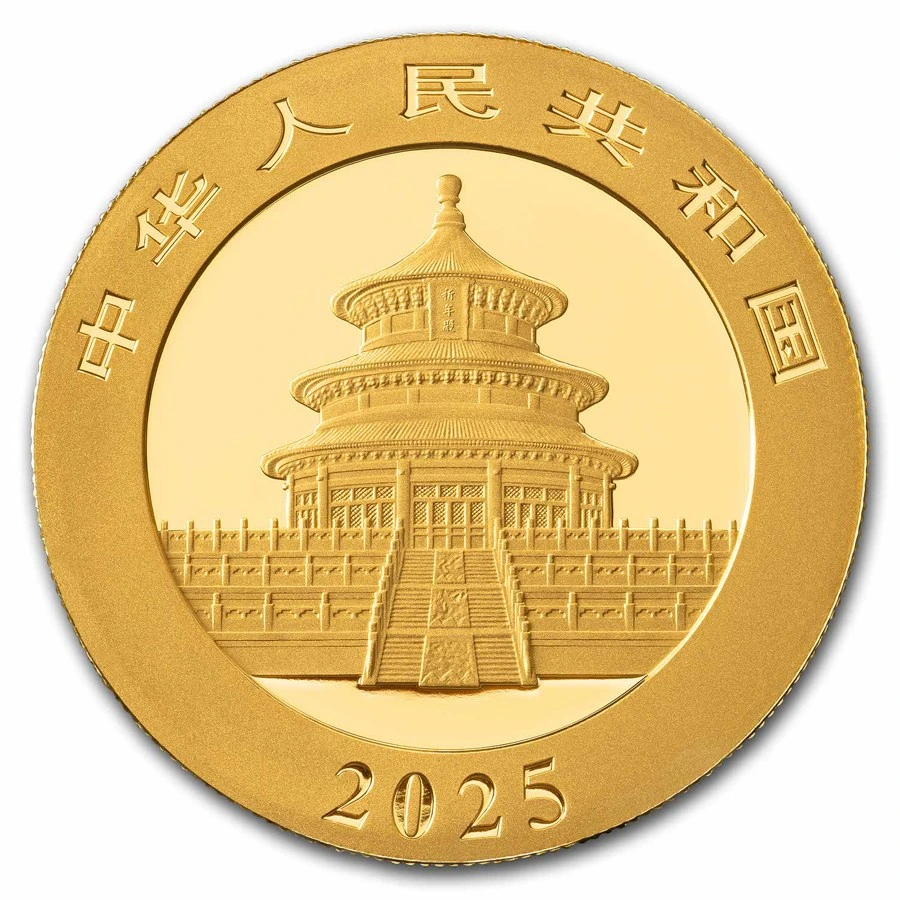
Images supplied by CashForCoins; used with permission. · Image source · CashForCoins website use authorized by site owner
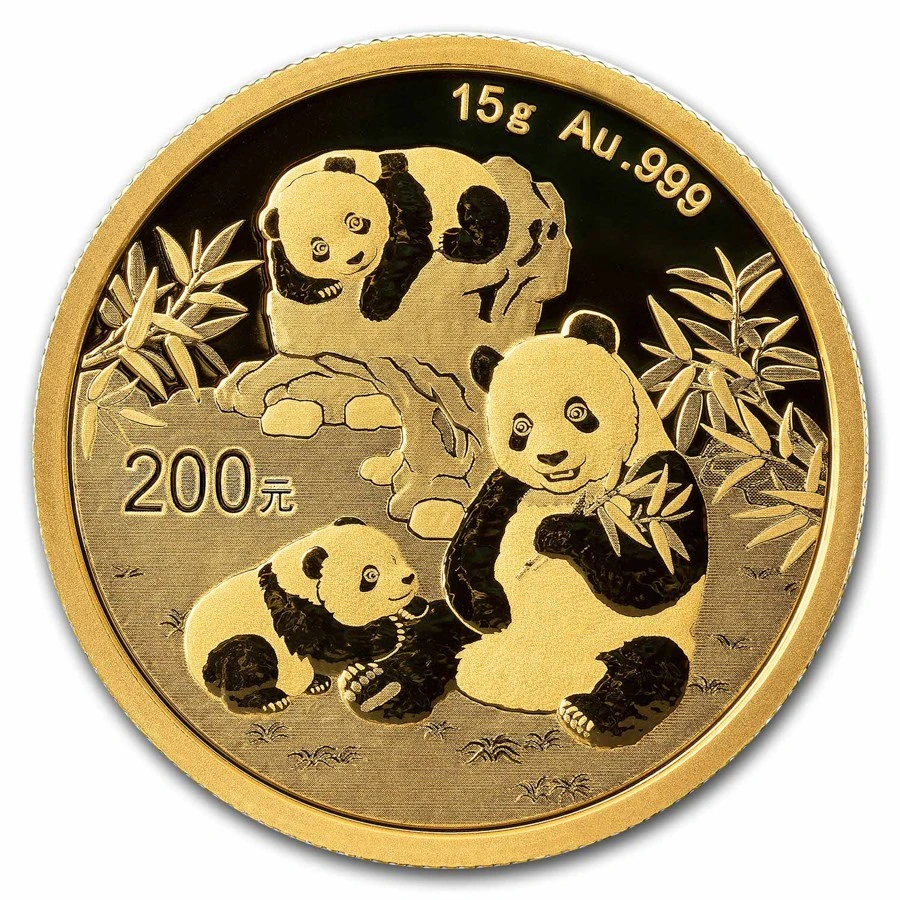
Images supplied by CashForCoins; used with permission. · Image source · CashForCoins website use authorized by site owner
When a fresh spot bid is available, melt values use fine-metal content × spot bid. CashForCoins guide buying offers use the separately configured percentage for each metal. Selected rare/numismatic coins require an appraisal. Dollar amounts remain unavailable when a fresh quote or buying percentage is missing.
Verified coin specifications
- Country
- China
- Face denomination
- 200 Chinese yuan
- Composition
- 99.9% gold; nominal fine-gold amount explicitly specified by issuer
- Fineness
- 0.999
- Fine-metal weight (troy oz)
- 0.482261198529
- Diameter (mm)
- 27
- Edge
- Inspect the exact issue; edge specification not independently established here
- Mint
- Shenyang, Shanghai and Shenzhen Guobao facilities; exact specimen attribution varies
- Mint mark
- See dated mint attribution
- Restrikes
- See dated issue attribution and exclusions in this guide
- Issue years
- 2016–2026
Normal issue dates within this profile. Read the guide for changing designs, mint/finish differences and excluded material standards.
- Source precision
- PBOC original 2026 notice explicitly says contains pure gold 15 g at .999 fineness, 27 mm diameter and 200 yuan. Named reference world-gold melt table has no metric Panda row. Fine gold is therefore 15/31.1034768 = 0.482261198529 troy oz, subject to issuer interpretation review; multiplying the issuer pure-gold amount by .999 again risks double deduction. Nominal gross mass is not supplied by this notice and is deliberately null rather than invented. All 11 actual years 2016–2026 supported by PCGS dated compositions through2023 and original PBOC 2024/2025 notice reprints plus direct2026 notice. The calculator uses the independently stated fine-metal amount directly. Gross mass is unavailable here; a rounded fine-weight display or inconsistent gross reference is not presented as a verified gross measurement. Restrike status: Normal annual metric gold denomination only; show medals, altered coins, other metals and larger proof sizes excluded. Product type: normal metric gold bullion issue. Mint mark: Do not infer a mint from the common Temple of Heaven alone.
Calculate this coin’s metal content
Formula: specified fine-metal troy ounces × quantity. Dollar melt value additionally requires an approved current metal price.
Obverse: identify the front
The Hall of Prayer for Good Harvests at Beijing’s Temple of Heaven appears on the national side, with the country name and actual face year. That common temple identifies the program but not the gold size or precious-metal type. Read the full denomination and weight on the opposite face before assigning a collection quantity. The program’s government issuing body is the People’s Bank of China; individual coins can come from more than one Chinese minting facility.
Reverse: identify the back
The reverse features a giant-panda scene with the 200-yuan denomination, 15-gram amount and purity inscription. Annual artwork changes. The 2026 notice describes resting pandas; a different scene on an earlier actual year is not automatically a different denomination. Match the actual year’s reference artwork rather than extending one representative photo to every date or describing a silver Panda image as the gold coin.
History and purpose
The Panda series used troy-ounce sizes before changing its normal bullion family to metric denominations in 2016. The reference’s original 2016 report lists the new 1, 3, 8, 15 and 30 gram gold sizes. This change affects metal quantity as well as labeling: a thirty-gram coin does not inherit the earlier one-ounce quantity. Larger proof sizes and show medals remain separately identified products, even when they carry related panda imagery.
How to identify this variant
The 15-gram 200-yuan gold Panda is smaller than the old half-ounce standard. Fifteen fine grams convert to about .482261 troy ounce, while half a troy ounce is about 15.551738 fine grams. Identify the actual metric inscription rather than retaining an older half-ounce calculator assumption. Compare the 200-yuan denomination, 15-gram inscription, .999 purity, actual year and 27 mm issuer diameter. A reflective field, slab label or original package is an attribution aid rather than proof of genuineness. Keep altered, plated or uncertain pieces separate from an ordinary gold collection total.
Understanding its metal content
The calculator retains 0.482261198529 fine troy ounce per matching coin. Multiply that fine-metal amount by the correctly identified quantity. Gross mass is unavailable; the declared fine-metal content is used directly without inventing a gross measurement. Fineness describes the alloy and must not be deducted a second time from an issuer’s already fine-metal declaration. Reference quantities do not determine authenticity, condition or collector premiums.
Dates, varieties and composition changes
Actual reviewed normal metric dates are 2016, 2017, 2018, 2019, 2020, 2021, 2022, 2023, 2024, 2025 and 2026. The issue year can differ from its sales date: the 2026 collection was authorized for release in October 2025. Additional bank-anniversary inscriptions, coin-show medals and privately altered finishes are not silently merged with the normal annual bullion issue. Artwork, mint attribution and packaging variants need their actual dated descriptions.
Melt value versus collector value
Preserve original sealed packaging, certificates and any documented annual or mint attribution. The actual year and panda artwork can help collectors distinguish issues, but this guide does not assign a visitor’s coin a grade, rarity label or current price. A nominal fine-gold amount and an individual collector premium are different appraisal inputs. Source mintages, price tables and marketing prose are not copied into the page.
Authenticity and condition
Inspect both sides, complete year, monetary denomination, weight and purity markings, edge and dimensions together. Common temple designs occur across several metals and sizes. A correct measured diameter alone does not establish authenticity. Keep show medals, suspicious inscriptions and altered pieces out of the normal annual count until individually assessed. Do not scratch, polish or acid-test a collector coin to resolve the program or material.
Selling this coin
Group only correctly identified 15-gram 200-yuan normal gold Pandas, recording their actual face years and any additional inscriptions. Include clear images of the temple side, panda side and edge plus original documentation in the CashForCoins appraisal workflow. The declared fine amount describes metal quantity; an actual accepted offer also depends on authenticity and condition. No live dollar amount is generated without an approved market-price source.
Sources and calculation methodology
The calculator retains 0.482261198529 fine troy ounce per matching coin. The retained fineness is 0.999, and the nominal diameter is 27 mm. Gross mass is unavailable; the declared fine-metal content is used directly without inventing a gross measurement. The references below distinguish the exact denomination and material standard from similar-looking coins. Reported fine content and rounded gross-mass arithmetic are separate conventions. The dated photographs supplied for CashForCoins use illustrate the identified type; they do not authenticate or grade an individual holding. A live market bid is obtained separately from specification references.
Common questions
Is the 15-gram Panda an older ounce-size coin?
The 15-gram 200-yuan gold Panda is smaller than the old half-ounce standard. Fifteen fine grams convert to about .482261 troy ounce, while half a troy ounce is about 15.551738 fine grams. Identify the actual metric inscription rather than retaining an older half-ounce calculator assumption.
Does the face year always equal its release calendar year?
No. For example, the 2026 edition was authorized for release in October 2025. Record the engraved coin year separately.
Why is nominal gross weight missing from this draft?
The original issuer notice states pure gold content, not a separately verified nominal gross mass. The calculator and display must resolve that distinction before publication.
References
- PBOC original 2026 Panda issue specifications — identity; fine gold 15 g; fineness .999; diameter 27 mm; denomination 200 yuan; dates 2026 released October2025 (checked 2026-10-16)
- NGC original 2016 metric Panda launch report — identity; dates first metric 2016; normal 15g/200yuan family (checked 2026-10-16)
- PCGS actual annual denomination composition — identity; actual engraved annual dates2016–2023; series distinctions; registry weights are set-rating weights, not coin grams (checked 2026-10-16)
- Original PBOC 2024 issue notice carried by Xinhua Financial — original issuer notice; dates actual2024; 15g gold/200yuan normal denomination (checked 2026-10-16)
- Original PBOC 2025 issue notice carried by Xinhua Financial — original issuer notice; dates actual2025; 15g gold/200yuan normal denomination (checked 2026-10-16)
- PBOC 2025 issue notice carried by Xinhua Financial — identity metric Gold Panda; dates 2025; design Temple of Heaven and three pandas; denomination-specific pure gold weight and .999 fineness (checked 2026-10-16)
Issue-year references
- PBOC original 2026 Panda issue specifications
- NGC original 2016 metric Panda launch report
- PCGS actual annual denomination composition
Content maintained by CashForCoins. Last substantive record update: 2026-10-16. Report a specification or attribution issue through our contact page.
Have this coin or a collection?
Photographs can help identify your coin. An appraisal may consider authenticity, condition and collector demand as well as metal content.
Request a photo appraisal View current gold coin buying information