
Austria • 500 schillings through 2001; 25 euros from 2002
Austrian Gold Philharmonic — Quarter Ounce, 1989–2026
The Austrian quarter-ounce Gold Philharmonic contains .25 fine troy ounce at .9999 fineness. Verified actual annual dates are every year 1989–2026. Its denomination is 500 schillings through 2001 and 25 euros from 2002. The official historical gross reference is 7.7759 g; the precise declared fine-ounce amount must remain the calculator basis rather than being reconstructed from rounded gram labels.
Images supplied by CashForCoins; used with permission. · Image source · CashForCoins website use authorized by site owner
Images supplied by CashForCoins; used with permission. · Image source · CashForCoins website use authorized by site owner
When a fresh spot bid is available, melt values use fine-metal content × spot bid. CashForCoins guide buying offers use the separately configured percentage for each metal. Selected rare/numismatic coins require an appraisal. Dollar amounts remain unavailable when a fresh quote or buying percentage is missing.
Verified coin specifications
- Country
- Austria
- Face denomination
- 500 schillings through 2001; 25 euros from 2002
- Composition
- 99.99% gold
- Gross weight (grams)
- 7.7759
- Fineness
- 0.9999
- Fine-metal weight (troy oz)
- 0.25
- Diameter (mm)
- 22
- Edge
- Reeded (official Schilling technical reference)
- Mint
- Münze Österreich AG, Vienna
- Mint mark
- See dated mint attribution
- Restrikes
- Normal fractional gold bullion; commemoratives, other weights, silver and platinum excluded
- Issue years
- 1989–2026
Normal issue dates within this profile. Read the guide for changing designs, mint/finish differences and excluded material standards.
- Source precision
- No matching fraction appears in named reference World Gold melt table. OeNB official Schilling catalogue PDF page48 explicitly supplies Raugewicht (gross) 7.7759 g, .9999 fineness, 22 mm and reeded edge. Those historically supplied rounded reference masses are not derived from current fine-weight labels. Current issuer explicitly declares .25 fine troy ounce and the same diameter. Rounded gram fields must not replace the exact declared fine-ounce override. Actual dated catalog entries prove every year 1989–2026; generic 1994 headings on quarter/tenth catalogue pages are corrected using original central-bank first-release entries and actual dated rows. Mint mark: Attribute actual face date; no mint letter inferred.
Calculate this coin’s metal content
Formula: specified fine-metal troy ounces × quantity. Dollar melt value additionally requires an approved current metal price.
Obverse: identify the front
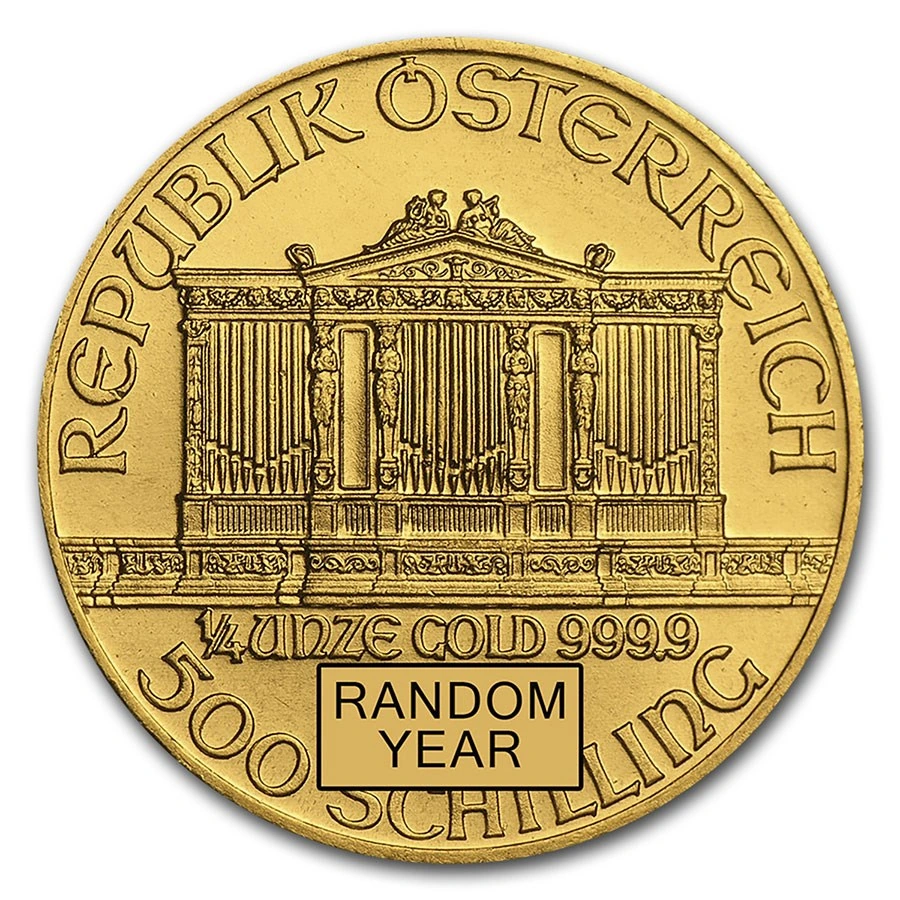
The national side depicts the organ in Vienna’s Musikverein with REPUBLIK ÖSTERREICH, the actual year, monetary denomination and fine-gold weight. It is the organ rather than a generic exterior building façade. Read the complete ounce fraction and denomination. Related silver and platinum Philharmonics share musical imagery but require other metal and size records.
Reverse: identify the back
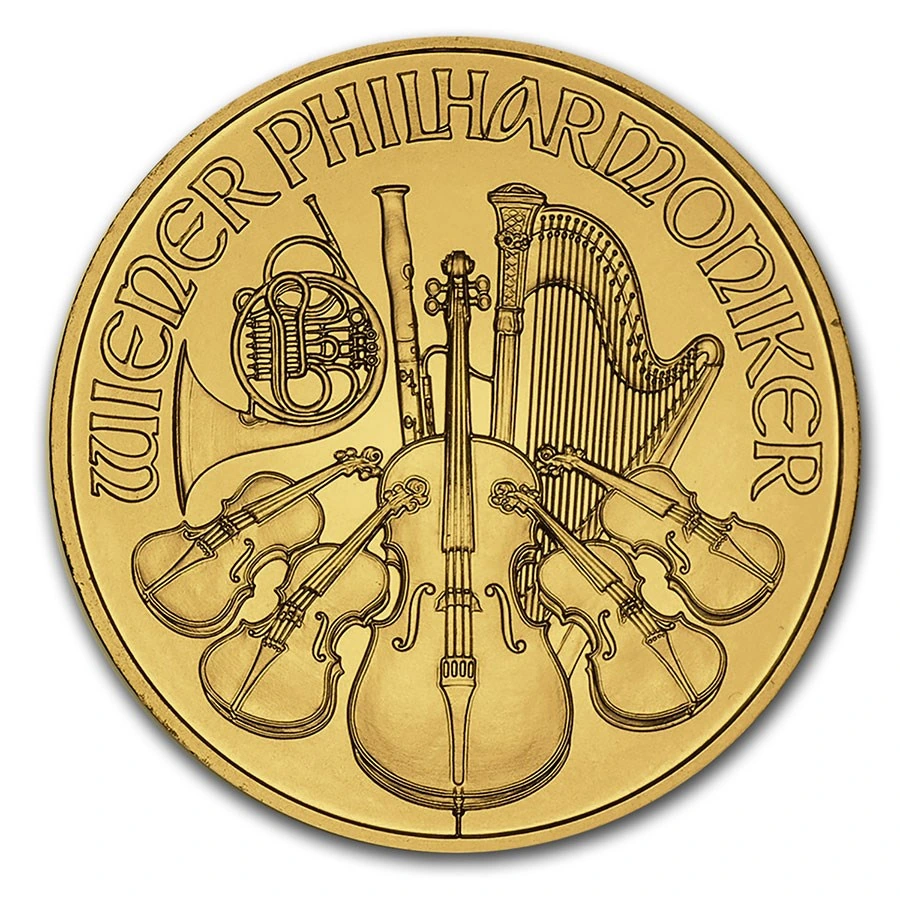
WIENER PHILHARMONIKER accompanies an arrangement of orchestral instruments. Thomas Pesendorfer designed the program’s musical faces. A shared instrument design makes the program recognizable but does not establish which fraction is pictured. Keep the whole opposite face and monetary amount visible when documenting a collection. A crop of the instrument cluster alone cannot identify the fine-gold quantity.
History and purpose
The official central-bank catalogue places the first quarter-ounce issue in 1989. The smaller denominations did not all begin in the same year: quarter and full ounce started in 1989, tenth in 1991 and half in 1994. The euro denomination begins in 2002 while the normal declared fine-gold fraction continues. This currency change is a visible subtype distinction, not a reason to reuse another coin size.
How to identify this variant
Match 500 SCHILLING on the earlier national face or 25 EURO on the later one, the actual year, .25-ounce fine-gold inscription and 22-mm reference diameter. The OeNB reference gross mass is 7.7759 g and its technical table specifies a reeded edge. Current Mint gram amounts are labeled Fine Weight; neither that label nor the rounded historical mass should be silently treated as a new precise physical measurement.
Understanding its metal content
Use the explicit issuer amount .25 fine troy ounce. Three matching coins total 0.75 fine ounces. Their historical rounded reference gross masses total 23.3277 g; this gram total is labelled for its source precision. Applying .9999 to the already declared fine ounce would deduct purity twice. Small differences from multiplying rounded grams by purity are source-rounding differences, not invented extra gold or a specimen assay.
Dates, varieties and composition changes
Actual normal annual dates are every year 1989–2026. Earlier dated types carry 500 schillings through 2001; 2002–2026 carry 25 euros. Original dated annual entries take precedence over the catalogue’s generic 1994 heading on quarter and tenth series. Preserve any genuinely separate commemorative, packaging or altered finish attribution. This annual normal-bullion list does not manufacture proof or error variants.
Melt value versus collector value
Retain the full actual year and schilling/euro subtype with original presentation or certification. Nominal gold quantity does not establish a collector premium, grade or authentic condition. Scratches, mounting, cleaning and uncertain attribution need individual assessment. This guide provides no source price table or mintage ranking. Preserve the original surfaces rather than polishing a bullion or special presentation coin before appraisal.
Authenticity and condition
Compare full inscriptions, actual date, organ and instrument faces, edge, mass and diameter together. A correctly sized coin or familiar musical scene alone cannot establish genuine gold. Watch for another metal or size with related imagery. Document both faces without acid testing, scraping or cleaning. Keep uncertain coins outside a confirmed normal bullion count until their material and dated type are examined.
Selling this coin
Separate each gold fraction from the one-ounce issue and from silver or platinum Philharmonics. Record the actual date and currency denomination, then retain certificates or grading documentation. Full-rim two-side photographs support the existing CashForCoins appraisal process. A fine-gold collection total is a nominal reference; an actual offer depends on the submitted specimens. Missing live quotes remain unavailable instead of being presented as zero.
Sources and calculation methodology
The calculator retains .25 fine troy ounce per matching coin. The retained fineness is .9999, and the nominal diameter is 22 mm. Nominal gross mass is 7.7759 grams. The references below distinguish the exact denomination and material standard from similar-looking coins. Reported fine content and rounded gross-mass arithmetic are separate conventions. The dated photographs supplied for CashForCoins use illustrate the identified type; they do not authenticate or grade an individual holding. A live market bid is obtained separately from specification references.
Common questions
Did all Gold Philharmonic fractions begin in 1989?
No. Quarter and full ounce began in 1989, tenth in 1991 and half in 1994.Did the euro change the normal fine-gold fraction?
The normal fractional fine-ounce amount continued while the monetary denomination changed in 2002.Should purity be applied to the declared fine ounce again?
No. Fine weight is already gold content; another purity deduction would count the same adjustment twice.References
- Austrian National Bank official Schilling catalogue — first release 1989; page48 explicit gross 7.7759 g/fineness .9999/diameter 22 mm/reeded edge; historical denomination 500 schillings; identity gold Vienna Philharmonic fractional denomination; dates Schilling issue years and euro transition (checked 2026-10-16)
- Original issuer exact current fractional specification — 25 euro; 22 mm; .9999; .25 fine oz; actual illustrated 2026 year; Thomas Pesendorfer design; gram label Fine Weight (checked 2026-10-16)
- Original CDN actual normal annual issue entries — actual 1989–2026 rows; schilling/euro transition; erroneous generic heading documented; no prices copied (checked 2026-10-16)
Issue-year references
Content maintained by CashForCoins. Last substantive record update: 2026-10-16. Report a specification or attribution issue through our contact page.
Have this coin or a collection?
Photographs can help identify your coin. An appraisal may consider authenticity, condition and collector demand as well as metal content.
Request a photo appraisal View current gold coin buying information