

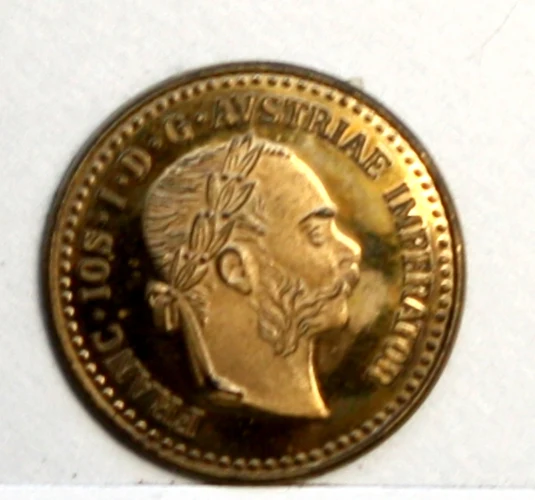
Austrian One Ducat Gold Restrike
Photo credits and rights on the linked coin profile.
Austria • 98.600% gold; balance alloy metal
Face date: 1915 (fixed restrike date)
Fine gold: 0.110700 troy oz
Austria • 4 Austrian ducats
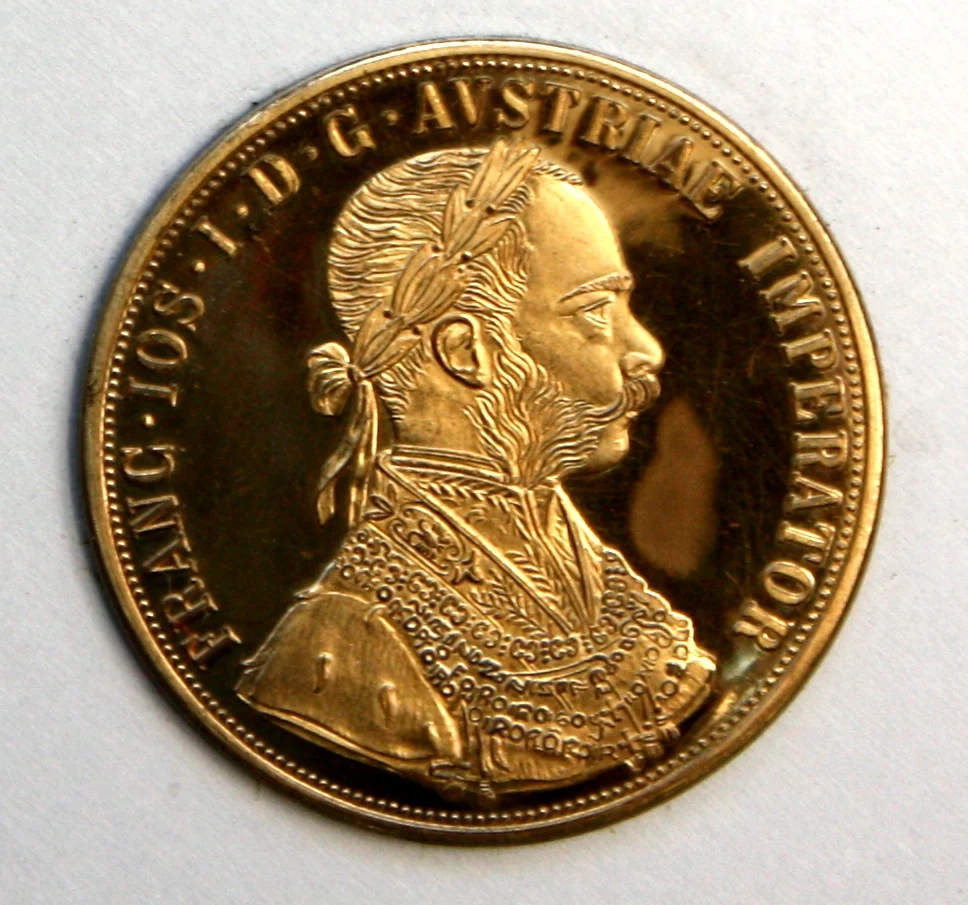
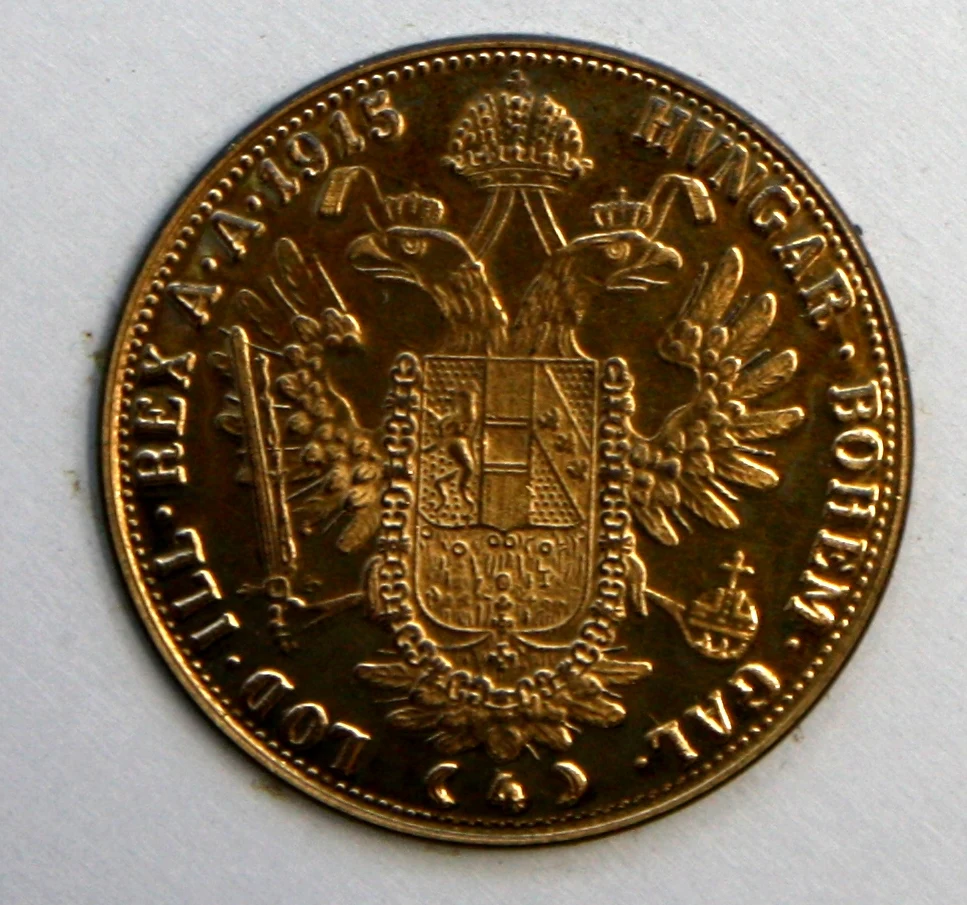
Austrian Four Ducat Gold Restrike uses 0.4426 troy oz fine gold per coin from the matching reference. Its reported gross weight is 13.9636 g and fineness is 0.986. This guide covers the 1915-dated Franz Joseph restrike design. The dates field records the year shown on the coin, not its manufacturing year. The source display photographed in 2009 identifies the denomination.
When a fresh spot bid is available, melt values use fine-metal content × spot bid. CashForCoins guide buying offers use the separately configured percentage for each metal. Selected rare/numismatic coins require an appraisal. Dollar amounts remain unavailable when a fresh quote or buying percentage is missing.
This is the date on the restrike design. Actual manufacture can be later; the date alone does not establish the striking year.
Formula: specified fine-metal troy ounces × quantity. Dollar melt value additionally requires an approved current metal price.
Franz Joseph faces right in an elaborate armored bust and laurel wreath. The shoulders and decorated armor distinguish this four-ducat illustration from the smaller one-ducat head portrait. The imperial legend surrounds the bust; preserve it with the rim in a reference photograph.
The crowned double-headed imperial eagle carries the Austrian arms. The fixed date 1915 appears in the surrounding inscription with the denomination (4). Both Austrian ducat sizes use related eagle imagery; the actual denomination and complete portrait must remain part of the identification.
The Austrian Mint describes these as modern restrikes of the historical Franz Joseph design. A retained old date is a design feature and does not make a recently struck coin an original wartime issue. The official issuer offers one- and four-ducat pieces; this guide keeps those sizes separate.
The issuer gives 39.5 mm nominal diameter for this size. Compare the actual denomination, portrait, fixed date and nominal mass together. Do not infer physical size from two photographs displayed at equal width: a website scales both images to fit its layout. Keep measurements separate from the reference calculator.
The calculator follows the cited 0.4426 troy oz fine-gold amount; three correctly identified coins total 1.3278 troy oz. The separately reported nominal mass calculation is 13.9636 g × 0.986 = 13.7681096 g, or approximately 0.442655 troy oz. Published rounding can make these displays differ; the source precision note records the distinction. The calculator does not measure wear or determine an actual purchase offer.
The date 1915 is retained on the modern restrike design. Older genuinely dated ducats, unusual proofs and privately made replicas require separate attribution; this entry does not absorb every Austrian coin called a ducat. Original packaging and provenance help document manufacture but cannot be reconstructed from the face date alone.
A modern restrike is a distinct issue category rather than a claim that a coin was produced in 1915. Preserve packaging, unusual surfaces and any specialist attribution. Do not assign a historical premium or grade from the display photograph; the nominal metal calculation is only one part of reviewing a lot.
Read the denomination, both face designs, full date and mint details together before choosing a calculator entry. Keep photographs of the rim and any original holder with the record. Measure an intact coin using a suitable scale and caliper; do not clean, scratch or bend it to test the metal. Reference photographs illustrate a design and do not authenticate or grade another specimen. An unfamiliar date, mount or altered detail warrants individual examination.
Keep this denomination separate from similar-looking smaller coins and from other alloys. Count only examples whose type has been identified; set uncertain pieces aside for appraisal. Record quantities, readable dates, mint details and both-side photographs using the existing quote form. The prefilled context helps identify the lot, while nominal metal content, collector assessment and any actual offer remain separate.
The reference’s named melt table controls this guide’s metal inputs. Its four-ducat AGW is .4426 oz, while the reference’s KM2276 type record displays .4427 oz; that difference is explicitly retained rather than silently substituting the type record. The issuer’s rounded gross/fine gram displays do not supply extra ounce precision. The 1915–1915 dates field identifies the fixed date shown; it is not a manufacturing interval. The owner selected reference as the deciding reference when metal specifications disagree. Source photographs, their reuse rights and face assignments are reviewed separately. These are reference specifications, not a first-party assay or a current market quote. No approved live price feed is configured, so dollar melt values remain unavailable. Dates of review reflect actual editorial work.
No. This restrike design retains that year. Manufacturing date and original-versus-restrike attribution need evidence beyond the face date.
No. They have different mass, diameter and portrait treatment. Select the actual denomination even when website photographs appear the same size.
It follows the named reference world-gold melt reference’s 0.4426 troy oz per coin. Three coins total 1.3278 oz; rounded issuer gram displays are not substituted for that figure.
Content maintained by CashForCoins. Last substantive record update: 2026-10-10. Report a specification or attribution issue through our contact page.
Photo credits and rights on the linked coin profile.
Austria • 98.600% gold; balance alloy metal
Face date: 1915 (fixed restrike date)
Fine gold: 0.110700 troy oz
Photographs can help identify your coin. An appraisal may consider authenticity, condition and collector demand as well as metal content.
Request a photo appraisal View current gold coin buying information
