
United States • 25 U.S. cents
Seated Liberty Quarter — Reduced Weight
A correctly identified seated liberty quarter — reduced weight uses 6.22 nominal gross grams, 90% silver and 0.1800 reference fine silver troy ounce. The covered dates are 1853 Arrows and Rays; 1854–1855 Arrows; 1856–1872. Keep these historic coins available for individual collectible appraisal; the metal figure alone is not a selling price.
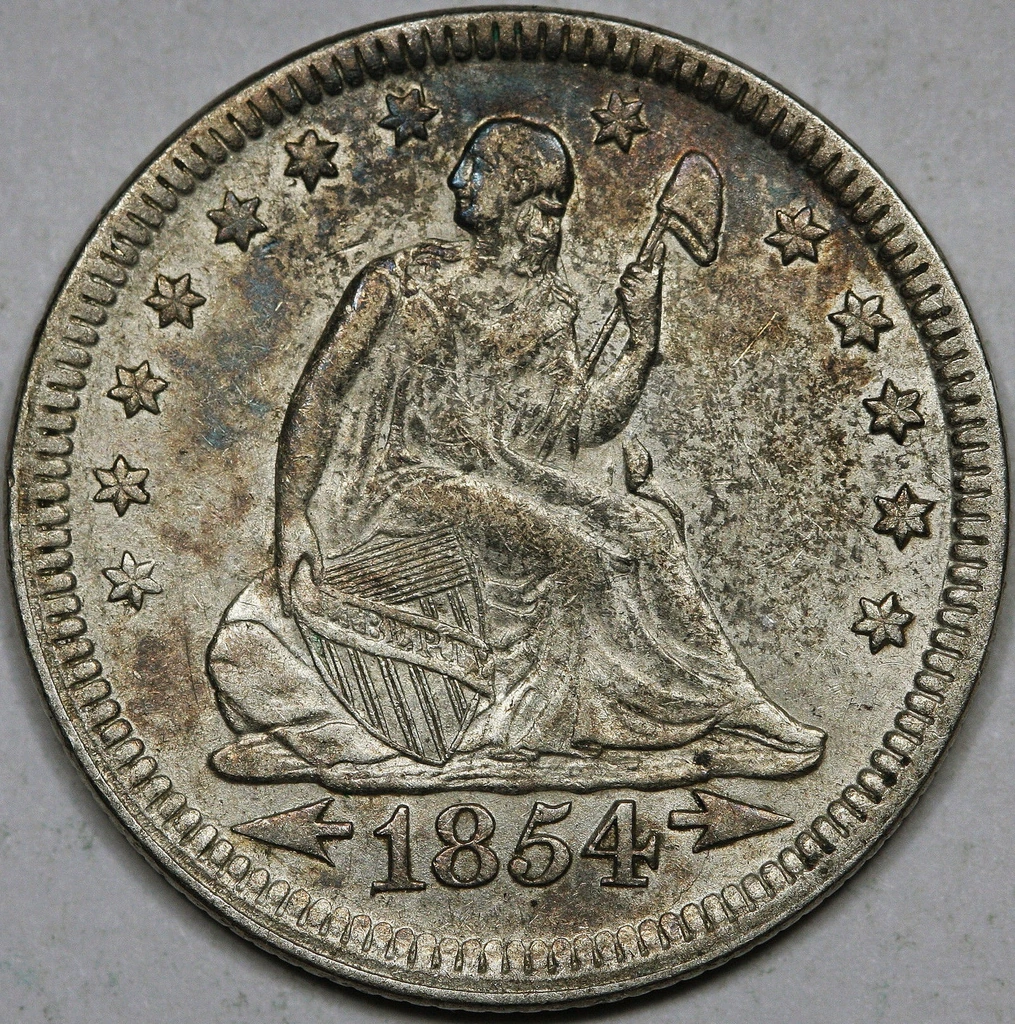
Lost Dutchman Rare Coins / Wikimedia Commons / CC BY-SA 3.0 US Changes: Complete acquired photograph retained; no crop. Downscaled from1568×1582 to1015×1024 pixels using Lanczos. Converted to WebP quality92. No retouching, synthetic reconstruction or rim trimming. · Image source · CC BY-SA 3.0 US
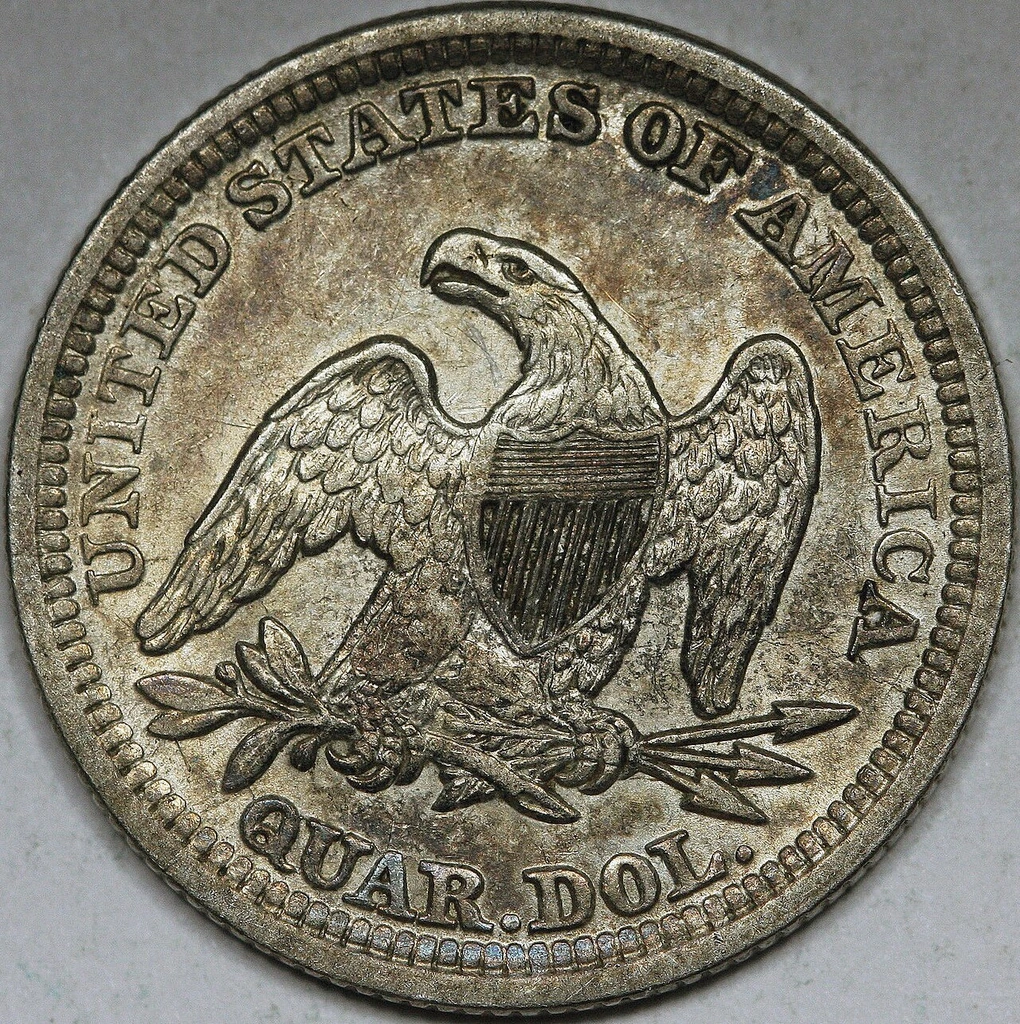
Lost Dutchman Rare Coins / Wikimedia Commons / CC BY-SA 3.0 US Changes: Complete acquired photograph retained; no crop. Downscaled from1280×1285 to1020×1024 pixels using Lanczos. Converted to WebP quality92. No retouching, synthetic reconstruction or rim trimming. · Image source · CC BY-SA 3.0 US
When a fresh spot bid is available, melt values use fine-metal content × spot bid. CashForCoins guide buying offers use the separately configured percentage for each metal. Selected rare/numismatic coins require an appraisal. Dollar amounts remain unavailable when a fresh quote or buying percentage is missing.
Verified coin specifications
- Country
- United States
- Face denomination
- 25 U.S. cents
- Composition
- 90% silver; remaining alloy not independently itemized here
- Gross weight (grams)
- 6.22
- Fineness
- 0.9
- Fine-metal weight (troy oz)
- 0.18
- Diameter (mm)
- 24.3
- Edge
- Reeded
- Mint
- United States Mint; see dated mint attribution
- Mint mark
- None, O, S or CC; match dated type
- Restrikes
- Patterns, restrikes and exceptional disputed types excluded
- Issue years
- 1853 Arrows and Rays; 1854–1855 Arrows; 1856–1872
Actual source-observed issue-date labels for the bounded denomination, design and nominal standard. Catalogue endpoints do not imply annual mint production; overdates and proof/mint combinations remain type-specific. Specimen measurements and images do not certify another coin. This guide covers the reduced-weight issues through 1872. Coins dated 1873 without arrows are outside this guide and require separate type attribution.
- Source precision
- The retained matching reference uses 6.22 nominal gross grams, 0.900 fineness and 0.1800 fine silver troy ounce. Source-specific precision and any disagreement are documented in References. Actual specimen measurements do not replace the nominal reference.
Calculate this coin’s metal content
Formula: specified fine-metal troy ounces × quantity. Dollar melt value additionally requires an approved current metal price.
Obverse: identify the front
Look for Liberty seated on a rock with a shield and a liberty pole. Capture the complete date, stars, nearby arrows if present, and the drapery beside Liberty. These details help identify a denomination and transition design before any silver calculation. A photograph of one specimen illustrates that specimen, not every date or mint variety.
Reverse: identify the back
The reverse shows an eagle with a shield and the QUAR. DOL. denomination. Record whether rays surround the eagle and whether a motto ribbon appears above it. Include the area below the eagle where applicable mint letters appear. Do not crop away these markers when requesting an attribution.
History and purpose
The 1853 coinage change lowered the silver weight of the quarter. Arrows beside the date and, during 1853 only, rays around the eagle made the changed issue recognizable. Removing the rays in 1854 and the arrows in 1856 changed the design markers rather than reversing that reduction.
How to identify this variant
For 1853, require both arrows beside the date and rays around the reverse eagle. The 1854–1855 pieces retain arrows but omit the rays; from 1856 the ordinary design lacks both. Their removal did not restore the original heavier weight. Check the 24.3 mm reference diameter. A plausible mass or diameter supports a comparison but does not certify authenticity, original surfaces or purity.
Understanding its metal content
Each matching seated liberty quarter — reduced weight contains 0.1800 reference fine silver troy ounce. Three contribute 0.5400 fine silver troy ounce and 18.66 nominal gross grams. The 90% reference fineness distinguishes silver content from total alloy mass. Melt value reflects metal content; early collectible coins require individual appraisal.
Dates, varieties and composition changes
Covered issue-date labels are 1853 Arrows and Rays; 1854–1855 Arrows; 1856–1872. The design subdivisions are 1853 Arrows and Rays, 1854–1855 Arrows without rays, and 1856–1872 issues without arrows; No Motto and With Motto designs. The covered annual list ends in 1872. Coins dated 1873 without arrows are outside this guide and need separate attribution. The ordinary reverse acquires IN GOD WE TRUST in 1866; exceptional No Motto pieces require individual attribution rather than automatic inclusion.
Melt value versus collector value
Date, mint, die variety, strike, wear, original surfaces and provenance can matter more than bullion content when appraising a historic coin. Preserve existing certificates and photographs and keep dates identifiable. Avoid cleaning, polishing or performing an abrasive acid test to prepare a coin for an enquiry. No rarity premium or grade is promised by this guide.
Authenticity and condition
Provide clear photographs of both faces and the edge, with measured mass and diameter when available. Show all arrows, drapery, mint letters and the denomination. Counterfeits, altered dates, repairs and uncertain varieties need individual assessment. A familiar seated figure alone does not prove that a piece belongs to this 6.22 g standard.
Selling this coin
Request a CashForCoins photo appraisal for a seated liberty quarter — reduced weight. Keep its date, mint attribution, reverse design and available measurements together. Photograph both complete faces and the edge, and retain certificates or ownership records. Keep different denominations and weight periods separate so an appraiser can assess each collectible type accurately.
Sources and calculation methodology
The dated specification reference supplies the nominal grams, fineness, diameter and fine silver content. The inspected series records supply actual issue-date labels; a range is a compact display of observed dates, not a claim that every mint struck every year. Transition markers and explicit exclusions limit this guide. Nominal content and a specimen measurement remain separate. References were inspected on 2026-10-12; catalogue prices are not reproduced.
Common questions
Which dates does this quarter guide cover?
1853 Arrows and Rays; 1854–1855 Arrows; 1856–1872. Transition designs must match the stated scope.Does removing the arrows mean the old weight returned?
No. Arrows were temporary design markers. Identify the year and weight period together.Should I sell a historic coin solely for its silver calculation?
Request an individual appraisal first. A date, mint or variety can have collectible importance that a metal calculation cannot assess.References
- NGC dated Seated Liberty quarter specification — Identity of the exact denomination/type; matching nominal weight in grams, fineness, fine silver, diameter and edge (checked 2026-10-12)
- NGC Seated Liberty quarter annual and design records — Dates and design scope; actual annual records and design transitions; excluded rare rows retained separately (checked 2026-10-12)
- U.S. coinage legislation: 1853 reduced silver weights and effective-date amendment — GovernmentPrintingOffice1904reprint printedpage39:1853Act192-grain half andquarterone-half; printedpage41March3amendmenteffectiveApril1, notJune1 (checked 2026-10-12)
- Genuine coin image and independent permission — Independent CC BY-SA 3.0 US permission; creator/credit Lost Dutchman Rare Coins; genuine source photograph or scan; actual paired source photographs and optimized faces reviewed independently; publication remains a separate decision. Wikimedia permission ticket 2014021910000596. (checked 2026-10-12)
- Genuine coin image and independent permission — Independent CC BY-SA 3.0 US permission; creator/credit Lost Dutchman Rare Coins; genuine source photograph or scan; actual paired source photographs and optimized faces reviewed independently; publication remains a separate decision. Wikimedia permission ticket 2014021910000596. (checked 2026-10-12)
Issue-year references
- NGC dated Seated Liberty quarter specification
- NGC Seated Liberty quarter annual and design records
- U.S. coinage legislation: 1853 reduced silver weights and effective-date amendment
Content maintained by CashForCoins. Last substantive record update: 2026-10-13. Report a specification or attribution issue through our contact page.
Have this coin or a collection?
Photographs can help identify your coin. An appraisal may consider authenticity, condition and collector demand as well as metal content.
Request a photo appraisal View current silver coin buying information