
United States • 25 U.S. cents
Seated Liberty Quarter — Increased Metric Weight
A correctly identified seated liberty quarter — increased metric weight uses 6.25 nominal gross grams, 90% silver and 0.1808 reference fine silver troy ounce. The covered dates are 1873–1874 Arrows; 1875–1891. Keep these historic coins available for individual collectible appraisal; the metal figure alone is not a selling price.
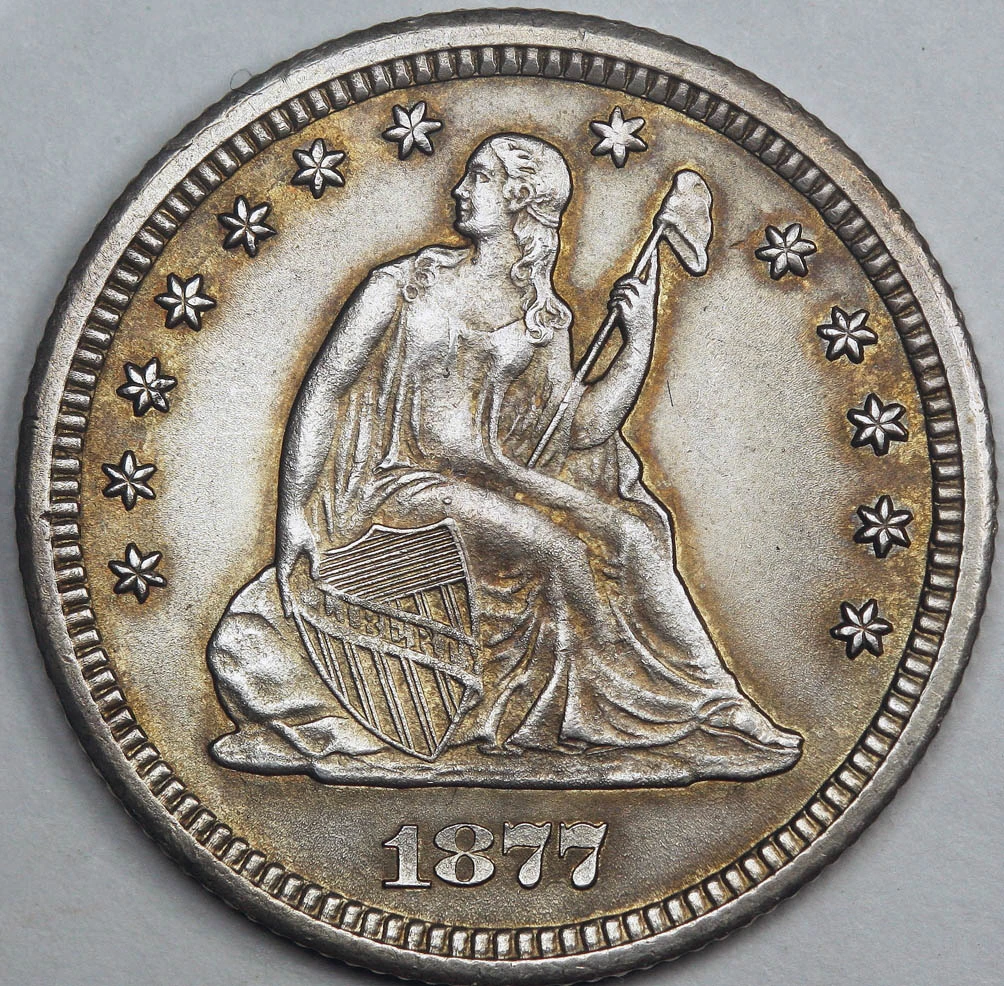
Lost Dutchman Rare Coins / Wikimedia Commons / CC BY-SA 3.0 US Changes: Complete acquired photograph retained; no crop. Native1004×986 pixel dimensions retained; no enlargement. Converted to WebP quality92. No retouching, synthetic reconstruction or rim trimming. · Image source · CC BY-SA 3.0 US
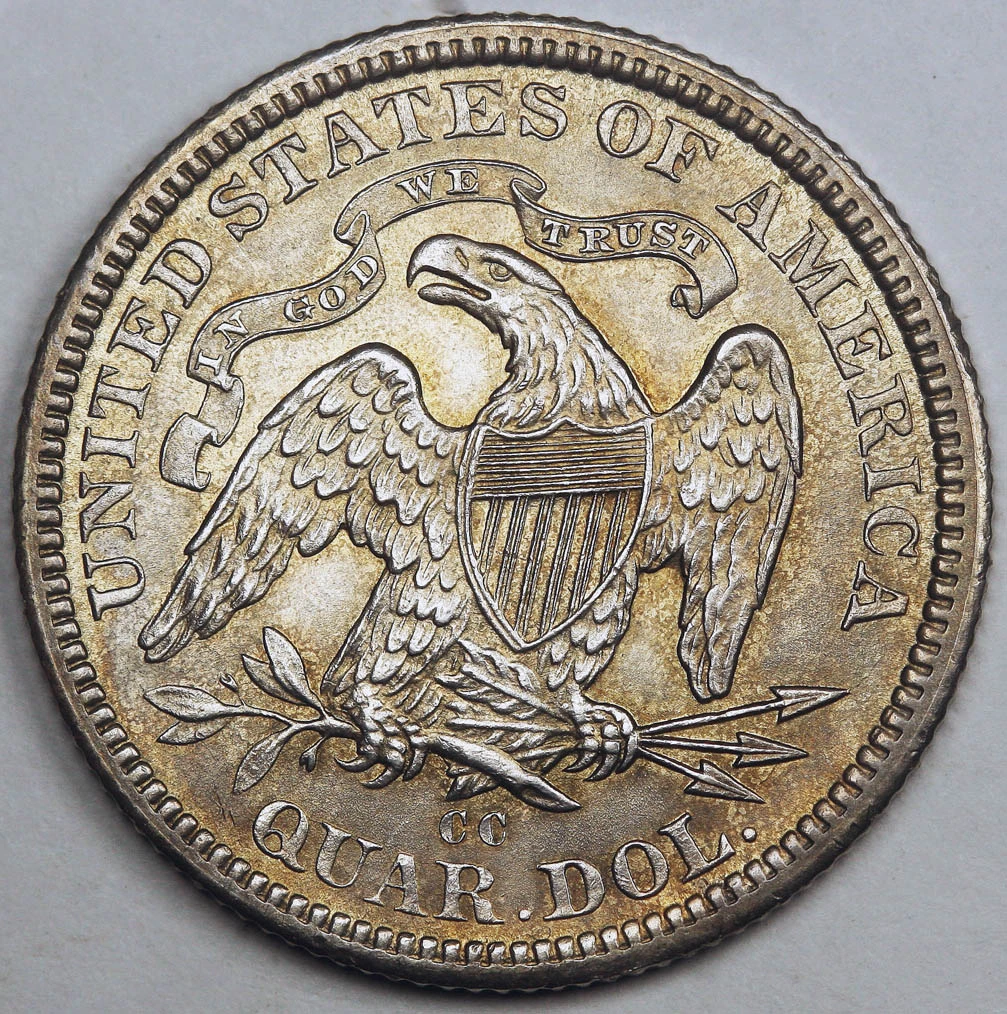
Lost Dutchman Rare Coins / Wikimedia Commons / CC BY-SA 3.0 US Changes: Complete acquired photograph retained; no crop. Native1007×1014 pixel dimensions retained; no enlargement. Converted to WebP quality92. No retouching, synthetic reconstruction or rim trimming. · Image source · CC BY-SA 3.0 US
When a fresh spot bid is available, melt values use fine-metal content × spot bid. CashForCoins guide buying offers use the separately configured percentage for each metal. Selected rare/numismatic coins require an appraisal. Dollar amounts remain unavailable when a fresh quote or buying percentage is missing.
Verified coin specifications
- Country
- United States
- Face denomination
- 25 U.S. cents
- Composition
- 90% silver; remaining alloy not independently itemized here
- Gross weight (grams)
- 6.25
- Fineness
- 0.9
- Fine-metal weight (troy oz)
- 0.1808
- Diameter (mm)
- 24.3
- Edge
- Reeded
- Mint
- United States Mint; see dated mint attribution
- Mint mark
- None, O, S or CC; match dated type
- Restrikes
- Patterns, restrikes and exceptional disputed types excluded
- Issue years
- 1873–1874 Arrows; 1875–1891
Actual source-observed issue-date labels for the bounded denomination, design and nominal standard. Catalogue endpoints do not imply annual mint production; overdates and proof/mint combinations remain type-specific. Specimen measurements and images do not certify another coin. The 1873 No Arrows issues are excluded. A date of 1873 alone is insufficient to select the increased-weight calculation.
- Source precision
- The retained matching reference uses 6.25 nominal gross grams, 0.900 fineness and 0.1808 fine silver troy ounce. Source-specific precision and any disagreement are documented in References. Actual specimen measurements do not replace the nominal reference.
Calculate this coin’s metal content
Formula: specified fine-metal troy ounces × quantity. Dollar melt value additionally requires an approved current metal price.
Obverse: identify the front
Look for Liberty seated on a rock with a shield and a liberty pole. Capture the complete date, stars, nearby arrows if present, and the drapery beside Liberty. These details help identify a denomination and transition design before any silver calculation. A photograph of one specimen illustrates that specimen, not every date or mint variety.
Reverse: identify the back
The reverse shows an eagle with a shield and the QUAR. DOL. denomination. Record whether rays surround the eagle and whether a motto ribbon appears above it. Include the area below the eagle where applicable mint letters appear. Do not crop away these markers when requesting an attribution.
History and purpose
The 1873 metric-weight change increased the nominal mass of the quarter slightly. Arrows again marked the transition in 1873–1874. Their absence after 1874 does not make an 1875 or later piece part of the earlier reduced-weight period.
How to identify this variant
Require arrows beside the date for the covered 1873–1874 pieces. The ordinary 1875–1891 pieces omit the arrows while retaining the metric weight. A matching reference diameter is 24.3 mm. Keep the 1873 No Arrows pieces separate before calculating. A plausible mass or diameter supports a comparison but does not certify authenticity, original surfaces or purity.
Understanding its metal content
Each matching seated liberty quarter — increased metric weight contains 0.1808 reference fine silver troy ounce. Three contribute 0.5424 fine silver troy ounce and 18.75 nominal gross grams. The 90% reference fineness distinguishes silver content from total alloy mass. Melt value reflects metal content; early collectible coins require individual appraisal.
Dates, varieties and composition changes
Covered issue-date labels are 1873–1874 Arrows; 1875–1891. The design subdivisions are 1873–1874 With Arrows and 1875–1891 without arrows; all covered ordinary designs have the reverse motto. The 1873 No Arrows issues are excluded. A date of 1873 alone is insufficient to select the increased-weight calculation.
Melt value versus collector value
Date, mint, die variety, strike, wear, original surfaces and provenance can matter more than bullion content when appraising a historic coin. Preserve existing certificates and photographs and keep dates identifiable. Avoid cleaning, polishing or performing an abrasive acid test to prepare a coin for an enquiry. No rarity premium or grade is promised by this guide.
Authenticity and condition
Provide clear photographs of both faces and the edge, with measured mass and diameter when available. Show all arrows, drapery, mint letters and the denomination. Counterfeits, altered dates, repairs and uncertain varieties need individual assessment. A familiar seated figure alone does not prove that a piece belongs to this 6.25 g standard.
Selling this coin
Request a CashForCoins photo appraisal for a seated liberty quarter — increased metric weight. Keep its date, mint attribution, reverse design and available measurements together. Photograph both complete faces and the edge, and retain certificates or ownership records. Keep different denominations and weight periods separate so an appraiser can assess each collectible type accurately.
Sources and calculation methodology
The dated specification reference supplies the nominal grams, fineness, diameter and fine silver content. The inspected series records supply actual issue-date labels; a range is a compact display of observed dates, not a claim that every mint struck every year. Transition markers and explicit exclusions limit this guide. Nominal content and a specimen measurement remain separate. References were inspected on 2026-10-12; catalogue prices are not reproduced.
Common questions
Which dates does this quarter guide cover?
1873–1874 Arrows; 1875–1891. Transition designs must match the stated scope.Does removing the arrows mean the old weight returned?
No. Arrows were temporary design markers. Identify the year and weight period together.Should I sell a historic coin solely for its silver calculation?
Request an individual appraisal first. A date, mint or variety can have collectible importance that a metal calculation cannot assess.References
- NGC dated Seated Liberty quarter specification — Identity of the exact denomination/type; matching nominal weight in grams, fineness, fine silver, diameter and edge (checked 2026-10-12)
- NGC Seated Liberty quarter annual and design records — Dates and design scope; actual annual records and design transitions; excluded rare rows retained separately (checked 2026-10-12)
- U.S. coinage legislation: 1873 metric silver weights — 1873Act Section15 printedpage427: half12.5g, quarterone-half; Section13.900silver/copperalloy (checked 2026-10-12)
- Genuine coin image and independent permission — Independent CC BY-SA 3.0 US permission; creator/credit Lost Dutchman Rare Coins; genuine source photograph or scan; actual paired source photographs and optimized faces reviewed independently; publication remains a separate decision. Wikimedia permission ticket 2013071310000741. (checked 2026-10-12)
- Genuine coin image and independent permission — Independent CC BY-SA 3.0 US permission; creator/credit Lost Dutchman Rare Coins; genuine source photograph or scan; actual paired source photographs and optimized faces reviewed independently; publication remains a separate decision. Wikimedia permission ticket 2013071310000741. (checked 2026-10-12)
Issue-year references
- NGC dated Seated Liberty quarter specification
- NGC Seated Liberty quarter annual and design records
- U.S. coinage legislation: 1873 metric silver weights
Content maintained by CashForCoins. Last substantive record update: 2026-10-13. Report a specification or attribution issue through our contact page.
Have this coin or a collection?
Photographs can help identify your coin. An appraisal may consider authenticity, condition and collector demand as well as metal content.
Request a photo appraisal View current silver coin buying information