
United States • dime (10 cents)
Roosevelt Dime Modern 90% Silver Proof
Roosevelt Dime Modern 90% Silver Proof uses 2.5 g nominal gross mass and 90% silver. The selected reference amount is 0.0723 fine silver troy ounce per matching coin. Actual dated normal issues are 1992–2018. Confirm the collector material and exact design/finish before counting a lot: a proof surface or mint letter alone does not establish silver, and later .999 issues require different inputs.
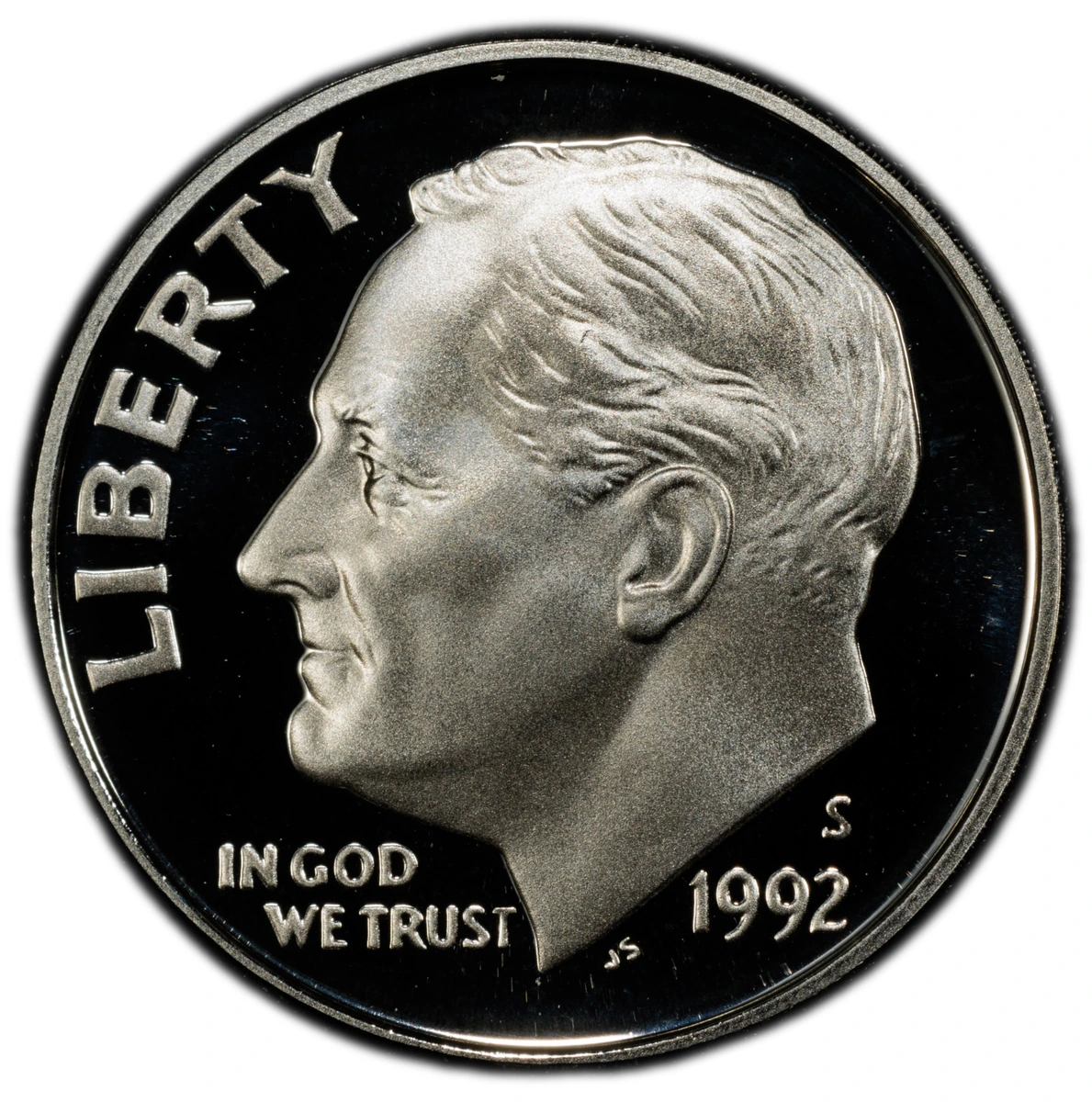
Images supplied by CashForCoins; used with permission. · Image source · CashForCoins website use authorized by site owner
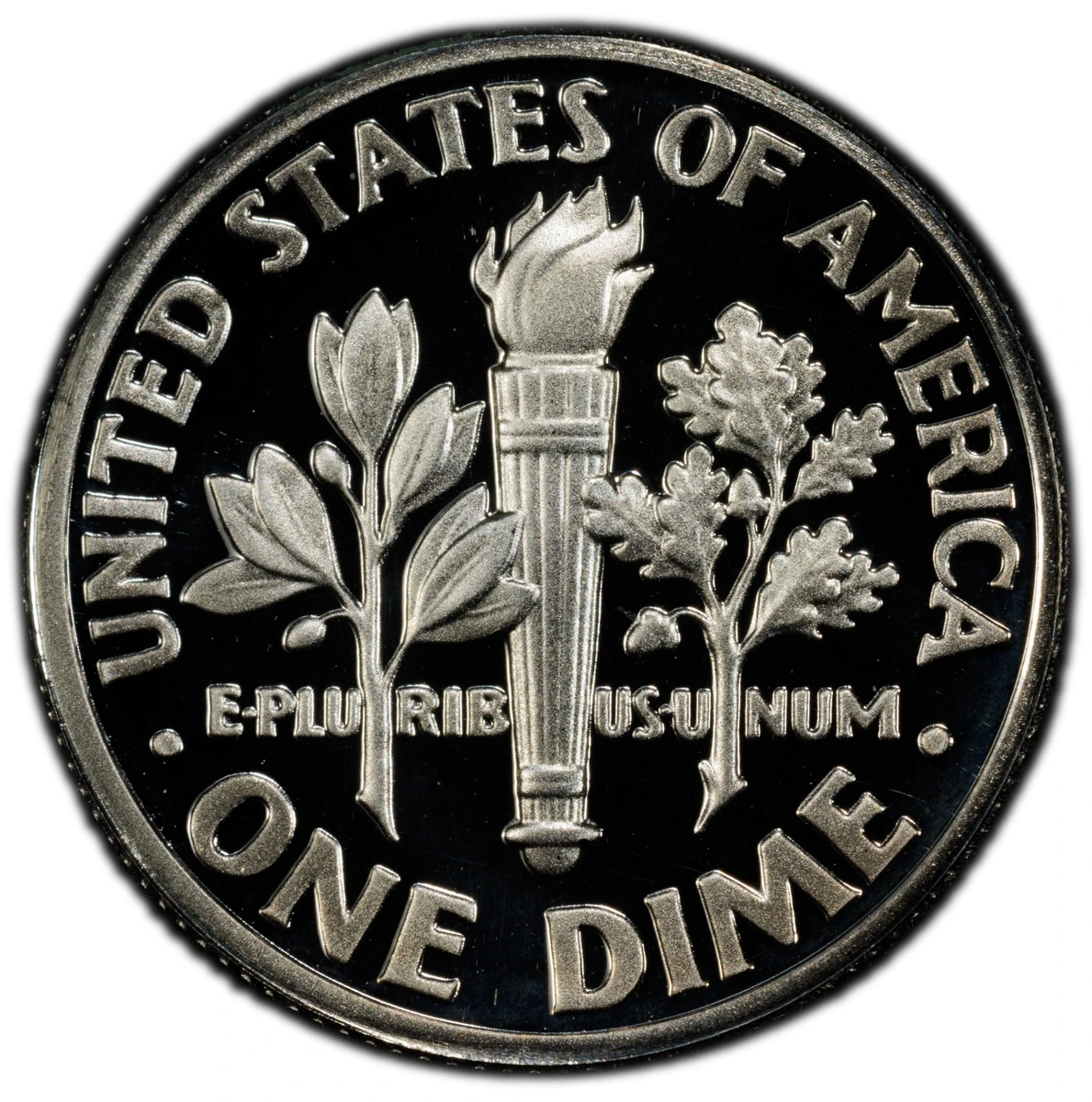
Images supplied by CashForCoins; used with permission. · Image source · CashForCoins website use authorized by site owner
When a fresh spot bid is available, melt values use fine-metal content × spot bid. CashForCoins guide buying offers use the separately configured percentage for each metal. Selected rare/numismatic coins require an appraisal. Dollar amounts remain unavailable when a fresh quote or buying percentage is missing.
Verified coin specifications
- Country
- United States
- Face denomination
- dime (10 cents)
- Composition
- 90% silver; 10% copper
- Gross weight (grams)
- 2.5
- Fineness
- 0.9
- Fine-metal weight (troy oz)
- 0.0723
- Diameter (mm)
- 17.9
- Edge
- Reeded
- Mint
- United States Mint, San Francisco; special issues described separately
- Mint mark
- See dated mint attribution
- Restrikes
- Matching modern 90% proof only; clad, 40%, gold and later .999 material standards excluded
- Issue years
- 1992–2018
Normal issue dates within this profile. Read the guide for changing designs, mint/finish differences and excluded material standards.
- Source precision
- The reference user-designated U.S. silver melt reference supplies the same normal denomination metal standard: 2.5 g, .900 fineness, 0.0723 reference ASW. Modern matched catalog/issuer references independently confirm the 90% collector material. Actual dated normal proof years 1992–2018. A reflective surface or S mint mark alone does not establish silver. Mint mark: S; specific 2014/2015 special proof mints described separately.
Calculate this coin’s metal content
Formula: specified fine-metal troy ounces × quantity. Dollar melt value additionally requires an approved current metal price.
Obverse: identify the front
Franklin D. Roosevelt faces left with LIBERTY beside his profile, IN GOD WE TRUST below and the actual year to the right. John R. Sinnock created the design. Check the modern mint mark near the portrait-side date; earlier circulation silver dimes place their marks differently. An S, P or W mark identifies a mint and issue context, not a universal silver guarantee.
Reverse: identify the back
A central torch stands between olive and oak branches, with UNITED STATES OF AMERICA above and ONE DIME below. The E PLURIBUS UNUM wording crosses the field. This is Sinnock’s familiar Roosevelt reverse, also used on clad circulation coins. Proof frosting changes how the devices and fields reflect light, but that surface treatment alone cannot establish the coin’s silver alloy.
History and purpose
The regular modern Silver Proof Set introduced this later 90% Roosevelt proof sequence in 1992. Circulation Roosevelt dimes had switched away from silver in 1965, so the familiar president and torch cannot identify metal by themselves. The special 2015 P and W collector proofs and the 2018 S reverse proof remain part of the documented 90% collector material period, distinct from later .999 issues.
How to identify this variant
Match the actual collector issue, 2.5 g nominal gross mass and 17.9 mm reference diameter. Ordinary clad dimes share the basic portrait and torch. The 2015-W proof has a different material from the clad 1996-W dime despite their shared mint letter. Keep set packaging and certificates with the coins, while treating those documents as attribution aids rather than proof that a loose coin is genuine.
Understanding its metal content
Multiply 2.5 nominal gross grams by .900 to obtain 2.25 nominal silver grams. The calculator retains the published reference amount of 0.0723 fine troy ounce rather than silently substituting a longer arithmetic result. Ten correctly identified matching coins total 0.7230 reference fine troy ounces. The other 10% is copper, not silver. Individual wear, mounts and material uncertainty must be evaluated separately.
Dates, varieties and composition changes
Normal S silver-proof dates occur every year 1992–2018. The 2015 March of Dimes set added a Philadelphia reverse proof and a West Point traditional proof; the W coin is not an enhanced-uncirculated dime. The 2018-S reverse proof provides another specific finish. A 1996-W circulation-style collector dime is clad and does not enter this 90% record. The silver-proof purity changed to .999 beginning in 2019, requiring separate material inputs.
Melt value versus collector value
Proofs are collector coins with deliberately prepared surfaces. Preserve original packaging, certificates and any documented special-finish attribution. Reflective fields in a photograph do not establish a grade or prove that a piece is a standard proof rather than an altered coin. Condition, surface damage and specific varieties can affect an appraisal beyond nominal silver content. No collector price or rarity claim is assigned to a visitor’s coin here.
Authenticity and condition
Inspect both faces, full date, mint mark, edge and measurements together. Original set documentation helps separate clad and silver offerings with similar designs. Correct nominal weight alone is insufficient to establish authenticity. Do not polish, scratch or acid-test a proof to resolve its composition. A doubtful coin stays separate from the nominal standard total until an individual assessment identifies its actual material and issue.
Selling this coin
Separate confirmed 90% collector proofs from clad coins, older circulation silver and later .999 proof issues. Include actual face dates, mint marks, finish notes, clear both-side images and original documentation in the existing CashForCoins appraisal process. The reference fine-silver total helps describe the lot; it is not a guaranteed accepted buying offer. Unavailable live market data remains unavailable rather than appearing as a zero dollar value.
Sources and calculation methodology
The calculator retains 0.0723 fine troy ounce per matching coin. The retained fineness is 0.9, and the nominal diameter is 17.9 mm. Nominal gross mass is 2.5 grams. The references below distinguish the exact denomination and material standard from similar-looking coins. Reported fine content and rounded gross-mass arithmetic are separate conventions. The dated photographs supplied for CashForCoins use illustrate the identified type; they do not authenticate or grade an individual holding. A live market bid is obtained separately from specification references.
Common questions
Does an S mint mark guarantee silver?
No. San Francisco issued clad and silver proof coins. Verify the actual material, dated issue and supporting specification.
Can later .999 proofs use this 90% record?
No. The silver-proof material changed beginning in 2019. Later .999 coins need their own mass and fine-silver inputs.
Is a mirror-like finish enough to identify a proof’s metal?
No. Finish and material are separate checks. Inspect the complete dated coin and use matching issuer or numismatic specifications.
References
- NGC designated U.S. silver melt reference — normal same-denomination metal reference 2.5 g/.900/0.0723 ASW; applies only to verified matching material, not clad (checked 2026-10-16)
- NGC actual modern dated proof entries — identity; dates actual normal 1992–2018; silver distinguished from clad; no prices copied (checked 2026-10-16)
- Original issuer 1992 annual report: first modern silver proof sets — identity; dates first modern silver proof sets May 1992 (checked 2026-10-16)
- Original issuer 2017 annual silver-proof alloy — identity; 90% silver dime/quarters/half dollar; S mint (checked 2026-10-16)
- Original issuer 2019 changed silver material — identity; dates 2019 .999 silver for dime/quarters/half; separate material standard (checked 2026-10-16)
- Original issuer 2018-S silver reverse-proof finish — identity; dates 2018-S; reverse-proof finish; dime and half 90% silver (checked 2026-10-16)
- NGC matching 1992-S silver dime specification — identity; weight 2.5 g; fineness .900; ASW .0723; diameter 17.9 mm (checked 2026-10-16)
- Original issuer 2015 March of Dimes P and W proof attribution — identity; dates 2015-P reverse proof and 2015-W proof; no enhanced-uncirculated W dime claim (checked 2026-10-16)
Issue-year references
- NGC actual modern dated proof entries
- Original issuer 1992 annual report: first modern silver proof sets
- Original issuer 2019 changed silver material
Content maintained by CashForCoins. Last substantive record update: 2026-10-16. Report a specification or attribution issue through our contact page.
Have this coin or a collection?
Photographs can help identify your coin. An appraisal may consider authenticity, condition and collector demand as well as metal content.
Request a photo appraisal View current silver coin buying information